Table of Contents
A Class 2 LED power supply should not be selected from output voltage or total wattage alone.
For a North American lighting project, the correct selection depends on the exact power-supply output classification, the LED load, the number of output circuits, the applicable product or system standard, the installation environment, and the certification status of the specific model.
A 24V LED strip system, for example, is low voltage—but that does not automatically make every 24V power supply a Class 2 power source.
For project teams that already know Class 2 is required, the practical selection sequence is:
- confirm the LED load is compatible with the power-supply architecture;
- match the required 12V or 24V constant-voltage output;
- determine whether one or multiple Class 2 output circuits are required;
- calculate the actual load on each output branch;
- verify the available AC input, such as 120V or 277V;
- confirm dimming or control requirements;
- match the enclosure / IP rating to the installation;
- verify the exact model’s North American safety listing and Class 2 configuration;
- validate the complete lighting system before approval.
FAHOLD manufactures several Class 2 constant-voltage platforms for North American architectural, LED strip, signage, and wet-location lighting projects. The correct platform depends on the project architecture rather than on the words “Class 2” alone.
First: What Does “Class 2” Actually Mean for a Lighting Project?
In North American electrical and product-safety terminology, Class 2 is a power-limited circuit classification, not simply another way of saying “low voltage.”
The active UL 1310 — Class 2 Power Units standard covers Class 2 power supplies and requires each output to remain within applicable Class 2 power levels. Its scope allows continuous DC outputs up to 60V, but voltage is only one part of the classification; the applicable energy / current limits also matter.
See: UL Standards & Engagement — UL 1310 Class 2 Power Units.
LED lighting introduces additional product and system requirements.
UL 8750 covers LED equipment used in lighting products, including LED drivers and related control circuits. UL’s own technical guidance specifically discusses Class 2 output circuits in the context of LED drivers and wired controls such as 0-10V and DALI.
See: UL Solutions — UL 8750 LED Drivers and Wired Controls.
For complete low-voltage lighting systems, UL 2108 is also relevant. Its current scope covers low-voltage lighting systems and components intended for installation under NEC Article 411, including Class 2 luminaires and low-voltage lighting systems.
See: UL Standards & Engagement — UL 2108 Low Voltage Lighting Systems.
The practical takeaway is straightforward:
Do not infer Class 2 status from “12V,” “24V,” or a wattage number on a product page. Verify the exact power source, output architecture, listing, and complete project configuration.
If you need the broader constant-voltage background first, see the Constant Voltage LED Power Supply Guide.
Why a 24V LED Power Supply Is Not Automatically Class 2
This is one of the most common specification errors in low-voltage lighting.
Suppose two power supplies both provide 24VDC.
The first may have one output circuit designed and evaluated within Class 2 limits.
The second may provide a much higher unrestricted output current that does not meet the same Class 2 output classification.
Both are 24V.
They are not automatically equivalent from a Class 2 standpoint.
The same caution applies to total power.
A high-total-power product can use multiple power-limited output circuits, while another product with a lower total nameplate wattage may have a different output architecture.
That is why the correct question is not:
Is this a 24V power supply?
or even:
Is this under a certain wattage?
The better question is:
How is the output divided, and is the exact output configuration evaluated and marked for the Class 2 requirement of this project?
This distinction matters directly in commercial LED strip, signage, light-box, display, and architectural lighting systems.
Single-Output vs Multi-Channel Class 2 Power
For small loads, one Class 2 output may be enough.
For larger lighting systems, the design may need several separate output circuits.
Consider a project with multiple 24V LED strip branches.
Instead of feeding the entire installation from one unrestricted high-current output, a multi-channel power platform can distribute the lighting load across separate output circuits.
For example:
| Lighting Branch | Example Load |
|---|---|
| Branch A | 72W |
| Branch B | 68W |
| Branch C | 70W |
| Total connected load | 210W |
The system has a 210W total load, but that total does not by itself determine whether the architecture is Class 2.
The project team needs to evaluate:
- the load on each output circuit;
- the exact power-supply output configuration;
- the number of channels;
- the certification / marking of that configuration;
- conductor and wiring requirements;
- the end-use lighting system.
For multiple LED branches, also review Can Multiple LED Loads Share One Power Supply? before selecting the power platform.
Why this changes product selection
If the project contains several physically separate LED loads, a multi-channel power supply may be a better platform than selecting one larger nominal wattage and treating all output wiring as one circuit.
The decision is not only about capacity.
It can also affect:
- branch loading;
- serviceability;
- fault isolation;
- wiring layout;
- voltage drop;
- installation method;
- Class 2 system design.
Match Class 2 to the Actual Lighting Application
A Class 2 requirement can appear in very different lighting applications, so the enclosure and output architecture should follow the application.
Commercial LED strip and architectural lighting
A protected cove, millwork, cabinet, or architectural linear-lighting installation may need:
- 12V or 24V constant voltage;
- 100–277Vac commercial input;
- Class 2 output architecture;
- 0-10V or phase-cut dimming;
- an enclosed field-wiring format.
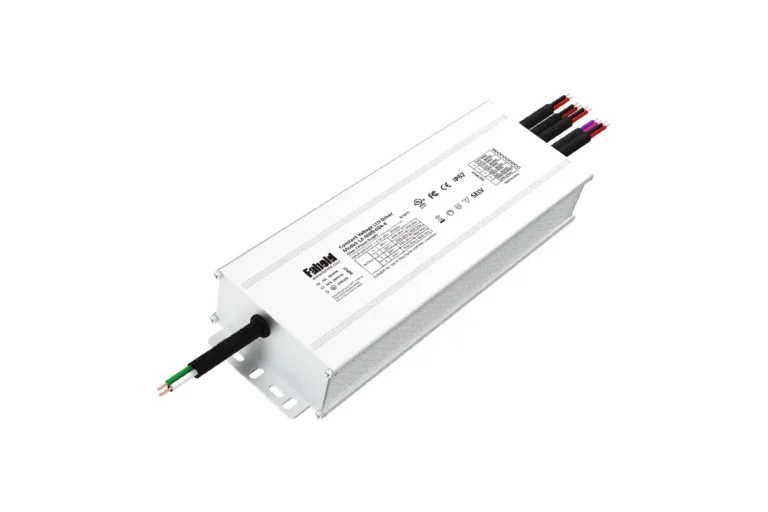
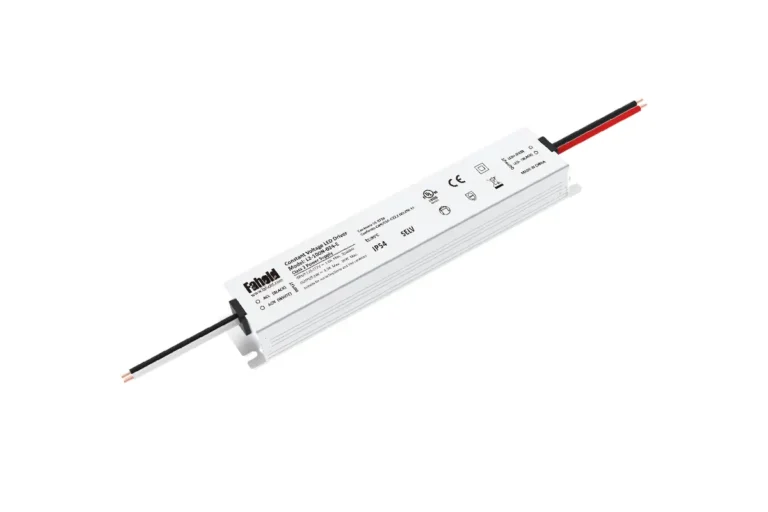
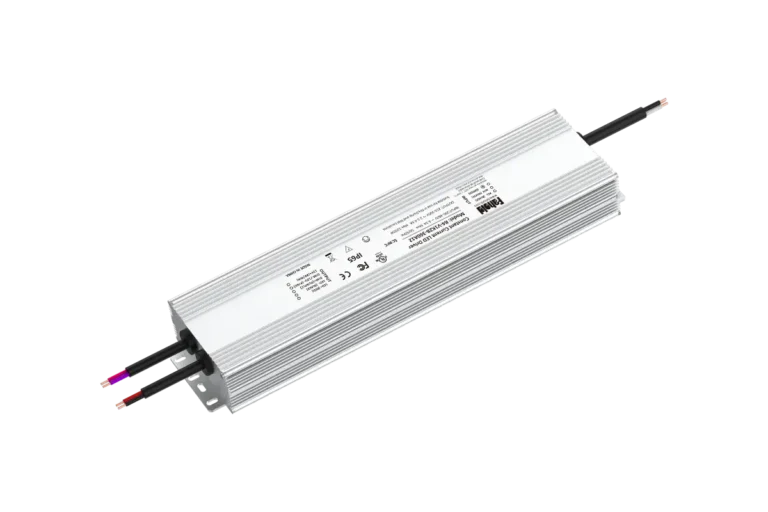
For this type of project, the FAHOLD L2-A Series is the primary Class 2 platform to evaluate.
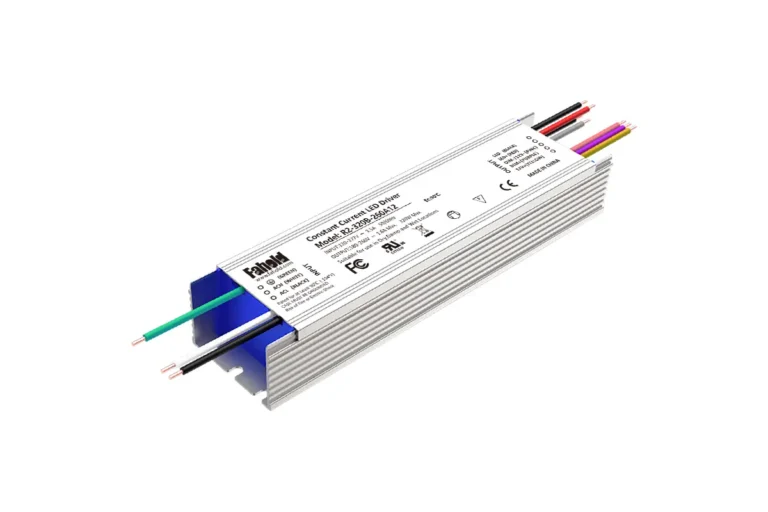
L2-A is an enclosed Class 2 constant-voltage series developed for North American architectural, commercial, and LED strip applications. Current models use 100–277Vac input, provide 12V or 24V output, and include single- and multi-channel configurations.
Depending on the selected configuration, the platform supports:
- 0-10V;
- TRIAC / phase-cut;
- ELV;
- MLV;
- PWM;
- potentiometer control.
The current L2-A technical range spans approximately the 30W through 400W model classes, with output architecture varying by model.
The correct L2-A model should be selected from the actual LED load and output-channel requirement rather than from total wattage alone.
Commercial signage, light boxes, and distributed loads
Signage frequently requires several separate 12V or 24V LED branches.
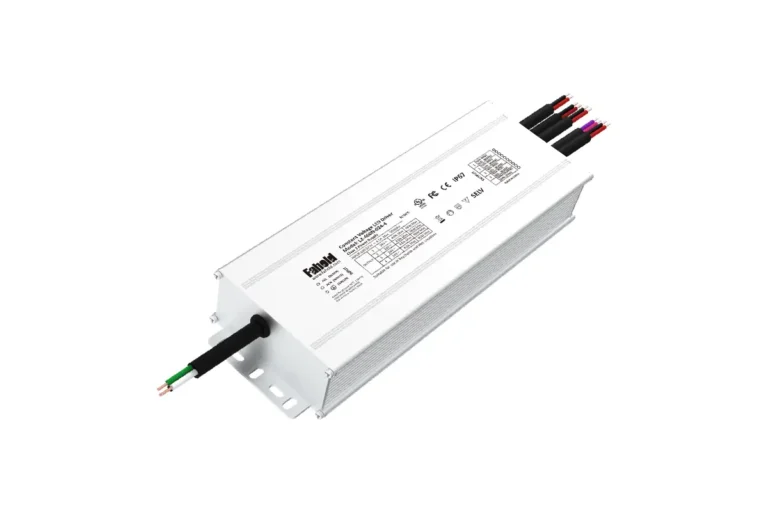
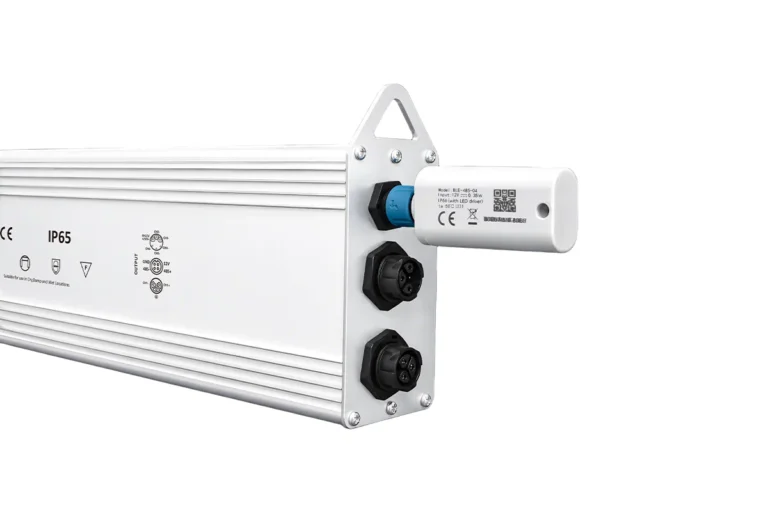
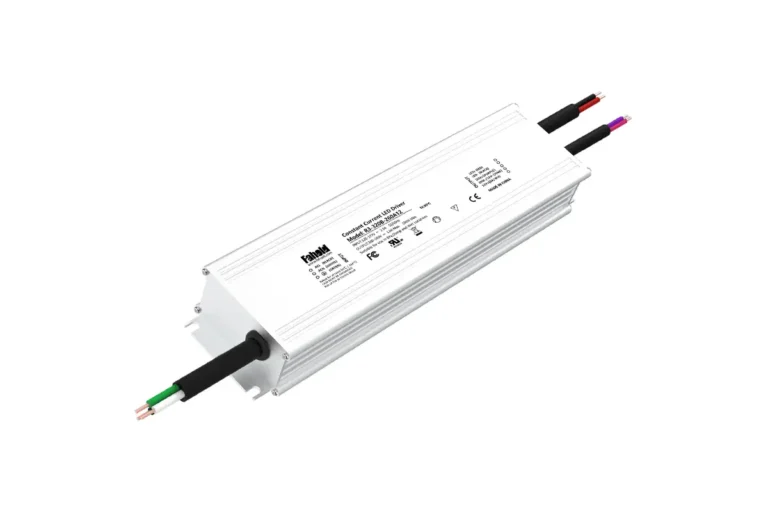
For that application, the FAHOLD L2 Series uses a multi-channel Class 2 architecture developed for:
- LED light boxes;
- billboards;
- illuminated signs;
- distributed signage loads.
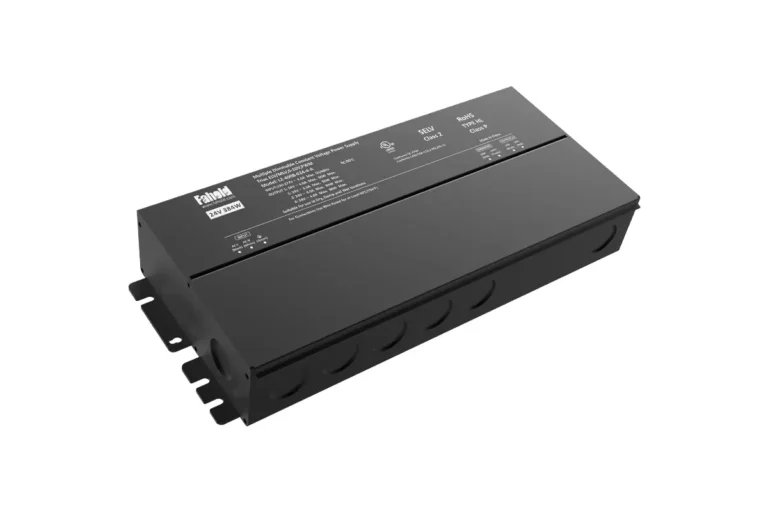
The current series uses 100–277Vac input, 12V / 24V constant-voltage output, and one to five channels depending on model.
For example, current 24V configurations include:
| Example L2 Configuration | Output Architecture | Maximum Output |
|---|---|---|
| L2-060X-024 | 1 × 24V output | 60W |
| L2-100X-024 | 1 × 24V output | 96W |
| L2-200X-024-2 | 2-channel | 192W |
| L2-300X-024-3 | 3-channel | 288W |
| L2-400X-024-4 | 4-channel | 384W |
These total product ratings do not mean all power is delivered through one Class 2 output.
The multi-channel architecture is precisely why the branch configuration must be reviewed during product selection.
For the application layer, see FAHOLD’s Sign Lighting Solutions.
Wet-location or outdoor architectural lighting
If the driver itself needs waterproof protection, the Class 2 requirement must be considered together with the enclosure requirement.
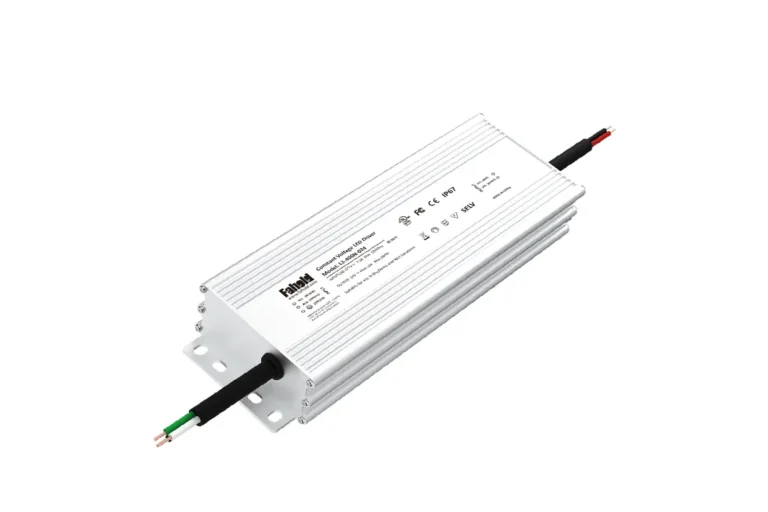
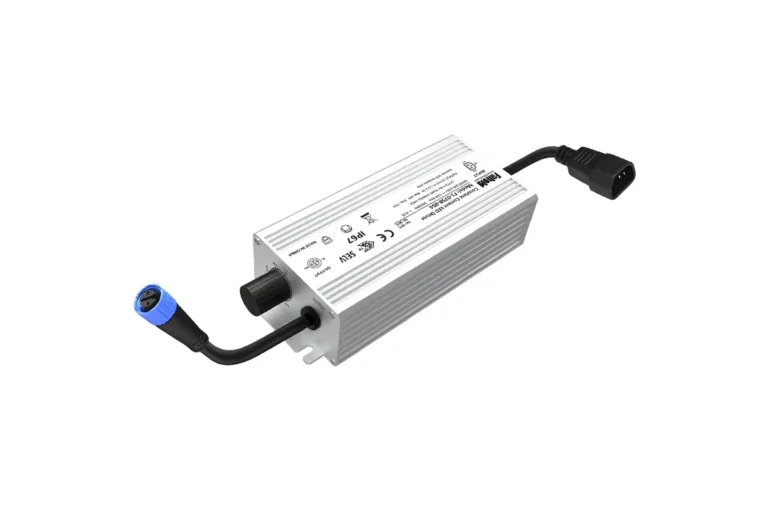
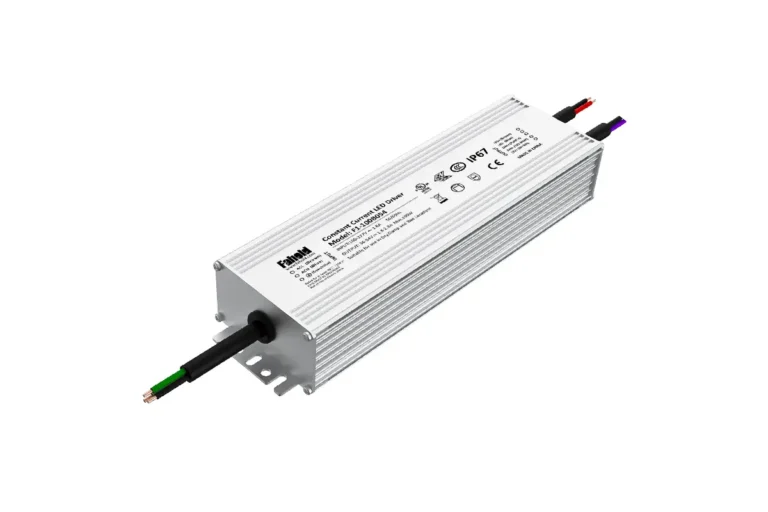
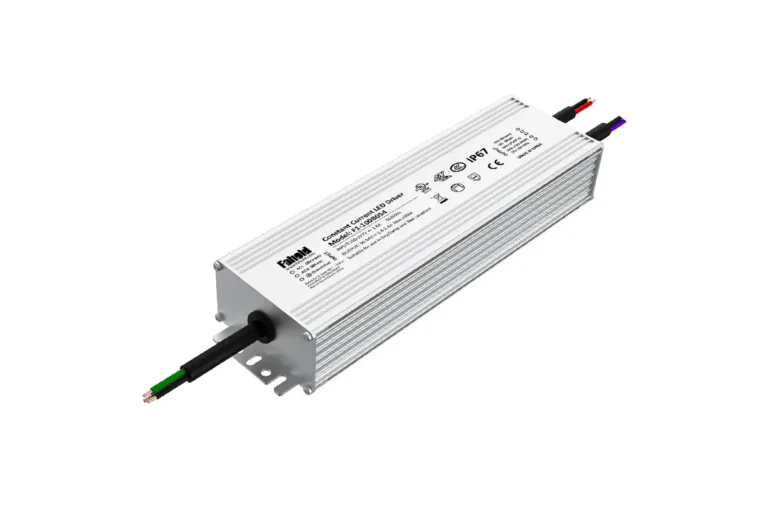
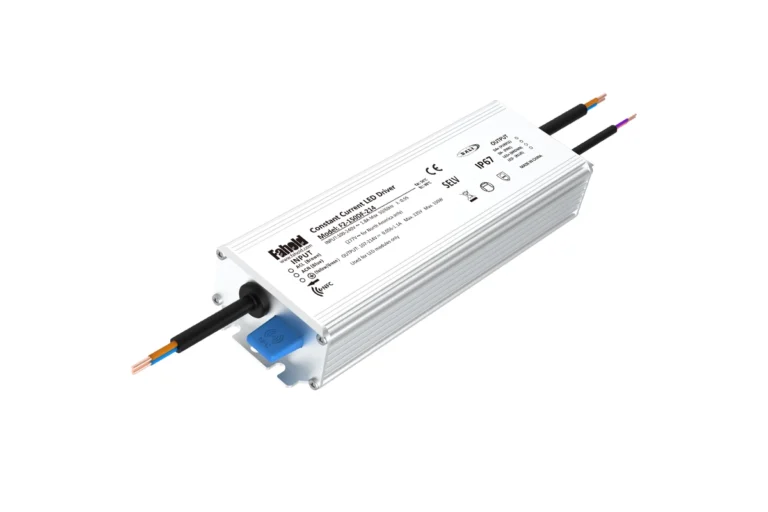
The FAHOLD L2-F Series is an IP67, 12V / 24V constant-voltage platform for North American architectural, commercial, and wet-location lighting.
Current listed models use 100–277Vac input, with compatible configurations supporting multiple dimming methods.
This platform becomes relevant when a project requires both:
- a Class 2-oriented low-voltage architecture; and
- a waterproof driver construction.
Do not select L2-F only because the LED strip is outdoors.
The important question is where and how the power supply itself is installed.
For LED strip system design, see LED Strip Power Supply Guide.
Slim signage and space-constrained installations
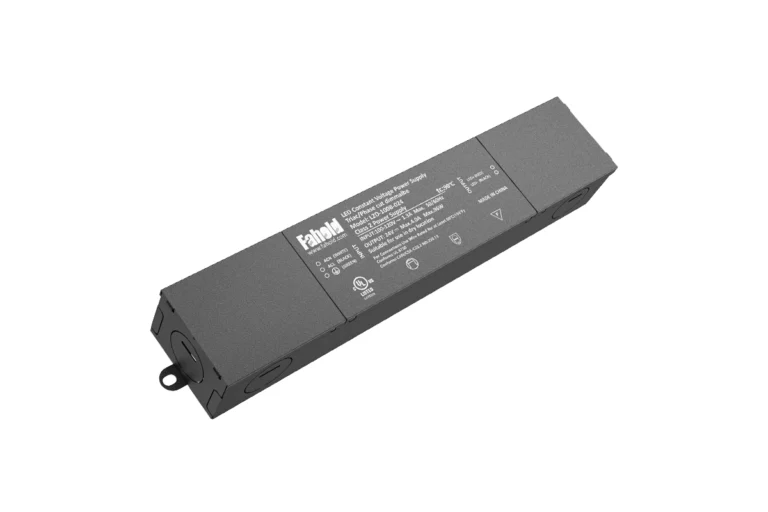
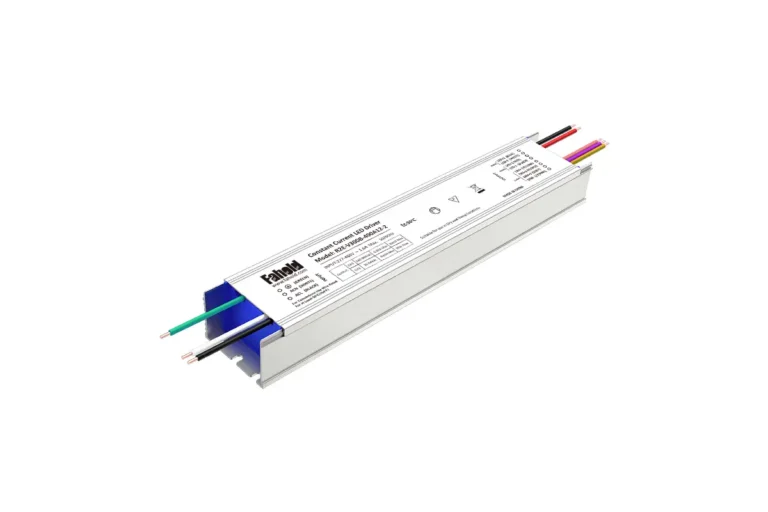
The FAHOLD L2-E Series provides compact 12V / 24V single-output power for channel letters, cabinets, and other space-constrained signage applications.
The current L2-E product information identifies products within the applicable range as UL Class 2 depending on model / configuration, with IP65 / IP67 options also varying by model.
This is a useful reminder that even inside one product family, Class 2 and ingress-protection claims should be verified at exact-model level.
Check the AC Input: 120V and 277V Are Different Project Conditions
Class 2 describes the power-limited output side.
It does not eliminate the need to match the input side correctly.
North American commercial lighting projects may use:
- 120Vac;
- 277Vac;
- or a product platform rated across a wider range such as 100–277Vac.
A fixture or power supply intended only for 120Vac should not be assumed suitable for a 277Vac project.
FAHOLD L2-A, L2, and L2-F current platforms use 100–277Vac rated input, which allows the same product family to be evaluated across common commercial lighting input environments.
However, always verify the exact model and installation requirement.
The procurement specification should state both:
Input requirement: 120Vac / 277Vac / required rated range
Output requirement: 12V or 24VDC Class 2 configuration
This avoids receiving quotations for products that match the LED voltage but not the building electrical system.
Dimming Is a Separate Compatibility Check
A Class 2 output does not tell you how the lighting system is controlled.
The project may require:
- 0-10V;
- TRIAC;
- ELV;
- MLV;
- PWM;
- non-dimming operation;
- another specified interface.
For example, a 24V Class 2 power supply may be electrically suitable for the LED strip but still be unsuitable if the selected configuration does not support the project’s 0-10V control system.
UL 8750 also treats wired control circuits as a specific design consideration for LED drivers, which is another reason not to reduce qualification to output voltage and wattage alone.
If the project specifically uses 24V and 0-10V, see How to Select a 24V 0-10V LED Driver for Commercial LED Strip Lighting.
The sequence should be:
Class 2 requirement → output voltage → load / branch architecture → control interface → environment → exact model qualification
not:
Find a Class 2 label and assume the rest will match.
Class 2 Does Not Replace Load Sizing
Class 2 compliance and power sizing are related, but they are not the same task.
You still need to calculate the actual connected LED load.
For a constant-voltage load:
Power = Voltage × Current
For several branches:
Total connected load = Branch A + Branch B + Branch C + …
Then check:
- maximum simultaneous load;
- usable output capacity;
- per-channel limits;
- product derating;
- operating temperature;
- applicable design margin.
Do not solve a Class 2 branch problem by simply selecting a larger single-output power supply.
Likewise, do not use a generic “80% loading rule” as a substitute for the exact product datasheet.
For a more precise sizing method, see How Much LED Power Supply Headroom Should You Leave?.
Example 1: 24V Architectural LED Strip With 0-10V Dimming
Consider this project:
| Requirement | Project Data |
|---|---|
| Application | Commercial cove lighting |
| Market | United States |
| AC input | 277Vac |
| LED load | 24V constant-voltage strip |
| Total load | 150W |
| Control | 0-10V |
| Installation | Protected architectural location |
| Class 2 | Required |
| Load distribution | Multiple LED branches |
This should not be approached as:
Find a 150W 24V Class 2 driver.
A better approach is:
- confirm the exact branch loads;
- determine how many output circuits are required;
- verify the selected Class 2 output configuration;
- select a 24V constant-voltage platform;
- confirm 277Vac input;
- confirm 0-10V control;
- verify enclosure / installation conditions;
- verify exact certification / listing.
For this project, L2-A is a logical FAHOLD platform to evaluate because the series combines 100–277Vac input, 24V options, Class 2 architecture, multi-channel configurations, and compatible 0-10V dimming options.
The exact model should be selected only after the branch-load schedule is known.
Example 2: 24V Signage With a Higher Total System Load
Now consider:
| Requirement | Project Data |
|---|---|
| Application | Large illuminated sign |
| AC input | 120–277Vac |
| Output | 24V |
| Total LED load | 260W |
| Dimming | Not primary requirement |
| Class 2 | Required |
| Layout | Three distributed sections |
The total 260W load should not automatically push the project toward one unrestricted high-current output.
A three-channel Class 2 architecture may be more appropriate if the load can be distributed correctly across the outputs and the selected configuration meets the project requirement.
For this type of application, the FAHOLD L2 multi-channel Class 2 platform is more relevant than an architectural enclosure selected only by total wattage.
This is why Class 2 projects should be specified using:
load per branch + number of branches + total load
rather than total wattage alone.
Example 3: Class 2 Plus Waterproof Construction
Consider an outdoor architectural system:
- 24V LED load;
- 100–277Vac input;
- 0-10V dimming;
- Class 2 requirement;
- driver installed in a location requiring IP67 protection.
The Class 2 requirement does not answer the enclosure question.
The enclosure requirement does not answer the Class 2 question.
Both have to be satisfied by the candidate configuration.
This is where the FAHOLD L2-F platform becomes a stronger starting point than an indoor architectural series.
Again, the final model requires exact verification of:
- output architecture;
- wattage;
- number of channels;
- dimming configuration;
- IP rating;
- listing / certification.
What to Verify Before Approving a Class 2 LED Power Supply
Before releasing a Class 2 power supply for a North American fixture or project, the approval package should answer more than “Is it UL?”
Use a model-level checklist:
| Verification Item | What to Confirm |
|---|---|
| Manufacturer | Exact company and product family |
| Model number | Exact quoted / sampled model |
| Input | Rated AC input matches project |
| Output voltage | 12V / 24V or required voltage |
| Output architecture | Single or multi-channel |
| Load per channel | Within selected configuration limits |
| Total system load | Matches actual project load |
| Class 2 status | Exact output configuration is evaluated / marked accordingly |
| Safety listing | Exact North American listing / certification required by project |
| Dimming | Exact control interface |
| Environment | Indoor / damp / wet / IP requirement |
| Temperature | Project conditions fit product limits |
| Wiring | Field wiring / junction-box requirement |
| Datasheet revision | Matches approved sample |
| End-use standard | Confirm with project / certification requirements |
If any of these fields changes after approval, the replacement product should be rechecked rather than assumed equivalent.
Replacing an Existing Class 2 Driver Requires More Than Matching 24V
Replacement projects are particularly sensitive.
If the current driver is:
- 24V;
- Class 2;
- 0-10V dimmable;
- 100–277Vac;
- multi-channel;
a replacement should not be approved only because another product shares “24V” and “Class 2.”
Compare:
- AC input;
- regulated output voltage;
- output-current / channel architecture;
- usable power;
- dimming interface and low-end behavior;
- shutdown / control behavior;
- dimensions;
- wiring;
- IP rating;
- certification;
- thermal limits.
If FAHOLD is being evaluated as an alternative to an existing product, send the current model number or datasheet. That gives engineering enough information to compare the actual architecture instead of guessing from a short part description.
Which FAHOLD Class 2 Platform Should You Start With?
Use this as a preliminary routing guide—not as final model approval.
| Project Requirement | FAHOLD Platform to Evaluate |
|---|---|
| Commercial / architectural LED strip, enclosed installation | L2-A |
| Multi-channel signage / light boxes / billboards | L2 |
| Waterproof architectural / wet-location installation | L2-F |
| Slim signage / compact single-output application | L2-E |
If the project requirements are still incomplete, start with How to Choose an LED Power Supply before requesting a model.
If you want to compare FAHOLD’s wider constant-voltage range first, review the FAHOLD Product Catalog.
Have a Class 2 Requirement? Send the Output Architecture, Not Just the Wattage
If your North American project already specifies Class 2, send FAHOLD the information that determines the actual power architecture:
- target market: U.S. / Canada;
- 12V or 24V output;
- total LED load;
- load per branch;
- number of output branches;
- 120V / 277V / required AC input;
- dimming method;
- installation environment;
- IP requirement;
- exact certification requirement;
- quantity and project stage.
For an existing installation, include the current power-supply datasheet.
FAHOLD can then identify whether the project should start with an L2-A, L2, L2-F, L2-E, or another product platform, and narrow the selection to the models that are actually worth evaluating.
Send Your Class 2 Project Requirements to FAHOLD
Find the Right LED Power Supply for Your Project
Share the core electrical and application requirements. We will narrow the available FAHOLD platforms to the options most relevant to your project.