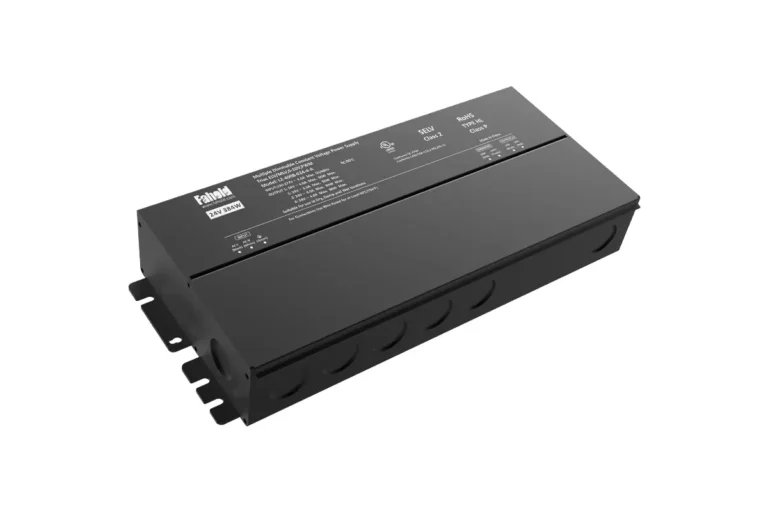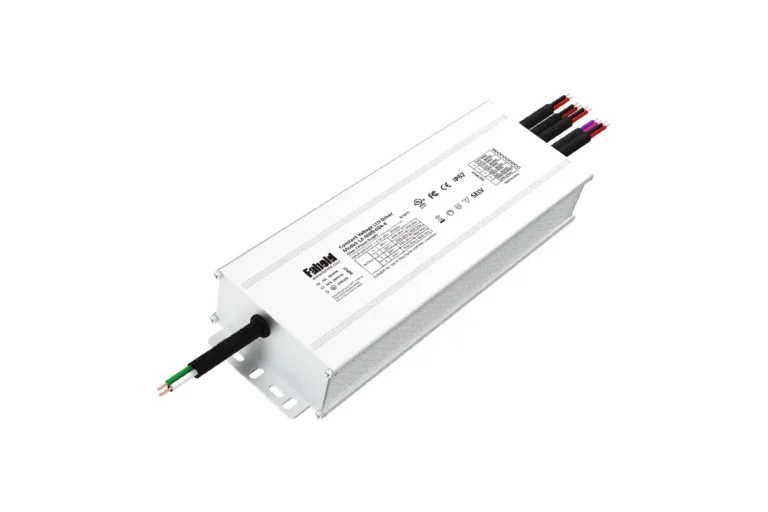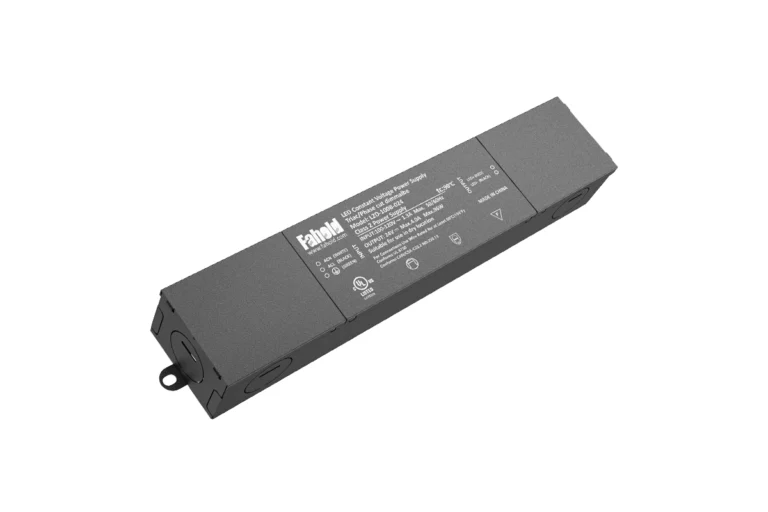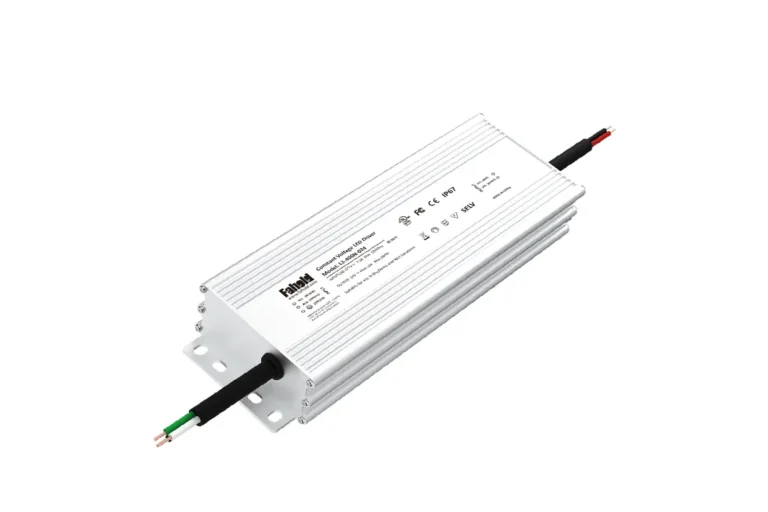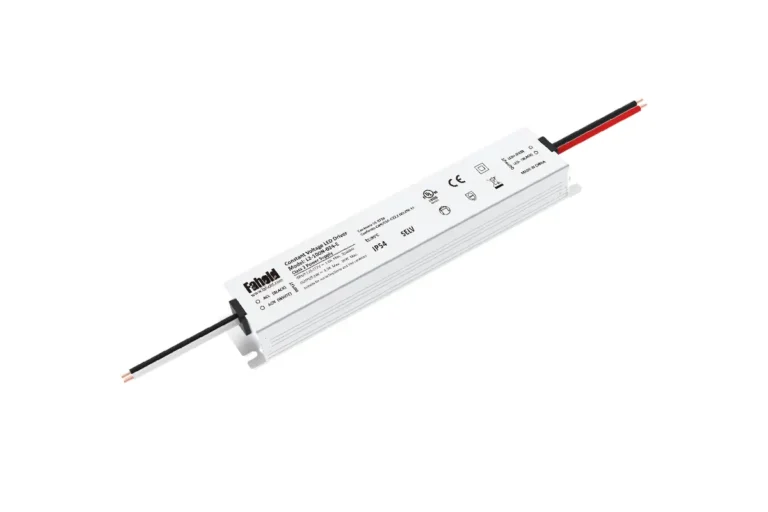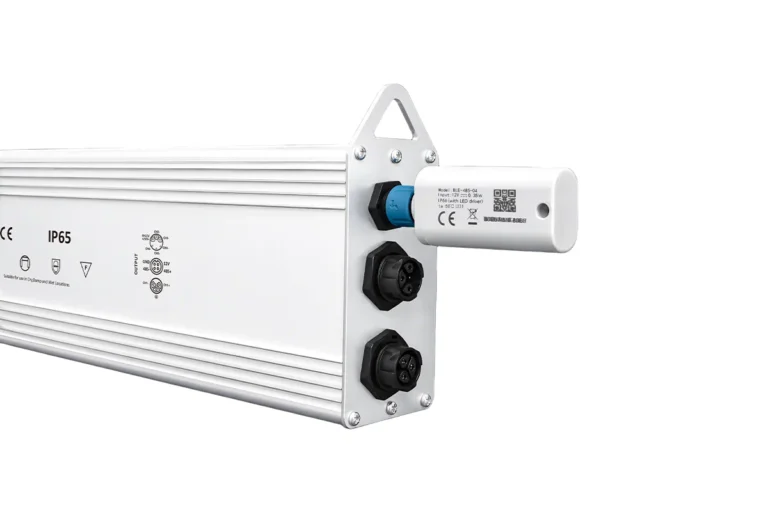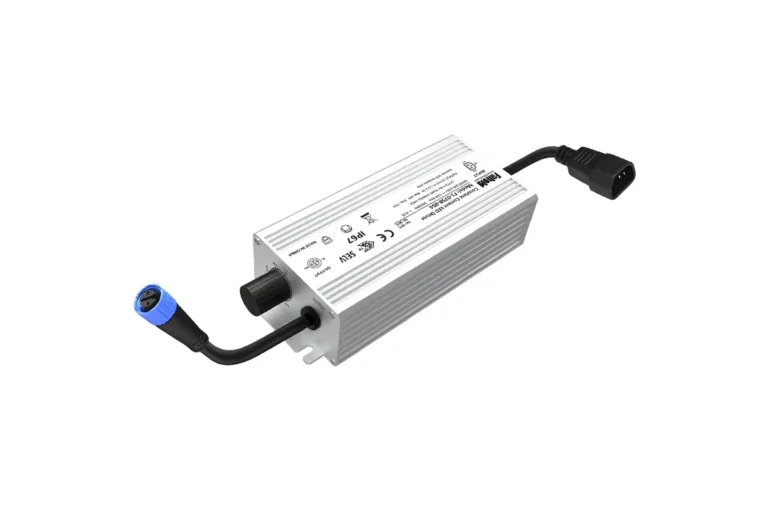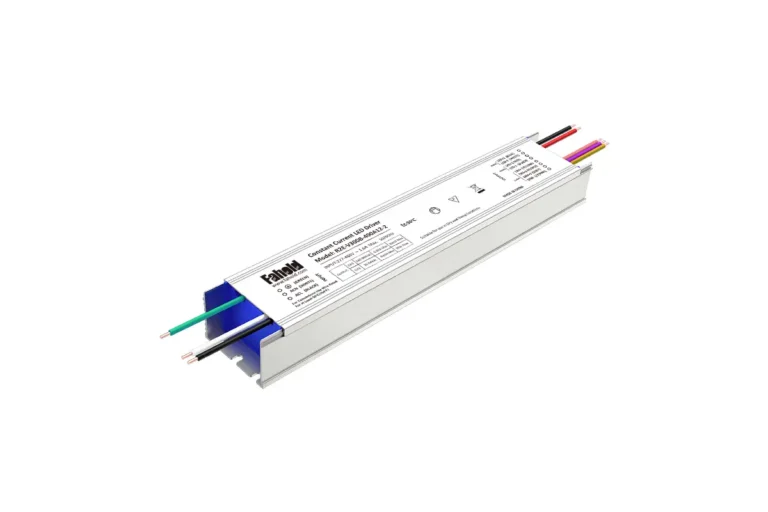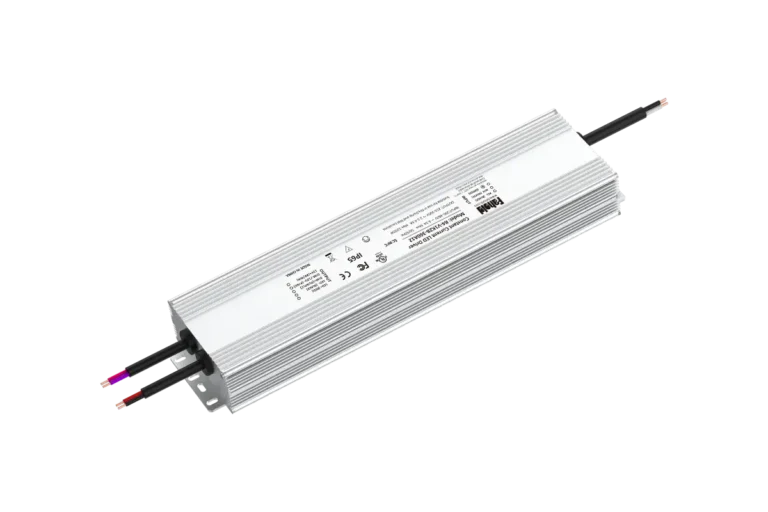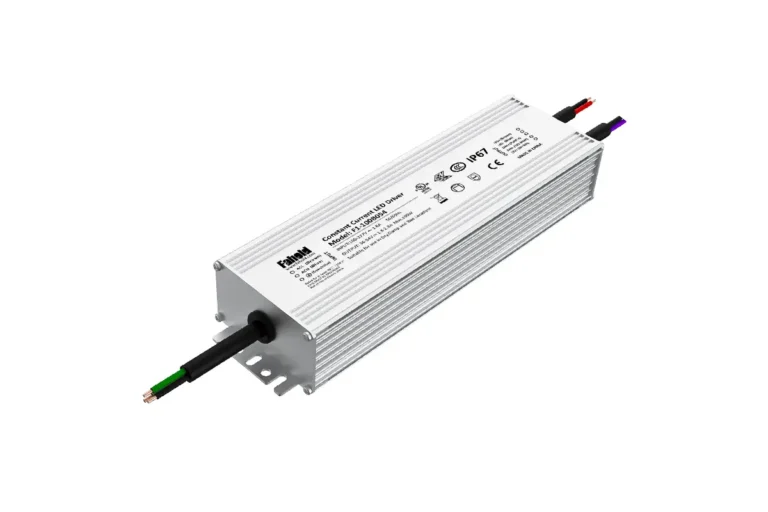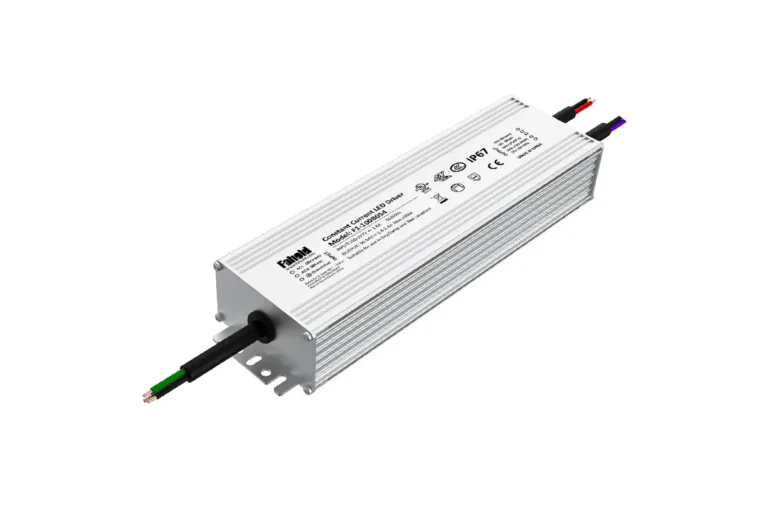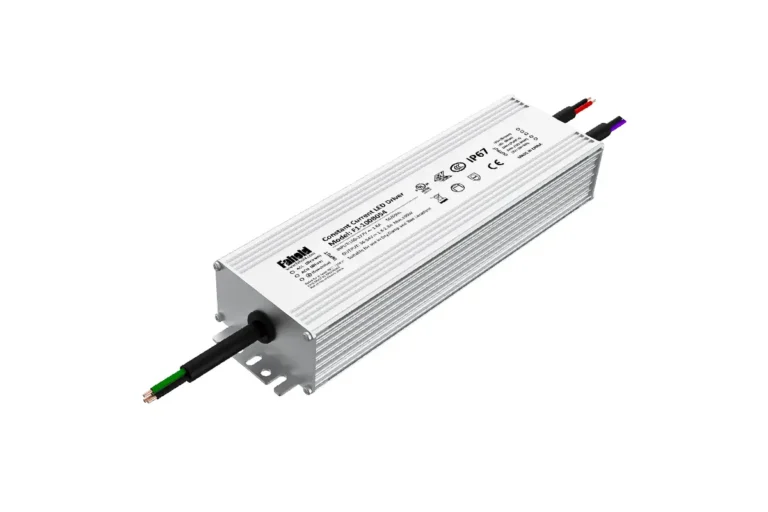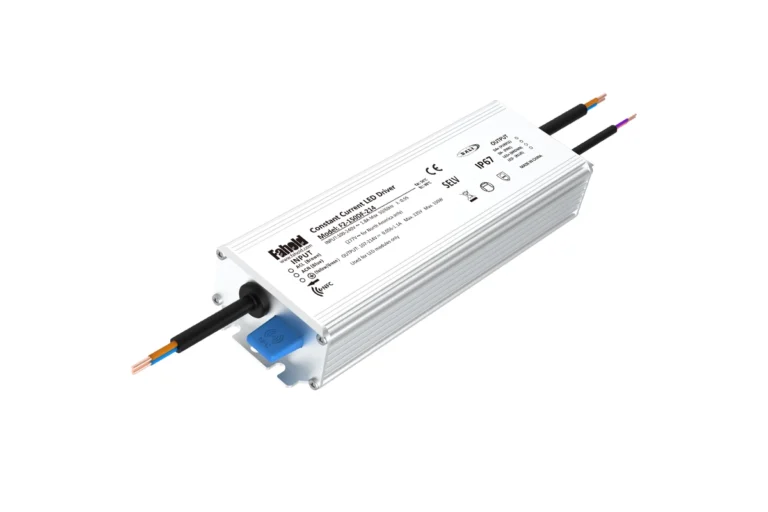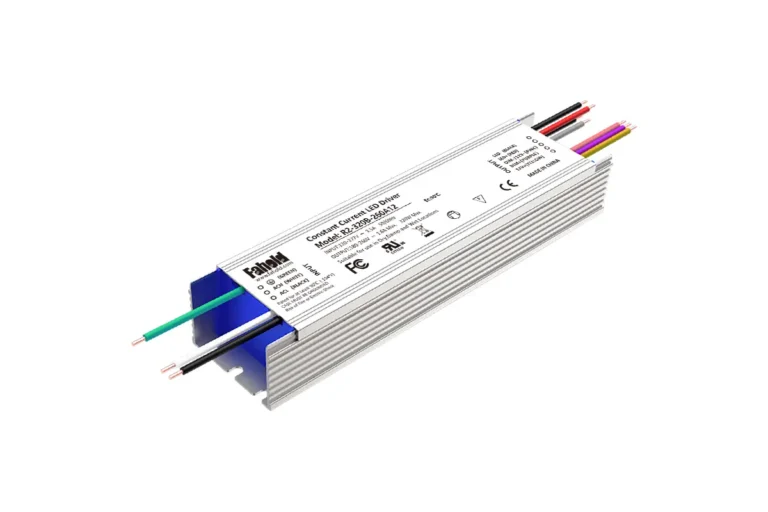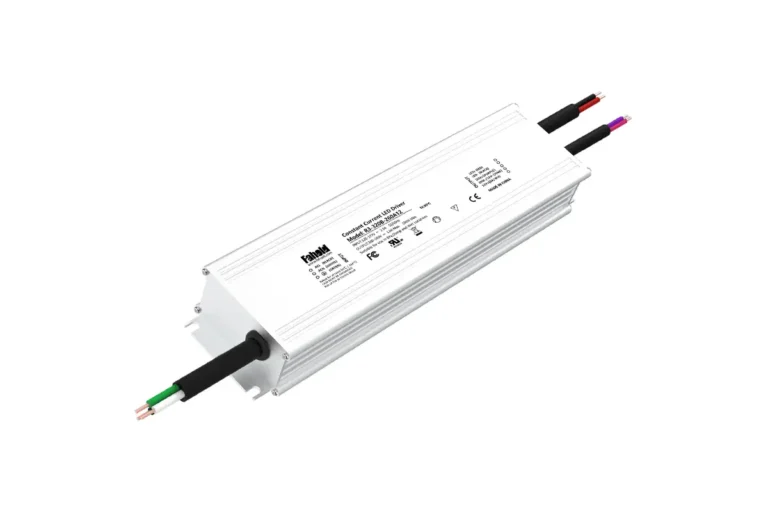
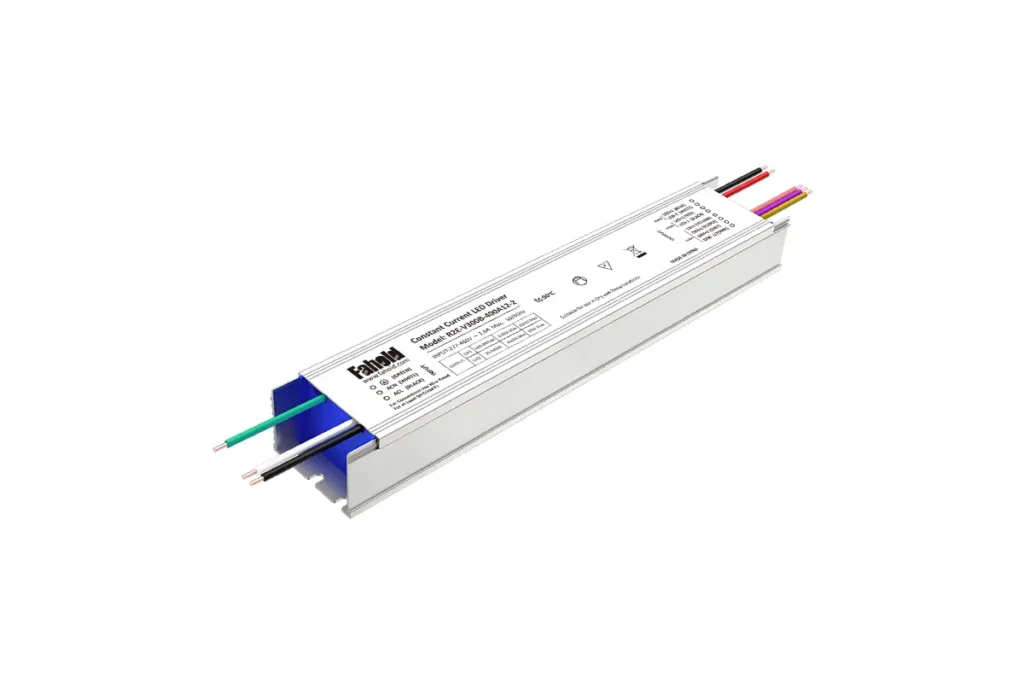
R2-150B-260Z-2 150W Dual-Channel Horticulture LED Driver
- PowerCH1: 150W; CH2: 15W
- Input120-277Vac
- IP RatingIP42 / IP67 (optional)
FAHOLD non-isolated multi-channel grow light drivers are designed for horticulture fixtures that require separate LED outputs and independent lighting control. The range includes compact R2 / R2E-V dual-channel platforms for inter-lighting and under-canopy fixtures together with high-power R6-V drivers for commercial top-grow systems.
Current products cover 150W to 1500W with 120–277Vac, 200–480Vac and 277–480Vac input platforms. Depending on series and configuration, available functions include independent dual-channel control, 0–10V / PWM dimming, dynamic channel power allocation, auxiliary power options and IP42 / IP67 or IP65 enclosure platforms.
Compare the eight models below by input voltage, primary and auxiliary channel requirements, total power, LED output-voltage range and control method. FAHOLD also supports channel-power matching, datasheets, samples and OEM/ODM horticulture-lighting projects.
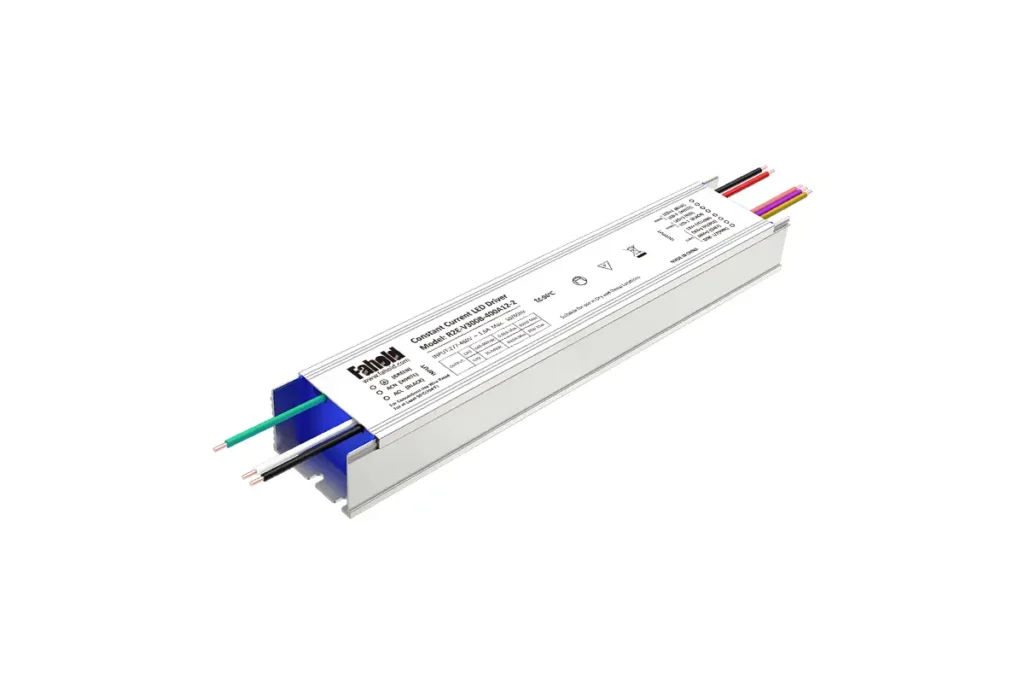
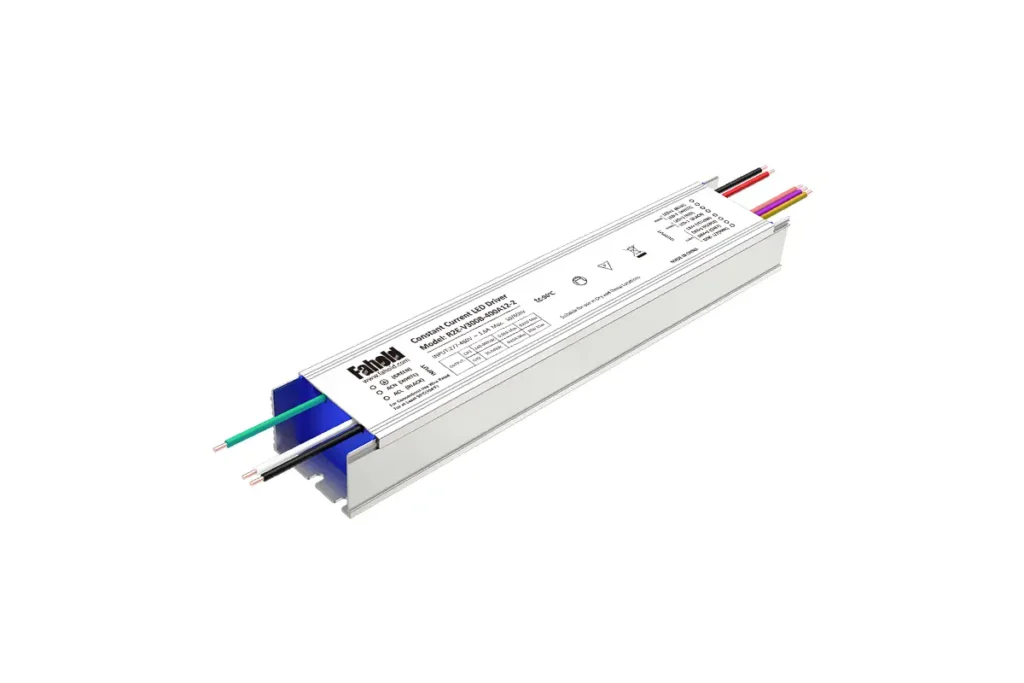
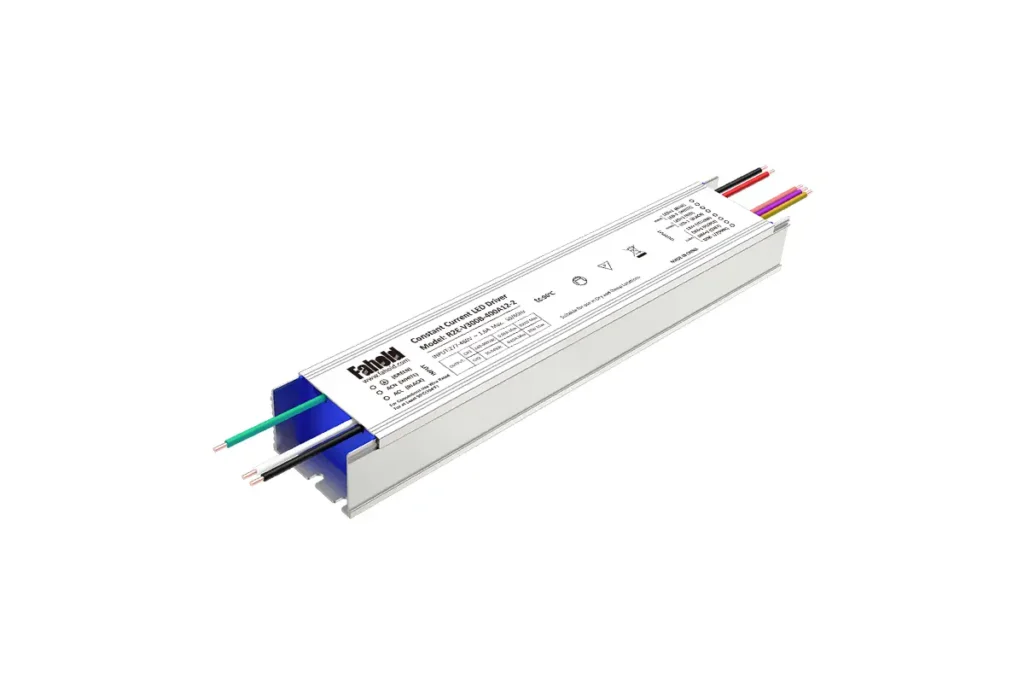
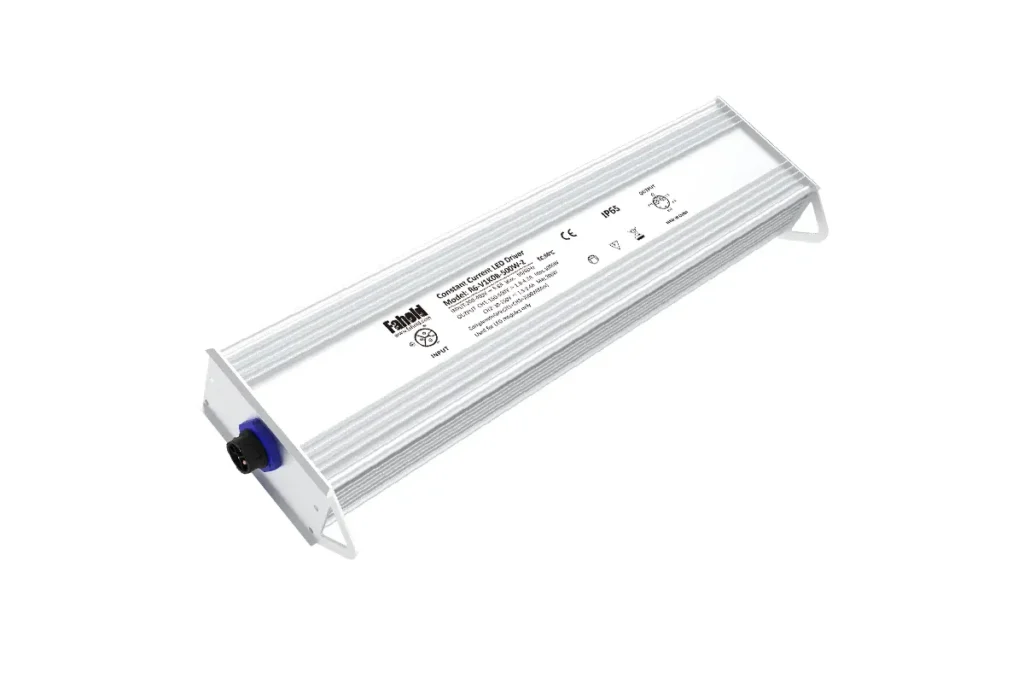
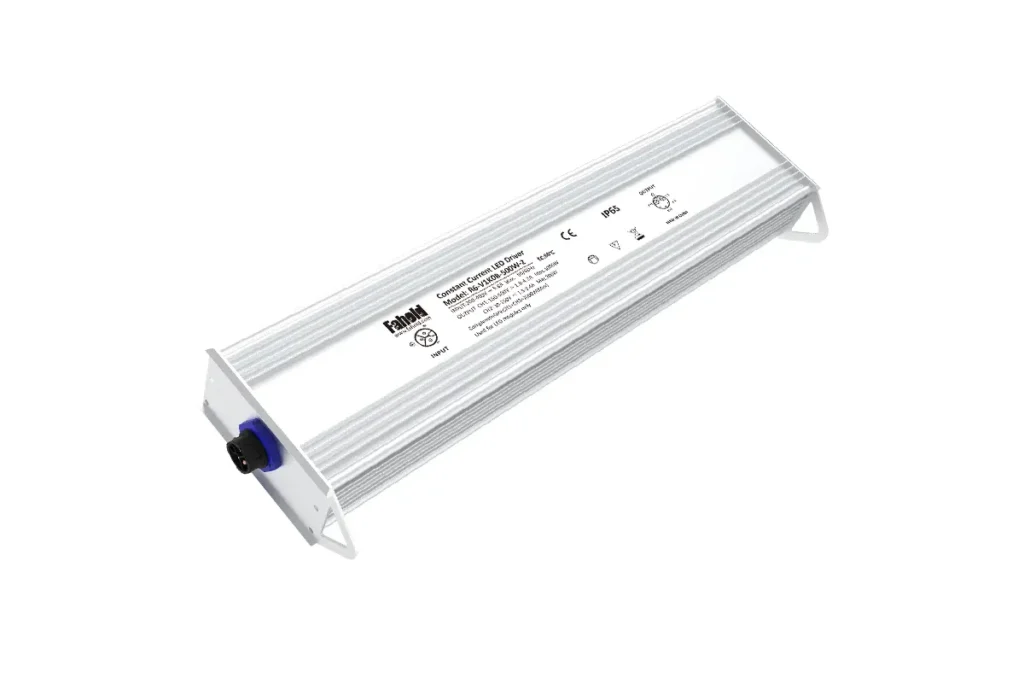
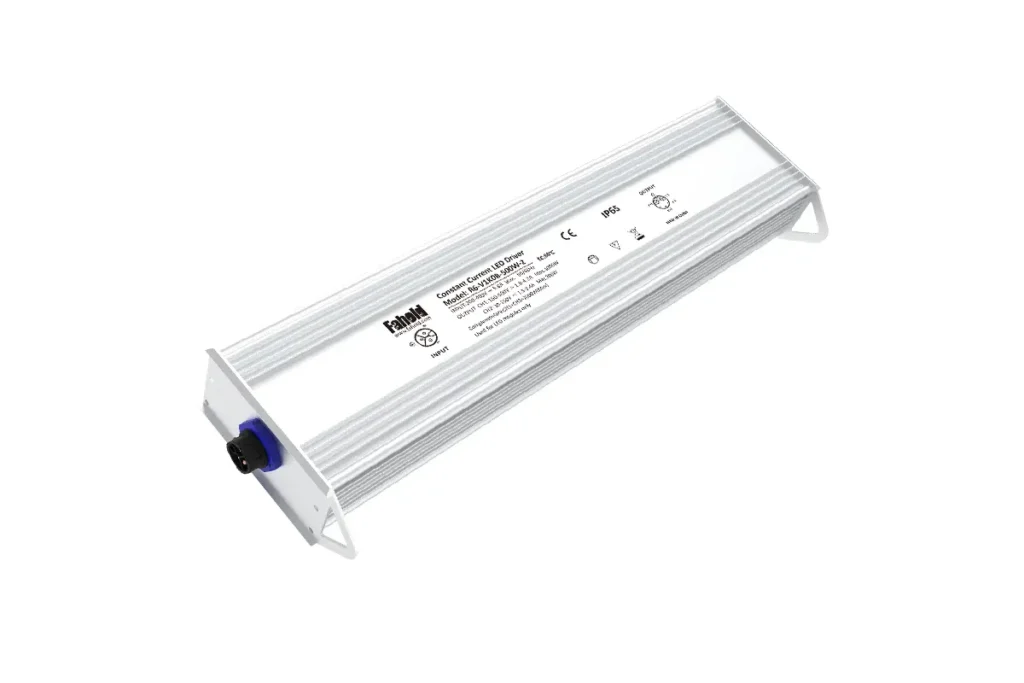
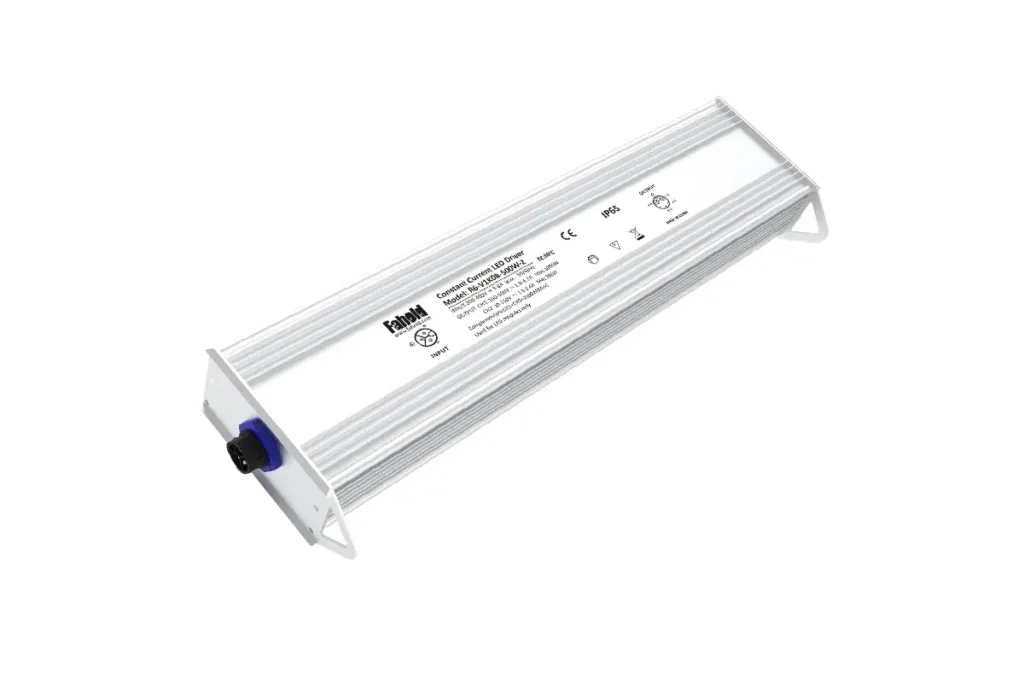
A multi-channel horticulture LED driver provides two or more controlled outputs from one driver platform so separate LED loads, fixture sections or spectral groups can be powered and managed independently. This architecture is useful when a grow-light fixture cannot be treated as one single electrical load.
FAHOLD non-isolated multi-channel grow-light drivers cover both compact dual-output horticulture fixtures and very high-power commercial top-grow systems. The current portfolio includes R2 / R2E-V platforms for inter-lighting and under-canopy applications together with R6-V high-power dual-channel drivers for greenhouse and commercial top lighting.
The correct product should be selected from the electrical requirements of each LED channel, not only from total fixture wattage. Input voltage, channel voltage window, current, channel power, dimming method, enclosure protection and fixture safety architecture must all be considered together.
A dual-channel driver is useful when one horticulture luminaire contains two LED loads that need different electrical operating points or separate control. Examples include a primary growing-light channel combined with a supplemental spectral channel, inter-lighting fixtures with a secondary LED section or commercial top-grow lights that require independent control over two LED loads.
Instead of installing two completely independent drivers, a properly designed dual-channel platform can integrate the two outputs into one power architecture while preserving independent channel control.
The number of channels should be determined by the fixture electrical design. A dual-channel driver is not automatically better than a single-channel driver for a high-power luminaire.
The current FAHOLD non-isolated multi-channel range contains two distinct product directions. Choosing between them should begin with the type of horticulture fixture being developed.
| Platform Direction | Current Power Classes | Rated Input | Typical Application |
|---|---|---|---|
| R2 / R2E-V | 150W–300W primary-channel platforms | 120–277Vac / 277–480Vac | Inter-lighting, under-canopy lighting, linear horticulture fixtures and supplemental LED loads |
| R6-V | 880W–1500W total driver platforms | 200–480Vac / 277–480Vac | Commercial top-grow lights, greenhouse fixtures and very high-power dual-channel horticulture systems |
R2 / R2E-V is the more appropriate direction when mechanical size and compact dual-output integration are important. R6-V is designed for substantially higher fixture power and high-voltage commercial grow-light infrastructure.
The R2 dual-channel horticulture platform is designed for slim lighting fixtures installed close to or within the crop canopy. These applications often require a narrow mechanical format and two electrically different LED loads inside one fixture.
The current 150W R2 dual-channel model uses 120–277Vac input and combines a 180–260Vdc primary channel with a 27–54Vdc auxiliary channel. Channel 1 provides the primary horticulture output, while Channel 2 supplies a lower-power secondary LED load.
Available 120–277Vac products currently include primary-channel power classes of 150W and 240W, with auxiliary-channel power designed for secondary horticulture lighting requirements.
This architecture is particularly relevant to inter-lighting, under-canopy lighting and supplemental horticulture fixtures where a separate secondary LED section must be integrated into a narrow luminaire.
For facilities using higher-voltage AC distribution, the R2E-V dual-channel platform extends the compact horticulture architecture into 277–480Vac systems.
Current R2E-V products include 150W and 300W primary-channel configurations with separate lower-power auxiliary outputs. These products allow compact dual-channel fixtures to be integrated into high-voltage commercial greenhouse or horticulture electrical infrastructure without moving directly to an 880W+ top-grow platform.
This makes R2E-V useful when the fixture itself remains relatively compact but the facility distributes power at 277V, 347V or 480V-class voltages.
R6-V is the high-power branch of the FAHOLD non-isolated multi-channel horticulture portfolio. It is developed for commercial LED top-grow lights and other high-output fixtures requiring two independently controlled constant-current channels.
Current R6-V products include 880W, 1000W, 1200W and 1500W models. The 880W and 1000W platforms use 200–480Vac rated input, while the 1200W and 1500W models use 277–480Vac input.
| R6-V Power Class | Rated Input | Primary Output Platform | Auxiliary Output Platform |
|---|---|---|---|
| 880W | 200–480Vac | P1: 150–500Vdc | P2: 30–150Vdc |
| 1000W | 200–480Vac | P1: 150–500Vdc | P2: 30–150Vdc |
| 1200W | 277–480Vac | P1: 150–500Vdc | P2: 30–150Vdc |
| 1500W | 277–480Vac | P1: 150–500Vdc | P2: 30–150Vdc |
The large difference between the P1 and P2 voltage windows allows the platform to support a high-power primary LED load together with a separate auxiliary LED section using a different electrical architecture.
For detailed model comparison, review the
R6-V Multi-Channel Grow Light Drivers
.
Independent channel control allows the two LED outputs to respond separately rather than forcing both loads to operate at the same intensity.
This is valuable in horticulture fixtures that combine different LED groups or spectral functions. Fixture engineers can design separate control behavior for the primary and auxiliary channels while keeping both outputs within one driver platform.
The required output voltage, current and power for each channel should be specified separately during product selection. Providing only the total fixture wattage is not sufficient to match a dual-channel driver accurately.
Selected FAHOLD dual-channel horticulture platforms support 0–10V and PWM control. These interfaces allow commercial grow-light systems to adjust lighting output according to crop stage, environmental strategy, daylight availability or facility-control schedules.
| Control Method | Typical Application | What to Confirm |
|---|---|---|
| 0–10V | Commercial greenhouse and indoor-grow controllers | Signal range, channel wiring and controller compatibility |
| PWM | Fixture controllers and automated horticulture systems | Signal level, frequency and driver interface requirements |
R6-V supports independent 0–10V / PWM control of its two outputs on compatible configurations. R2 dual-channel products also use compatible 0–10V / PWM control architectures depending on configuration.
Some horticulture fixtures do not require maximum output from both LED channels at the same time. In these systems, fixed power allocation can leave available driver capacity unused.
Compatible R6-V configurations support dynamic channel power transfer, allowing available power to be redistributed between the auxiliary and primary outputs while remaining within the total power limit of the driver.
This can be useful for top-grow luminaires that adjust the balance between primary and supplemental LED sections according to crop recipe or operating mode.
A dual-channel horticulture fixture commonly uses one channel as the main growing-light output and another as an auxiliary or supplemental LED load. The two channels may use different LED string voltages, currents and power levels.
This architecture can support supplemental spectrum, inter-lighting functions or other fixture-specific LED groups without requiring every load to share one electrical operating point.
Channel purpose is determined by the final luminaire design. The driver itself should therefore be matched from the actual electrical requirements of P1 / CH1 and P2 / CH2 rather than from a generic spectrum label.
FAHOLD non-isolated multi-channel products span several commercial AC input platforms.
| Rated Input | Platform Direction | Typical Project |
|---|---|---|
| 120–277Vac | R2 dual-channel | Inter-lighting and compact horticulture fixtures using common commercial AC distribution |
| 200–480Vac | Selected R6-V models | High-power top-grow fixtures operating across broad commercial and industrial voltage systems |
| 277–480Vac | R2E-V and selected R6-V models | High-voltage greenhouse and commercial horticulture infrastructure |
The exact rated-input range must be confirmed for the selected model. Do not assume every product in the multi-channel category supports the same AC supply voltage.
Large commercial cultivation facilities can use 347V or 480V-class electrical distribution to supply lighting systems efficiently across large areas. R2E-V and R6-V provide high-voltage input directions for compatible horticulture projects.
The correct platform depends heavily on fixture power. A compact 150W or 300W multi-channel fixture has very different electrical and mechanical requirements from an 880W to 1500W commercial top-grow luminaire even when both operate from a high-voltage facility supply.
Environmental protection differs between the compact and high-power platforms.
| Platform | Protection Direction | Typical Application |
|---|---|---|
| R2 / R2E-V | IP42 standard with IP67 option on applicable configurations | Inter-lighting, under-canopy and compact horticulture fixtures |
| R6-V | IP65 | Commercial high-power top-grow and greenhouse fixtures |
The driver enclosure rating does not automatically define the environmental rating of the complete grow-light fixture. Connectors, cables, seals, luminaire housing and mounting conditions must also be designed for the intended environment.
Driver efficiency is especially important in grow-light systems because fixtures can operate for long daily cycles. Electrical losses become both energy cost and heat that must be managed by the luminaire and cultivation facility.
Current compact R2 / R2E-V dual-channel models reach typical efficiency values in approximately the 93.5% to 95% range depending on configuration. R6-V models reach approximately 95% to 96% typical efficiency depending on power level and operating point.
Efficiency should be considered together with channel architecture, output voltage, current, ambient temperature and thermal design rather than used as the only product-selection criterion.
Commercial horticulture installations can be exposed to switching transients and demanding electrical conditions. Current R2 dual-channel and R6-V platforms include surge and electrical protection functions designed for professional lighting systems.
R6-V provides DM 8kV / CM 8kV surge protection together with short-circuit, over-current and over-temperature protection. Internal driver protection should still be combined with correct facility grounding, branch-circuit protection and system-level surge design.
Inter-canopy and under-canopy luminaires operate in space-constrained locations close to crop foliage. These fixtures benefit from a narrow mechanical format and a power architecture capable of supplying primary and supplemental LED loads from one driver.
The compact R2 / R2E-V dual-channel platforms are particularly relevant to these applications because they combine separate LED outputs with narrow driver construction and commercial AC input options.
High-power top-grow fixtures require a substantially different power platform. R6-V covers 880W through 1500W and provides separate high-voltage primary and auxiliary outputs for commercial horticulture luminaires.
Independent channel dimming and optional dynamic power transfer provide additional flexibility for top-grow fixtures that use two controlled LED sections within one luminaire.
Choose a multi-channel driver when the grow-light fixture contains two separate LED loads that require different electrical operating points or independent control.
If the complete fixture operates as one regulated LED load, a single-channel driver normally provides the simpler architecture. For those projects, compare
Non-Isolated Single-Channel Grow Light Drivers
.
For the wider non-isolated horticulture portfolio, return to
Non-Isolated Horticulture LED Drivers
.
For application-level selection between top lighting, inter-lighting, vertical farming and other grow-light systems, review
FAHOLD Grow Lighting Solutions
.
Multi-channel horticulture fixtures require more detailed electrical matching than a standard single-output grow light. Each LED channel may have different voltage, current, power and control requirements, while the complete system must remain within the total driver and thermal limits.
FAHOLD supports OEM horticulture-lighting projects with channel-power matching, control-interface evaluation, datasheets, samples and project-specific configuration. When requesting a recommendation, provide the facility AC input, CH1 / CH2 LED voltage ranges, current, power, dimming method, environmental requirements, certification target and expected quantity.
A dual-channel grow light LED driver provides two regulated LED outputs from one driver platform. The channels can be designed for different LED voltage, current or power requirements and can support separate control when the horticulture fixture contains two independently managed LED loads.
A single-channel driver powers one primary regulated LED load. A dual-channel driver provides separate outputs for two LED loads or lighting sections. Choose dual-channel architecture when the fixture requires different electrical operating points or independent control between the two LED sections.
The current FAHOLD non-isolated multi-channel range includes compact R2 / R2E-V products with 150W to 300W primary-channel configurations and R6-V high-power dual-channel drivers from 880W to 1500W.
FAHOLD dual-channel horticulture platforms currently include 120–277Vac, 200–480Vac and 277–480Vac input options depending on model. Select the input range according to the actual electrical distribution used by the grow facility.
FAHOLD R2 and R2E-V dual-channel platforms are designed for compact inter-lighting, under-canopy and supplemental horticulture fixtures. They combine a primary LED output with a lower-power auxiliary channel in a narrow non-isolated driver architecture.
FAHOLD R6-V is designed for high-power commercial top-grow fixtures. The current series includes 880W, 1000W, 1200W and 1500W models with separate P1 and P2 constant-current outputs and independent channel control.
Yes. Compatible FAHOLD dual-channel horticulture drivers support 0–10V and PWM control. R6-V provides independent dual-channel control, while compatible R2 dual-channel configurations also support 0–10V / PWM dimming. Exact wiring and controller compatibility should be confirmed for the selected model.
Dynamic channel power allocation allows available driver power to be redistributed between two LED outputs while remaining within the driver's total power limit. Compatible R6-V configurations can use this function when primary and auxiliary LED loads require different power levels during different operating modes.
Yes. Current R6-V models use either 200–480Vac or 277–480Vac rated-input platforms, making them suitable for compatible high-voltage commercial horticulture systems including 347V and 480V-class facility distribution. Final fixture and certification requirements must still be verified.
Provide the facility AC input voltage plus the minimum and maximum LED voltage, required current and maximum power for both channels. Also specify the dimming method, whether independent channel control or dynamic power allocation is required, environmental requirements and target certification.