Table of Contents
FAHOLD is a 24V LED power supply manufacturer serving commercial, architectural, signage, and linear-lighting projects in North America.
Our 24V constant-voltage product platforms are designed around different project requirements rather than a single generic power-supply format. Depending on the application, FAHOLD can provide 24V solutions with 100–277Vac input, 0-10V or phase-cut dimming, Class 2 output architecture, single- or multi-channel configurations, enclosed junction-box designs, and IP67 waterproof construction.
That matters because two projects that both specify “24V LED power supply” may require completely different products.
A protected commercial cove-lighting installation, an outdoor linear-lighting project, and a multi-channel signage system can all use 24VDC while differing in:
- AC input;
- total and per-branch load;
- dimming interface;
- Class 2 requirements;
- enclosure and IP rating;
- mechanical dimensions;
- wiring architecture;
- certification requirements.
FAHOLD therefore manufactures several 24V constant-voltage product families so engineering and procurement teams can select a platform around the actual fixture or project requirement.
FAHOLD 24V LED Power Supply Platforms at a Glance
For procurement teams comparing 24V LED power supply manufacturers, the fastest way to determine whether FAHOLD belongs on the shortlist is to look at the available product architectures.
| FAHOLD Platform | Typical 24V Application | Key Direction |
|---|---|---|
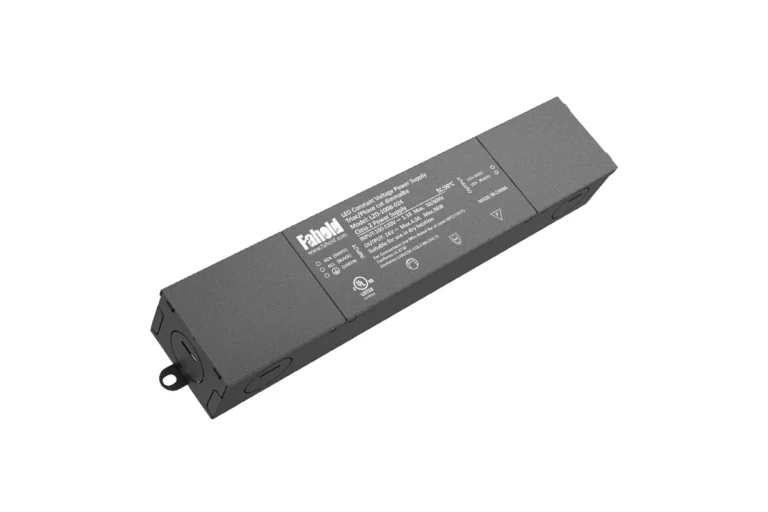
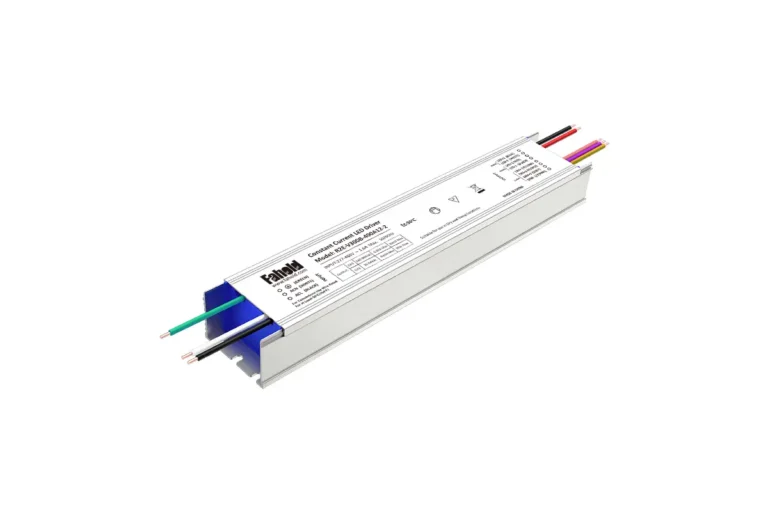
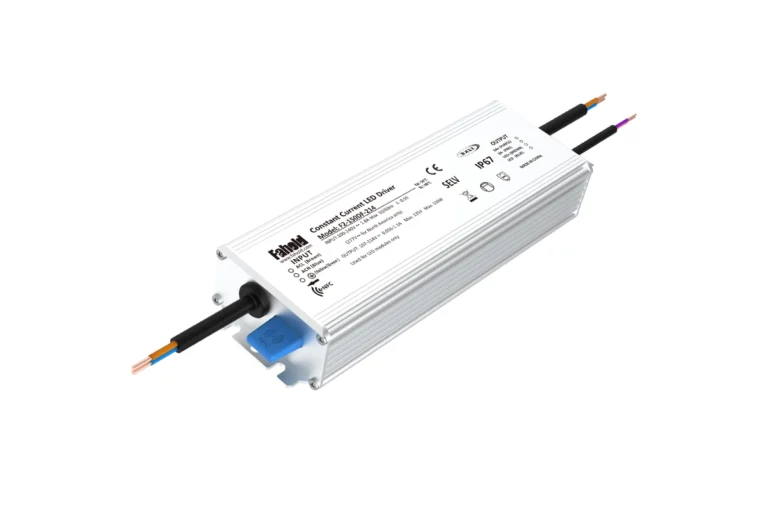
| L2-A Series | Commercial LED strip, cove, architectural lighting | Enclosed Class 2 platform, 100–277Vac, dimming, single/multi-channel |
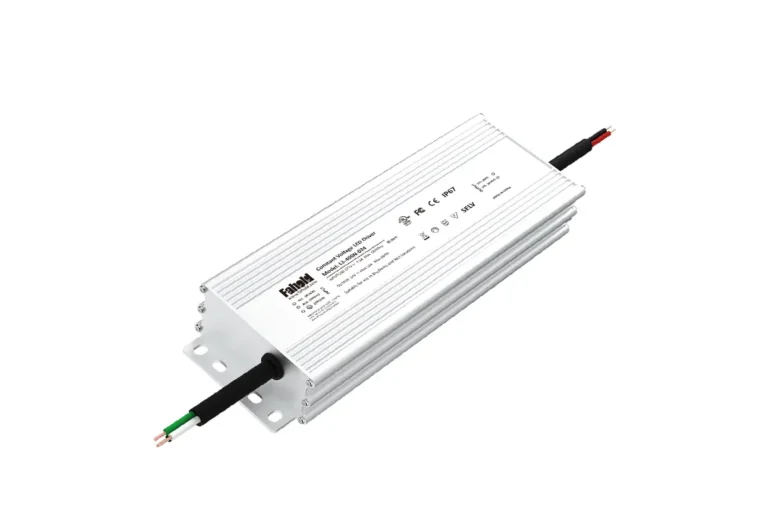
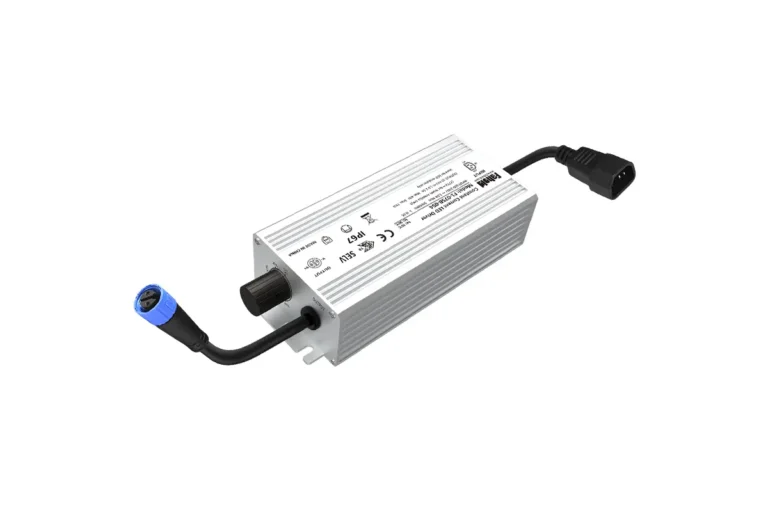
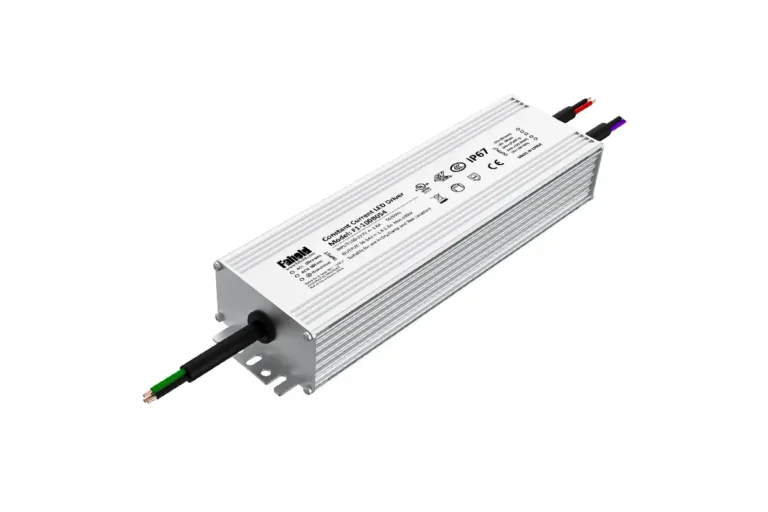
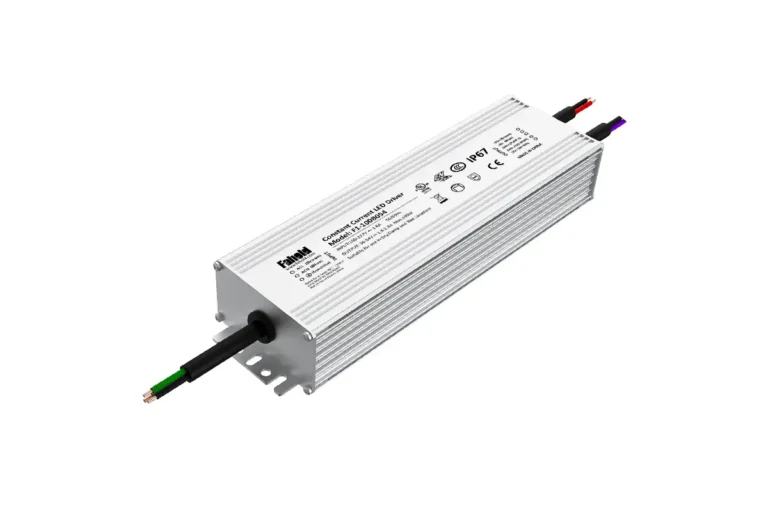
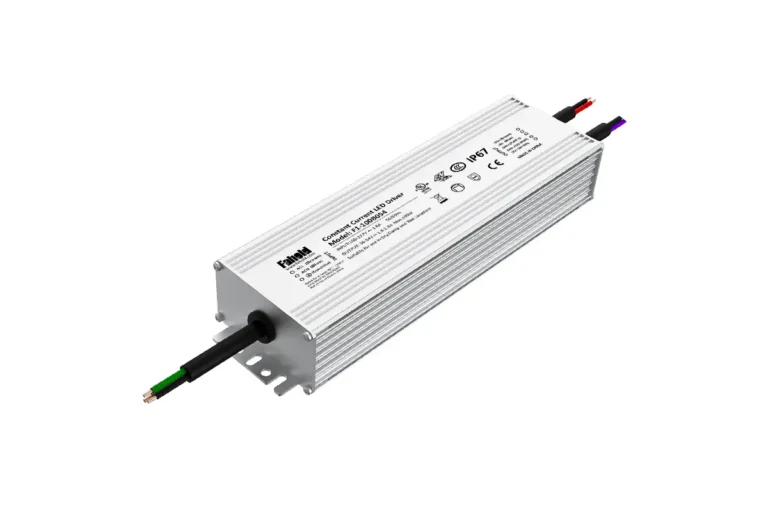
| L2-F Series | Outdoor linear, wet-location architectural lighting | IP67 waterproof platform, 100–277Vac, 24V models, multi-mode dimming |
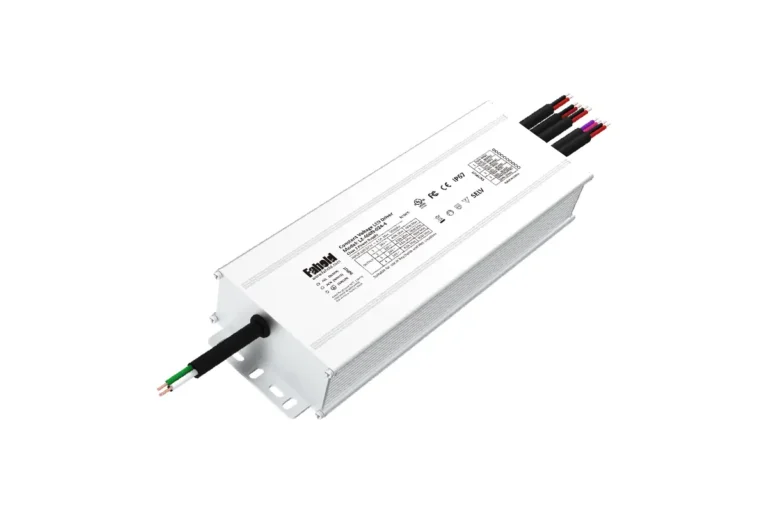
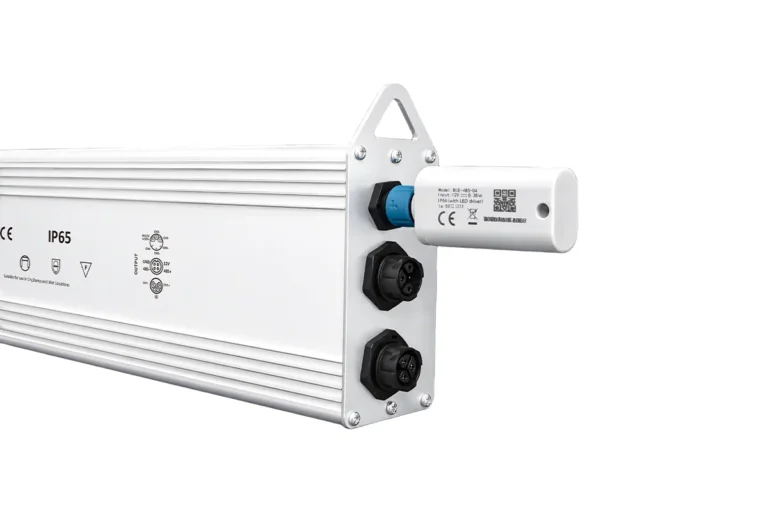
| L2 Series | Light boxes, billboards, signage | Multi-channel Class 2 platform, 100–277Vac, 1–5 channels |
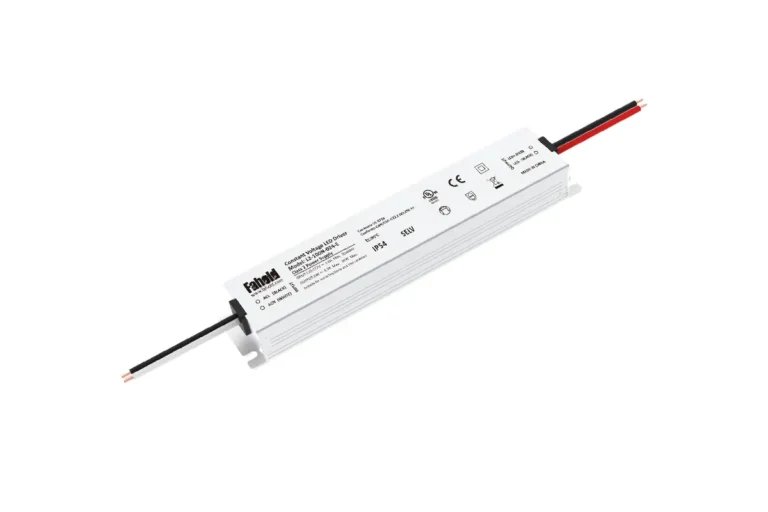
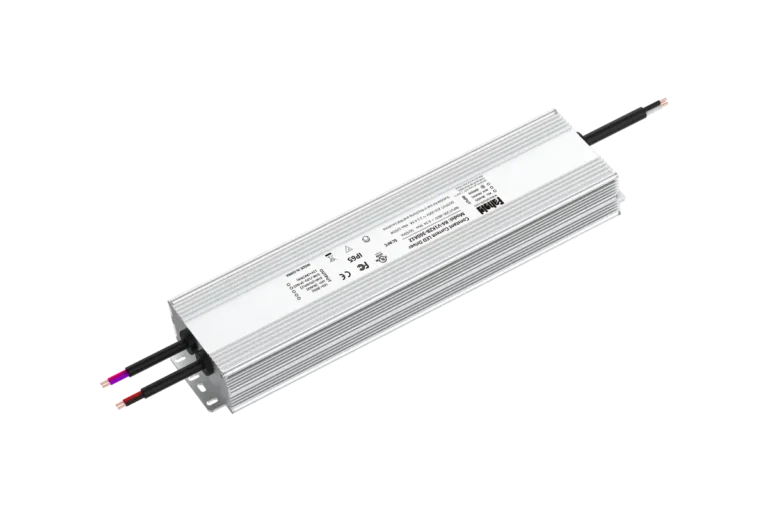
| L2-E Series | Channel letters, displays, compact signage | Slim single-output 24V platform for space-constrained installations |
These are not four versions of the same power supply.They are different product platforms intended to solve different mechanical, environmental, wiring, and control requirements.
For projects where the system voltage itself is still being decided, see 24V vs 48V LED Power Supply: Key Differences before locking the driver specification.
L2-A: 24V Class 2 Power for Commercial and Architectural Lighting
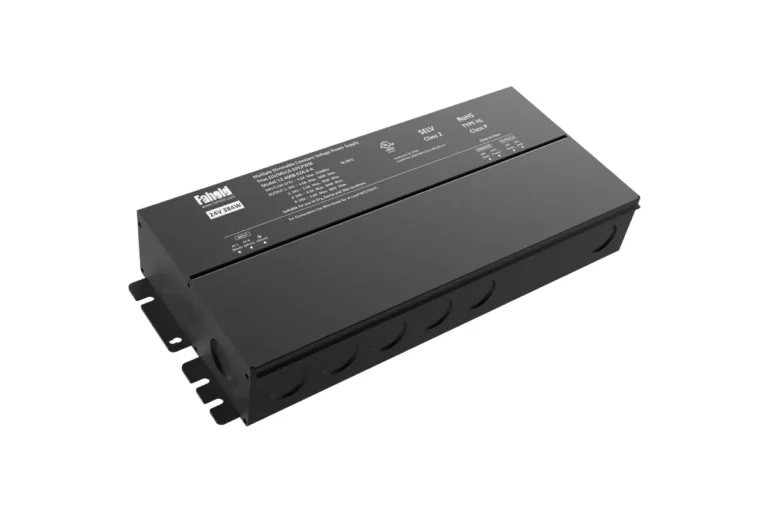
The FAHOLD L2-A Series is one of the main 24V platforms for North American commercial and architectural lighting.
Current L2-A models use 100–277Vac rated input and provide 12V or 24V constant-voltage output in both single-output and multi-channel configurations. The series spans the 30W through 400W model classes, with compatible configurations supporting 0-10V, TRIAC, ELV, MLV, PWM, and potentiometer control.
The platform also uses an integrated enclosure and junction-box architecture for protected field installation.
This makes L2-A relevant when a project combines requirements such as:
- 24V LED strip or linear lighting;
- 120V / 277V commercial branch circuits;
- Class 2 output architecture;
- 0-10V or phase-cut dimming;
- single or distributed multi-channel loads;
- architectural or commercial installation.
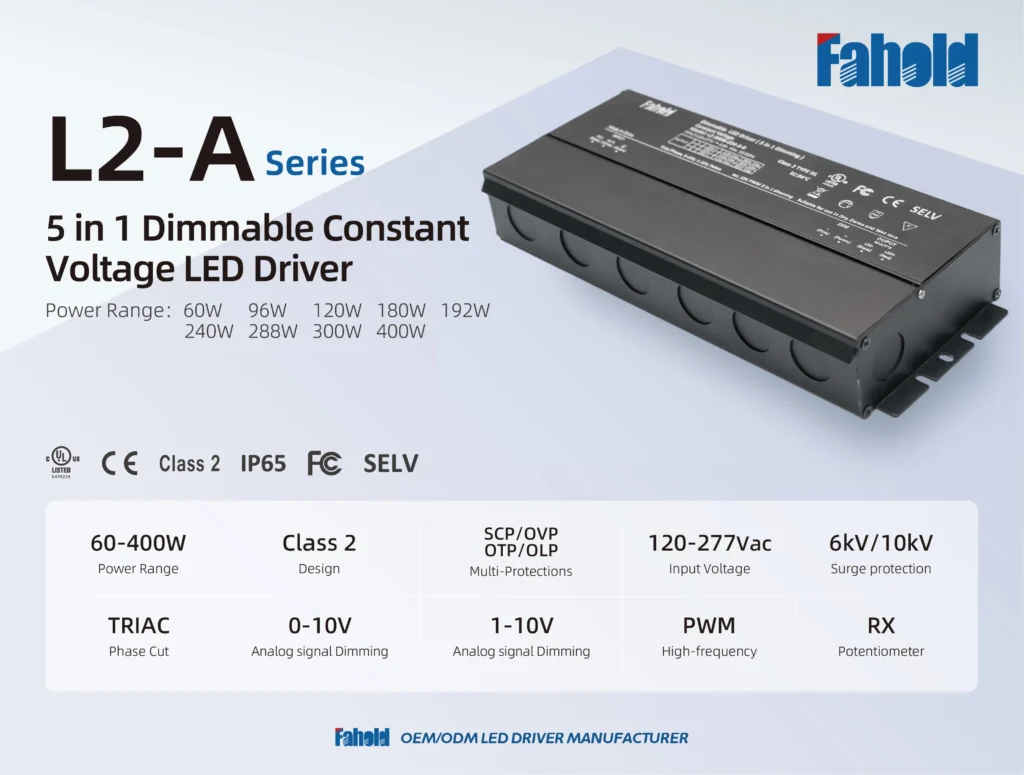
Review the L2-A Class 2 LED Power Supply Series.
Example sourcing scenario
A lighting manufacturer is developing a 24V commercial cove-lighting fixture for the U.S. market.
The project requires:
- 24VDC output;
- 100–277Vac input;
- 0-10V dimming;
- multiple LED load branches;
- Class 2 architecture;
- enclosed installation.
Instead of starting from a generic “200W 24V power supply,” FAHOLD can narrow the evaluation to an L2-A configuration that matches the branch structure, required control method, and real connected load.
The final model still needs to be confirmed against the exact wattage, current per branch, controller, mechanical space, and certification requirement.
L2-F: 24V IP67 Power for Outdoor and Wet-Location Projects
Not every 24V commercial project can use the same enclosure architecture.
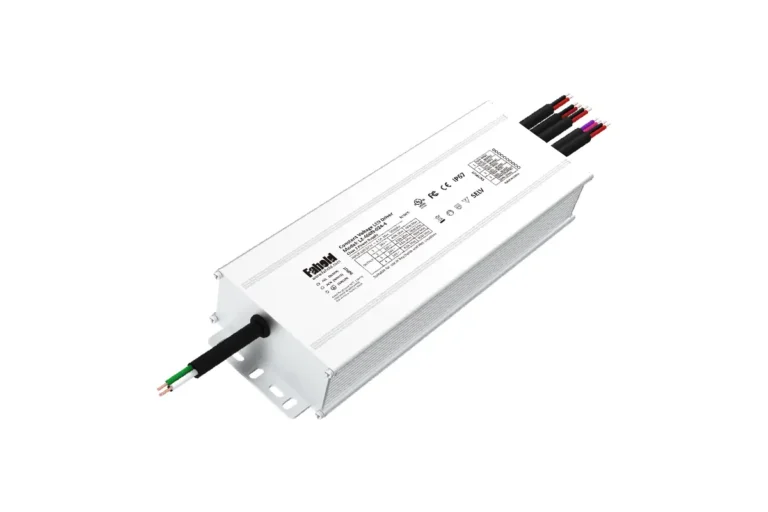
When the driver itself needs waterproof construction, FAHOLD manufactures the L2-F Series as an IP67 constant-voltage platform.
Current 24V L2-F model classes include 60W, 100W, 200W, 300W, and 400W, with 100–277Vac rated input and multi-mode dimming options including 0-10V in compatible configurations.
Typical evaluation scenarios include:
- outdoor linear lighting;
- façade and architectural lighting;
- landscape-related low-voltage lighting;
- wet-location LED strip systems;
- projects where the driver cannot rely only on a separate protected enclosure.
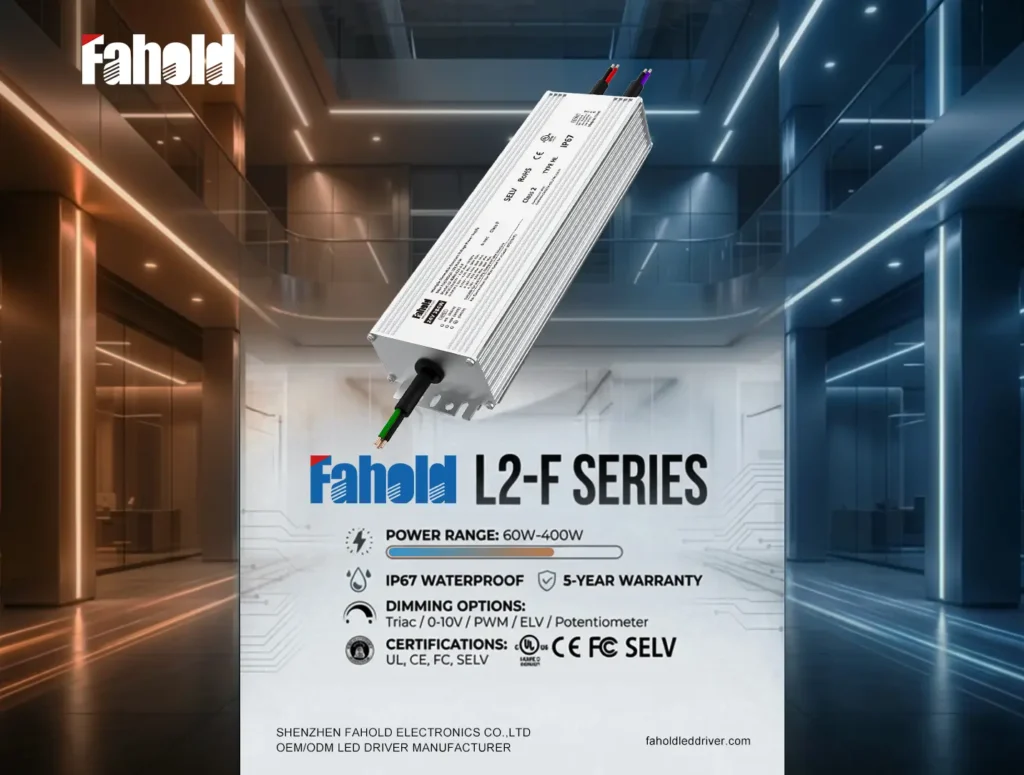
Review the L2-F IP67 Dimmable LED Power Supply Series.
The distinction between L2-A and L2-F is important for sourcing.
If the driver will be installed inside a suitable protected architectural enclosure, an enclosed Class 2 platform may be the better direction.
If the driver itself is expected to tolerate an IP67-type environment, the waterproof platform becomes more relevant.
The correct series depends on the driver installation environment, not simply on whether the LED strip happens to be installed outdoors.
For the wider system-design issue, see LED Strip Voltage Drop Explained, especially when long low-voltage runs and remote driver placement are part of the project.
L2: Multi-Channel 24V Class 2 Power for Signage
Commercial signage often creates a different requirement from architectural cove lighting.
FAHOLD’s L2 Series is a 12V / 24V multi-channel constant-voltage platform developed for North American:
- light boxes;
- billboards;
- illuminated signs;
- distributed signage loads.
Current models use 100–277Vac rated input and provide one to five output channels depending on configuration.
For 24V systems, the multi-channel architecture allows a project to distribute the load across separate output branches rather than treating the entire sign as one unrestricted output.
Review the L2 Multi-Channel Class 2 Series.
This is particularly useful when the procurement requirement is not simply:
We need 24V and 300W.
but:
We need a 24V platform that can distribute several sign sections through controlled output branches.
That is a fundamentally different product requirement.
For a broader view of FAHOLD’s signage portfolio, see LED Sign Power Supply Solutions.
L2-E: Slim 24V Power for Space-Constrained Signage
Some 24V projects are limited less by total wattage and more by installation space.
The FAHOLD L2-E Series is a slim single-output platform for channel letters, display cabinets, illuminated signs, and other installations where the power supply must fit into a narrow mechanical envelope.
The current L2-E range includes 24V model classes from 20W through 150W.
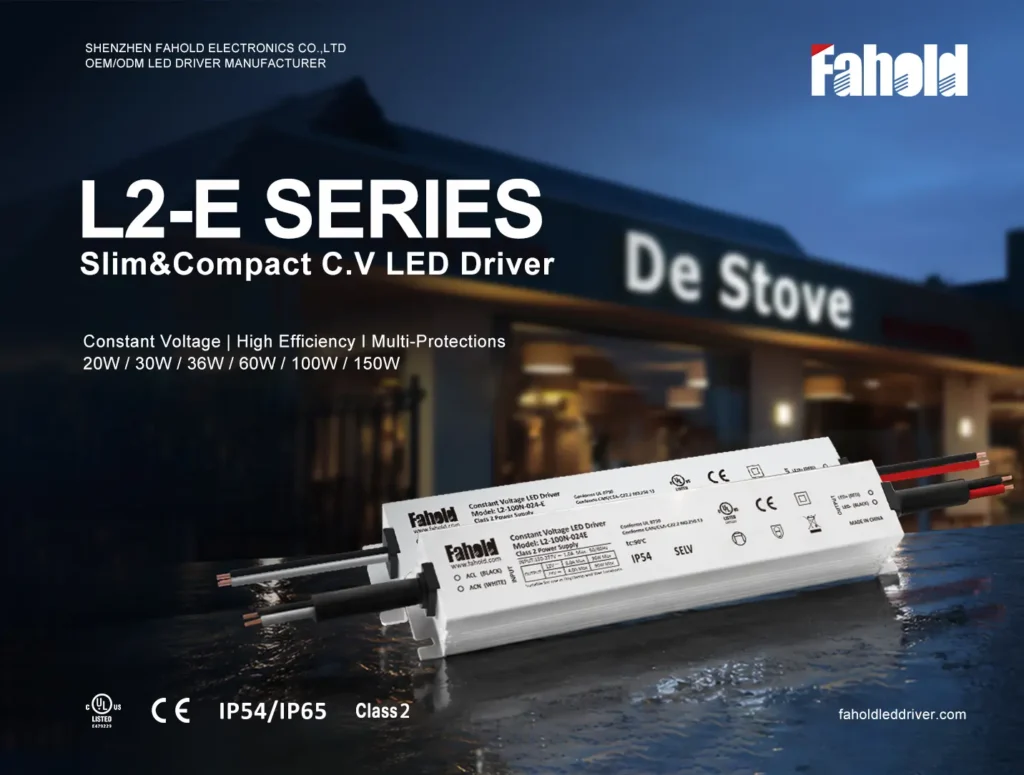
Review the L2-E LED Sign Power Supply Series.
This gives FAHOLD a different 24V sourcing path for projects where:
- the load is relatively localized;
- one regulated output is preferred;
- enclosure width is limited;
- signage packaging is more important than multi-channel architecture.
Why North American Projects Often Start With 100–277Vac Input
The DC output requirement may be 24V, but the AC input side is equally important when qualifying a manufacturer.
Commercial projects in North America commonly involve 120V and 277V branch circuits. For lighting manufacturers selling into different project environments, qualifying a 24V driver platform with 100–277Vac rated input can simplify product planning and sourcing.
FAHOLD’s L2-A, L2-F, and L2 platforms currently provide 100–277Vac input coverage.
That does not mean every 24V project needs wide-input operation.
It means our engineering team can start with the actual project input specification rather than assuming that all 24V products use the same AC platform.
When requesting a quote, we recommend specifying both:
AC input requirement: e.g. 120Vac / 277Vac / 100–277Vac
DC output requirement: 24V constant voltage
This prevents two nominally similar “24V drivers” from being compared when their intended electrical environments are different.
0-10V, Phase-Cut, and Other Dimming Requirements
A 24V LED power supply manufacturer also needs to understand the control architecture around the driver.
“Dimmable” is not a sufficient specification for a commercial project.
North American projects may require:
- 0-10V;
- TRIAC / forward phase;
- ELV / reverse phase;
- MLV;
- PWM;
- another project-specific control method.
FAHOLD’s L2-A and L2-F platforms provide multiple dimming configurations, while the L2D Series is specifically positioned for TRIAC / ELV / MLV phase-cut applications.
For 0-10V projects, ANSI C137.1 defines the interface method and performance requirements used to evaluate interoperability between dimmable drivers and controls. See the NEMA / ANSI C137.1 scope.
From a manufacturer-selection perspective, the relevant question is therefore:
Can this supplier provide the exact 24V electrical platform and the control method required by the fixture?
rather than:
Does this supplier make dimmable drivers?
If your project team is still defining the complete LED strip power architecture, see the LED Strip Power Supply Guide for voltage, wattage, wiring, dimming, and environment checks.
North American Compliance Should Be Verified at Model Level
FAHOLD manufactures products for multiple global markets, but certification should never be assumed from a brand-level logo alone.
For a North American project, the certification status of the exact model and configuration should be confirmed during the selection and quotation process.
UL Solutions identifies UL 8750 as the standard for LED equipment used in lighting products, including LED drivers and related control interfaces. See UL Solutions lighting standards and certification guidance.
UL also documents specific requirements related to LED drivers with wired controls such as 0-10V and DALI. See UL 8750 wired-control guidance.
When FAHOLD receives a project requirement, the relevant information should include:
- target country / market;
- required certification;
- Class 2 requirement;
- selected model;
- dimming configuration;
- output architecture.
This allows the commercial and engineering teams to evaluate the correct product configuration before sample approval or volume quotation.
FAHOLD Is the Manufacturer, Not Just a Product Listing
For procurement teams comparing suppliers, product specifications are only one part of the decision.
The second question is whether the company behind the product can support engineering qualification and repeat production.
FAHOLD has focused on LED driver development since 2011. According to the current company manufacturing profile, FAHOLD operates a self-owned 14,000 + m² Foshan manufacturing base with three modern production lines, automated and semi-automated operations, in-line testing, automatic aging equipment, ATE testing, and quality-control processes.
The company currently reports:
- 400+ employees;
- 60+ intellectual-property assets;
- customers across 50+ countries and regions;
- more than 15 years of R&D experience;
- 3M+ annual high-power LED driver manufacturing capacity at company level.
These figures describe FAHOLD’s overall manufacturing system; they should not be interpreted as the production volume of one individual 24V model.
Review FAHOLD manufacturing base and company capabilities.
From Standard 24V Models to OEM / ODM Projects
Some projects can use an existing FAHOLD model without modification.
Others require a standard electrical platform with controlled OEM changes.
Depending on the project and the selected product family, customization discussions may involve:
- electrical parameters;
- cable length;
- connectors;
- housing details;
- label and logo;
- packaging;
- dimming functions;
- project-specific testing.
The useful starting point is to separate the requirements into two groups.
1. Non-negotiable electrical requirements
For example:
- 100–277Vac input;
- 24VDC output;
- 160W actual LED load;
- 0-10V control;
- Class 2 requirement;
- IP67 requirement.
2. OEM / mechanical requirements
For example:
- cable length;
- connector type;
- housing format;
- private label;
- packaging;
- fixture-specific mounting constraints.
This allows FAHOLD to first determine whether an existing product platform is suitable before introducing unnecessary customization.
If a standard product already satisfies the electrical and compliance requirements, that is usually the cleaner starting point.
Engineering Samples Before Volume Production
A supplier should not be selected only from a datasheet.
For commercial lighting projects, the engineering sample stage is where the 24V driver is evaluated inside the actual system.
A typical qualification sequence is:
Project requirement → FAHOLD model shortlist → datasheet review → sample → system test → approval → volume quotation
During sample evaluation, the fixture manufacturer or project team may verify:
- actual 24V output behavior under load;
- startup;
- dimming range;
- control compatibility;
- branch-current distribution;
- thermal behavior;
- installation fit;
- wiring;
- noise or flicker;
- behavior at required AC input conditions.
This is especially important when replacing an existing supplier.
Matching 24V and wattage does not automatically make two LED power supplies interchangeable.
If the current project already uses another driver, send the existing model number or datasheet so FAHOLD can compare the electrical, dimming, environmental, mechanical, and certification requirements before recommending an alternative.
What to Send FAHOLD for a 24V Quote
If your team is already comparing 24V LED power supply manufacturers, the fastest path to a useful quotation is to send enough information for us to narrow the product platform first.
A strong RFQ can be as simple as:
| Requirement | Example |
|---|---|
| Application | Commercial LED strip / architectural lighting |
| Target market | United States / Canada |
| AC input | 100–277Vac |
| Output | 24VDC constant voltage |
| Actual connected load | 160W |
| Dimming | 0-10V |
| Output branches | 2 |
| Installation | Indoor enclosure / wet location / outdoor |
| IP requirement | If applicable |
| Class 2 | Required / not required |
| Certification requirement | Specify project requirement |
| Estimated quantity | Prototype + expected bulk quantity |
| Existing driver | Model / datasheet if replacement |
| Mechanical limit | Drawing or available installation space |
If the total LED load still needs to be calculated, use the LED Strip Power Supply Calculator before submitting the final requirement.
For general constant-voltage system fundamentals, see the Constant Voltage LED Power Supply Guide.
Why Include FAHOLD in a 24V LED Power Supply Supplier Comparison?
For a North American commercial lighting project, FAHOLD is most relevant when the sourcing requirement goes beyond a generic 24V adapter and includes some combination of:
- commercial 100–277Vac input;
- 24V constant-voltage output;
- Class 2 architecture;
- 0-10V, TRIAC, ELV, or MLV dimming;
- single- or multi-channel outputs;
- IP67 waterproof construction;
- architectural, LED strip, or signage applications;
- engineering samples;
- OEM / ODM requirements;
- volume production support.
The product platform still needs to match the real project specification.
The correct recommendation depends on the complete requirement.
That is also why our next step is not to send every 24V product in the catalog.
It is to narrow the range to the products that are actually worth evaluating.
Compare Models, Request Samples, or Ask for a Volume Quote
If your team is sourcing a 24V LED power supply manufacturer for a North American commercial lighting project, send FAHOLD your electrical requirements and project stage.
We can review:
- which 24V series fits the application;
- which models match the required power range;
- the appropriate dimming configuration;
- enclosure / IP requirements;
- certification requirements;
- sample availability;
- OEM requirements;
- estimated volume and quotation path.
If you already have a driver available, please provide the model number or datasheet and ask us to evaluate a suitable FAHOLD alternative.
Or review the wider portfolio first:
Download the FAHOLD Product Catalog
Find the Right LED Power Supply for Your Project
Share the core electrical and application requirements. We will narrow the available FAHOLD platforms to the options most relevant to your project.