LED Power Supplies for Landscape Lighting Applications
Constant-voltage LED power supplies for gardens, pathways, facades, bridges, guardrails and architectural landscape lighting. The current promoted portfolio centers on 12V / 24V outdoor systems, with selected 36V / 48V high-current options, IP67 / IP68 protection, Class 2 configurations and multiple dimming paths.
What Power Supply Is Used for Landscape Lighting?
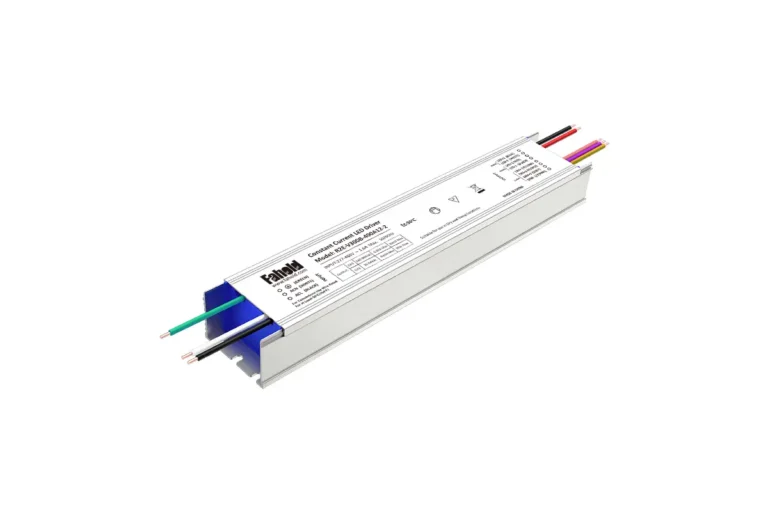
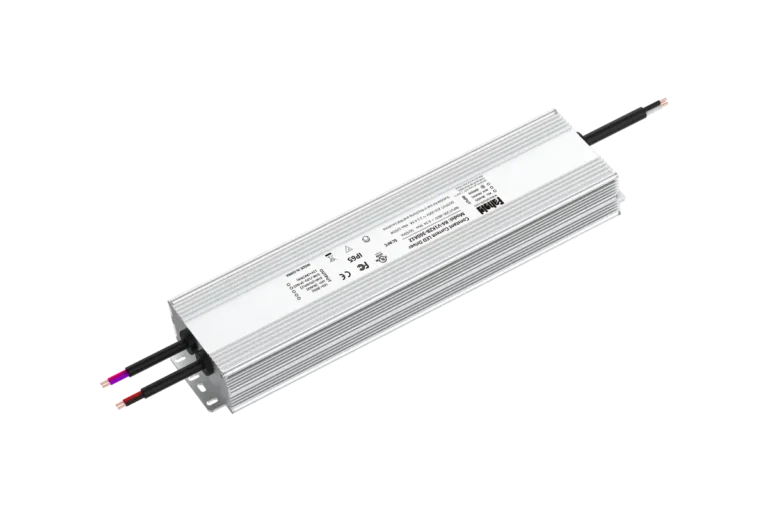
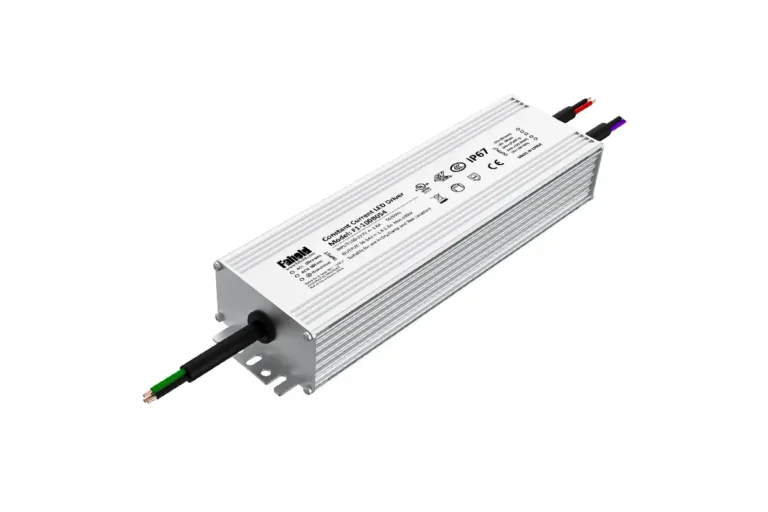
For Fahold’s current landscape portfolio, constant-voltage power supplies are the primary solution for 12V and 24V systems, with selected L3 models extending to 36V and 48V. L2-F is suited to waterproof dimmable installations, L2D to North American Class 2 phase-cut projects, and L3 to high-current single-output applications. Constant-current luminaires should be evaluated separately.
Landscape Lighting Applications
Match outdoor constant-voltage loads to the correct voltage, power, dimming method and environmental protection level.
Garden & Pathway Lighting
12V / 24V low-voltage zones where wet-location protection and practical dimming are required.
L2-F Waterproof Landscape Power Supply Series →Parks & Public Spaces
Multi-branch 12V / 24V landscape systems requiring IP67 protection and flexible control options.
L2-F Waterproof Landscape Power Supply Series →Facade & Linear Landscape Lighting
Dimmable 12V / 24V strip and architectural loads, or higher-current single-output runs.
L2-F Waterproof Power Supply → / L3 High-Power Power Supply →Bridge & Guardrail Lighting
Long continuous loads and high-current constant-voltage systems where 12V–48V platform flexibility is useful.
L3 High-Power Landscape Power Supply Series →Hotel & Resort Landscapes
Wet-location landscape, cove and accent lighting requiring dimmable 12V / 24V constant-voltage power.
L2-F Waterproof Landscape Power Supply Series →Covered Landscape & Architectural Zones
Dry or damp 12V / 24V Class 2 projects using TRIAC / ELV / MLV phase-cut control.
L2D Class 2 Landscape Power Supply Series →Common Power Challenges in Landscape Lighting
Landscape systems combine long feeders, multiple zones, outdoor exposure and mixed constant-voltage or constant-current loads.
Long-Distance Voltage Drop
Centralized power supplies and dispersed fixtures can create significant feeder voltage loss.
High Current at Low Voltage
12V systems require higher current, larger conductors and stronger branch connections.
Moisture & Condensation
Power supply IP rating alone is not enough; junction boxes, cable exits and drainage matter.
Lightning & Switching Surge
Outdoor cable networks and public distribution increase induced surge exposure.
Distributed Zones
Separate zones simplify control, maintenance, fault isolation and future expansion.
Mixed CV and CC Fixtures
Strips, guardrail lights, floodlights and spotlights may require different power-supply or driver architectures.
Recommended Landscape Lighting Power Supply Series
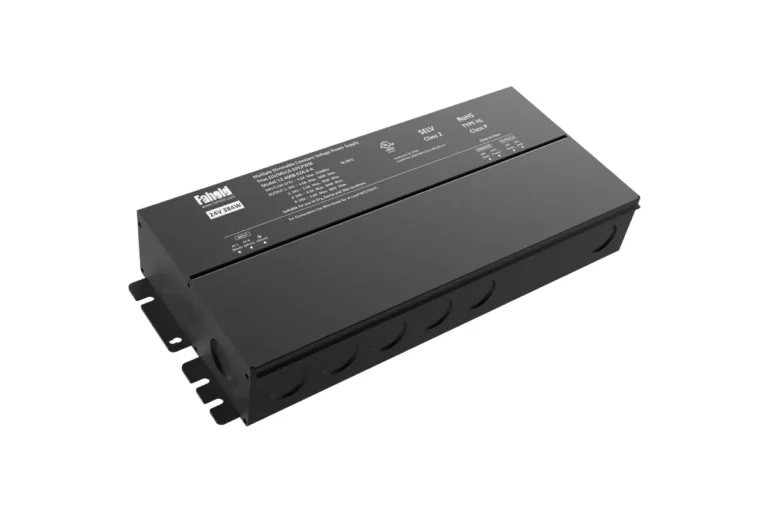
Current promotion focuses on three constant-voltage power supply platforms: L3 for high-current landscape loads, L2-F for waterproof dimmable systems, and L2D for North American Class 2 phase-cut projects.
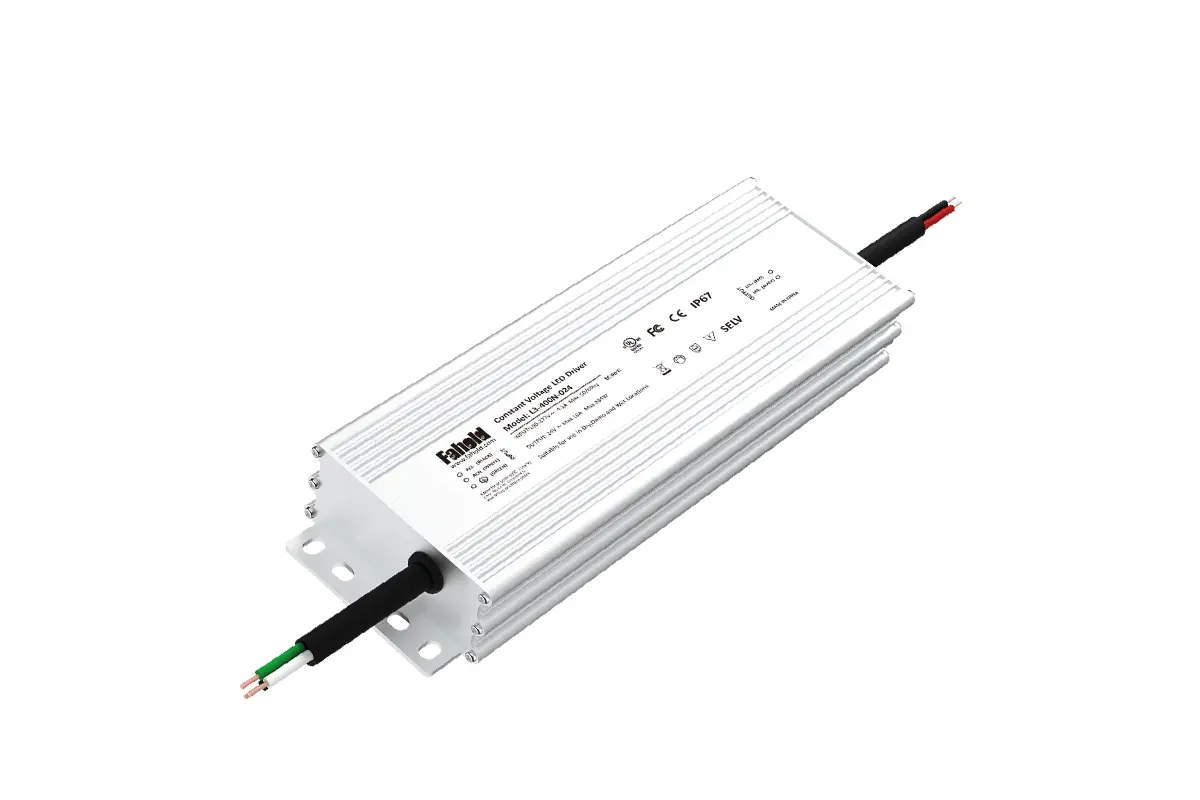
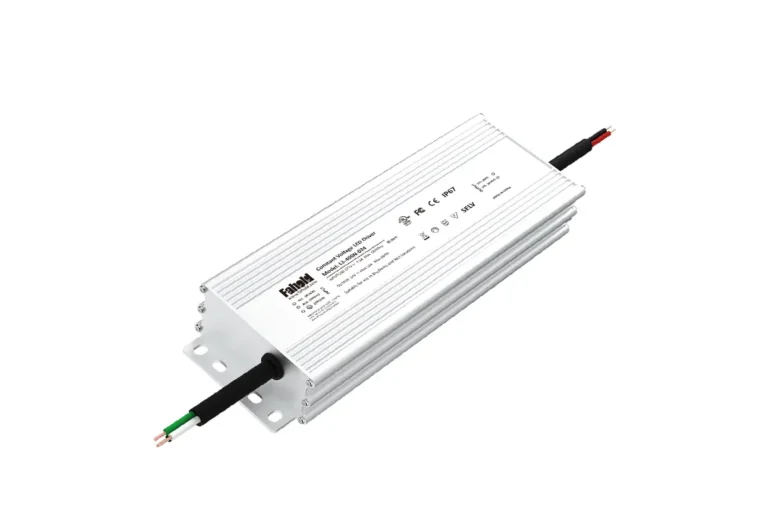
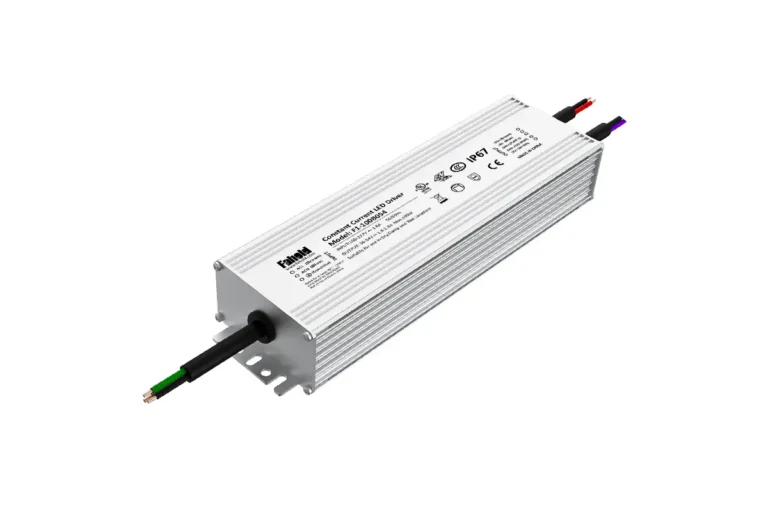
High-Current Isolated Landscape Power Supply
For bridge, guardrail, facade and long linear landscape loads requiring a single high-current constant-voltage output.
- 100–1000W portfolio
- 12V / 24V plus selected 36V / 48V models
- 100–277Vac model platform; 90–305Vac input coverage stated by series
- Isolated constant-voltage architecture
- IP67 / IP68 high-protection options
- Non-dimming; offline-programmable platform
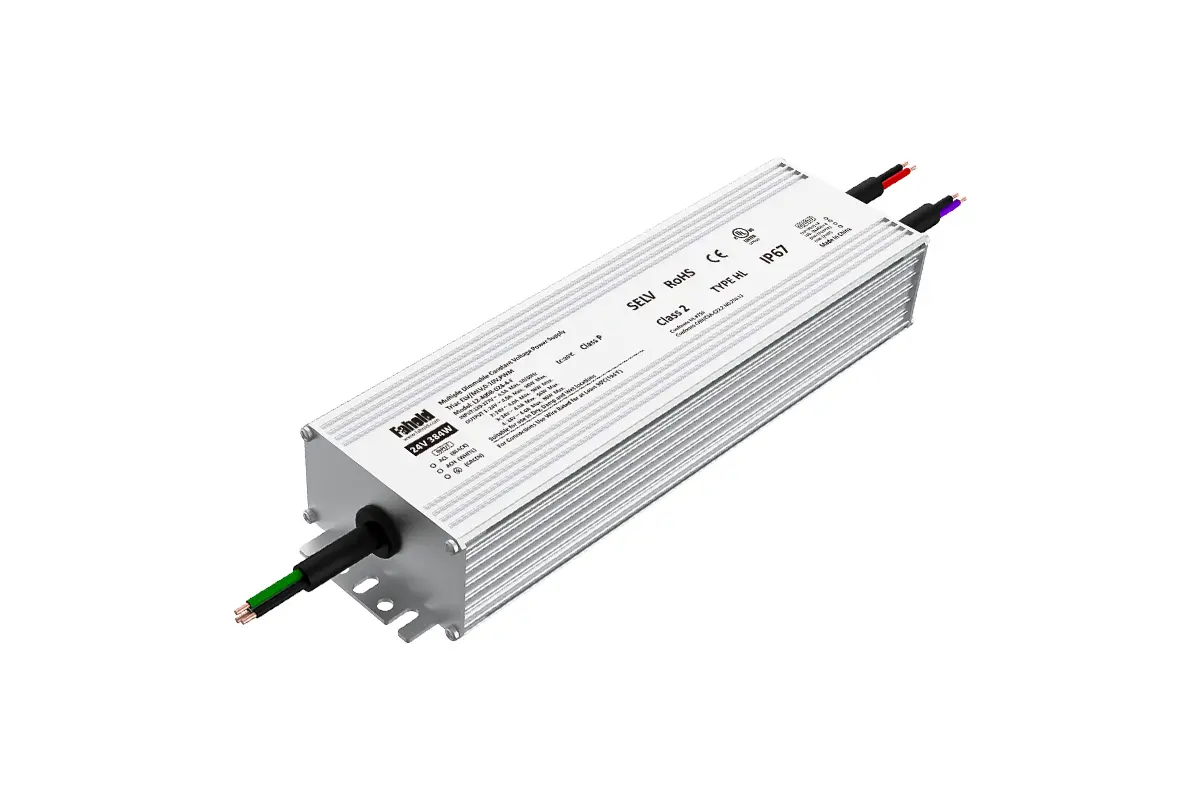
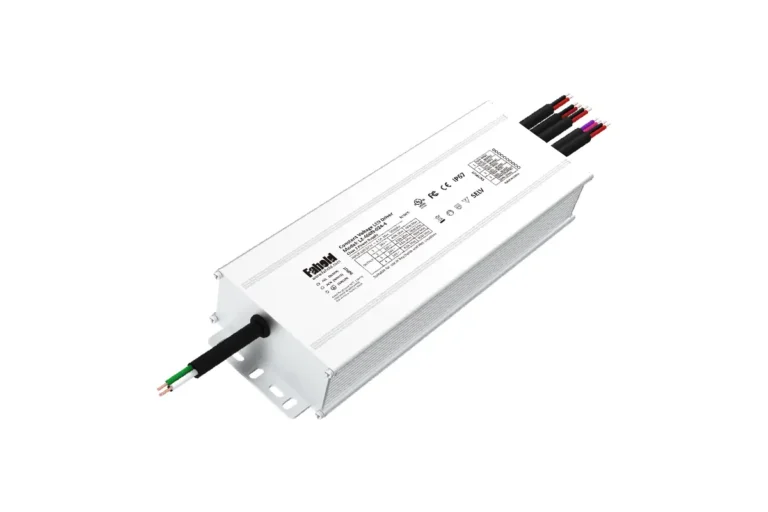
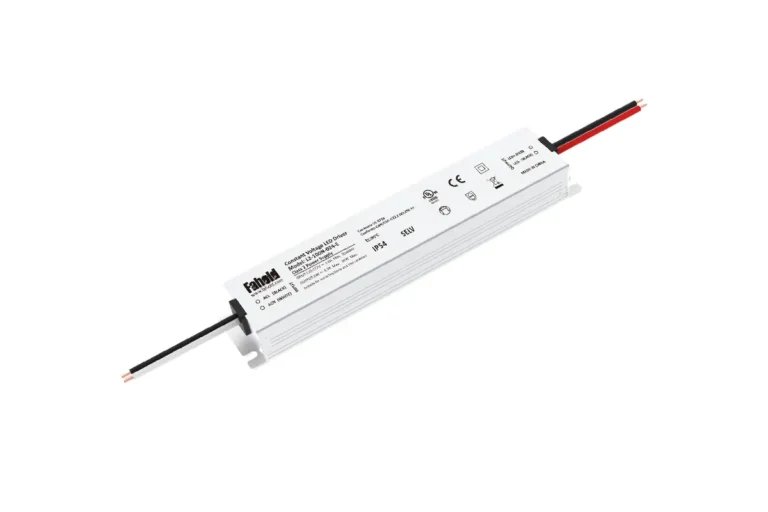
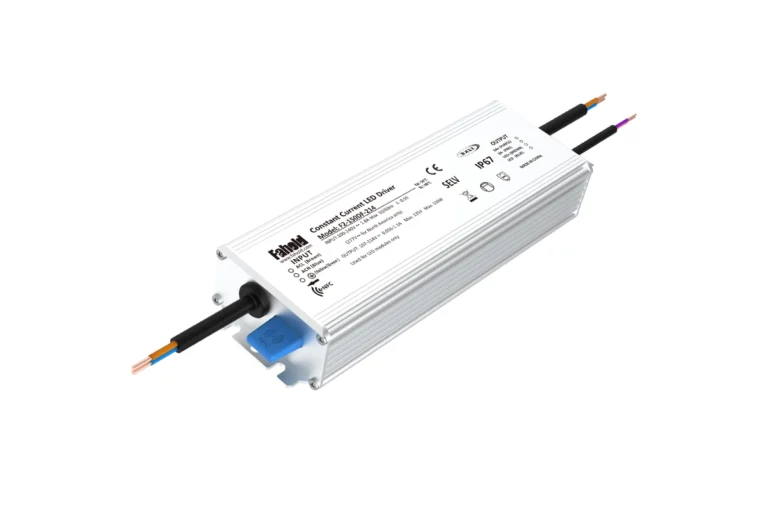
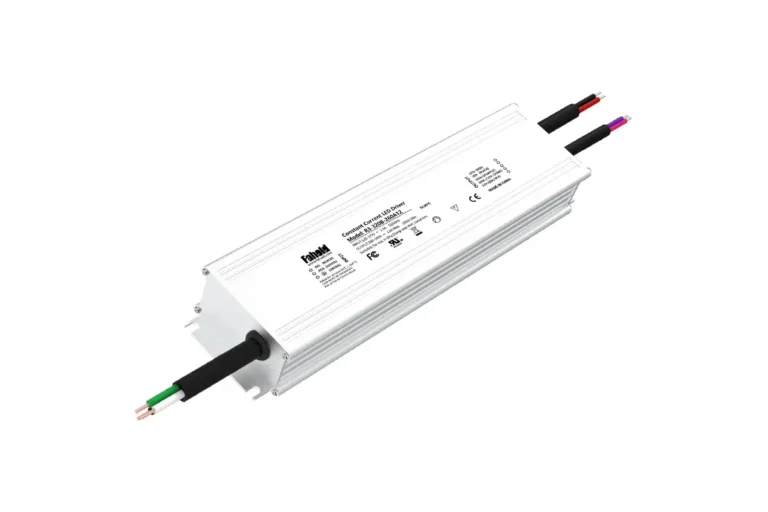
Waterproof Dimmable Landscape LED Power Supply
For wet-location strip, facade, garden and architectural landscape lighting requiring flexible dimming.
- 60–400W
- 12V / 24V constant-voltage output
- 90–305Vac universal input direction
- TRIAC / ELV / MLV / 0–10V / PWM / potentiometer
- IP67 for damp and wet locations
- 5-year warranty
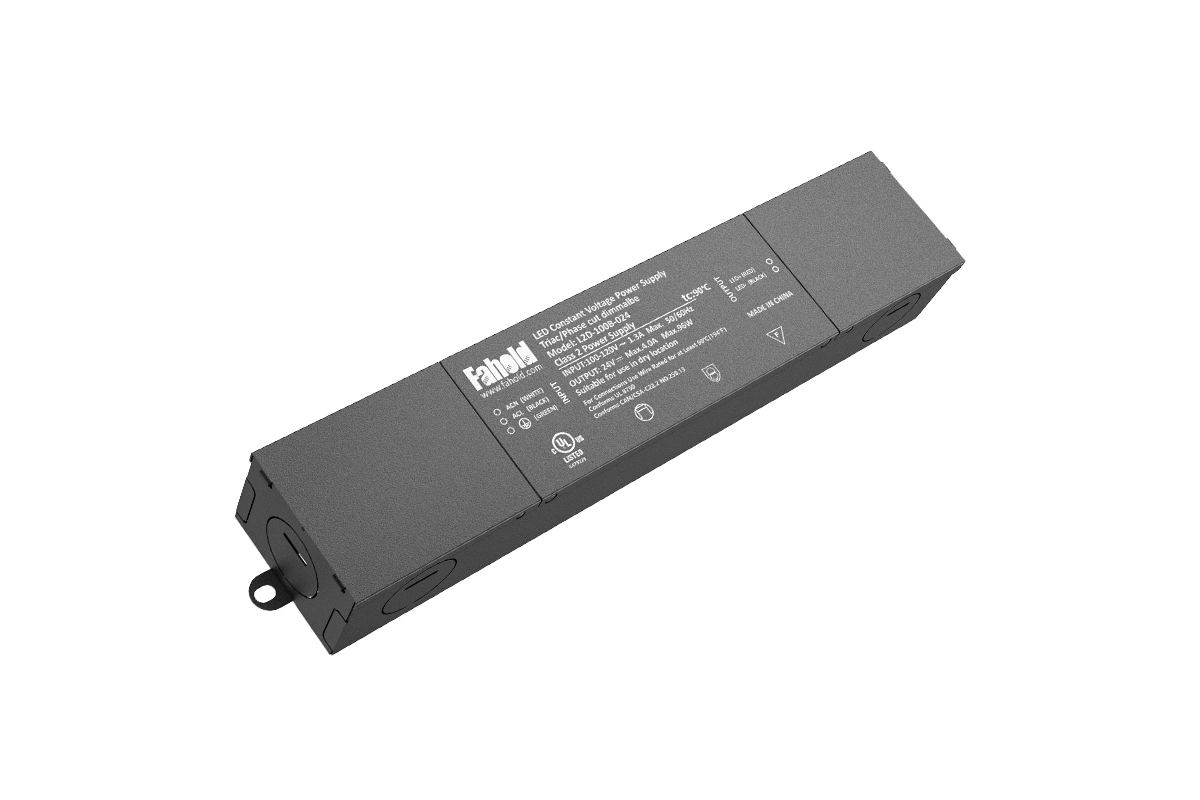
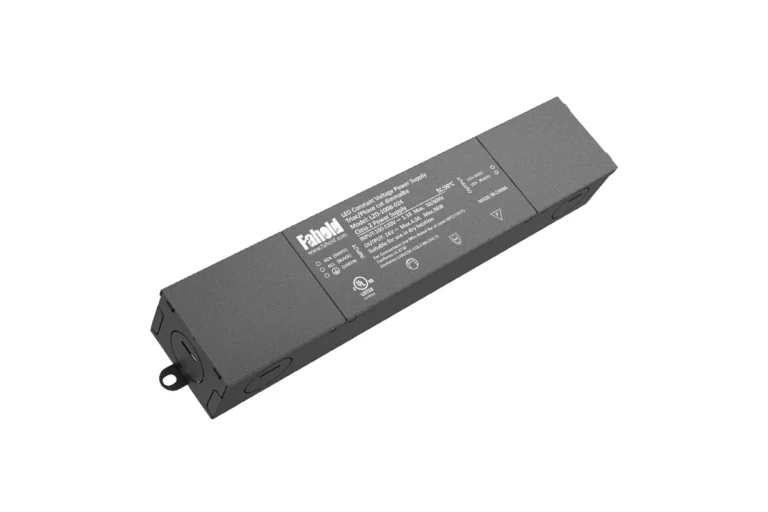
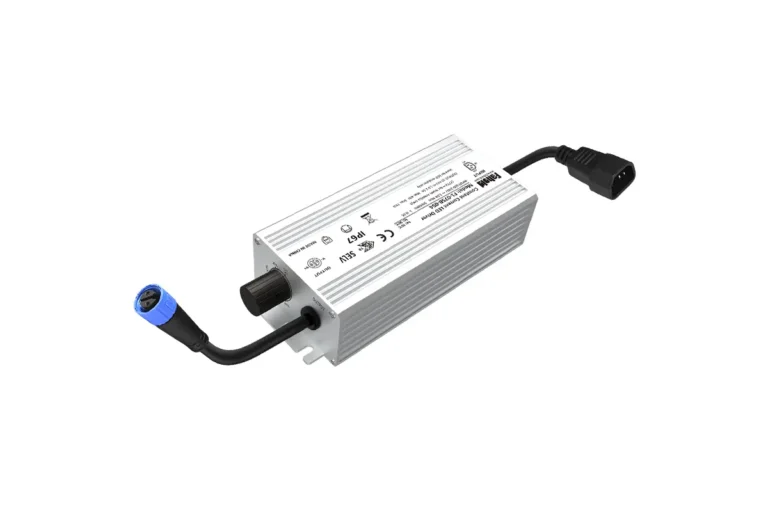
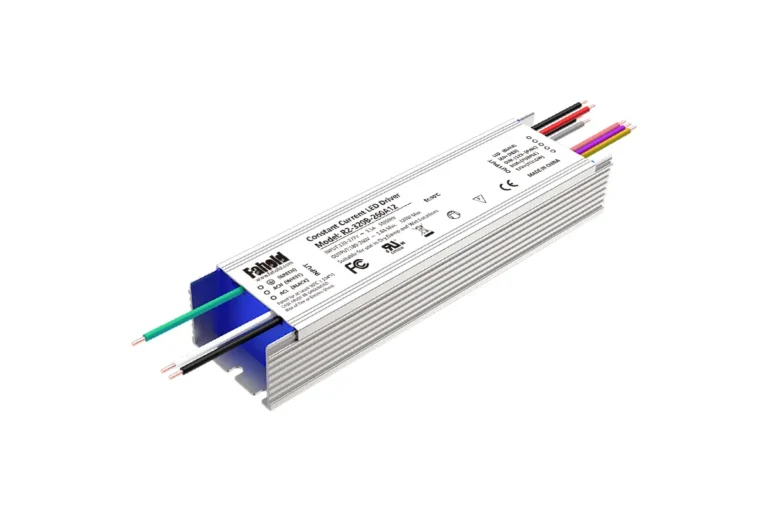
Class 2 Phase-Cut Landscape Power Supply
For sheltered North American landscape and architectural projects requiring Class 2 12V / 24V power with phase-cut dimming.
- 60–100W class
- 100–120Vac input
- 12V / 24V constant-voltage output
- TRIAC / ELV / MLV dimming
- UL Class 2 power-supply direction
- Dry / damp locations; integrated junction-box design
Quick Landscape Power Supply Selection Matrix
Use the table for early-stage series direction only. Final model selection still requires voltage, current, load, dimming and installation review.
| Project Requirement | Output / Voltage | Power Direction | Control / Environment | Best Match |
|---|---|---|---|---|
| High-Current Bridge / Guardrail / 36V–48V Load | CV · 12V / 24V / selected 36V / 48V | 100–1000W | Single output · IP67 / IP68 options | L3 High-Power CV → |
| Garden / Facade / Multi-Branch Wet-Location System | CV · 12V / 24V | 60–400W | Multi-channel · dimming · IP67 | L2-F Waterproof CV → |
| North American Class 2 / Sheltered Phase-Cut Zone | CV · 12V / 24V | 60–100W class | 100–120Vac · TRIAC / ELV / MLV · Class 2 | L2D Class 2 Phase-Cut → |
Landscape Lighting Power Supply Sizing Calculator
Estimate constant-voltage zone load, current and feeder voltage drop. Automatic product-series recommendations are intentionally disabled pending engineering review.
24V Garden Pathway Power-Supply Example
A practical example shows how to estimate constant-voltage load, minimum power supply capacity and zone current before choosing between L2-F, L2D or L3 by project conditions.
A minimum 240W constant-voltage capacity is indicated by the load calculation. Series selection is not automatic: wet-location dimming, Class 2 requirements, system voltage and cable distance must be reviewed before choosing the actual power supply model.
Landscape Lighting Power Supply & Zone Distribution Architecture
A robust outdoor system combines grid protection, suitable driver topology, waterproof distribution and clearly separated lighting zones.
Why Choose Fahold Power Supplies for Landscape Lighting
The current promoted landscape portfolio is built around high-current constant voltage, wet-location dimming and North American Class 2 project requirements.
12V–48V Portfolio Coverage
12V / 24V are the core landscape voltages, with selected L3 models extending to 36V and 48V.
Wet-Location Options
L2-F provides IP67 waterproof protection, while L3 includes IP67 / IP68 high-protection options.
Multiple Dimming Paths
L2-F supports phase-cut and low-voltage dimming methods; L2D focuses on TRIAC / ELV / MLV phase-cut control.
Single & Multi-Channel Architectures
L3 addresses high-current single-output loads, while L2-F includes multi-channel constant-voltage configurations.
Class 2 Project Option
L2D provides a North American Class 2 constant-voltage direction for 12V / 24V sheltered landscape projects.
OEM / ODM Support
Cables, connectors, junction-box requirements, housing and project-specific electrical configuration can be reviewed.
Custom Landscape Lighting Power Supply Solutions
Fahold can evaluate constant-voltage landscape power around system voltage, total load, output current, channel count, dimming method, Class 2 requirement, cable distance and wet-location conditions.
Testing, Surge and Waterproof Reliability
Critical validation items for gardens, parks, bridges, facades, water features and public outdoor lighting.
Surge Testing
Confirm common-mode and differential-mode levels for the driver and complete installation.
Ingress Protection
Review driver sealing, cable exits, junction boxes, connectors and installation orientation.
Voltage-Drop Validation
Evaluate feeder cables, splices, connectors and longest branch distance.
Timer & Control Testing
Validate dimming, sunset schedules, low-end stability and shutdown behavior.
Burn-In & Protection
Review overload, short-circuit, over-temperature and open-load behavior.
Market Compliance
Certification scope must match the final fixture, region and wiring category.
Find the Right LED Power Supply for Your Project
Share the core electrical and application requirements. We will narrow the available FAHOLD platforms to the options most relevant to your project.
Landscape Lighting Power Supply FAQs
Key questions for landscape fixture manufacturers, contractors, municipalities and architectural lighting engineers.
Which Fahold series are currently promoted for landscape lighting?
The current promoted landscape set is L3, L2-F and L2D. L3 is the high-current isolated constant-voltage platform, L2-F is the waterproof dimmable 12V / 24V platform, and L2D is the North American Class 2 phase-cut platform.
What output voltages are available for landscape lighting?
L2-F and L2D focus on 12V and 24V constant-voltage systems. L3 includes 12V and 24V models plus selected 36V and 48V options.
Which series is suitable for wet-location landscape lighting?
L2-F is IP67 and intended for damp and wet locations. L3 includes IP67 / IP68 high-protection options. L2D is intended for dry and damp locations rather than exposed wet installations.
Which series is best for North American Class 2 landscape projects?
L2D is a 100–120Vac Class 2 constant-voltage platform for 12V / 24V loads with TRIAC / ELV / MLV dimming. Final use still depends on the project wiring and fixture requirements.
Which landscape lighting power supply supports dimming?
L2-F supports TRIAC, ELV, MLV, 0–10V, PWM and potentiometer control. L2D supports TRIAC / ELV / MLV phase-cut dimming. L3 is a non-dimming platform.
Which series should I consider for high-power or high-current landscape loads?
L3 is the primary current promoted direction for single-output high-current landscape systems, with a catalogue power range up to 1000W and selected 12V / 24V / 36V / 48V models.
Why is voltage drop important in low-voltage landscape lighting?
Long cable runs create resistance and reduce the voltage delivered to remote fixtures. Check conductor size, current, branch distance, feed method, connectors and splices before finalizing the power supply.
What information should I send for a landscape LED power supply recommendation?
Send system voltage, fixture or load power, quantity, total current, zone count, longest cable distance, dimming method, dry/damp/wet installation condition, Class 2 requirement, junction-box requirement and target market.
Need a Landscape Power Supply Recommendation?
Send your system voltage, load, cable distance, control and installation requirements.