Table of Contents
To choose an LED driver for commercial lighting, first identify whether the LED load requires constant-current or constant-voltage power. Then verify the building’s AC supply, the LED output voltage or current, connected wattage, dimming interface, safety requirements, installation environment, and exact product specifications. A driver that passes all these checks is a better choice than one selected by wattage or price alone.
In offices, retail stores, hotels, and commercial linear-lighting projects, the driver affects more than whether the LEDs turn on. It can influence dimming behavior, visible flicker, electrical compatibility, heat, maintenance access, and commissioning time. For lighting manufacturers and project buyers, the wrong specification can also mean additional sampling, field troubleshooting, or an expensive replacement after installation.
This guide provides a practical selection sequence for North American projects, including a worked 24V example and a procurement checklist. If you already know your project’s requirements, explore FAHOLD commercial lighting solutions or send your specifications for a model review.
1. Understand the LED Driver Requirements for Commercial Lighting
What does an LED driver do in a commercial lighting system?
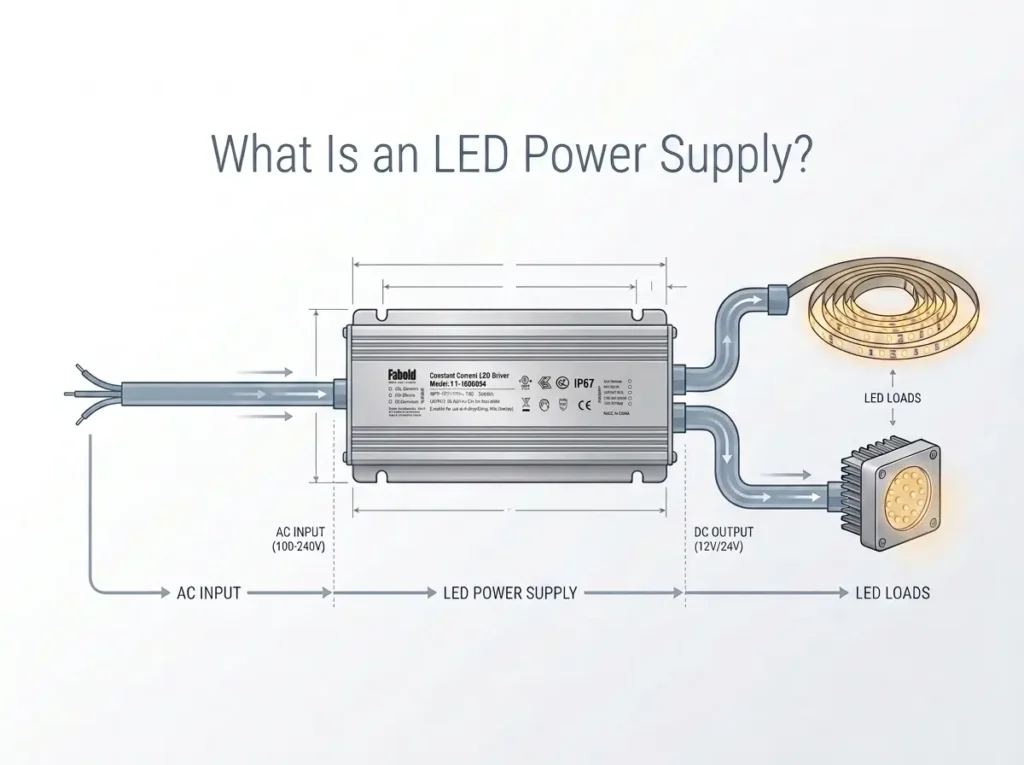
An LED driver converts an available electrical supply into the regulated electrical output required by a compatible LED load. Depending on its design, it controls output current or voltage. Some drivers also accept a dimming signal, protect against abnormal conditions, or provide multiple output channels.
In a typical low-voltage architectural installation, the power path is:
Building AC circuit → LED driver / power supply → compatible LED strip or luminaire
The labels LED driver and LED power supply sometimes overlap in product searches. For specification purposes, however, the crucial distinction is not the marketing term. It is the required output regulation: constant current (CC) or constant voltage (CV).
How do commercial requirements differ from residential applications?
A commercial system may have longer operating hours, centralized lighting controls, multiple LED branches, 277V building circuits, or maintenance access constraints. The design team may also need documented control compatibility, thermal performance, relevant safety certification, and repeatable specifications across a project or production run.
Rather than assuming every commercial project needs the most advanced driver, determine the actual constraints. A simple display cabinet and a fully networked office floor may require very different electrical and control architectures.
Common commercial lighting applications
| Application | Typical selection question | Critical specification |
|---|---|---|
| Office and conference-room lighting | Does the driver work with the specified control system? | Control protocol, dimming range, flicker performance |
| Retail display and shelf lighting | Is the LED load a 12V/24V strip or an integrated module? | CC versus CV, output rating, installation space |
| Hotel and restaurant accents | Is phase-cut wall dimming required? | Dimmer/driver compatibility, minimum light level |
| Commercial cove and linear lighting | How far are the LED runs and how many branches exist? | 24V/48V compatibility, wattage, channel current, voltage drop |
| Damp or exposed architectural lighting | Where will the driver actually be mounted? | Enclosure, environmental rating, listing and wiring details |
2. Choose Between Constant Current and Constant Voltage LED Drivers
This is the first technical decision. A driver can meet your preferred wattage, input voltage, and dimming interface and still be incompatible with the LEDs if its output regulation is wrong.
When to use constant-current LED drivers
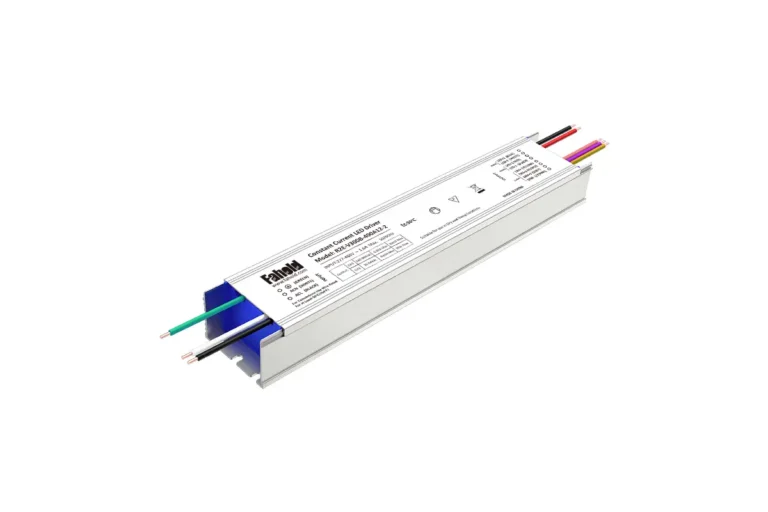
A constant-current driver regulates current while its output voltage changes within a specified operating range. It is commonly used with LED boards, modules, and integrated luminaires designed for a defined drive current—for example, a module specified at 700mA with an appropriate forward-voltage range.
Check rated output current, allowable output-voltage range, maximum output power, and any programming limits. Do not connect a constant-current module to a generic 24V constant-voltage supply unless the luminaire manufacturer expressly provides for that configuration.
When to use constant-voltage LED drivers
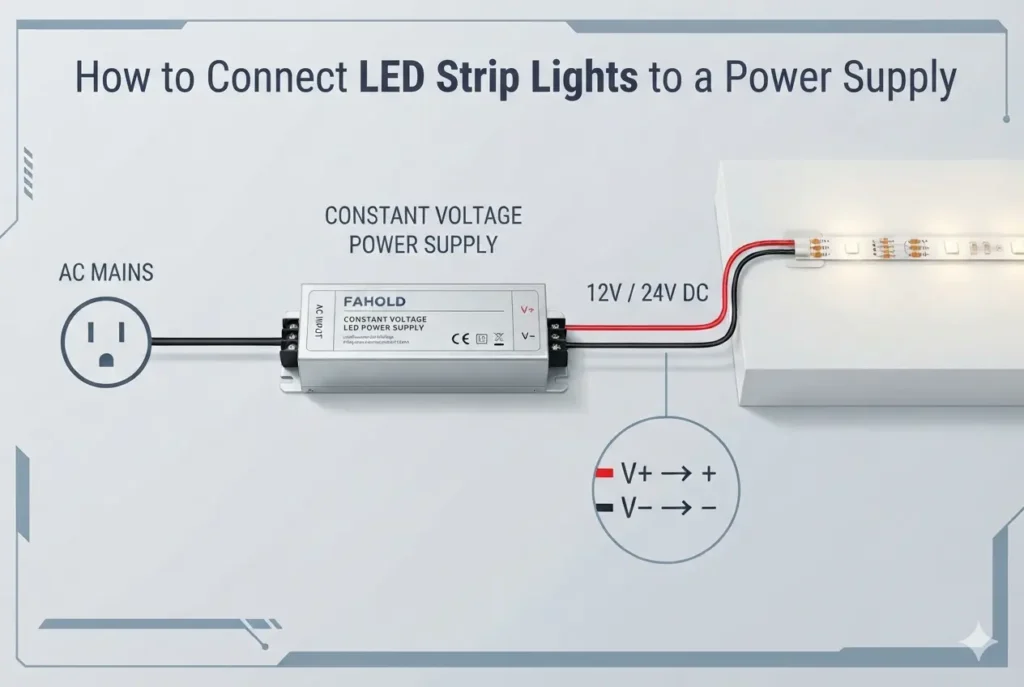
A constant-voltage driver maintains a regulated DC voltage—commonly 12V, 24V, or, where supported, 48V. It supplies LED strips and modules that are designed with suitable current-limiting electronics for that rated voltage.
For example, a commercial 24V LED strip requires a compatible 24V constant-voltage supply; choosing a 12V or constant-current unit does not become acceptable merely because the wattage matches.
Read the constant-voltage LED power supply guide for a deeper discussion of load matching.
Constant current vs. constant voltage: comparison
| Selection factor | Constant current (CC) | Constant voltage (CV) |
|---|---|---|
| Controlled output | Current, e.g., 700mA | Voltage, e.g., 24VDC |
| Typical load | LED boards and specified-current modules | LED strips and voltage-rated lighting modules |
| Essential compatibility check | Drive current and voltage operating window | Exact rated voltage and total load current |
| Common failure in selection | Incorrect current rating | Incorrect output voltage or overloaded branch |
| Commercial use case | Integrated commercial luminaires | Linear, cove, display, and accent lighting |
3. Match Input and Output Voltage to the Project
Check the commercial AC supply first
North American commercial facilities commonly include nominal 120V, 208V, 240V, and 277V AC conditions, depending on the building’s distribution and the circuit. A driver must be rated for the actual supply at its installation point; do not infer that a product accepts 277V because it accepts 120V.
For instance, a driver rated 100–277Vac covers nominal 120Vac and 277Vac within its published input range, subject to its other conditions. A 100–120Vac driver is not suitable for direct connection to a 277Vac circuit. Verify the exact nameplate and datasheet rather than relying on a search-result title.
Choose the correct LED output voltage
For CV systems, match the LED load’s specified 12VDC, 24VDC, or 48VDC requirement. Higher-voltage systems can reduce current for a given power level, but only if the LED product is designed for that voltage. Voltage drop, cable sizing, permissible run lengths, and circuit topology still require review.
Do not confuse AC input with DC output. A 277Vac commercial circuit can feed an appropriately rated driver that supplies regulated 24VDC to a 24V LED strip. The LEDs do not receive 277V.
For an example focused on this question, see how to select a 120–277V LED driver for 24V commercial lighting.
Confirm the full operating range
Check input frequency and voltage tolerance, output accuracy, permitted load range, starting behavior, and the rated ambient temperature. A nominal voltage match is necessary but not sufficient for a project-ready selection.
4. Calculate the Correct LED Driver Wattage
Start with the connected LED load
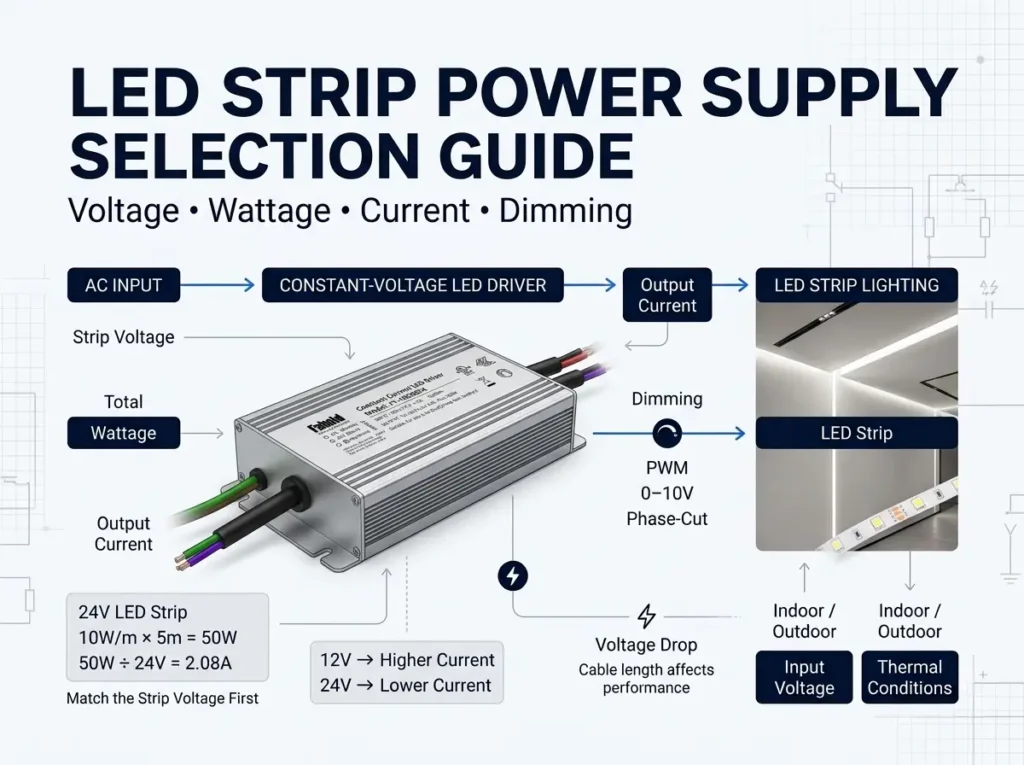
For constant-voltage LED strips, estimate the maximum connected power from rated power per unit length and the amount powered by one driver:
Connected load (W) = Rated strip power (W/m) × Powered strip length (m)
For multiple branches:
Total connected load (W) = Branch 1 (W) + Branch 2 (W) + …
At a given CV output voltage:
Approximate total output current (A) = Total connected load (W) ÷ Output voltage (V)
Use the LED manufacturer’s applicable maximum rating, not a low reading obtained while the lights are dimmed.
Worked example: a 24V commercial cove-lighting installation
Assume a retail space specifies:
- A 24V constant-voltage linear LED strip rated at 12W/m.
- Two powered branches, each 6m long.
- A 277Vac branch circuit.
- 0–10V dimming and a protected indoor driver location.
Each branch requires 12W/m × 6m = 72W. Two branches create a 144W connected load. At 24VDC, the nominal output current is 144W ÷ 24V = 6A total, or approximately 3A per branch.
Suppose the engineering team chooses a 20% illustrative planning allowance: 144W × 1.20 = 172.8W target capacity. That percentage is not a universal rule or a substitute for the manufacturer’s derating data. Final sizing must account for the actual driver, ambient temperature, installation orientation, load variation, and permitted continuous output.
If evaluating a two-channel 24V driver, both the combined available output power and the independent per-channel current limits must support the design. A 192W two-channel platform with 4A per channel, for example, appears capable of meeting the example’s nominal 3A-per-branch requirement on paper; it would still require confirmation of the exact dimmable model, listings, thermal conditions, wiring, and control compatibility before approval.
Use the LED strip power supply calculator to check load arithmetic before reviewing specific models.
How much power headroom should you allow?
A practical design allowance can help account for tolerances and operating conditions, but fixed recommendations such as “always add 20%” should not replace the driver manufacturer’s data. The required capacity depends on continuous-rating definitions, ambient and case temperatures, any derating curve, and real project loads.
Also check DC cable voltage drop. Oversizing the driver does not automatically correct excessive resistance in long leads or strips. Shorter feed runs, additional feed points, appropriate conductor sizing, and a different branch arrangement may be more relevant.
Single-output vs. multi-channel power distribution
Several LED branches can share one appropriately designed supply, or a project may benefit from independent outputs. Multi-channel architecture can simplify load allocation and support certain Class 2 designs, but it does not mean every output has the full nameplate wattage available simultaneously.
Request total output power and channel-by-channel limits. For wiring and distribution considerations, read can multiple LED loads share one power supply?.
5. Select the Right Dimming Method for Commercial Lighting
A driver described as dimmable is not necessarily compatible with the building’s control system. Specify the interface before choosing a product family, then test the exact pairing.
0–10V dimming for offices and commercial spaces
0–10V control is common in commercial lighting projects because it allows a low-voltage control signal to adjust compatible drivers. However, control-source/sink behavior, signal polarity, control-wire routing, minimum light output, and off behavior vary by equipment and design. A 0–10V signal does not automatically guarantee complete switch-off at the low end.
Ask for the tested control-device list, dimming curve, minimum stable light level, and whether dim-to-off is supported for the exact configuration. A conference-room application may be especially sensitive to low-end behavior and flicker.
TRIAC, ELV, and MLV dimming in hospitality lighting
Phase-cut systems are frequently encountered in hotels, restaurants, and architectural renovations that retain wall dimmers. Forward-phase (often TRIAC/MLV) and reverse-phase (commonly ELV) controls should not be treated as interchangeable without verified compatibility.
The driver and wall dimmer must work as a system. Check minimum and maximum load, input voltage, low-end trimming, audible noise, and whether the installation uses a neutral conductor. For example, FAHOLD’s L2D TRIAC/ELV/MLV platform is oriented toward 100–120Vac applications; it must not be assumed suitable for 277Vac input.
DALI and PWM for advanced control
DALI is a digital, addressable lighting-control protocol associated with IEC 62386. It can be appropriate where individually addressable luminaires, commissioning, grouping, or more sophisticated building controls are required. Verify the relevant supported functionality and, if DALI-2 certification is requested, the exact model in the DALI Alliance product database.
PWM can mean different things in a specification: a PWM control input accepted by a driver, or pulse-width modulation of the LED output. Confirm which one the controller and load expect. A driver that accepts PWM input is not automatically a DALI driver, and an output PWM design is not automatically interchangeable with a 0–10V interface.
Dimming comparison for commercial projects
| Method | Typical application | Key items to verify |
|---|---|---|
| 0–10V | Offices, retail, commercial linear lighting | Controller compatibility, dimming curve, dim-to-off, low-end stability |
| TRIAC / ELV / MLV phase-cut | Hospitality, retrofit, accent lighting | Forward/reverse phase, mains voltage, tested dimmer list, flicker/noise |
| DALI / DALI-2 | Addressable, centrally managed installations | Protocol version, certified device, required functions, system commissioning |
| PWM control input | Selected architectural and specialty controls | Signal type, frequency/range, interface isolation, controller match |
| Potentiometer | Local or simple manual adjustment | Resistance range, wiring, control behavior |
When is a multi-mode dimmable LED driver useful?
Multi-mode products can be useful for lighting OEMs serving multiple project requirements, provided the exact variant supports the desired interfaces. FAHOLD’s 5-in-1 dimmable LED driver category includes constant-voltage platforms supporting combinations of phase-cut, 0–10V, PWM, and potentiometer control depending on configuration.
Need a driver that matches a specified dimmer? Send the dimmer/controller model, AC input, LED voltage, output load, and required low-end dimming behavior to FAHOLD’s technical team. Request compatibility confirmation or a sample evaluation before bulk purchasing.
Need Help With Your LED Power Supply Project?
Tell us what you are working on. We will review your application and recommend the most relevant FAHOLD solution.
6. Check Safety, Certification, and Electrical Performance
UL 8750, NRTL listing, and Class 2 requirements
For U.S. lighting projects, UL 8750 is an important safety standard covering LED equipment used in lighting products, including drivers. A reference to UL 8750 in product literature is not, by itself, proof that a specific item has a valid listing for the planned installation.
Request the exact model identification, applicable standard(s), certification organization and file/reference number, and check whether the relevant mark and listing cover your variant. OSHA’s Nationally Recognized Testing Laboratory (NRTL) framework explains how recognized third-party certification marks are used in the United States. For Canadian projects, verify that the product’s certification and marking are acceptable for the intended Canadian market and application.
Class 2 is a defined, power-limited electrical source classification—not a synonym for “24V,” “low voltage,” or “safe in every installation.” Where Class 2 is part of the project specification, review the source’s certified output arrangement and each circuit’s limitations. A high-total-power multi-output unit should not be interpreted as one unlimited Class 2 output.
Installation methods must follow applicable adopted electrical codes, the equipment listing, the manufacturer’s instructions, and the authority having jurisdiction (AHJ). A driver listing does not automatically certify the complete luminaire or field installation.
Power factor, THD, efficiency, and flicker
Power factor (PF) and total harmonic distortion (THD) describe different AC-side electrical properties. Ask for performance at the specified input voltage and load conditions, rather than treating a single headline value as representative of every operating point. ANSI C82.77-10 addresses harmonic emissions and related lighting-equipment power-quality requirements.
Efficiency affects wasted power and heat. Temporal light artifacts such as flicker and stroboscopic effects can be relevant to occupant comfort or tasks involving motion and cameras. Evaluate performance across the actual dimming range using application-appropriate measurement and the complete driver–LED–controller system. “Flicker-free” marketing language without stated conditions is not a substitute for test data.
Reliability, surge protection, and protective functions
Review surge immunity where relevant, thermal protection, overload and short-circuit behavior, overvoltage protection, and permitted case temperature. A nominal service-life claim cannot be assessed without operating conditions and test assumptions.
Ask what happens after a fault: does the driver shut down, auto-recover, or require power cycling? These details can materially influence maintenance costs in inaccessible commercial ceilings.
7. Evaluate Installation Environment and Driver Design
Indoor, damp, and wet locations are different requirements
Select environmental protection based on the driver’s mounting location, not only the location of the LED strip. A strip installed near moisture does not necessarily mean the driver is exposed; conversely, an exposed driver may need a higher protection level even when the LED load is under cover.
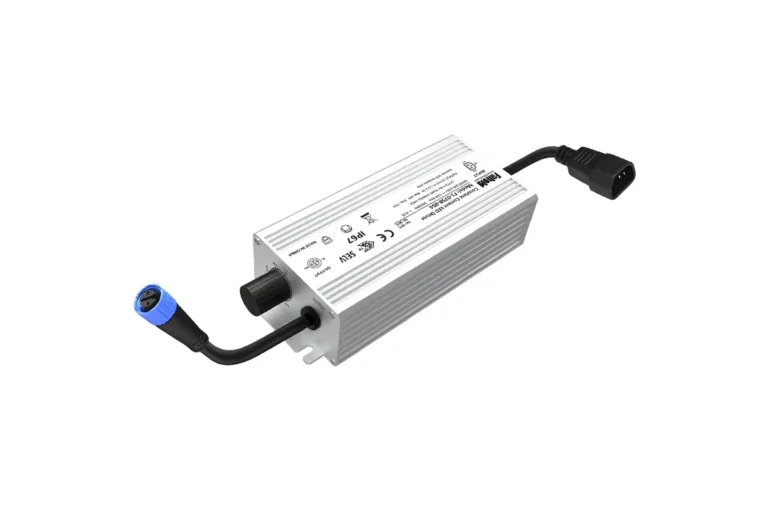
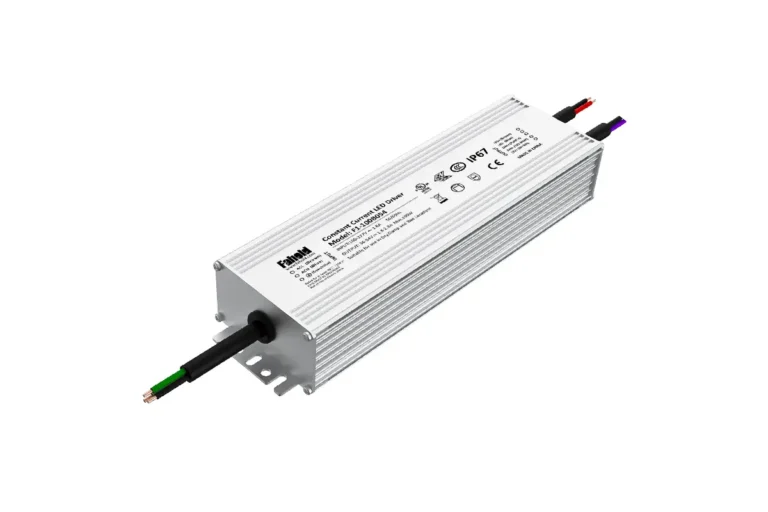
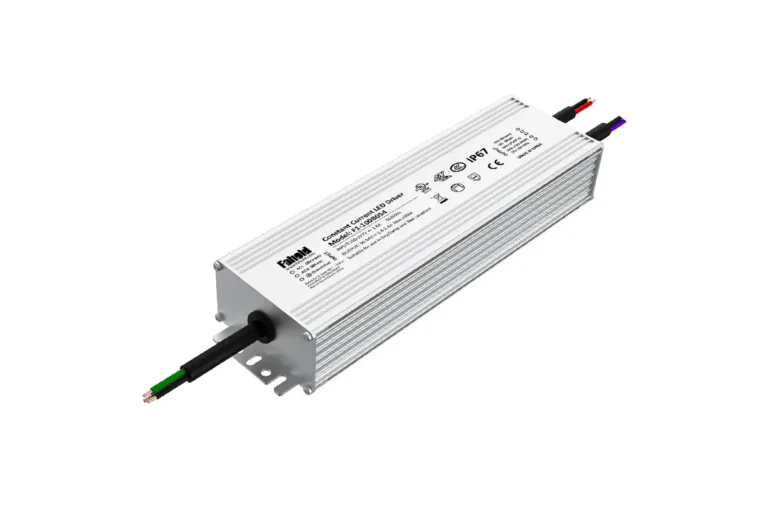
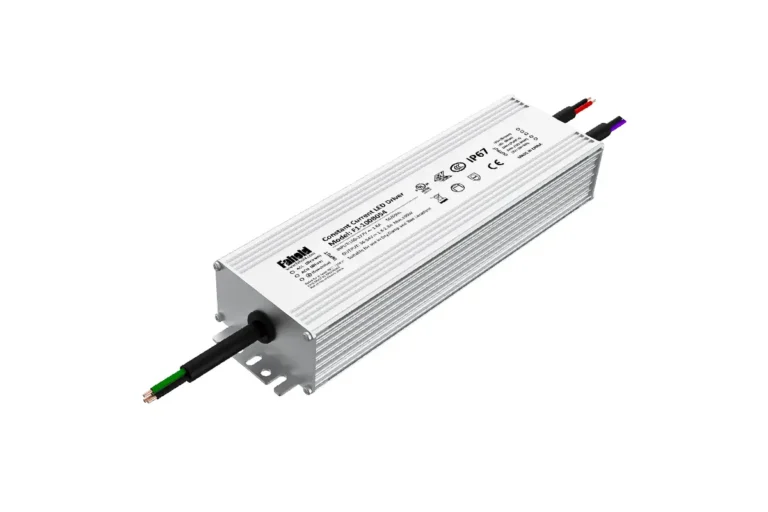
Ingress-protection ratings describe enclosure resistance to dust and water under defined tests. An IP67 claim should be considered together with the actual installation instructions, certified use conditions, wiring interfaces, corrosion exposure, and any applicable wet-location listing requirements. IP rating alone does not determine North American code compliance.
Enclosure and junction-box configuration
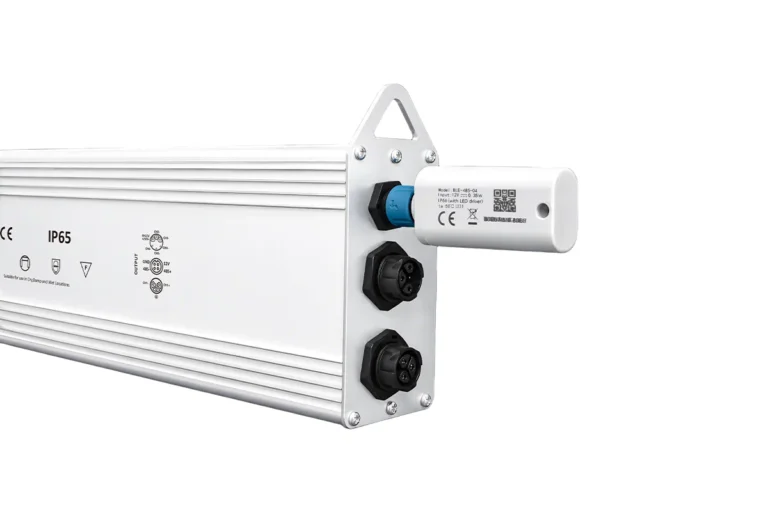
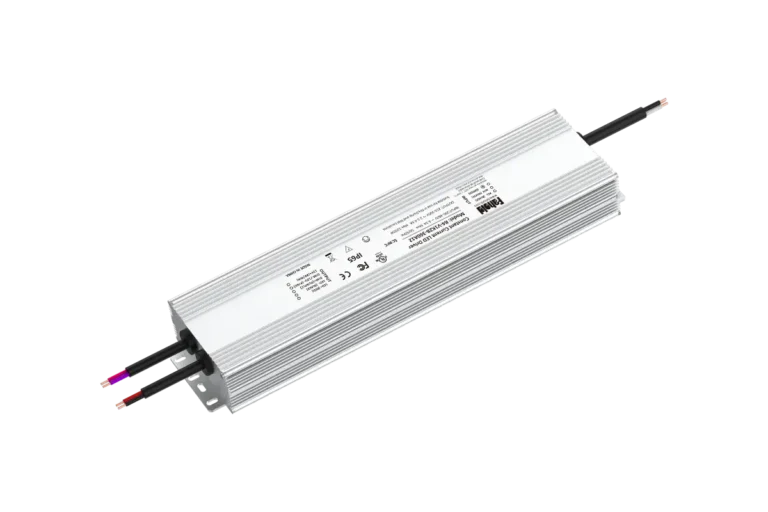
Protected field wiring, service access, cable entries, strain relief, and available mounting dimensions are part of the selection. Some installations call for an integrated junction-box construction; others need an appropriately listed external wiring enclosure. Confirm what the exact model supplies and what additional components are required.
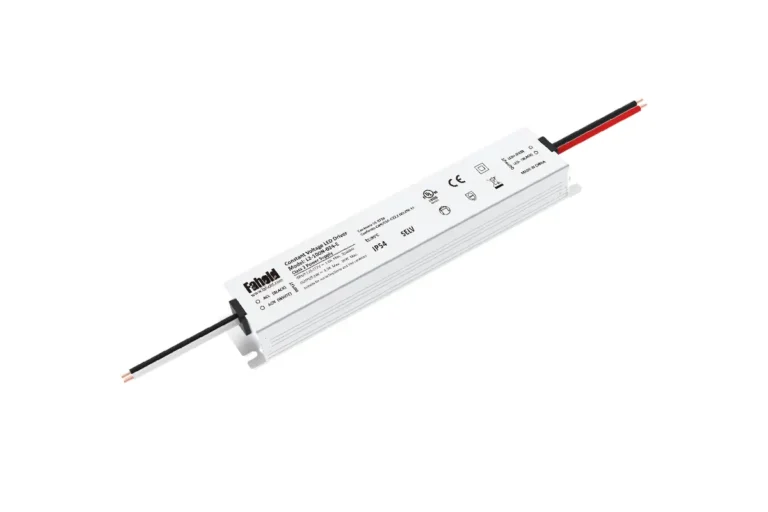
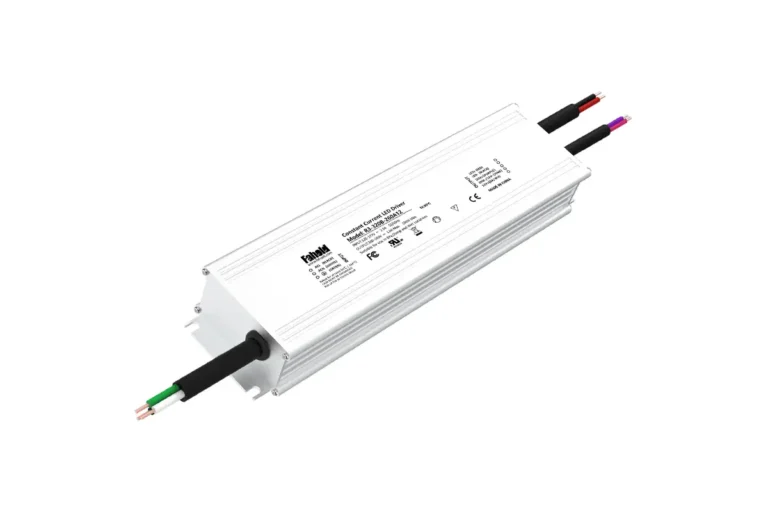
FAHOLD’s L2-A enclosed Class 2 series is one starting point for 12V/24V commercial architectural systems using protected wiring. The L2-F IP67 series is a starting point when a waterproof driver enclosure is required. This is platform guidance, not approval for a specific mounting condition.
Thermal management and maintenance access
Check ambient temperature limits, any required clearance, thermal derating, and the manufacturer’s specified temperature measurement point. A driver located above a warm ceiling, inside millwork, or near other heat sources may need a different design than the same load in an open service space.
For commercial facilities, maintainability is also a specification: the driver should remain accessible in the manner required by the installation design and applicable rules.
8. Match Drivers to Common Commercial Lighting Applications
Application names are useful for initial screening but cannot replace the electrical specification. Use the following matrix to organize your shortlist.
| Application | Likely load architecture | Common control consideration | Priority checks |
|---|---|---|---|
| Office linear fixtures | CC integrated modules or CV linear systems | 0–10V or specified digital control | LED module requirements, flicker, low-end behavior |
| Retail shelves and displays | Frequently 12V/24V CV LED strips/modules | Simple dimming or 0–10V | Voltage, wire length, cabinet ventilation |
| Hotel and restaurant accent lighting | Often CV strips or specialized CC modules | Phase-cut or specified controls | Dimmer compatibility, minimum light level, noise |
| Commercial coves | Often 24V/48V CV systems where supported | 0–10V, phase-cut, or project-specific | Run length, output channels, voltage drop |
| Exposed architectural accents | CV or CC depending on fixture | Project-specific | IP rating, wiring, mounting, certified location suitability |
Where FAHOLD product platforms may fit
For 12V or 24V constant-voltage architectural lighting, the first platforms to compare include:
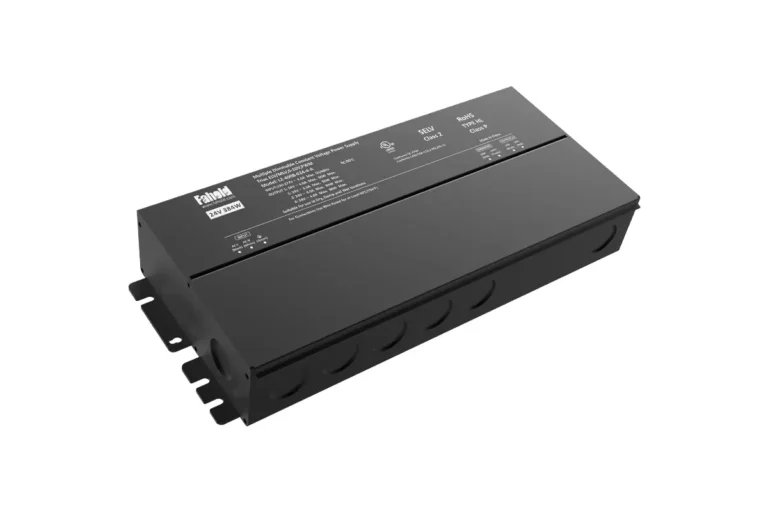
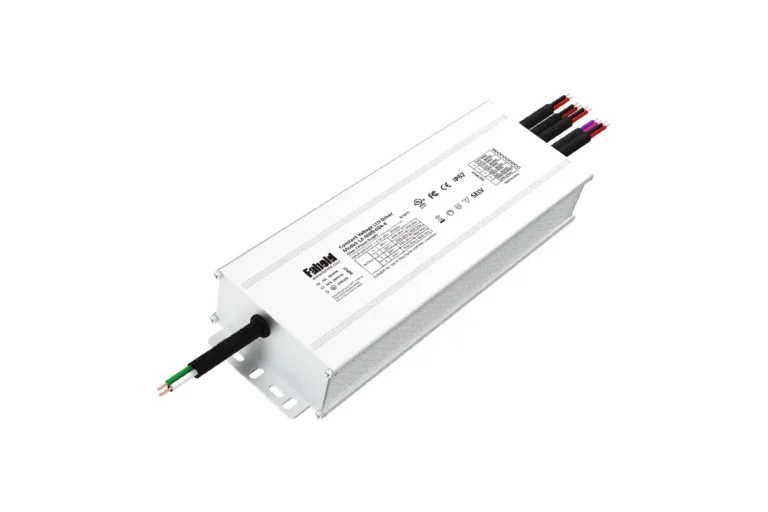
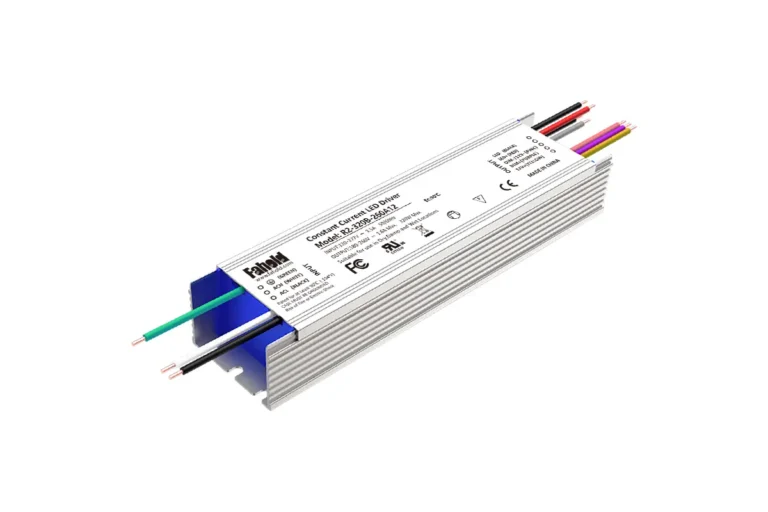
- L2-A: enclosed, Class 2-oriented, 100–277Vac input platform with single- and multi-channel options and configuration-dependent multi-mode dimming.
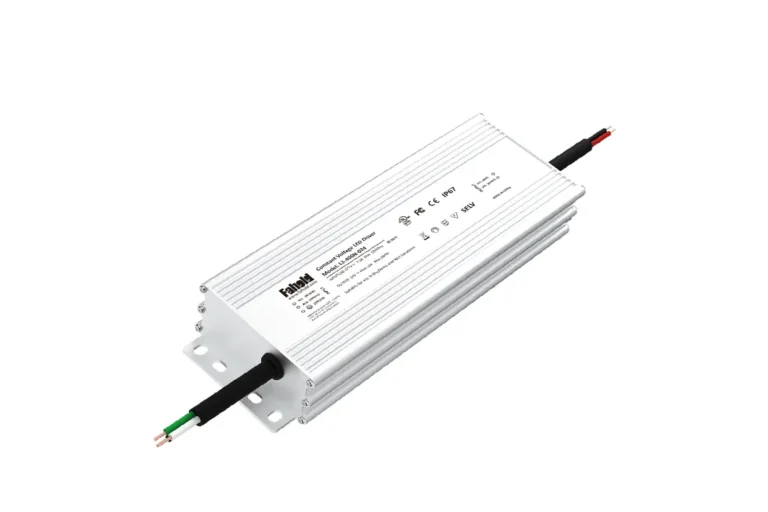
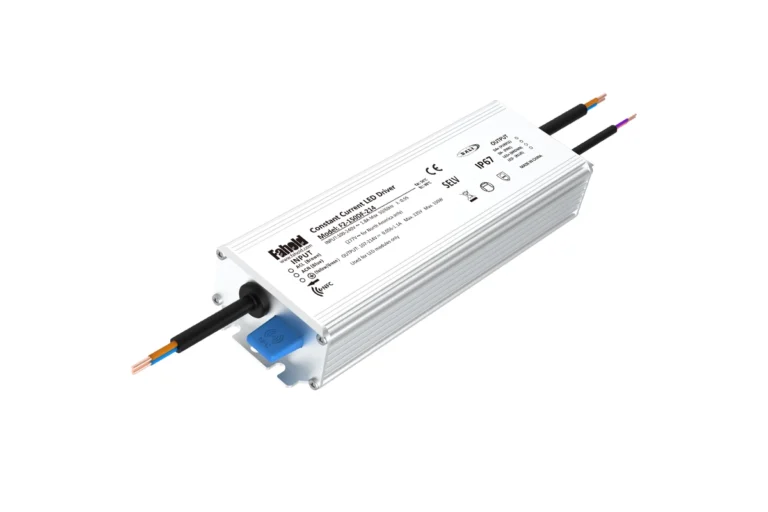
- L2-F: 100–277Vac, 12V/24V constant-voltage IP67 platform for projects where the driver needs waterproof construction.
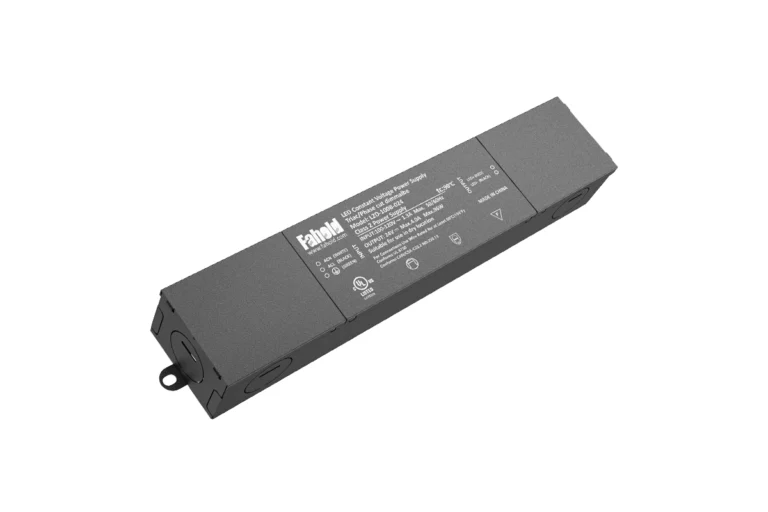
- L2D: 100–120Vac phase-cut-oriented platform for compatible TRIAC/ELV/MLV installations; do not specify it for a 277Vac supply.
- L2 Class 2 power supply range: worth evaluating for low-voltage, distributed lighting or signage-type loads where the actual model’s output and application requirements align.
These are selection starting points, not interchangeable products. Check each SKU for its supported dimming modes, actual maximum output (which can differ from the marketed wattage class), per-channel limits, certifications, and dimensional requirements. A CC LED module requires a suitable CC driver rather than one of these CV supplies.
9. How to Evaluate an LED Driver Manufacturer for Commercial Projects
The purchasing decision should extend beyond a catalog price. Commercial OEM and project sourcing requires technical reproducibility, accurate documentation, and the ability to resolve issues before installation.
Ask for complete technical and compatibility documentation
Request the exact datasheet, relevant certification evidence, mechanical drawing, wiring/installation instructions, dimming curve, controller compatibility information, and environmental/thermal ratings. For a custom or multi-channel design, obtain a clear written definition of the output limits and model configuration.
A vague claim such as “works with 0–10V” is insufficient if the project requires a particular low-end dimming level, controller behavior, or zero-light-off function. Request a sample test with the specified controller, LED load, and installation conditions.
Review OEM/ODM capability and consistency
For lighting brands or repeat commercial projects, determine whether the manufacturer can maintain electrical performance, component traceability, and documentation consistency across production lots. Any proposed change to enclosure, controller interface, output rating, or safety-related construction should trigger an engineering and certification-impact review before approval.
Ask whether custom labeling, cables, connectors, or packaging are available, and whether those changes affect the certified configuration or lead time.
Compare sample validation, production terms, and support
Discuss sampling availability, testing support, expected order quantities, production lead times, warranty conditions, and the process for handling field failures. Obtain these for the actual project and quantity rather than treating generic website figures as binding commitments.
A useful supplier can explain why a shortlisted driver is compatible, what still needs testing, and which specification trade-offs are acceptable. That can reduce the cost of late-stage redesign and commissioning delays.
10. Frequently Asked Questions
What type of LED driver is best for commercial lighting?
There is no universally best driver. An integrated LED luminaire may require a constant-current driver, while a 24V commercial cove-lighting system normally requires a compatible constant-voltage supply. Start with the LED load specification, then verify supply voltage, capacity, dimming, safety, and installation conditions.
Can a 120V LED driver be used on a 277V circuit?
Only if its published input rating includes 277Vac. A product rated solely for 100–120Vac must not be directly connected to 277Vac. A 100–277Vac-rated model can be evaluated for both nominal supply conditions, subject to its full specification.
Is 0–10V dimming required for commercial lighting?
No. 0–10V is common, but the project may use phase-cut, DALI, another specified interface, or non-dim operation. The lighting controls specification determines what is required. Verify the exact driver–controller pairing rather than choosing an interface because it is widely used.
What is the difference between a Class 2 LED driver and a regular LED power supply?
A Class 2 power source meets defined output-limitation requirements; “regular LED power supply” does not describe a specific safety class. Two 24V supplies can have very different output architectures and certification conditions. Check the actual Class 2 marking, listing, and individual output restrictions.
How do I determine the correct wattage for a commercial LED driver?
Calculate the maximum LED load supplied by the driver, then check usable output capacity and current limits under the planned temperature and installation conditions. For LED strip, multiply rated W/m (or W/ft) by the length supplied. Any design allowance should be justified by the product data and project conditions.
Can one LED driver power multiple commercial lighting fixtures?
Sometimes, provided the outputs and wiring architecture are compatible with every connected load, and the combined and per-branch electrical limits are respected. Review distribution, voltage drop, circuit protections, and Class 2 requirements where relevant. Independent output channels may be preferable for some installations.
Select the Driver That Fits the Complete Project
Commercial LED driver selection should follow an engineering sequence: load type → AC supply → regulated output → real load and branch limits → dimming → compliance → installation → supplier validation. That process prevents a common mistake: buying a driver that matches a headline wattage but not the actual luminaire or building system.
FAHOLD supports commercial and architectural projects involving 12V/24V constant-voltage lighting, multi-mode dimming, enclosed driver construction, and waterproof configurations. If you need help narrowing the options, start with the architectural LED driver range or request a model match.
Request a project-specific LED driver recommendation: Share your AC input voltage, LED load type, DC output requirement, total and per-branch wattage, dimming controller, installation conditions, required certifications, and expected quantity. Contact FAHOLD to discuss specifications, sample validation, and a quotation.
Technical references
The following authoritative resources inform the safety and control considerations above. Refer to current editions and local requirements for project compliance; these links are not a substitute for reviewing the exact manufacturer’s certifications.
- UL Standards & Engagement — UL 8750: LED Equipment for Use in Lighting Products
- UL Standards & Engagement — UL 1310: Class 2 Power Units
- OSHA — NRTL Program and Product Certification
- ANSI/NEMA C82.77-10-2024 — Lighting Equipment Harmonic Emission and Power Quality Requirements
- DALI Alliance — Control Gear Device Types (DT6 and DT8)
- DALI Alliance — Certified Product Database