Table of Contents
Choosing LED drivers for retail lighting is not simply a matter of finding a power supply with enough watts. Retail projects may include illuminated shelving, display cabinets, window displays, linear accent lighting, track spotlights, and storefront signs. These loads can require different output types, control methods, enclosure designs, and wiring arrangements.
The practical starting point is to identify the LED load, confirm whether it needs constant voltage or constant current, match the output specification, calculate the maximum connected load, and verify dimming, installation, and safety requirements. For many retail shelves and display cabinets, this leads to a 12V or 24V constant-voltage LED power supply. For certain track spotlights and integrated luminaires, a matched constant-current driver or the fixture manufacturer’s specified driver may be required instead.
This guide explains the electrical decisions behind reliable retail lighting, with a particular focus on North American lighting OEMs, shopfitting contractors, fixture manufacturers, and multi-store project buyers.
1. Understand LED Driver Requirements for Different Retail Lighting Applications
A retail store rarely uses one type of lighting throughout. The correct power architecture depends on the actual luminaire or LED module, not the room label alone.
LED Drivers for Retail Shelf Lighting
Undershelf LED strips and linear bars help illuminate products without occupying valuable display space. Many systems use 12V or 24V constant-voltage (CV) LEDs that incorporate their own current-limiting components or a compatible control architecture. The power supply must provide the specified voltage and sufficient current for the connected shelves.
Important considerations include narrow installation spaces, concealed cable routing, movable shelf positions, connector current limits, and the maximum load on each branch. For systems with adjustable shelves, check the ratings of the entire shelf-power track and its accessories—not just the driver.
LED Power Supplies for Display Cabinets and Showcases
Showcase lighting is often installed in confined joinery, glass cabinets, or modular fixtures. A compact 24V LED power supply for retail displays may be appropriate when the lighting modules are rated for 24V CV operation. However, the enclosure needs room for heat dissipation and maintenance access.
A slim form factor can solve a mechanical problem, but it does not eliminate electrical clearance, thermal, or wiring requirements. Verify the exact dimensions, mounting conditions, and permissible ambient temperature.
LED Drivers for Track and Accent Lighting
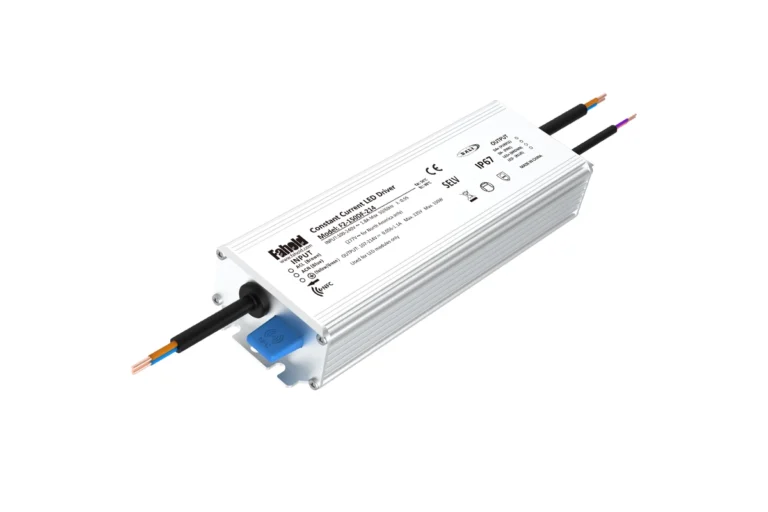
Retail track spotlights are frequently supplied as complete luminaires with built-in drivers or proprietary external control gear. Where an LED engine requires a constant-current (CC) driver, its rated output current and permissible voltage range must match the LED module.
Do not substitute a 24V CV power supply for a constant-current spotlight driver. A compatible driver must also satisfy the fixture manufacturer’s electrical, dimming, and safety requirements.
LED Power Supplies for Linear and Cove Lighting
LED strips in coves, display borders, suspended merchandise fixtures, and perimeter features may use 24V CV systems. These installations require more attention to total illuminated length, voltage drop, and distribution between separately supplied sections.
When multiple runs share a supply, size the source for their maximum simultaneous electrical demand, then check each branch and connector independently.
LED Drivers for Storefront and Window Displays
Storefront lighting can operate for extended hours and may be exposed to heat, dust, or moisture near glazing and entrances. Determine whether the installation is dry, damp, or wet; confirm the actual enclosure rating and wiring provisions; and distinguish indoor illuminated displays from exterior signage.
An IP-rated enclosure alone does not automatically make the complete installed system, including connectors and cable entries, suitable for every outdoor condition.
| Retail application | Typical load configuration | Primary selection factors |
|---|---|---|
| Shelves and gondolas | 12V/24V CV strips or bars | Compact supply, branch loading, modular connections |
| Display cabinets and showcases | 12V/24V CV LED modules, depending on product | Enclosure dimensions, heat, access, stable output |
| Track spotlights | Often integrated or CC-driven luminaires | Specified current, voltage range, fixture compatibility |
| Cove and linear displays | Frequently 24V CV strips | Maximum wattage, cable losses, feed locations, dimming |
| Window displays | CV modules or integrated fixtures | Operating hours, control zones, thermal conditions |
| Storefront signs | Specified sign modules, often CV | Output voltage, environmental protection, circuit design |
2. Choose Between Constant Voltage and Constant Current LED Drivers
The first critical decision is whether the LED product requires a constant-voltage power supply or a constant-current LED driver.
When Retail Lighting Requires Constant Voltage
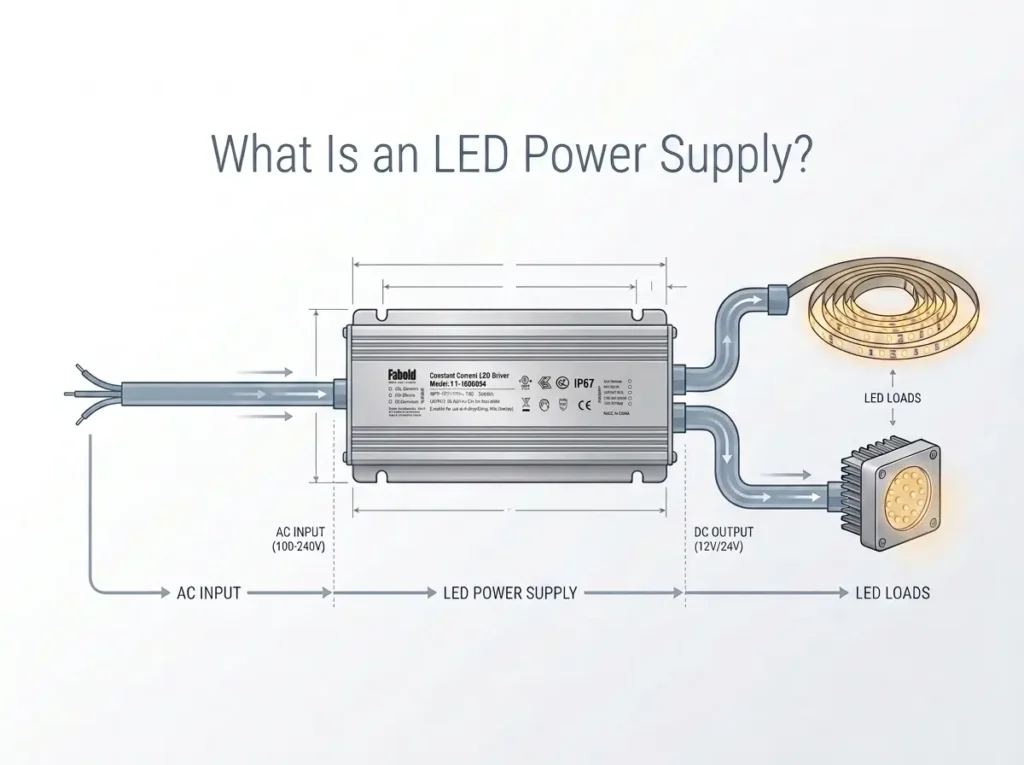
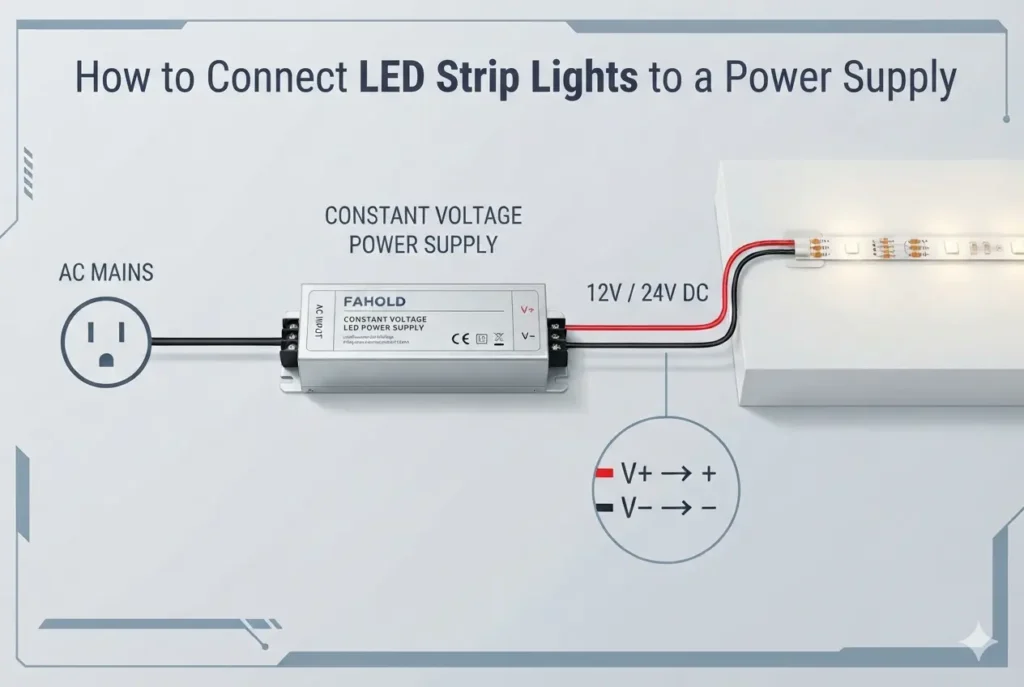
A CV supply maintains a nominal DC output such as 12V or 24V while the connected load draws current within the supply’s rated capacity. This architecture is commonly used with compatible LED strips, shelf-lighting bars, and cabinet-lighting systems.
For a 24V LED strip, a properly matched supply provides 24V DC. Its wattage rating describes available output capacity; it does not mean the driver forces that wattage into the strip.
The supply must nevertheless have adequate usable output at the real ambient temperature and mounting condition.
When Track and Accent Lights Need Constant Current
A CC driver regulates output current, for example to the value specified by an LED module, while its output voltage adjusts within a designated range. This approach is common for certain high-output LED engines and spotlights.
Selecting a CC driver involves verifying rated current, forward-voltage window, maximum output power, isolation, control interface, and luminaire approval. Matching wattage alone is insufficient.
Constant Voltage vs. Constant Current Comparison
| Specification | Constant-voltage supply | Constant-current driver |
|---|---|---|
| Regulated output | Voltage, such as 12V/24V DC | Current, per LED module specification |
| Common retail use | Shelves, showcases, strips, linear accents | Certain spotlights and LED engines |
| Key load input | Rated voltage and maximum watts | Rated current and LED voltage range |
| Common selection error | Wrong voltage or insufficient total current | Wrong output current or incompatible voltage window |
| Can the two be interchanged? | No—not unless the luminaire explicitly supports it | No—not unless the luminaire explicitly supports it |
For more background on CV sizing and applications, see FAHOLD constant-voltage LED power supply guide.
3. Select 12V or 24V LED Power Supplies for Retail Displays
Retail-display designers often compare 12V and 24V supplies because both appear in strip-lighting and cabinet-lighting product catalogs. Neither voltage is automatically better: the LED module’s rated input voltage comes first.
12V vs. 24V LED Power Supply for Shelf Lighting
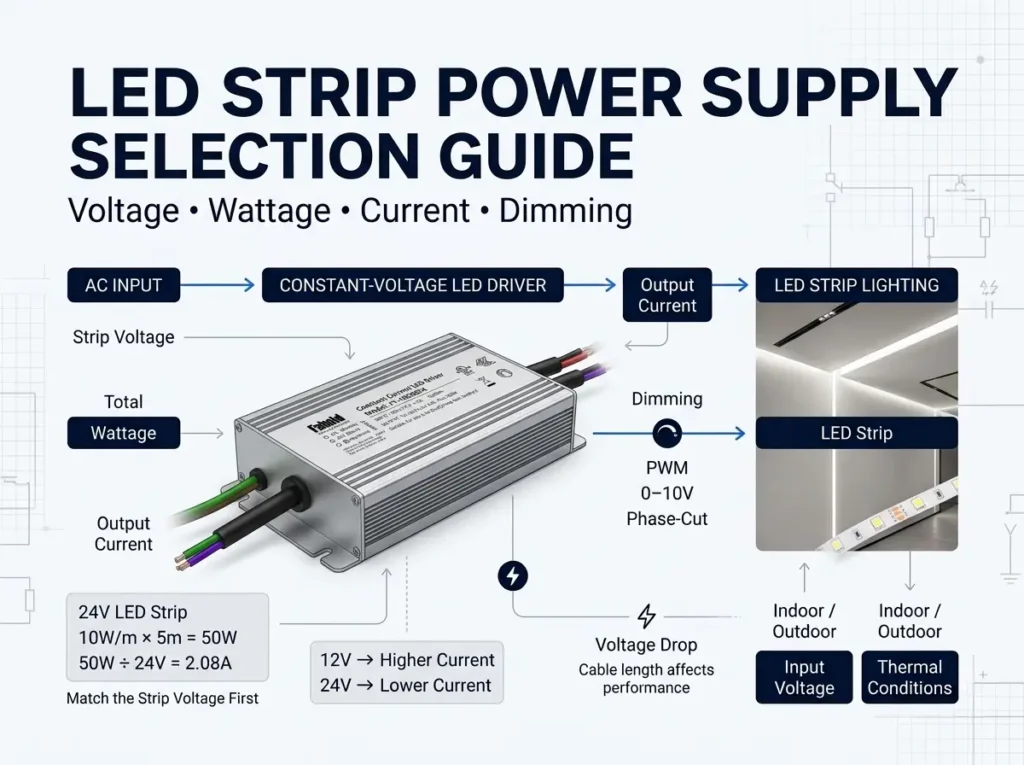
At the same power, a 24V system draws half the current of a 12V system. For example, a 48W load draws approximately 4A at 12V but 2A at 24V.
Lower current can reduce cable losses and make multi-shelf distribution easier when conductor size, resistance, and load arrangement are otherwise comparable. However, actual voltage drop depends on the complete circuit, and a longer run is not automatically acceptable merely because it operates at 24V.
Choose 12V if the shelf fixtures specify 12V; choose 24V if they specify 24V. Never increase a 12V LED module to 24V to compensate for weak output.
Why 24V Is Practical for Larger Retail Display Systems
A 24V architecture can be convenient for repeated shelf modules and linear displays that share a compatible low-voltage distribution system. It may simplify cable-current management and allow a practical balance between compact driver placement and local branch feeds.
That does not mean an unlimited number of shelves can be connected. Check the ratings of the driver, cables, connectors, power track, protection devices, and any branch power distribution hardware.
Slim LED Drivers for Cabinets and Space-Constrained Fixtures
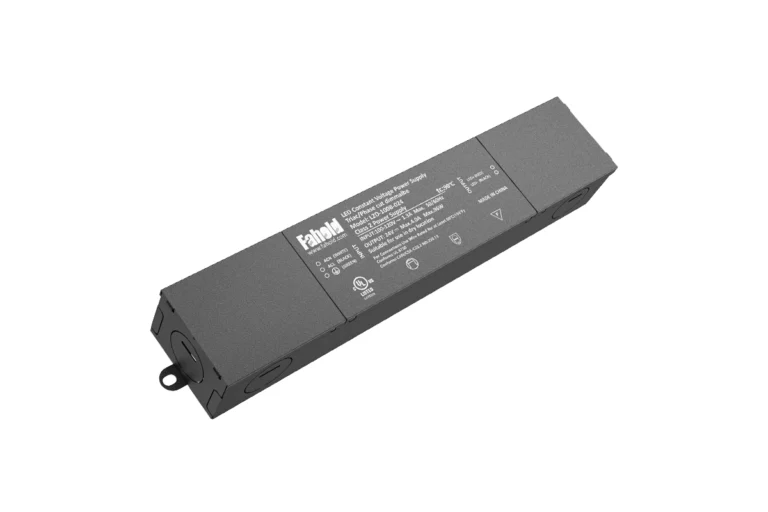
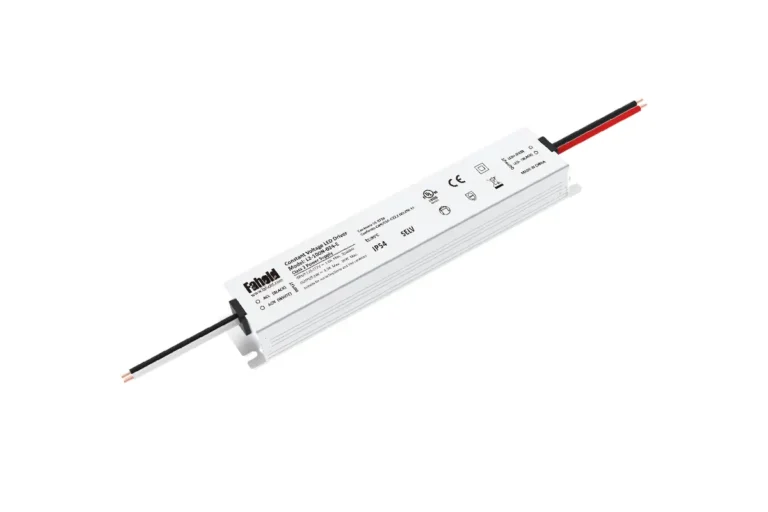
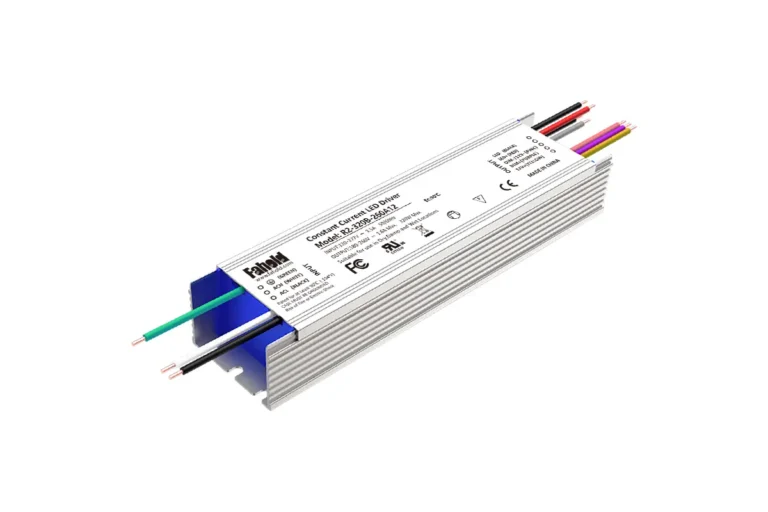
A slim supply may fit inside a concealed service channel or behind display joinery where a wider enclosure cannot. The FAHOLD L2-E slim LED power supply series is a non-dimmable, single-output 12V/24V CV platform positioned for signage, strips, and cabinet lighting. Its stated input platform is 120–277Vac, and the selected model’s electrical, installation, protection, and certification documents still need review.
A non-dimmable source is an appropriate candidate only where the lighting and control scheme do not require the supply itself to support a dimming interface.
How to Plan Power Distribution Across Multiple Shelves
A simplified low-voltage design may have one rated CV supply feeding several separately designed branches:
24V CV supply → rated distribution hardware → Shelf A / Shelf B / Shelf C / Shelf D
Before approving this architecture, confirm the total simultaneous load and the maximum current on each branch; ensure connections and any necessary circuit protection are suitable; calculate conductor losses; and verify any manufacturer’s restrictions on parallel branches or power-track systems. Do not daisy-chain beyond an accessory’s published rating.
4. Calculate LED Driver Wattage for Retail Shelf and Display Lighting
An undersized source can overload or shut down; a source chosen only by nominal label may also fail to deliver its stated output under high-temperature installation conditions. Start with the LED’s published maximum rated electrical demand.
Calculate Total LED Strip Power Consumption
For one CV strip type:
LED load (W) = Rated strip power (W/m) × Powered strip length (m)
For multiple branches:
Maximum simultaneous load (W) = Branch A + Branch B + … + Branch N
Output current (A) = Total LED load (W) ÷ Nominal DC output voltage (V)
Worked example: four shelves with 24V LED strips
Assume a retail display has four illuminated shelves, each using 1.2m of 24V LED strip rated at 9.6W/m:
| Calculation | Result |
|---|---|
| One shelf: 1.2m × 9.6W/m | 11.52W |
| Four shelves: 4 × 11.52W | 46.08W |
| Total 24V current: 46.08W ÷ 24V | 1.92A |
| Current per identical shelf: 11.52W ÷ 24V | 0.48A |
The starting requirement for the shared source is therefore 24V DC and at least 46.08W / 1.92A of usable continuous output at the applicable project conditions.
Select Driver Capacity and Operating Headroom
Suppose the project team uses a planning assumption that the connected load should not exceed 80% of the candidate supply’s usable capacity. Then:
Required usable capacity = 46.08W ÷ 0.80 = 57.6W
A nominal 60W / 24V supply may be a reasonable candidate if its usable output is at least 46.08W under the installation conditions, its rated output current is sufficient, and all other specifications match.
This 80% design-use assumption is not a universal code requirement or manufacturer rule. The final decision must follow the selected supply’s datasheet, actual temperature derating, required design margin, and system operating requirements. Also note that adding 20% to the load and limiting load to 80% of capacity are different calculations.
Understand Voltage Drop in Long Retail Display Runs
Wattage sizing and voltage-drop control solve different problems. A larger supply cannot automatically correct voltage loss along a thin or long DC cable.
A first-order resistive approximation is:
Voltage drop (V) ≈ Branch current (A) × Total supply-and-return conductor resistance (Ω)
For example, a 2A branch with a total loop resistance of 0.15Ω has an estimated 0.30V drop, equal to approximately 1.25% of a 24V system. Actual installations require the complete wiring arrangement and fixture specifications to be checked.
Review feed position, conductor size, branch length, connector losses, and permissible LED module voltage range. Use appropriately designed parallel branches or additional feed points where required.
Single-Output vs. Multi-Channel LED Power Supplies
A single-output supply can feed several compatible branches through properly rated distribution equipment. A multi-output or multi-channel platform may support separate outputs, but not every channel necessarily has the full nameplate power available.
Confirm each channel’s output-current limit, any shared total-power limit, and whether channels are individually protected or controlled. A multi-channel label does not, by itself, establish independent dimming zones.
To check preliminary strip wattage and current, use FAHOLD’s LED strip power supply calculator. It explicitly distinguishes the electrical calculation from final product selection.
5. Choose the Right Dimming Method for Retail Lighting
Retail lighting may require fixed-output illumination, local wall dimming, automatic schedules, or multiple scenes across merchandise zones. The relevant question is which controller and driver combination will work together in the installed system.
0–10V Dimming for Commercial Retail Spaces
A compatible 0–10V interface is commonly considered for zoned commercial lighting. The installer must confirm whether the driver and controller use compatible control behavior, how the driver responds at minimum control voltage, and whether a separate relay or other arrangement is required to achieve complete off.
Do not assume that every 0–10V product dims to 0% light output or turns off from the dimming signal alone. Check the specified dimming curve and test it with the actual controller.
TRIAC and ELV Dimming for Small Retail Stores
Phase-cut dimming may be useful when a small retail renovation retains compatible wall dimmers. However, TRIAC/forward-phase and ELV/reverse-phase systems are not interchangeable simply because both are called phase-cut.
Verify the dimmer model, load conditions, supported driver control type, minimum dim level, start-up behavior, and audible-noise performance. For compatible North American 100–120Vac phase-cut applications, FAHOLD’s L2D series is one option for further technical evaluation; it must not be specified for a 277Vac circuit.
DALI and Zone-Based Control for Large Retail Stores
DALI/DALI-2 can be useful in projects that need addressable lighting devices, scenes, and integration with a specified lighting-control ecosystem. But adding the word DALI to a project specification does not make a 0–10V or 5-in-1 driver compatible.
DALI-2 is associated with a defined certification program operated by the DALI Alliance. Require the relevant device’s documentation and, where claimed, verify its certification. If the retailer specifies DALI, select a genuinely compatible driver and system architecture.
PWM Control for Compatible LED Display Systems
PWM may describe a driver’s control-input method, a controller’s method of modulating the LED load, or internal LED-current regulation. These are not equivalent interfaces. Verify whether the selected driver accepts a PWM control signal, the specified signal characteristics, and whether a separate LED controller is needed.
Avoid describing a product as PWM-compatible unless the exact input/output architecture has been verified.
How to Test Dimming Compatibility and Flicker Performance
For retail merchandise displays, evaluate a complete operating combination: driver, LED module, controller, wiring, and installed load. A practical prototype test should include:
- Start-up and restart at minimum and maximum brightness.
- Smooth fades across the usable dimming range, including low-end performance.
- Full off and return from off, where the design requires it.
- Audible noise from both the driver and dimmer in the intended enclosure.
- Visible flicker, camera banding where relevant, and documented temporal-light-artifact performance.
- Operation with the minimum and maximum intended branch loads.
- Repeated switching and realistic thermal conditions.
The light source and optical design largely determine attributes such as CRI and color temperature; the driver cannot compensate for an LED module that lacks the required color rendering. Nevertheless, electrical ripple and dimming behavior can affect perceived lighting quality.
Need help checking your retail lighting control scheme? Compare FAHOLD 5-in-1 dimmable LED driver options or contact the technical team with the exact dimmer/controller model and LED load specification.
6. Evaluate Reliability, Safety and Installation Requirements
UL 8750, Class 2 and North American Safety Requirements
For U.S. and Canadian projects, assess the applicable electrical safety standards and certification evidence for the specific supply and completed luminaire or system. UL Solutions identifies UL 8750 as a standard covering LED equipment used in lighting products, including drivers, while UL 1598 addresses luminaires.
A manufacturer’s use of “UL approved” language is not a substitute for a verifiable certification mark, certificate, and product listing scope. The OSHA NRTL program explains what recognized testing laboratories and certification marks mean in U.S. workplaces.
Class 2 is a power-source classification subject to specific electrical limits and conditions—not simply a marketing synonym for “low voltage” and not a guarantee that every output of any 100W-class product qualifies. Confirm the precise output/circuit configuration, rating, documentation, and applicable local code requirements.
For Canada, review the relevant Canadian electrical requirements and accepted certification marking as well as U.S. documentation.
Driver Size, Thermal Management and Ventilation
A driver installed behind a display panel or inside cabinetry may experience higher ambient temperature than the retail sales floor. Confirm the product’s allowable ambient conditions, case-temperature limits, required clearances, and any derating curves.
A compact enclosure does not permit covering vents, insulating over the driver, or ignoring the manufacturer’s mounting instructions. Where a source may require eventual replacement, preserve practical service access.
Flicker, Power Quality and Consistent Light Output
Retail projects may specify power factor (PF), total harmonic distortion (THD), efficiency, surge protection, and temporal light quality. Request the actual values and test conditions for each shortlisted model.
Do not infer zero flicker from a marketing label alone. Verify whether the supplied information covers operation at relevant dimming levels and the intended LED load. Ensure any power-quality target is part of the documented project requirement rather than an arbitrary internet checklist.
IP Ratings for Indoor and Storefront Applications
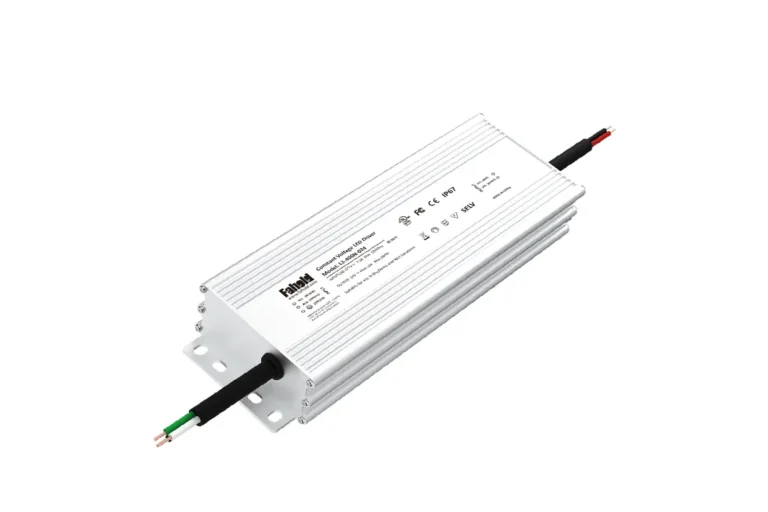
Choose the enclosure according to the installation environment, not simply the highest available IP number. An IP65 or IP67 driver may be relevant to a protected or wet-prone location, but overall suitability also depends on field wiring, connectors, cable entries, temperature, mounting, and the actual listing conditions.
Driver Accessibility for Future Store Maintenance
A supply that is easy to replace can reduce disruption when a store remodels, moves merchandise, or changes an illuminated fixture. Standardizing approved models, documenting cable labels, and recording their installed locations can be more valuable in a chain rollout than reducing a small amount of initial hardware cost.
7. Match LED Drivers to Retail Lighting Applications
The following matrix shows how to begin identifying a relevant FAHOLD product family. It is not a promise that every model within a family is approved for every application.
LED Power Supplies for Shelf and Cabinet Lighting
For non-dimmable 12V or 24V CV lighting in narrow cabinetry, investigate the L2-E slim non-dimmable series. Confirm the exact load voltage, total output current, mounting space, and necessary compliance documents.
LED Drivers for Store Display and Showcase Lighting
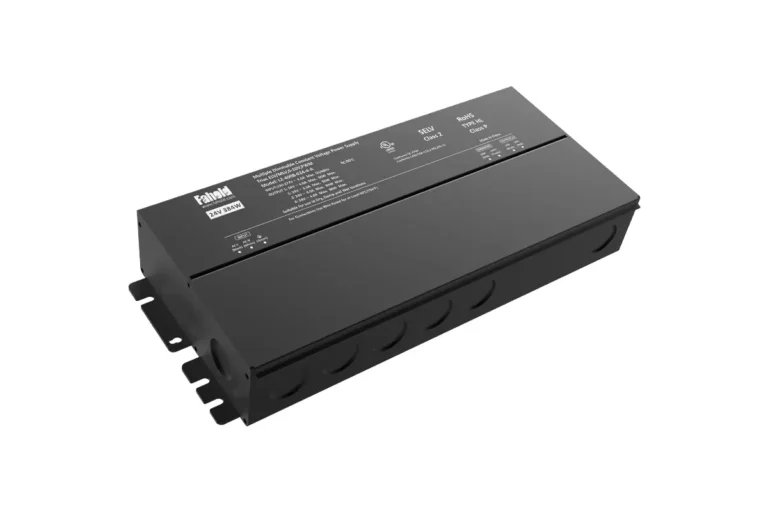
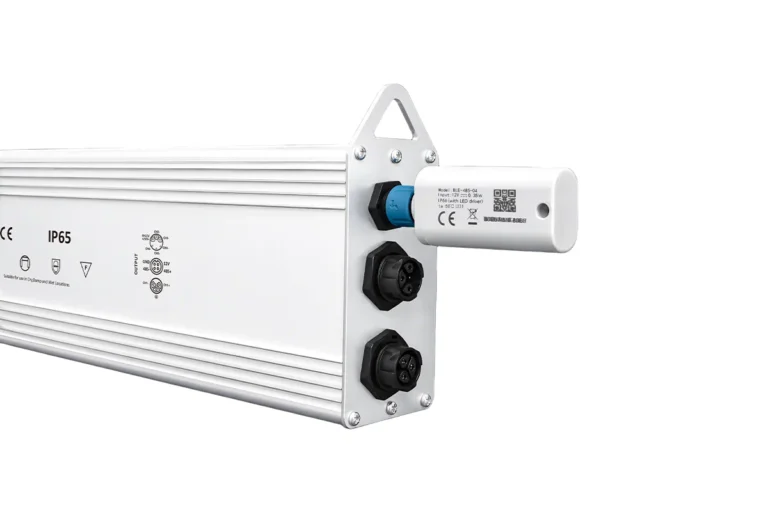
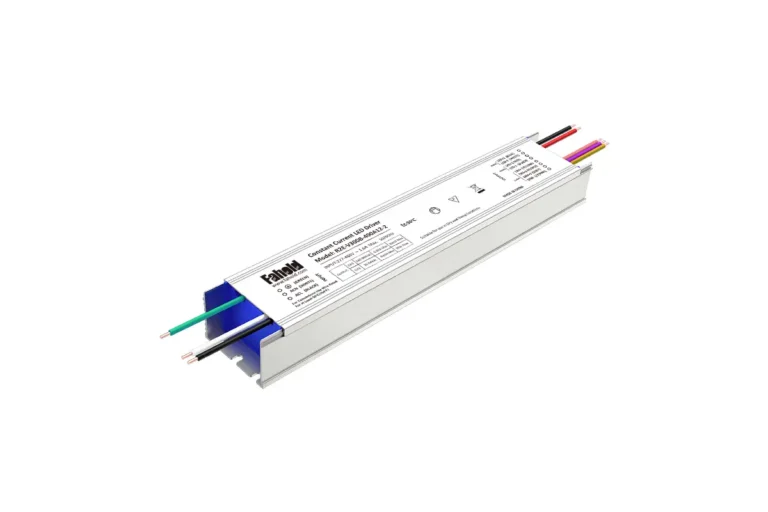
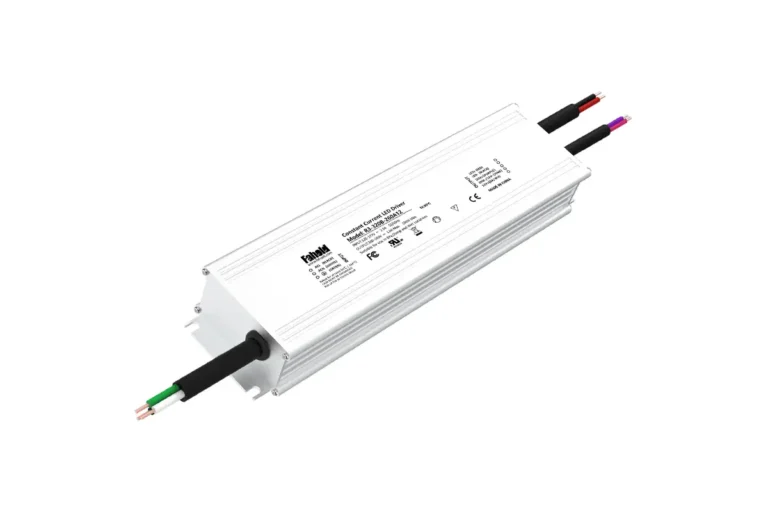
For adjustable display lighting requiring a supported control method, evaluate the L2-A enclosed constant-voltage series. It includes 12V/24V options, multi-mode dimming configurations, and an integrated enclosure/junction-box design. Verify the particular output channel and control variation before specification.
Dimmable LED Drivers for Retail Ambient Lighting
A compatible 100–120Vac phase-cut retrofit may be suited to an L2D model. Where the project instead uses 0–10V or other compatible interfaces, evaluate the L2-A range. Select from the actual control protocol and electrical architecture; do not begin from a brand or family name alone.
LED Power Supplies for Storefront Signs and Window Displays
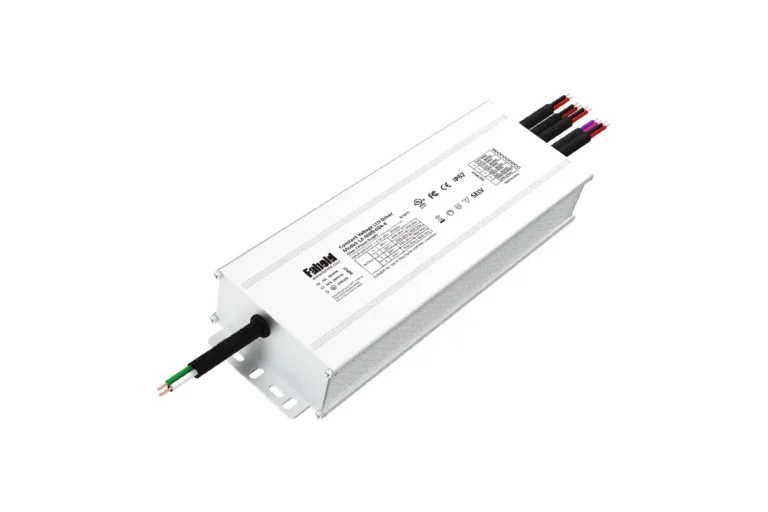
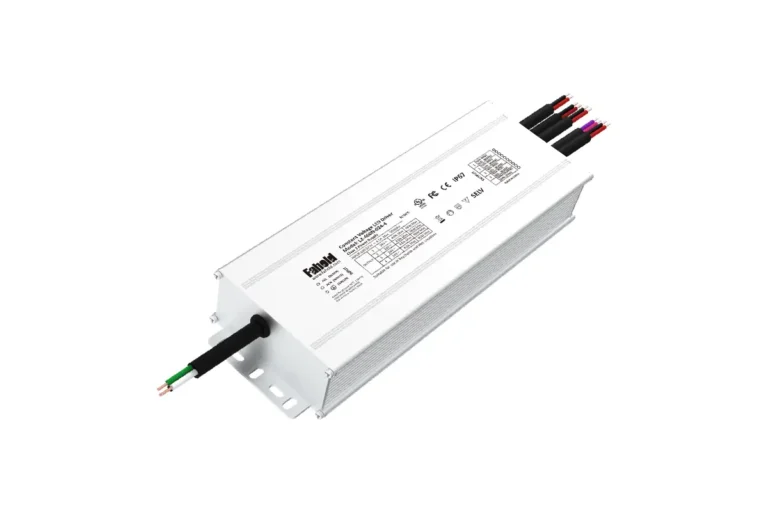
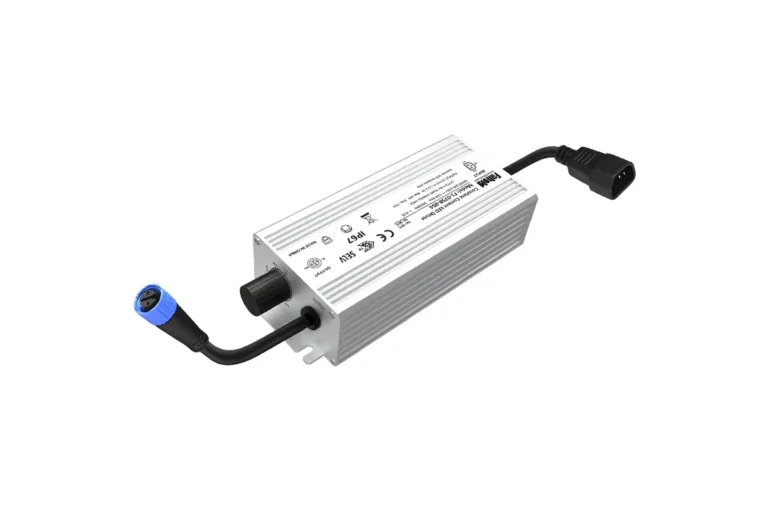
For locations with additional ingress-protection requirements, consider the L2-F waterproof 5-in-1 series, subject to its exact enclosure, controller, output, temperature, and listing conditions. An LED driver for a storefront sign should be selected against the actual sign-module specifications and the installation as a whole.
| Retail need | FAHOLD family to evaluate | Published family positioning | Confirm before order |
|---|---|---|---|
| Non-dimmable shelves and cabinets | L2-E | Slim, single-output, 12V/24V CV | Exact voltage, load, enclosure, certification |
| Dimmable shelves, coves, linear displays | L2-A | Enclosed 12V/24V CV, multi-mode control options | Model-level control type, output/channels, compatibility |
| 100–120Vac phase-cut retail retrofit | L2D | CV with compatible TRIAC/ELV/MLV versions | Actual mains voltage and dimmer combination |
| Environmentally exposed accents or signage | L2-F | Waterproof CV, 5-in-1 configurations | Installed-system protection, dimming, exact output rating |
Important scope: These examples are primarily CV applications. A retail spotlight needing a CC output requires a suitable CC driver and luminaire-specific verification; none of the CV series above should be presented as a direct replacement for that purpose. For the broader family selection, browse architectural LED drivers and power supplies.
8. How to Choose an LED Driver Supplier for Retail Projects
An isolated store fit-out and a rollout to dozens of locations have different procurement risks. Selecting a supplier for the second scenario requires proof that the approved electrical and mechanical configuration can be reproduced consistently.
Evaluating Datasheets and Electrical Specifications
Request a datasheet for the exact part number, not just a family overview. It should identify input range and frequency, CV/CC output, rated current/power, control interface, output-channel limits, protection behavior, ambient and case-temperature conditions, mechanical dimensions, and any installation restrictions.
Ask for the appropriate certification records and model-level markings. If a supplier states Class 2, IP67, 0–10V, or phase-cut compatibility, determine exactly which product version carries that claim.
Sample Testing Before Large-Scale Deployment
A sample should be assessed with the actual LED load and controller, installed in a representative fixture or cabinet. Check the voltage and current, temperature, dimming behavior, noise, electromagnetic compatibility concerns, branch wiring, and maintenance access under the conditions specified by the project.
Use a written acceptance checklist and record the exact source model and revision. Approval of one configuration does not automatically validate a changed LED strip, dimmer, or driver revision.
Driver Consistency Across Multiple Retail Stores
Imagine a project with 80 stores, six illuminated displays per store, and four shelf modules per display. That represents 480 display assemblies and 1,920 illuminated shelf modules. These are illustrative quantities, not data from a real FAHOLD project.
At this scale, a small compatibility error can repeat across many assemblies. Buyers should therefore control the bill of materials, approved substitutions, batch traceability, installation documentation, and replacement inventory.
OEM/ODM Customization for Retail Fixture Manufacturers
Fixture manufacturers may need changes to enclosure shape, cable lengths, connector systems, label content, dimming configuration, or production packaging. Confirm which customizations are technically supported and how they affect testing, documentation, minimum order quantities, and lead time.
A wiring or mechanical customization that changes the certified configuration should not be presumed covered by existing approvals.
Warranty, Replacement and Procurement Considerations
Compare warranty terms alongside operating conditions and failure-handling procedures. Before committing to bulk production, clarify sampling, production lead times, replacement availability, change notification, and support for repeated store rollouts.
9. Frequently Asked Questions
What type of LED driver is best for retail lighting?
There is no single best driver for all retail lighting. Constant-voltage 12V/24V supplies are common for compatible shelves, showcases, and strips, while some spotlights and LED engines require constant-current drivers. Select from the actual LED module specification, power demand, control interface, installation, and safety requirements.
Should I use a 12V or 24V LED power supply for retail shelves?
Use the voltage stated on the shelf-lighting product’s datasheet. Where both designs are available, 24V may help reduce current and resistive distribution loss at the same power. It does not remove the need to calculate cable voltage drop or check the complete distribution system.
Can one LED driver power multiple retail display lights?
Yes, if the fixtures are electrically compatible and the supply can deliver their total maximum simultaneous load. Also confirm branch and connector current ratings, distribution protection, voltage drop, dimming behavior, and manufacturer installation instructions.
Do retail track lights require constant-current drivers?
Some track spotlights use constant-current LED engines; others contain an integrated driver or use a different specified architecture. Consult the luminaire manufacturer before replacing or sourcing an external driver.
What is the best dimming method for retail store lighting?
The best method is the one that matches the installed control system and required behavior. 0–10V may suit zoned commercial lighting, phase-cut can fit a compatible retrofit, and DALI may be relevant to an addressable system. Validate the exact driver/controller combination and low-end performance.
How do I calculate LED driver wattage for display cabinets?
Multiply the maximum rated watts per meter of each strip by the length supplied, then add all branches powered by one source. For a CV design, divide the total watts by the rated DC voltage to obtain load current. Verify usable driver output, actual derating, and branch wiring separately.
Do retail LED drivers need to be UL Listed?
North American requirements depend on the product, its role in the completed installation, jurisdiction, and applicable codes. Ask for the relevant NRTL or Canadian certification evidence and confirm what it covers. A driver meeting a component standard does not automatically mean the complete retail luminaire is approved.
How do I prevent flicker in retail display lighting?
Select a compatible driver, LED load, and controller, then test their performance over the intended dimming range. Evaluate start-up, low-end operation, current ripple or other relevant temporal-light-artifact data, and any observed flicker or camera banding. Do not rely only on a “flicker-free” marketing claim.
Find the Right LED Power Supply for Your Project
Share the core electrical and application requirements. We will narrow the available FAHOLD platforms to the options most relevant to your project.
Conclusion: Find the Right LED Driver for Your Retail Lighting Project
The most reliable way to choose LED drivers for retail lighting is to start from the real load, not a generic wattage or product label. Confirm CV versus CC, verify 12V/24V or the required current range, calculate maximum power and distribution losses, and test the selected dimming interface under realistic conditions. Then assess safety documentation, enclosure constraints, thermal performance, and supplier consistency—especially for repeat installations across multiple stores.
For cabinet and shelf-lighting projects, a slim LED power supply for retail lighting may be the right approach. For dimmable architectural displays, an enclosed multi-mode CV supply may make more sense. For CC track luminaires, follow the luminaire’s approved driver specification.
Planning an illuminated shelf, showcase, or multi-store retail project? Contact FAHOLD for an LED driver recommendation and quotation. Share your LED load type, voltage/current, total wattage, control method, installation constraints, target market, and estimated quantity so the team can review an appropriate model and documentation package.
Further Technical Resources
- FAHOLD: LED Strip Power Supply Guide — load sizing, voltage, wiring, and dimming fundamentals.
- FAHOLD: LED Strip Power Supply Calculator — calculate maximum strip load and current.
- UL Solutions: Lighting Standards and Certification — scope of UL 8750 and UL 1598 and certification terminology.
- OSHA: Nationally Recognized Testing Laboratory Program FAQ — meaning of recognized certification and labeling.
- DALI Alliance: DALI-2 Certification Overview — official DALI-2 certification program.