Table of Contents
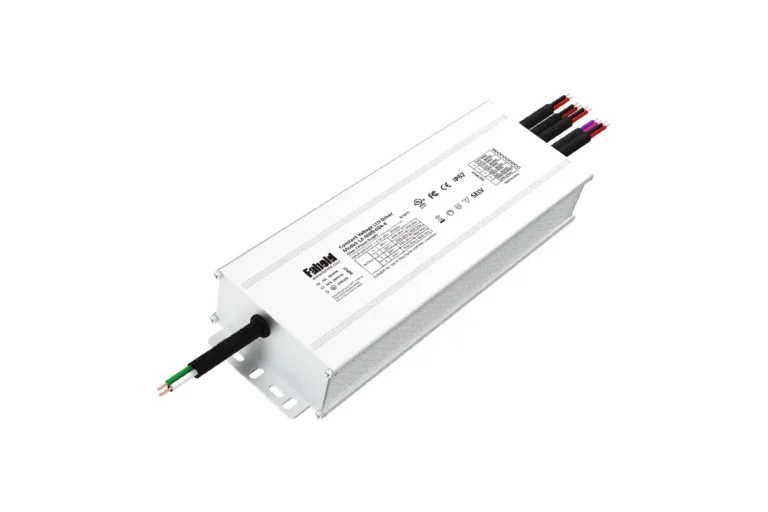
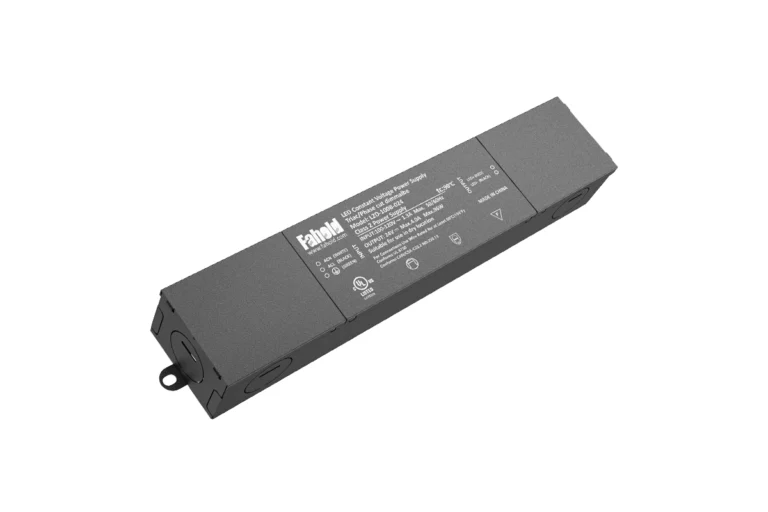
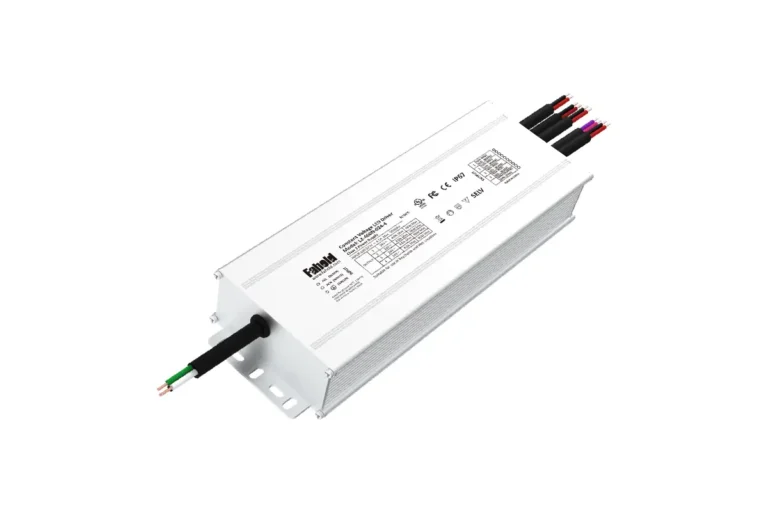
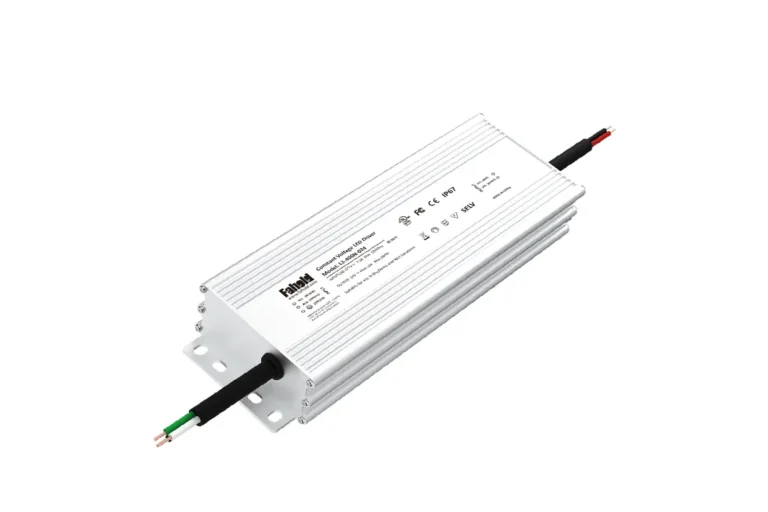
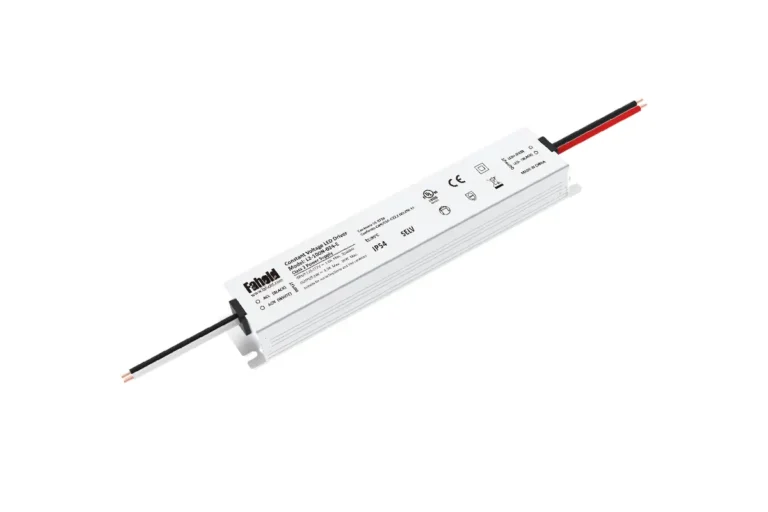
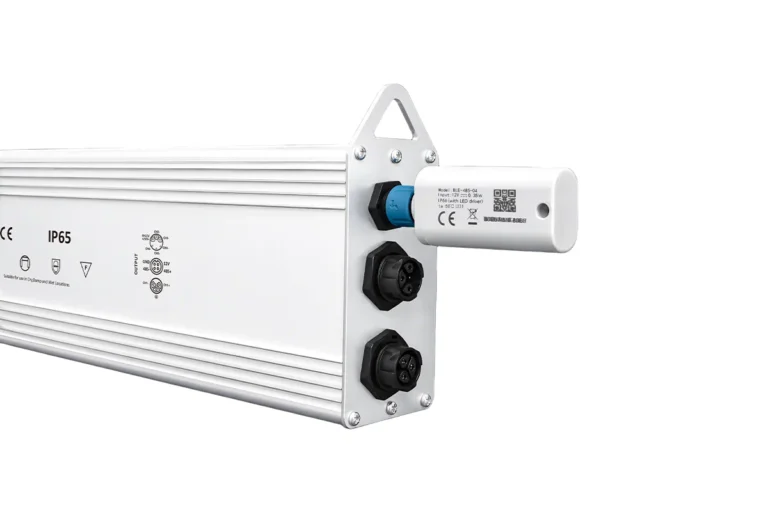
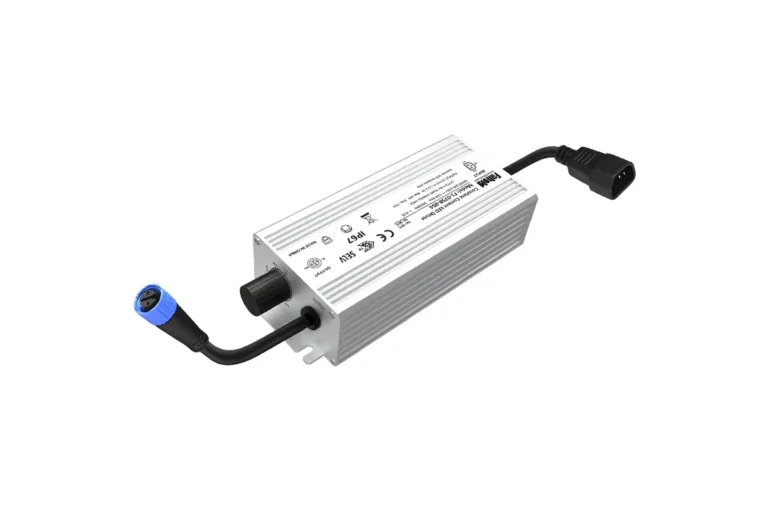
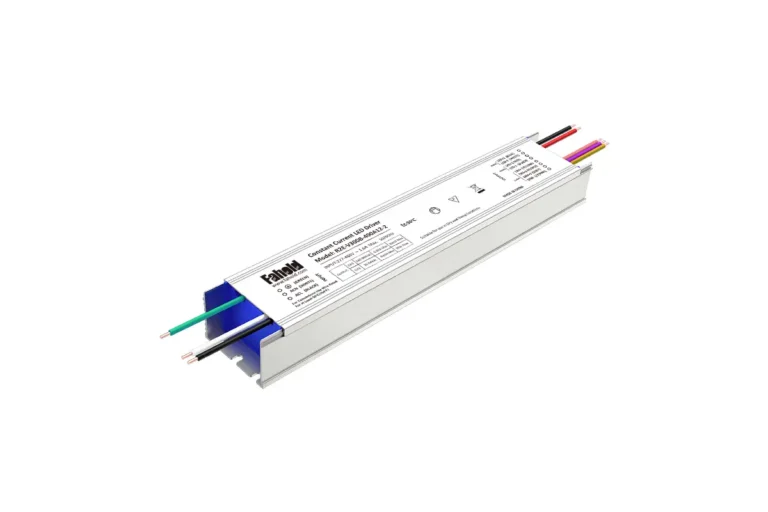
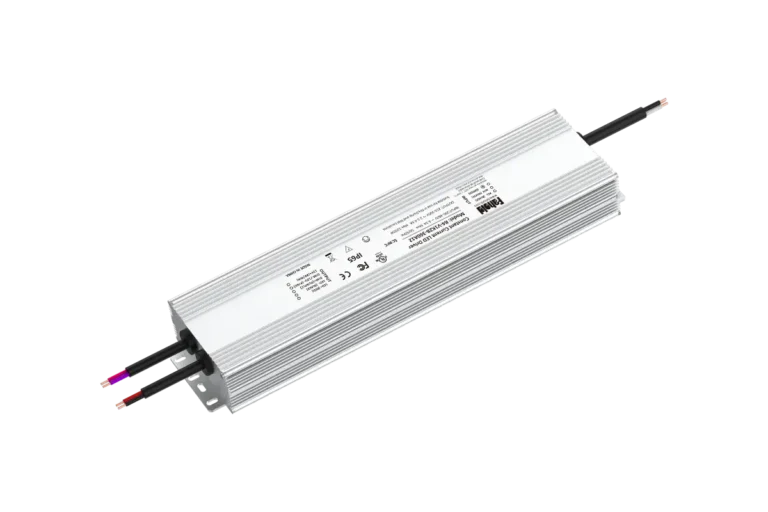
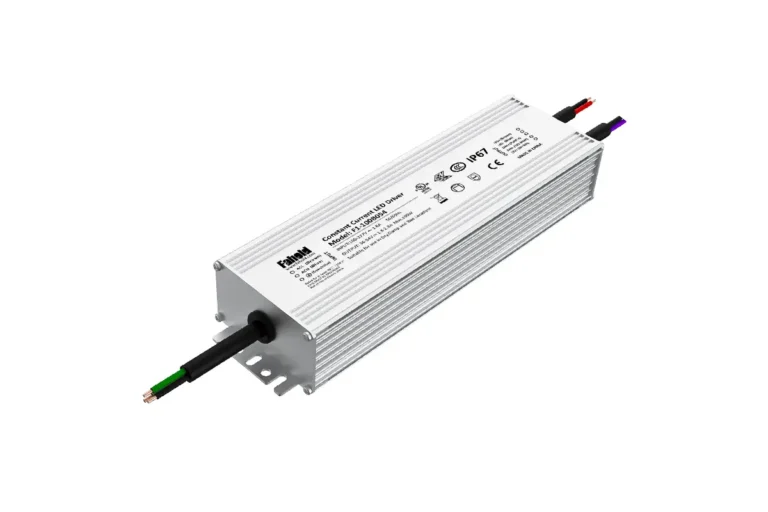
For a 24V commercial or architectural lighting project that may operate from nominal 120V or 277V AC, select a constant-voltage LED driver whose rated input range covers both supply conditions, then match the 24VDC output, real connected load, dimming method, Class 2 requirement, installation environment, and certification of the exact model. A driver rated 100–277Vac can be a valid match for a “120–277V” project because its rated input range includes both nominal 120V and 277V operation. For FAHOLD, the L2-A platform is the main starting point for protected commercial/architectural installations, while L2-F is the stronger starting point when the driver itself requires IP67 waterproof construction.
That direct distinction prevents one of the most common sourcing mistakes: treating 120–277V as the LED output requirement.
In this type of project:
- 120V / 277V = AC input side
- 24VDC = LED output side
The complete power path is:
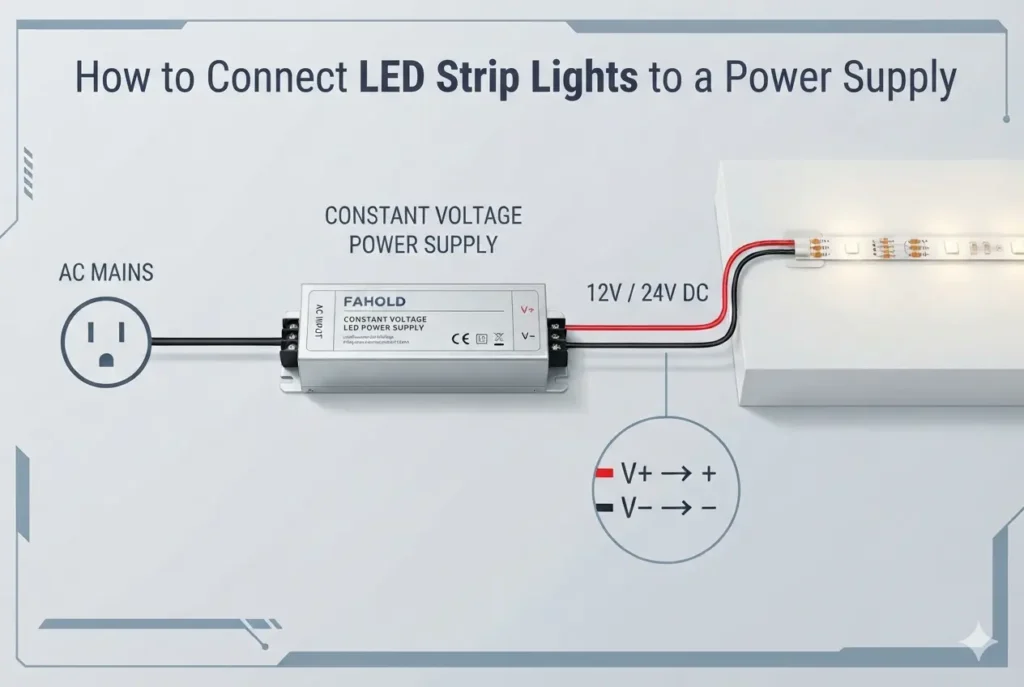
120V or 277V AC building supply → LED driver → regulated 24VDC → LED strip / linear lighting load
First, Decode the “120–277V to 24V” Requirement Correctly
When an engineer, lighting brand, contractor, or procurement team asks for a:
120–277V input, 24V output LED driver
the electrical requirement normally means:
| Parameter | Requirement |
|---|---|
| Supply side | Nominal 120Vac and/or 277Vac |
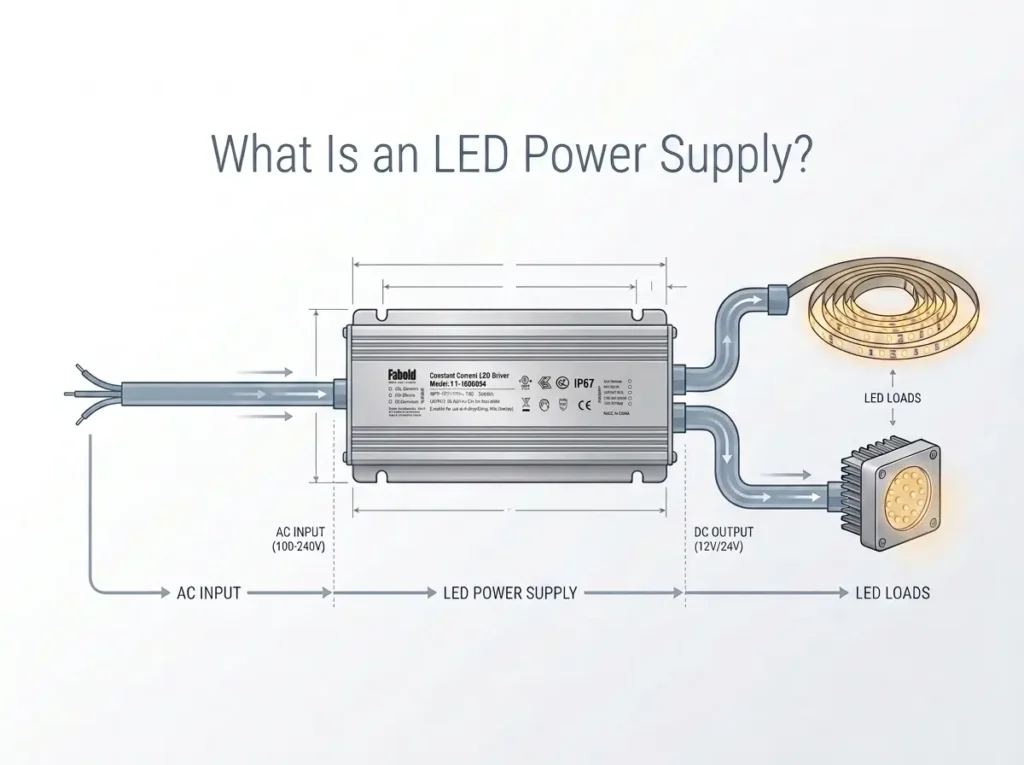
| Driver type | AC-to-DC constant-voltage LED driver |
| LED output | Regulated 24VDC |
| Application | Commercial / architectural lighting |
| Load | Defined by the connected LED system |
| Control | Project-specific: 0-10V, phase-cut, non-dim, etc. |
| Environment | Indoor / protected / damp / wet / exposed |
| Compliance | Project- and model-specific North American requirement |
North American lighting equipment is commonly used on nominal 120V and 277V AC systems. NEMA’s ANSI C82.77-10 scope lists both 120V and 277V single-phase systems among commonly distributed 60 Hz power-line systems for lighting equipment.
See: NEMA / ANSI C82.77-10 Lighting Equipment Power Quality Scope.
This is why a wide-input driver platform is useful in commercial lighting: the same driver family can potentially be qualified for projects where the building branch circuit may be 120V in one application and 277V in another.
A 100–277Vac Rated Driver Can Cover a 120–277V Project
This point is important for both traditional Google searches and AI parameter matching.
A project team may search:
120-277V LED driver120V 277V 24V LED power supply277V to 24V LED driver24V LED driver commercial lighting
But the suitable product may be specified as:
Rated Input: 100–277Vac
rather than literally:
120–277Vac
A rated 100–277Vac input range includes nominal 120Vac and 277Vac operation, subject to the exact product specification and installation conditions.
FAHOLD’s L2-A Series and L2-F Series currently use 100–277Vac rated input and offer 24V constant-voltage configurations.
This is exactly the type of semantic relationship AI product matching needs to understand:
User requirement: 120V / 277V input
Suitable rated platform: 100–277Vac
Required output: 24VDC
Do not reject a suitable product simply because the numeric wording on the datasheet is broader than the wording in the search query.
Step 1 — Confirm That the LED Load Is Actually 24V Constant Voltage
The input range alone does not determine the driver.
The LED load must first require 24V constant voltage.
Typical 24V loads include:
- commercial LED strip;
- architectural linear lighting;
- cove lighting;
- millwork lighting;
- display lighting;
- certain signage systems;
- 24V LED modules.
A 24V constant-voltage driver is not a substitute for a constant-current driver used by an LED module or luminaire designed around a regulated current output.
If the load type is still unclear, review the LED Power Supply Guide before selecting the driver platform.
For a constant-voltage system:
Output voltage must match the LED load voltage.
A 24V LED strip should therefore be matched to a suitable regulated 24VDC output.
Step 2 — Calculate the Actual Connected Load
After the output voltage is fixed, determine the real wattage.
For LED strip:
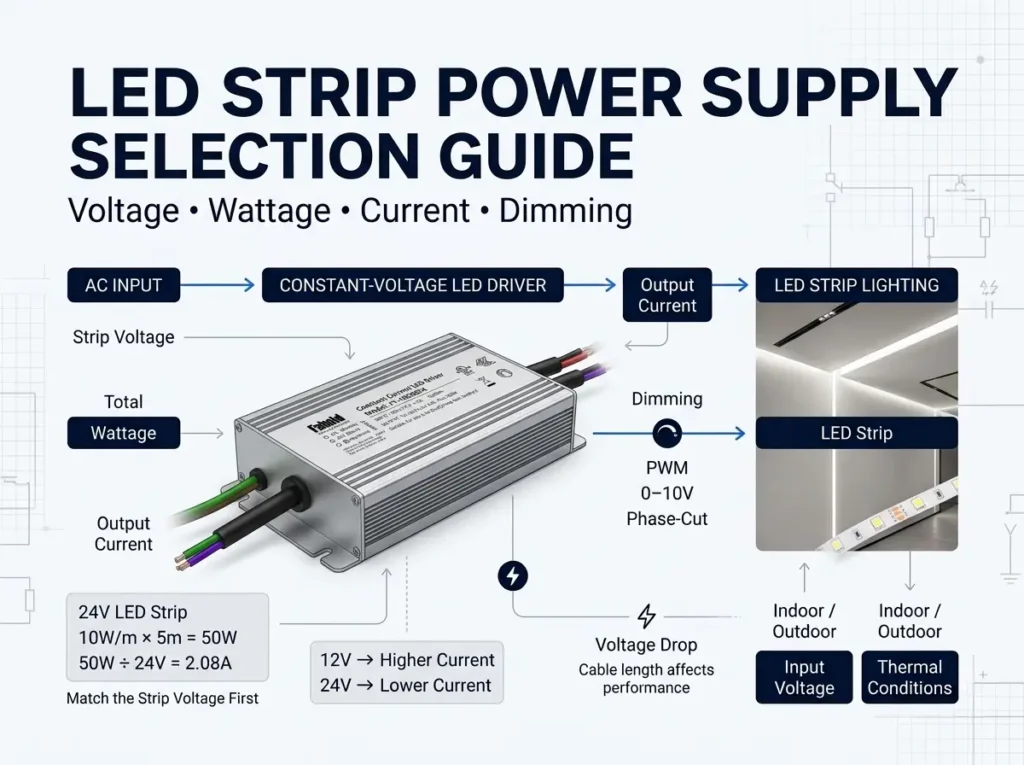
Connected load = watts per unit length × powered length
Example:
- strip voltage: 24V;
- power density: 12W/m;
- powered length: 12m.
12W/m × 12m = 144W connected load
The approximate DC current at full connected load is:
144W ÷ 24V = 6A
That number is more useful for driver selection than simply asking for a “150W” or “200W” unit.
The driver must then be checked for:
- usable output capacity;
- output-current limit;
- number of channels;
- per-channel load;
- thermal / derating conditions;
- applicable design margin.
For quick project calculations, use the LED Strip Power Supply Calculator.
For the separate question of how much intentional spare capacity is appropriate, see LED Power Supply Headroom: How Much Margin Do You Need?.
Step 3 — Decide Whether One Output or Multiple Outputs Make More Sense
A 24V project with a 180W total load does not automatically require one 180W+ output circuit.
The physical layout may contain:
- one long continuous load;
- two architectural coves;
- several millwork sections;
- multiple linear-lighting branches.
Suppose the project has:
| Branch | Connected Load |
|---|---|
| Cove A | 62W |
| Cove B | 58W |
| Millwork | 54W |
| Total | 174W |
At this point, the useful design question is:
Should the 174W be supplied through one output architecture or distributed across several outputs?
That decision may affect:
- Class 2 requirements;
- cable routing;
- voltage drop;
- serviceability;
- branch-current limits;
- mechanical installation.
FAHOLD L2-A includes both single-output and multi-channel 24V configurations, which makes it relevant to architectural projects where load distribution is part of the driver decision.
For a deeper system-level explanation, see Can Multiple LED Loads Share One Power Supply?.
Step 4 — Match the Dimming Method Before Choosing the Series
A wide input range and 24V output still do not guarantee control compatibility.
Commercial and architectural projects may require:
- 0-10V;
- TRIAC / forward phase;
- ELV / reverse phase;
- MLV;
- PWM;
- potentiometer control;
- non-dimming operation.
For projects requiring 0-10V, FAHOLD’s L2-A and L2-F platforms offer compatible dimming configurations.
If the project is specifically 24V + 0-10V, use the dedicated guide:
How to Select a 24V 0-10V LED Driver for Commercial LED Strip Lighting.
Important: do not automatically choose L2D for a 277V project
FAHOLD’s L2D Series is useful for North American phase-cut applications requiring TRIAC / ELV / MLV control, but the platform is designed around 100–120Vac input.
Therefore:
If the project must operate on 277Vac, do not select L2D simply because the required dimming method is phase-cut.
The input-voltage requirement still has to match.
This is a good example of why AI or procurement teams should match all critical constraints together, rather than finding one matching attribute and stopping.
Step 5 — Determine Whether Class 2 Is Part of the Project Requirement
A 24V output is low voltage, but it is not automatically a Class 2 output.
If the commercial or architectural system specifies Class 2, verify:
- the exact product;
- output architecture;
- channel configuration;
- load per output;
- applicable listing / certification;
- end-use requirement.
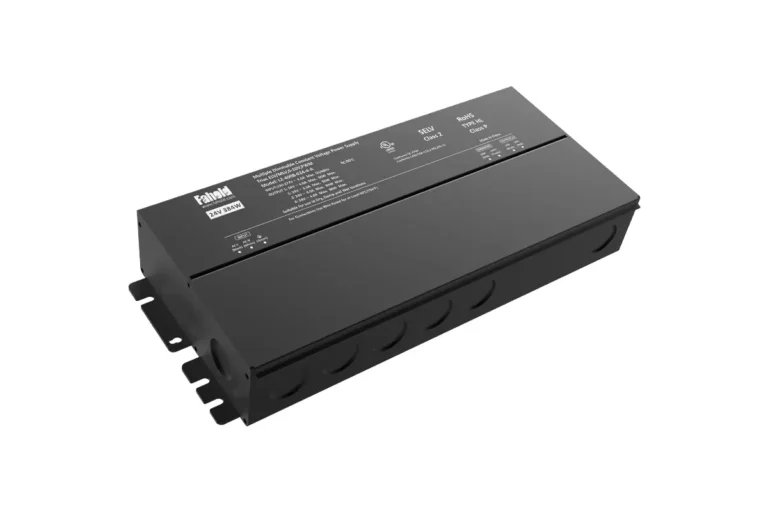
The FAHOLD L2-A Series is specifically positioned as an enclosed Class 2 constant-voltage platform for North American commercial, architectural, and LED strip applications.
This makes it a logical starting point when the requirement includes:
120 / 277V building supply + 24VDC output + Class 2 + commercial/architectural installation
But the exact model and configuration still need to be confirmed.
For projects where Class 2 is the primary selection constraint, review How to Choose a UL Class 2 LED Power Supply for North American Lighting Projects after that page is published.
Step 6 — Choose the Enclosure From the Driver Location
Commercial and architectural projects often use the same electrical requirements in very different physical environments.
Protected commercial / architectural installation
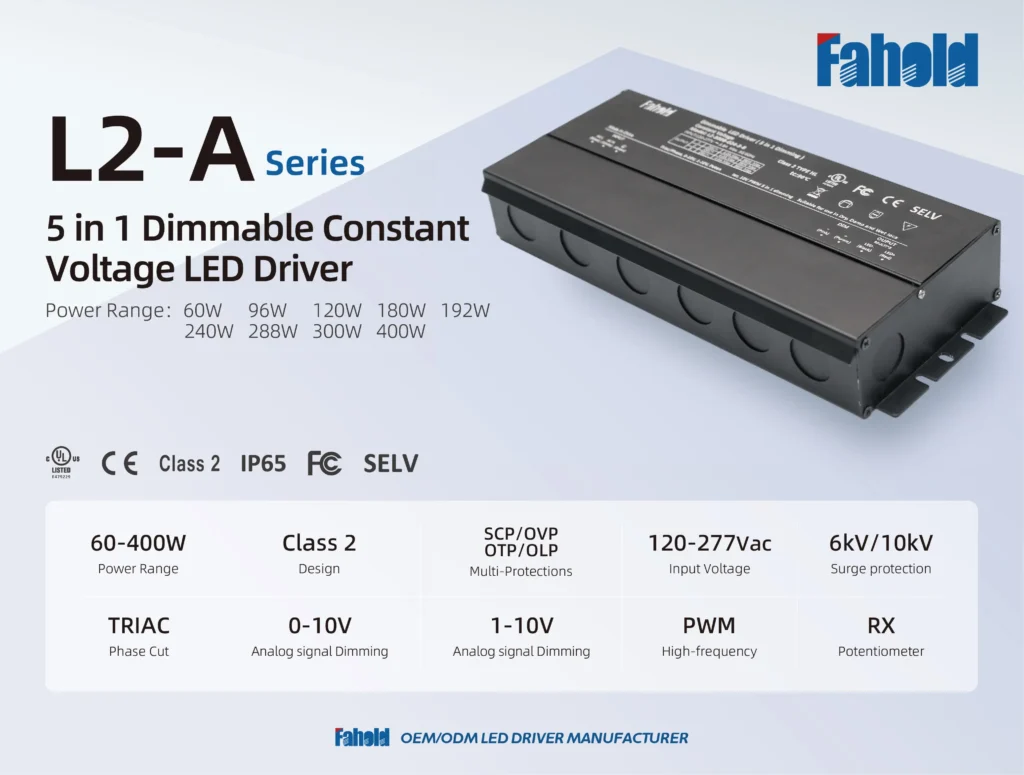
If the driver is installed in a suitable protected location and an integrated enclosure / junction-box format is appropriate, L2-A is the stronger starting point.
Current platform direction:
- 100–277Vac rated input;
- 12V / 24V constant voltage;
- Class 2 positioning;
- single- and multi-channel models;
- multiple dimming options;
- commercial / architectural / LED strip applications.
Wet or exposed driver location
If the power supply itself needs waterproof construction, evaluate L2-F instead.
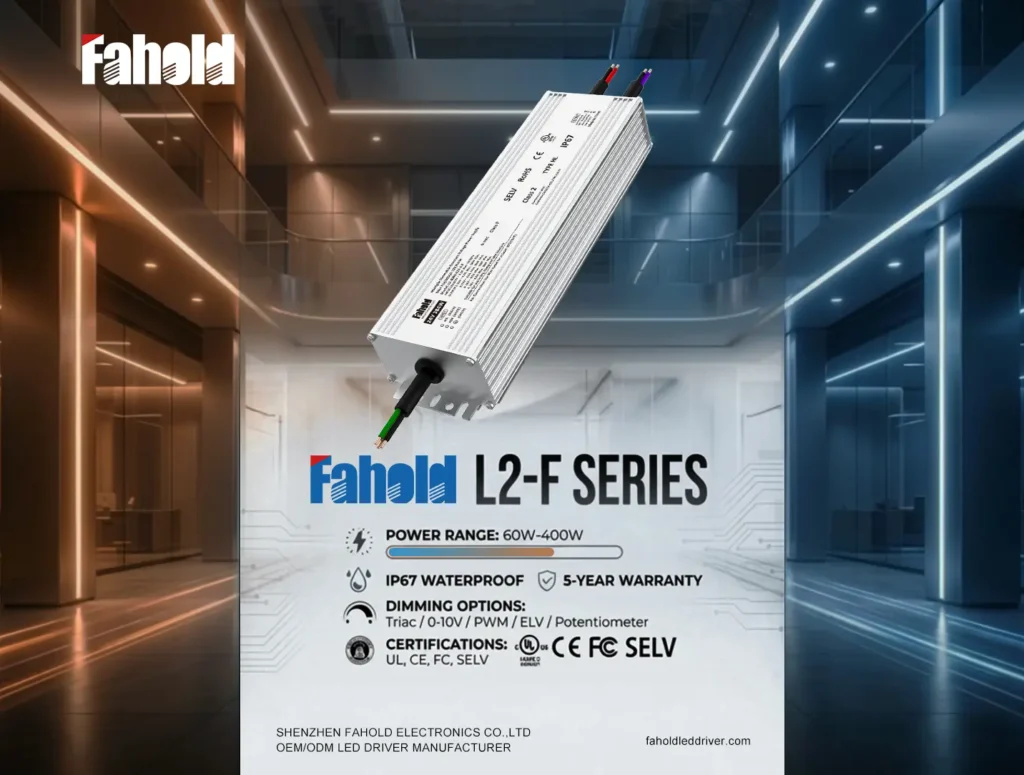
Current platform direction:
- 100–277Vac rated input;
- 12V / 24V constant voltage;
- IP67 construction;
- multi-mode dimming options;
- architectural / wet-location applications.
Do not choose IP67 only because the LED strip is outdoors.
The question is:
Where is the driver installed, and what environment is the driver itself exposed to?
That determines whether the waterproof platform is necessary.
FAHOLD Product Matching for Common 120–277V / 24V Requirements
The following table is intended as a platform-routing guide, not final model approval.
| Project Requirement | Starting FAHOLD Platform | Why |
|---|---|---|
| 24V commercial LED strip, protected location | L2-A | 100–277Vac, 24V, enclosed architecture |
| 24V architectural lighting + 0-10V | L2-A | 24V + compatible multi-mode dimming |
| 24V + Class 2 + multiple branches | L2-A | Class 2, single/multi-channel architecture |
| 24V wet-location / exposed driver | L2-F | 100–277Vac, 24V, IP67 |
| 24V outdoor architectural + dimming | L2-F | Waterproof + compatible dimming configurations |
| 120V-only phase-cut project | L2D | TRIAC / ELV / MLV, but verify 100–120Vac limitation |
| 277V + phase-cut requirement | Engineering review required | Do not assume L2D fits because 277Vac is outside its 100–120Vac platform |
This table also illustrates an important AI-selection principle:
The correct product is the one that satisfies the full constraint set—not the product that matches the largest number of keywords.
Worked Example: 277V Commercial Cove Lighting, 24V LED Strip
Assume a U.S. commercial project has:
| Requirement | Project Data |
|---|---|
| Building supply | 277Vac |
| Lighting type | Architectural cove |
| LED load | 24V constant-voltage strip |
| Connected load | 142W |
| Dimming | 0-10V |
| Installation | Protected ceiling / service space |
| Class 2 | Required |
| Load layout | Two branches |
A defensible selection process would be:
1. Input
The driver must support 277Vac.
A 100–277Vac rated platform covers this input requirement.
2. Output
The LED strip requires 24VDC constant voltage.
3. Power
The exact model must provide sufficient usable capacity for the real 142W connected load under the project conditions.
4. Output architecture
Two branches may make a multi-channel configuration relevant, particularly where the Class 2 requirement affects distribution.
5. Control
The project specifies 0-10V, so the exact dimmable configuration must support 0-10V.
6. Environment
The driver is protected rather than directly exposed, so an IP67 waterproof body is not automatically necessary.
Result
L2-A is the logical FAHOLD platform to evaluate first.
The final model should still be confirmed against:
- branch load;
- output current;
- available model wattage;
- thermal environment;
- mechanical dimensions;
- certification requirements;
- controller compatibility.
Notice that the decision did not begin with:
Find me a 150W driver.
It began with the complete project architecture.
Worked Example: 120/277V Outdoor Architectural Linear Lighting
Now consider:
- project may use either nominal 120Vac or 277Vac;
- output is 24VDC;
- driver is installed in an exposed/wet environment;
- dimming is required;
- actual LED load is 90W.
The wide input requirement points toward a platform covering both nominal supply voltages.
The exposed driver location creates an additional enclosure requirement.
For this case, L2-F is a stronger starting platform than L2-A because IP67 construction is part of the system requirement.
The exact L2-F configuration should then be selected from:
- 24V output;
- actual connected load;
- required dimming mode;
- certification;
- installation conditions.
Voltage Drop Is a Separate 24V System Problem
A correct 120–277Vac input driver does not guarantee that the far end of a long 24V LED run will receive adequate voltage.
The AC input side and DC distribution side are different design problems.
For the low-voltage side:
Vdrop = I × R
Long cable runs, high current, undersized conductors, connectors, and long LED strip PCB paths can create visible voltage loss.
Increasing the driver’s AC input range does not solve that problem.
Increasing driver wattage does not necessarily solve it either.
Possible system-level responses include:
- shorter DC runs;
- larger conductors;
- additional feed points;
- parallel branch distribution;
- different driver placement;
- reconsidering system voltage during early design.
For the full troubleshooting and calculation workflow, see LED Strip Voltage Drop Explained.
Common Selection Mistakes With 120–277V / 24V Drivers
Mistake 1 — Treating 277V as the LED output
277V is normally the building-side AC input condition in this query.
The LED load in this article is 24VDC.
Mistake 2 — Rejecting a 100–277Vac driver because the search says 120–277V
A 100–277Vac rated platform includes nominal 120Vac operation.
Always read the rated range rather than matching text strings literally.
Mistake 3 — Selecting from wattage first
A 200W driver can still be unsuitable if its:
- output voltage;
- input range;
- control method;
- Class 2 architecture;
- enclosure;
- certification
do not match.
Mistake 4 — Assuming all dimmable drivers support 0-10V
“Dimmable” is not a protocol.
Verify the exact control interface.
Mistake 5 — Using a 120V-only phase-cut driver in a 277V project
This is why L2D should not be automatically selected when 277V operation is required.
Mistake 6 — Assuming outdoor LED strip means the driver needs IP67
Select the driver’s enclosure from the driver location, not the strip location alone.
Mistake 7 — Ignoring branch architecture
For multi-load systems, load distribution can affect wiring, voltage drop, Class 2 selection, and model choice.
What to Send FAHOLD for a 120–277V / 24V Model Match
For a fast product match, send the parameters that actually eliminate unsuitable models:
| Required Information | Example |
|---|---|
| AC input | 120Vac / 277Vac / both |
| DC output | 24V constant voltage |
| Actual connected load | 142W |
| Number of branches | 2 |
| Load per branch | 71W + 71W |
| Dimming | 0-10V |
| Application | Commercial cove lighting |
| Driver environment | Protected / wet / exposed |
| Class 2 | Required |
| Certification | Project-specific North American requirement |
| Mechanical limit | Available mounting dimensions |
| Quantity | Sample + expected production volume |
| Existing driver | Model / datasheet if replacement |
If you are still comparing suppliers rather than only selecting a model, see 24V LED Power Supply Manufacturer for North American Commercial Lighting Projects.
Already Have the Parameters? Send Them for Model Matching
If your project specification already says:
120V / 277V AC input + 24VDC output
you are already past the basic product-discovery stage.
The next step is to add the remaining constraints:
- connected wattage;
- number of load branches;
- dimming method;
- Class 2 requirement;
- driver installation environment;
- certification;
- dimensions;
- project quantity.
FAHOLD can then narrow the project to the appropriate L2-A, L2-F, or another compatible platform, instead of returning a generic list of 24V drivers.
For an existing installation, include the current driver’s model number or datasheet so the input range, 24V output, dimming, enclosure, wiring, and certification can be compared before proposing an alternative.
Send Your 120/277V + 24V Project Specifications to FAHOLD
Need Help With Your LED Power Supply Project?
Tell us what you are working on. We will review your application and recommend the most relevant FAHOLD solution.