Table of Contents
Choosing an LED power supply should start with the LED load, not with the wattage printed on the power supply.
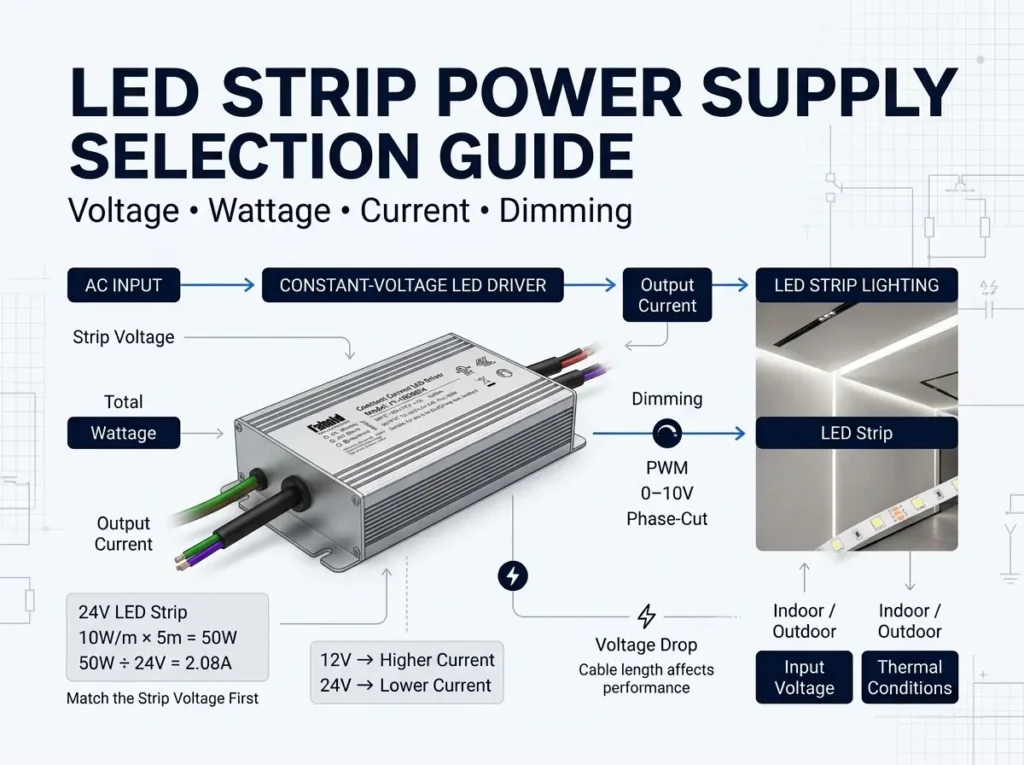
For a constant-voltage LED system, the basic selection sequence is straightforward: identify the type of LED load, match its required DC voltage, calculate the maximum connected load, confirm the available output current, and then verify the input voltage, dimming method, installation environment, safety requirements and mechanical constraints.
Skipping any of these steps can result in a power supply that has enough nominal wattage but is still electrically or mechanically incompatible with the lighting system.
This guide focuses primarily on constant-voltage LED power supplies used in North American LED strip, signage and architectural-lighting projects.
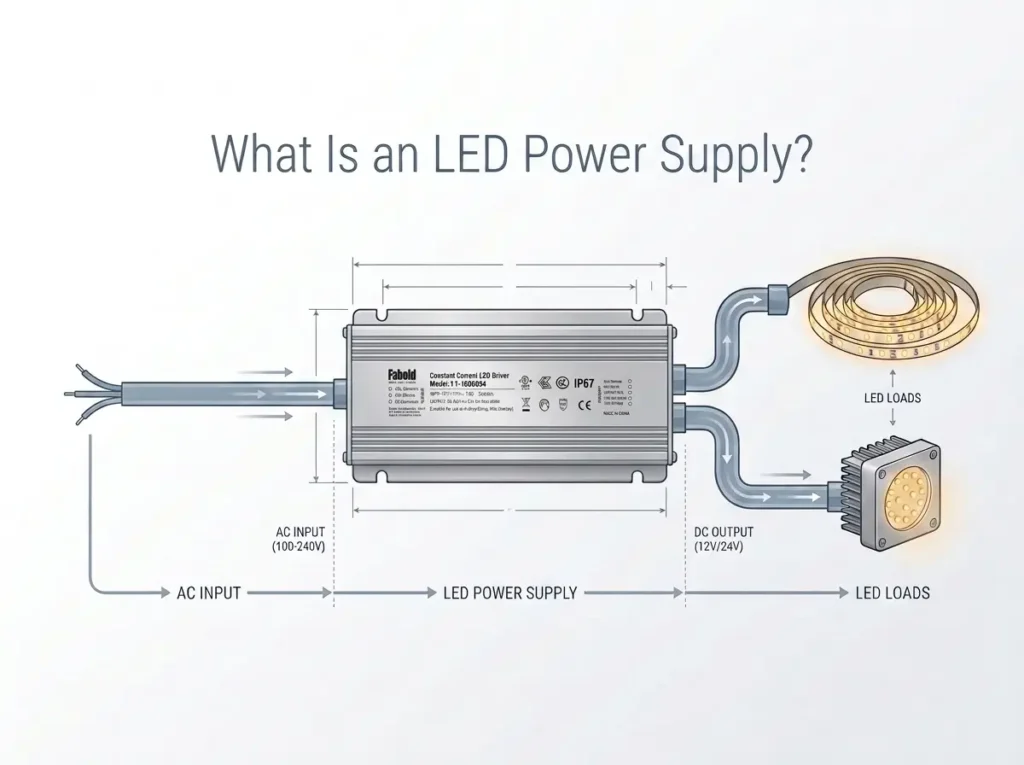
What Is an LED Power Supply?
An LED power supply converts the available input power into the controlled electrical output required by an LED lighting system.
For the constant-voltage systems discussed in this guide, that normally means converting AC mains power into a regulated DC output such as 12V, 24V, 36V or 48V, depending on the LED load.
The key characteristic is the regulated output voltage. The connected load draws current according to its electrical design, while the power supply must be capable of supplying that current without exceeding its specified operating limits.
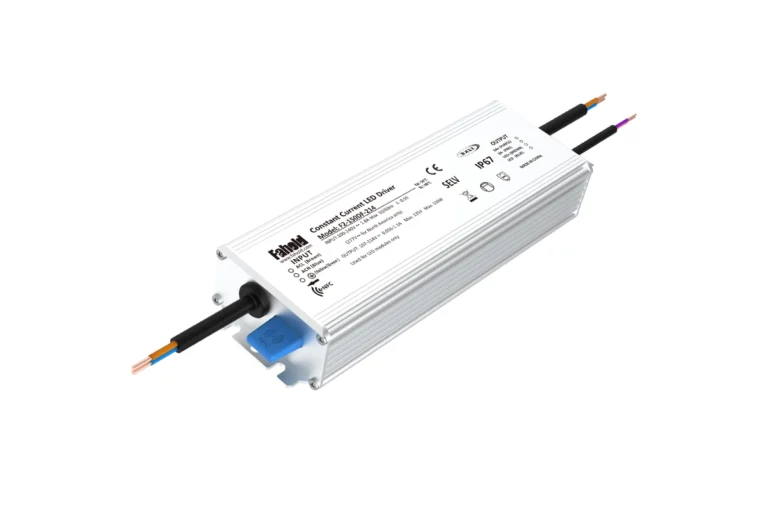
For practical product selection, FAHOLD separates the two primary electrical categories as follows:
| Product Type | Main Controlled Parameter | Typical Selection Basis |
|---|---|---|
| Constant Voltage LED Power Supply | Output voltage | Voltage + load power |
| Constant Current LED Driver | Output current | Current + output-voltage range |
LED Power Supply vs LED Driver
The terminology is not completely standardized in everyday market usage.
In North America, LED power supply is commonly used for regulated constant-voltage products, particularly 12V and 24V systems. At the same time, many manufacturers still place constant-voltage products inside a broader LED Driver product category.
For FAHOLD content architecture, the terminology is therefore routed by electrical type and search intent:
- LED Power Supply — prioritized for North American constant-voltage systems, especially LED strip, signage and architectural applications.
- LED Driver — prioritized for constant-current and engineering-lighting applications such as street lighting, horticulture and high-bay lighting.
The actual electrical output—constant voltage or constant current—is more important than the product name.
For a deeper explanation, see LED Driver vs LED Power Supply.
Constant Voltage vs Constant Current: Check This First
Before calculating wattage, determine how the LED load is designed to be powered.
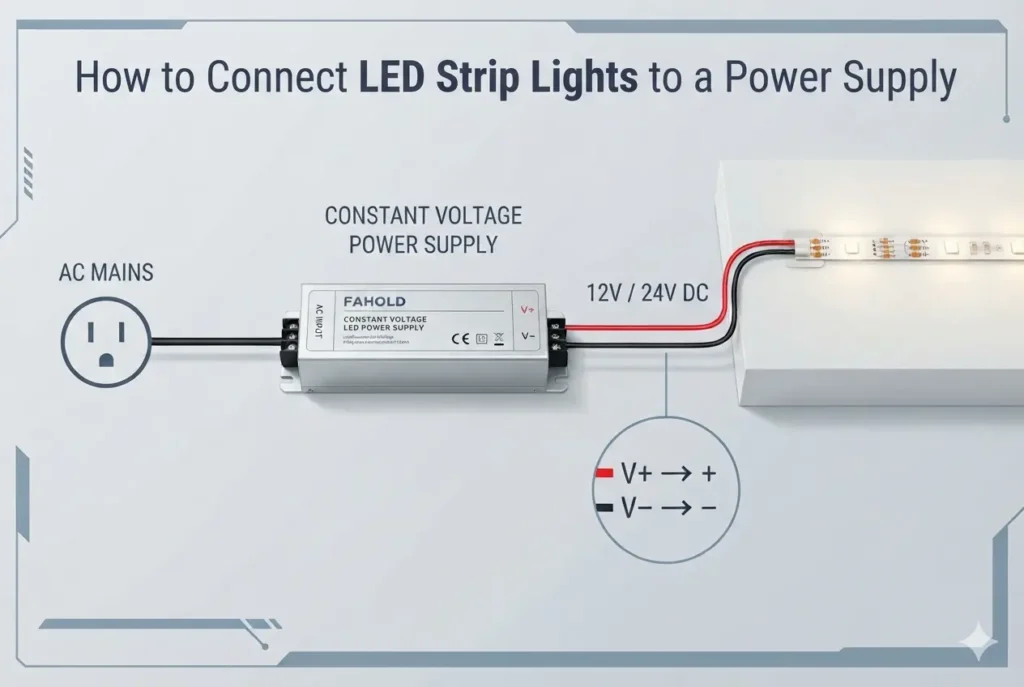
A constant-voltage LED strip or module may be marked 12VDC, 24VDC, 36VDC or 48VDC. Its internal circuit handles the current regulation required by the LEDs, while the external power supply maintains the required system voltage.
A constant-current LED module is different. It requires a driver designed to regulate a specific output current while operating within an allowable voltage range.
That distinction cannot be made from wattage alone.
A 100W constant-voltage power supply is not automatically interchangeable with a 100W constant-current LED driver, and two products with the same wattage may have completely different electrical outputs.
Step 1: Match the Output Voltage
For a constant-voltage system, the power-supply voltage must match the voltage for which the LED load was designed.
A 24V LED module should be powered from an appropriate 24V constant-voltage source. A 12V module should use a 12V source.
Do not select the voltage based on what power supply happens to be available.
Instead, verify the LED strip, module, light engine or luminaire specification first.
FAHOLD current constant-voltage portfolio includes 12V and 24V product families, with additional product families extending to 36V and 48V outputs.
Why Higher Voltage Changes the Current
For a simplified DC calculation:
Power = Voltage × Current
Therefore:
Current = Power ÷ Voltage
For the same 96W load:
| System Voltage | Approximate Current at 96W |
|---|---|
| 12V | 8A |
| 24V | 4A |
| 36V | 2.67A |
| 48V | 2A |
This does not mean that 48V is automatically better than 24V or that 24V should always replace 12V.
It simply means that, for the same power, increasing system voltage reduces current. Lower current can reduce conductor losses and voltage drop in an otherwise comparable wiring system, but the LED load, controller, wiring, connectors and power supply must all be designed for the selected voltage.
The LED product specification must therefore determine the voltage—not the power-supply preference.
Step 2: Calculate the Maximum Connected Load
Once the output voltage is known, determine the maximum electrical load that the power supply needs to support.
For LED strip lighting, this may be calculated from:
Wattage per unit length × total connected length
For signage modules, the calculation may instead use:
Maximum wattage per module × number of modules
For multiple lighting loads connected to one power supply, add their maximum specified power consumption.
As a simple example, if a 24V lighting system has a maximum connected load of 96W:
96W ÷ 24V = 4A
The power supply therefore needs to support the required 24V output and sufficient output current for that load.
The actual LED product datasheet should remain the primary source for load power and current. Calculated values are useful for system planning, but they should not replace manufacturer specifications.
How Much Extra Wattage Should an LED Power Supply Have?
Many online guides use a fixed rule such as “add 20%” or “use only 80% of the power supply.”
That can be a convenient planning estimate, but it should not be treated as a universal technical standard.
The correct margin depends on the actual power supply, maximum load, thermal environment, manufacturer derating curve, installation method and project requirements.
The safer rule is:
Calculate the real maximum load first, then apply the requirements of the actual power-supply datasheet and operating environment.
If a manufacturer’s documentation specifies a particular continuous-load limit or temperature-derating requirement, use that value instead of applying a generic margin.
Step 3: Check Output Current and Channel Limits
Total wattage alone is not enough.
At a fixed output voltage, the power supply must also provide sufficient current.
With multi-output products, another variable appears: each output channel may have its own limit.
A multi-channel power supply should not automatically be treated as one unrestricted output simply because its total rated wattage is high.
For signage and multi-channel systems, always verify:
- total rated output;
- individual channel limits;
- permitted output configuration;
- the actual wiring arrangement.
This becomes particularly important when a project has multiple sign branches, light boxes or distributed LED modules.
Step 4: Verify the AC Input Voltage
After confirming the DC output, check the power available at the installation site.
North American commercial lighting projects may use different AC supply voltages depending on the building and circuit design, so the actual project voltage should be confirmed rather than assumed.
Check the exact power-supply datasheet for:
- rated input-voltage range;
- frequency;
- any restrictions associated with the selected model or function version.
A power supply with the correct 24V output is still unsuitable if its AC input range does not match the project.
Step 5: Determine Whether Dimming Is Required
Dimming must be considered before the power supply is selected.
There are several possible architectures.
A constant-voltage power supply may accept a line-side phase-control dimming signal. Another product may have a dedicated 0–10V control input. A non-dimming constant-voltage supply may instead feed a separate low-voltage PWM controller.
These architectures are not interchangeable.
Even the term “PWM dimming” can refer to different parts of the system depending on the product design, so the exact wiring diagram and datasheet must be checked.
Verify the complete control chain:
control device → power supply → LED load
rather than selecting the power supply in isolation.
Step 6: Check the Installation Environment
The enclosure and environmental rating of the power supply must match where and how the product will actually be installed.
Relevant considerations include:
- dry, damp or wet locations;
- dust and moisture exposure;
- ambient temperature;
- enclosure ventilation;
- mounting space;
- junction-box requirements;
- cable routing.
Do not treat an IP rating as the only installation criterion.
An IP rating describes ingress protection, but project suitability can also depend on product listing, enclosure construction, installation instructions and the requirements of the complete lighting system.
The correct approach is:
Check the exact model’s listing, environmental rating and installation instructions.
Recommended FAHOLD Constant-Voltage Solutions
| Application / Requirement | FAHOLD Product Series | Combined configuration |
|---|---|---|
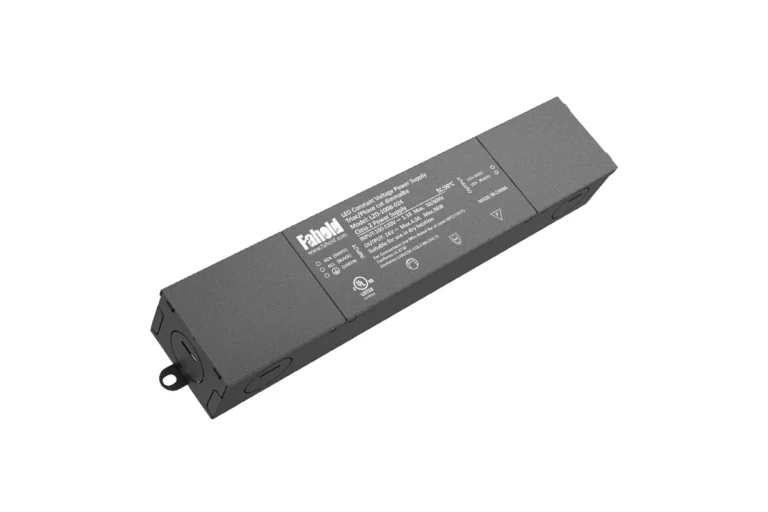
| North American architectural lighting requiring phase-cut dimming | L2D Series | Constant-voltage 12V/24V platform for North American architectural applications with TRIAC/ELV/MLV dimming |
| Architectural projects requiring broader dimming/control flexibility | L2-A Series | North American constant-voltage architectural platform with multiple dimming/control options |
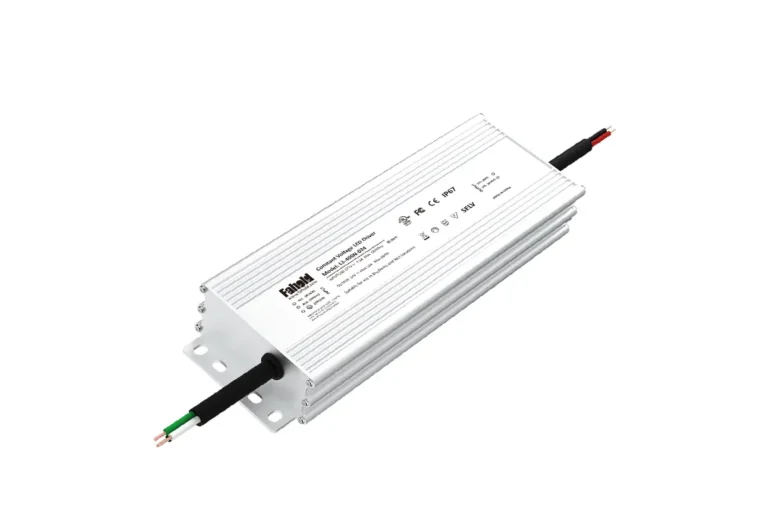
| Architectural / landscape installations requiring a waterproof constant-voltage platform | L2-F Series | Constant-voltage architectural platform with waterproof construction and multiple dimming options |
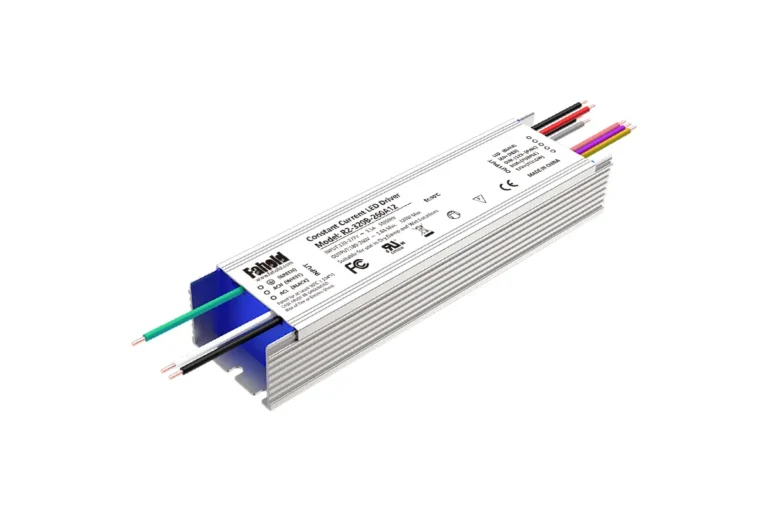
| Signage, light boxes and multi-branch constant-voltage systems | L2 Series | Multi-channel Class 2 constant-voltage platform for signage applications |
| Slim signage, LED strip and cabinet-lighting installations | L2-E Series | Compact 12V/24V constant-voltage power-supply family for space-constrained installations |
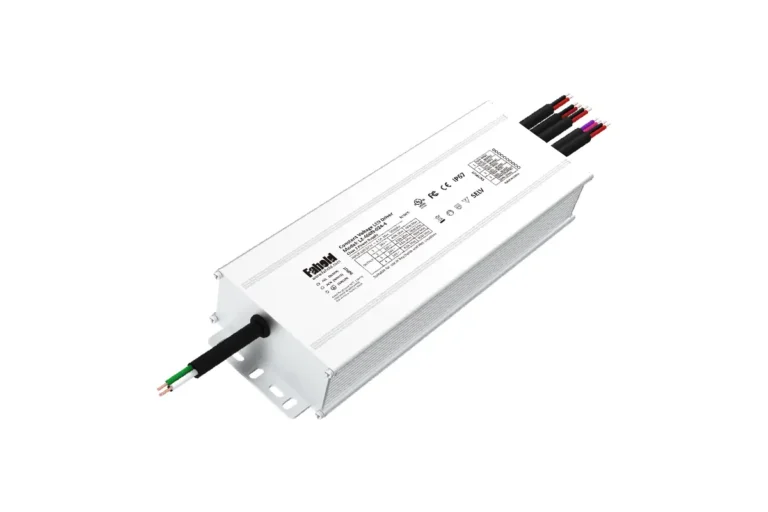
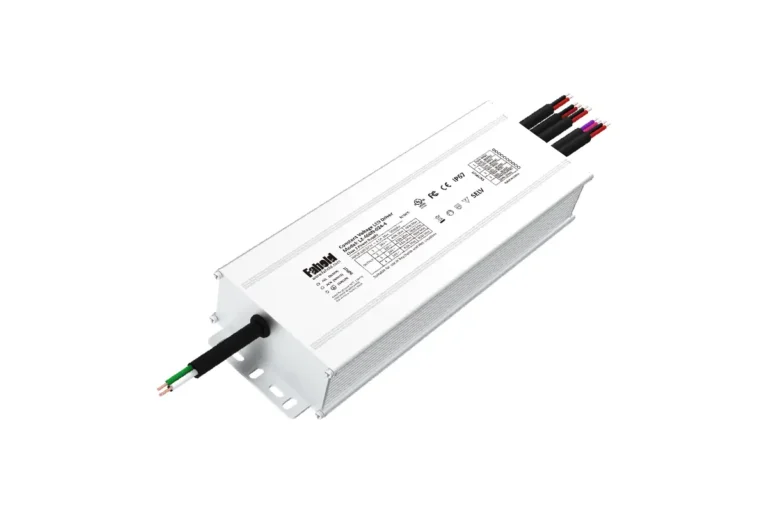
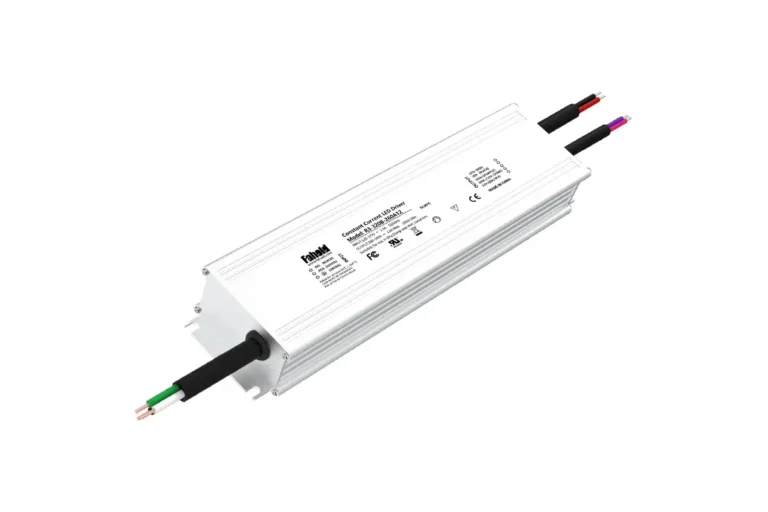
| Higher-power constant-voltage signage / landscape projects or applications requiring 36V/48V options | L3 Series | Constant-voltage family with 12V/24V/36V/48V output options and higher-power coverage |
How to Use This Recommendation Table
Do not choose a product solely because the application name appears in the table.
Use the series table only after the project has passed the earlier selection steps:
- confirm constant-voltage operation;
- confirm required output voltage;
- calculate the real load;
- confirm output-current requirements;
- confirm AC input voltage;
- confirm dimming/control requirements;
- confirm installation environment;
- confirm certification and mechanical requirements.
Only then should the relevant series be narrowed to a specific model.
When We Do Not Recommend a Product
FAHOLD should not recommend a series or model when:
- the search intent is still purely educational and the reader has not reached a product decision point;
- the article does not provide enough electrical or application information;
- the latest product catalog does not clearly support the required function;
- certification, IP rating, dimming function or communication protocol would need to be guessed;
- replacement compatibility has not been verified;
- the recommendation exists only to force a product block into the article.
In these cases, the correct CTA is to request the missing project specifications rather than presenting a product as suitable.
Step 7: Verify Class 2 and Certification Requirements
Class 2 is particularly important in North American low-voltage lighting, signage and architectural projects.
However, Class 2 should not be assigned based only on a familiar voltage or wattage number.
Verify the exact model and output configuration against the manufacturer’s certification documentation.
This matters especially for multi-output power supplies, where the conditions applied to individual outputs or their interconnection may affect the certified configuration.
The safe rule is:
Never infer UL, Class 2, Class II, ENEC or another certification from the series name, output voltage or similar models.
Step 8: Check the Secondary Electrical Specifications
Once voltage, load and application compatibility are established, evaluate the additional electrical characteristics required by the project.
These may include:
- efficiency;
- power factor;
- THD;
- protection functions;
- operating temperature;
- case temperature;
- thermal derating;
- surge capability;
- no-load behavior;
- dimming range;
- acoustic performance;
- lifetime.
Not every project needs the same combination.
For example, a simple non-dimming signage installation and a high-end architectural dimming project may both use 24V constant-voltage loads, but their control, mechanical and performance requirements can be very different.
These parameters should always come from the exact product datasheet, not from another model in the same family.
Choosing an LED Power Supply by Application
| Application | Typical Starting Point | Additional Checks |
|---|---|---|
| LED Strip Lighting | Constant voltage; match strip voltage | Wattage, current, voltage drop, dimming, installation distance |
| LED Signage / Modules | Constant voltage | Branch/channel limits, enclosure, Class 2, environment |
| Channel Letters / Light Boxes | Constant voltage | Module voltage, total load, branch layout, service access |
| Architectural Linear Lighting | Constant voltage | Dimming compatibility, junction box, noise, installation location |
| Cabinet / Cove Lighting | Constant voltage | Compact dimensions, control method, wiring access |
| Landscape Lighting | Confirm load design first | Environment, waterproofing, wiring distance, control |
For LED strip projects, continue to the LED Strip Lighting application guide rather than expanding this Pillar into a strip-only tutorial.
For signage projects, continue to Sign Lighting.
For architectural and commercial applications, see Commercial Lighting.
This separation is intentional: the current Pillar explains how to understand and select LED power supplies, while each application page handles the engineering details specific to that lighting system.
Common LED Power Supply Selection Mistakes
Avoid these common errors:
- choosing only by wattage;
- using a 24V supply on a 12V load;
- assuming every LED product uses constant voltage;
- applying a universal 20% margin without checking the datasheet;
- ignoring per-channel limits on multi-output supplies;
- choosing the dimming system after the power supply;
- treating IP67 alone as proof of every wet-location requirement;
- assuming a familiar voltage automatically means Class 2;
- calling two products direct replacements because their wattage is similar.
The correct sequence is:
Identify the load type first, confirm the application second, and only then evaluate functions, certification and mechanical details.
FAHOLD Constant-Voltage Power Supply Coverage
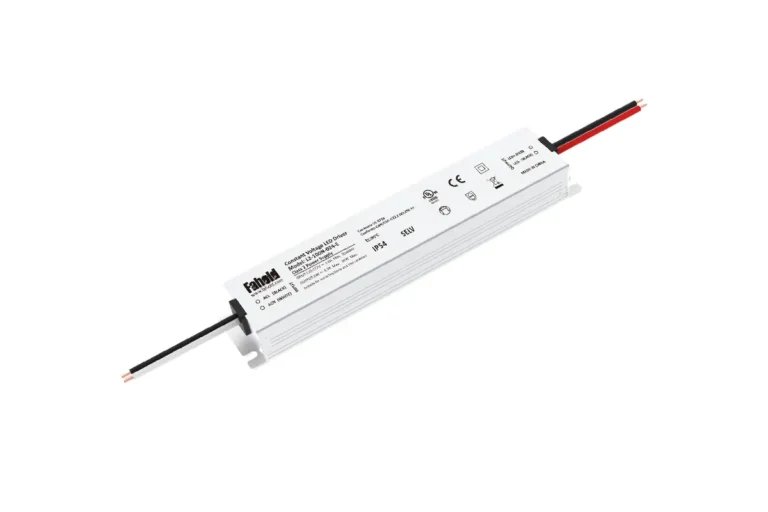
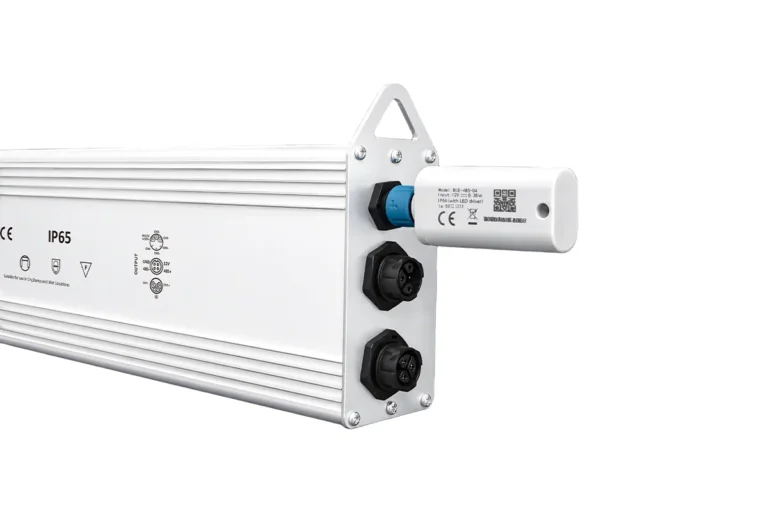
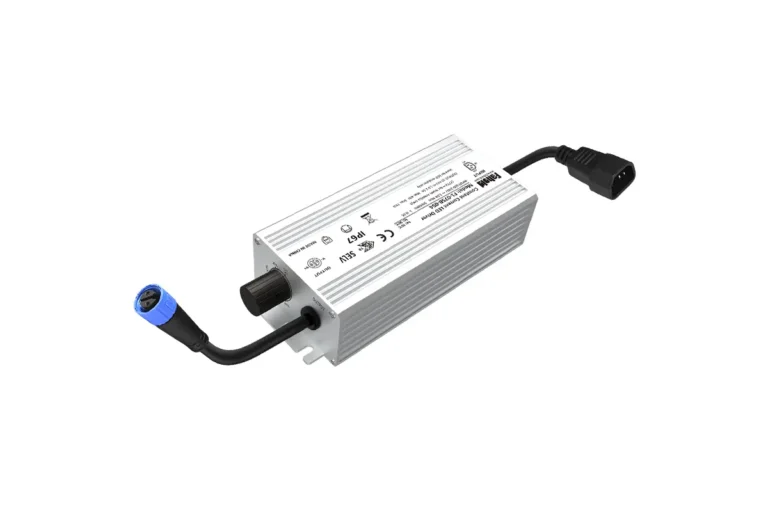
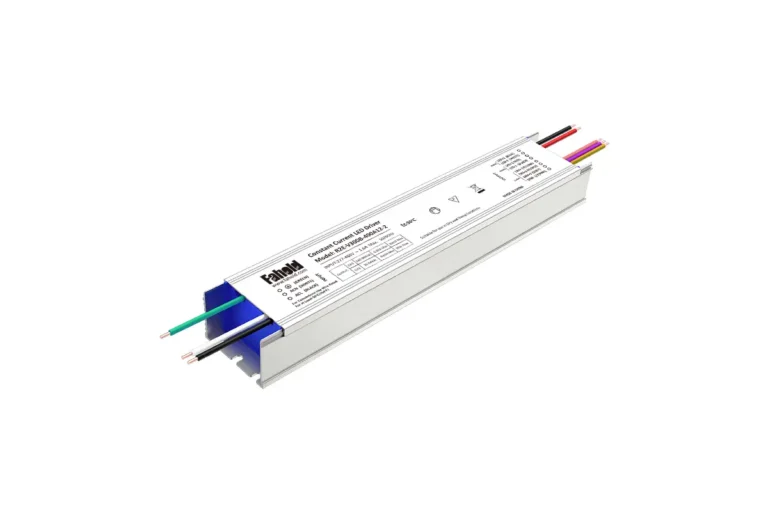
FAHOLD current product portfolio includes multiple constant-voltage product families serving architectural, signage and landscape-lighting applications.
The portfolio includes North America-oriented 12V and 24V constant-voltage families such as:
- L2D TRIAC Dimmable Series;
- L2-A Enclosed Dimmable Series;
- L2-F Waterproof Dimmable Series;
- L2 Multi-Channel Class 2 Series;
- L2-E Slim Compact Series;
- L3 High-Power Constant-Voltage Series.
Additional constant-voltage families such as L3 extend the available output options to 36V and 48V and cover higher-power applications.
This does not mean every series supports every voltage, dimming method, certification or protection rating.
Product selection must always be performed against the latest model-specific specification.
LED Power Supply Selection Checklist
Before approving a power supply, confirm:
- LED load type;
- required DC voltage;
- maximum connected wattage;
- required output current;
- channel limits;
- AC input range;
- dimming or control method;
- installation environment;
- safety/listing requirements;
- dimensions;
- thermal conditions;
- project-specific performance requirements.
If any of these parameters are unknown, obtain the LED load specification or project information before choosing a model.
This is more reliable than starting with a wattage or searching for a “similar” power supply.
FAQ
Is an LED power supply the same as an LED driver?
Sometimes the terms overlap in commercial usage. For FAHOLD North American content strategy, LED power supply is used primarily for constant-voltage products, while LED driver is prioritized for constant-current products and engineering-lighting applications. The actual electrical output—CV or CC—is more important than the name.
Can I use a 24V power supply with a 12V LED strip?
No. A constant-voltage power supply should match the rated voltage of the LED load. Use the voltage specified by the strip or module manufacturer.
Can I use a higher-wattage LED power supply than the LED load?
A constant-voltage power supply can have more rated capacity than the connected load, provided the voltage, current behavior, dimming architecture, minimum-load requirements, environment and other specifications are compatible. Do not select it based on wattage alone.
Do I always need 20% extra power-supply capacity?
No universal 20% rule applies to every product and installation. Calculate the maximum load first, then follow the power-supply manufacturer’s continuous-load and thermal-derating requirements.
Do I need a dimmable LED power supply?
Only if the selected lighting/control architecture requires the power supply itself to perform or respond to the dimming function. Some systems dim at the AC input, some use a dedicated control input, and others use a downstream low-voltage controller.
What information should I provide when asking for an LED power supply recommendation?
Provide the LED load type, required voltage, maximum wattage, input voltage, dimming/control method, installation environment, quantity, target certifications and any mechanical restrictions.
For an existing installation, also provide the current manufacturer, model number and datasheet when available.
Need Help Selecting a Constant-Voltage LED Power Supply?
A correct recommendation starts with the LED load and project requirements.
Send FAHOLD your:
- required output voltage;
- maximum load;
- input voltage;
- dimming method;
- installation environment;
- certification requirements;
- quantity;
- mechanical constraints.
If you are replacing an existing product, include the manufacturer and model number so the electrical and mechanical specifications can be reviewed before a suitable option is recommended.Contact FAHOLD
Find the Right LED Power Supply for Your Project
Share the core electrical and application requirements. We will narrow the available FAHOLD platforms to the options most relevant to your project.