Table of Contents
The best LED driver for hotel lighting is the one that matches the LED load, the building’s electrical supply, the specified lighting controls, and the installation conditions—while delivering reliable dimming at the levels guests actually use. For hotel rooms and decorative LED strips, that may mean a compatible 12V or 24V constant-voltage power supply. For recessed fixtures with dedicated LED modules, it may mean a constant-current driver. Neither type can be selected safely on wattage alone.
Hotel lighting is unusually demanding because the same property may combine bedside reading lights, cove lighting, reception features, restaurant accent lighting, corridor fixtures, and moisture-exposed outdoor areas. A driver that appears suitable on a product list may reveal flicker, audible noise, an abrupt minimum brightness, or a control-system conflict only after installation. With hundreds of similar rooms, an overlooked specification can become a repeatable maintenance problem.
This practical guide explains how to choose an LED driver for hotel lighting, from room-by-room requirements and dimming controls to power calculations, North American safety considerations, and procurement testing. For broader project options, see FAHOLD commercial lighting solutions.
1. Understand LED Driver Requirements Across Different Hotel Areas
The first step in hotel lighting LED driver selection is to separate the building into application zones. The lighting designer decides what the space must do; the electrical and procurement teams then confirm which driver architecture can reliably deliver that result.
Guestroom lighting: bedside, cove and decorative fixtures
Guestrooms need comfortable transitions between daytime, reading, relaxation, and sleep settings. Bedside decorative strips may be dimmed to very low levels, while a reading light may need independent control and repeatable brightness. Avoid specifying a driver solely because its datasheet says “dimmable.” Ask how it behaves with the chosen wall dimmer, room controller, and LED load.
For a 24V cove strip, a constant-voltage LED power supply may be appropriate. A recessed reading light containing a dedicated current-driven LED module may instead require a constant-current driver. Keep these circuits and their electrical requirements distinct.
Lobby and reception lighting: scene-based dimming
Hotel lobbies often combine reception task lighting, indirect ceiling illumination, display accents, and decorative features. Operators may want day, evening, and late-night scenes. The driver must accept the designated control interface, deliver consistent behavior across fixtures, and respond properly when scenes change.
Where a building-wide control architecture is specified, the integrator may require 0–10V, DALI-based equipment, or another compatible system. Do not substitute a phase-cut driver for a 0–10V or DALI interface without an engineered control solution.
Corridors and public areas: long operating hours
Many corridor lighting zones operate for extended periods. They benefit from suitable thermal performance, maintainable mounting positions, repeatable output characteristics, and careful power distribution. For linear LED strips, check the length and load of every branch rather than assuming one large driver can feed an entire corridor without voltage-drop concerns.
Restaurants, bars and hospitality accent lighting
Restaurants and lounges rely on lighting scenes and low-light comfort. A visible jump from dim to bright—or a strip that glows when commanded off—can undermine the intended atmosphere. Here, minimum stable output, smooth fades, dim-to-off behavior, and control compatibility deserve early testing.
Bathrooms, spas and outdoor hotel areas
Bathrooms, spa spaces, exterior façades, and canopies introduce moisture and environmental constraints. An IP rating is useful information about the driver enclosure, but does not independently approve the whole installation for every damp or wet location. The mounting location, connections, temperature, safety certification, and local electrical requirements remain decisive.
| Hotel area | Typical LED load | Main driver requirement | Common control consideration |
|---|---|---|---|
| Guestroom cove / headboard | Voltage-rated LED strip | Compatible 12V/24V constant-voltage output | Low-end dimming, smooth transitions |
| Bedside reading fixture | Often an integrated LED module | Match the fixture’s constant-current or other specified input | Individual room control |
| Lobby / reception | Mixed architectural luminaires | Separate driver types by actual load | Scenes, zoning, system integration |
| Corridor linear lighting | Linear LED strips or fixtures | Output capacity, distribution, thermal performance | Scheduled / occupancy-based control when specified |
| Restaurant / bar | Decorative strips and specialty fixtures | Stable low-light behavior | Phase-cut, 0–10V or system-specific control |
| Spa / exterior accents | Product-specific protected lighting | Environmental and installation suitability | Compatibility with installed controller |
Selection principle: “Hotel LED driver” describes an application, not an electrical standard. Start with the fixture and its controls—not a generic hospitality product label.
2. Choose Between Constant-Voltage and Constant-Current Drivers
A driver must regulate the electrical quantity required by the LED product. This is a fundamental compatibility decision.
When hotels need constant-voltage LED power supplies
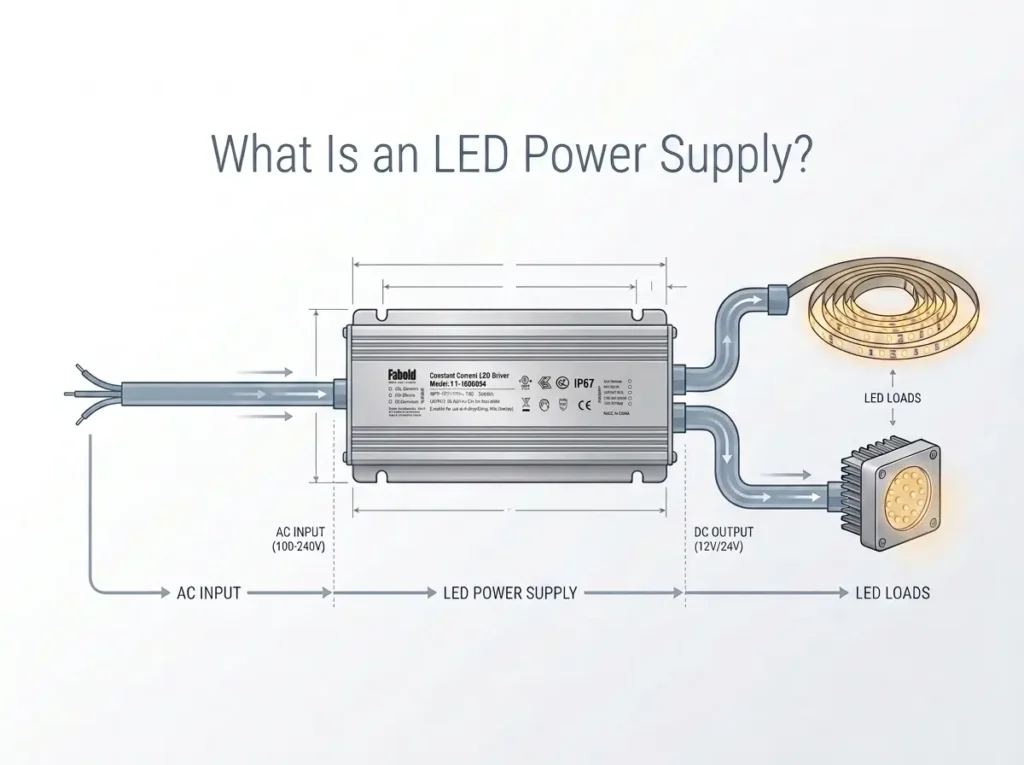
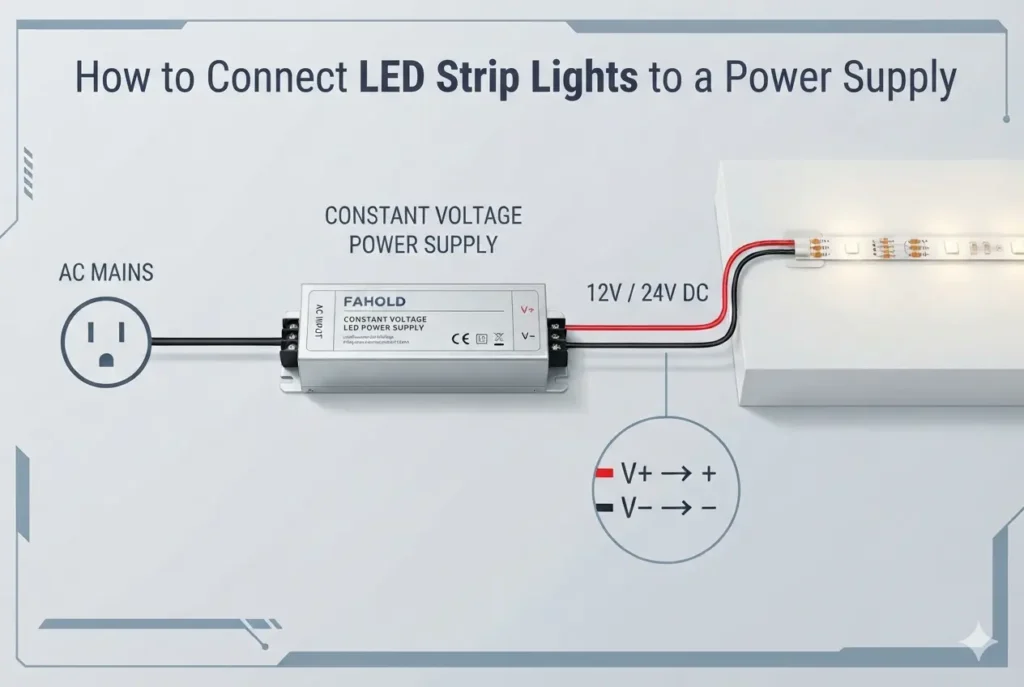
Constant-voltage (CV) drivers regulate output voltage, commonly 12VDC or 24VDC in architectural and decorative systems. They are suitable for LED strips and modules expressly designed to operate from that voltage with their own appropriate current-limiting arrangements.
For example, a 24V strip installed behind a headboard needs a compatible 24V supply; a 12V driver is not interchangeable. A 24V supply can power more than one permitted branch if the total power, individual output ratings, cable runs, and protections are correctly designed.
For more background, see the constant-voltage LED power supply guide and FAHOLD LED strip lighting solutions.
When constant-current drivers are required
Constant-current (CC) drivers regulate LED current while the output voltage varies within a specified operating window. Many integrated downlights, linear modules, and specialty luminaires use this approach. Their datasheets may specify an operating current such as 350mA or 700mA and an allowed forward-voltage range.
For these fixtures, selecting a 24V CV driver simply because the fixture consumes about 24W would be incorrect. Verify the required output current, voltage range, maximum wattage, dimming behavior, and the luminaire manufacturer’s replacement-driver instructions.
Constant voltage vs. constant current for hotel projects
| Item | Constant voltage | Constant current |
|---|---|---|
| Regulated output | DC voltage, such as 24V | LED current, such as 700mA |
| Common hotel example | Cove and decorative LED strips | Dedicated LED modules in downlights |
| First specification to match | Rated load voltage | Rated current and voltage window |
| Driver sizing | Total W and output A, including branch limits | Required mA, operating voltage and power |
| Frequent specification mistake | Wrong 12V/24V output | Wrong current setting or incompatible voltage range |
3. Select the Right Dimming System for Hotel Lighting
Dimming compatibility is often the most commercially important hotel driver specification. The right protocol depends on whether the project uses room wall controls, retrofit dimmers, centrally managed scenes, or addressable lighting. The LED driver and control device must be tested as a system.
TRIAC and ELV dimming for guestrooms and renovations
Phase-cut dimming is often considered where a hotel already has compatible mains-voltage wall dimmers or a retrofit program aims to retain some existing controls. “TRIAC” commonly refers to forward-phase control; ELV generally refers to reverse-phase control, while MLV is commonly associated with forward-phase applications. These terms are not proof of universal cross-compatibility.
A phase-cut driver must match the dimmer type, the AC supply, the connected LED load, and the required minimum level. Check for dropout, pop-on, audible buzzing, and residual illumination. A driver designed for nominal 120V phase-cut operation must not be connected directly to a 277V circuit.
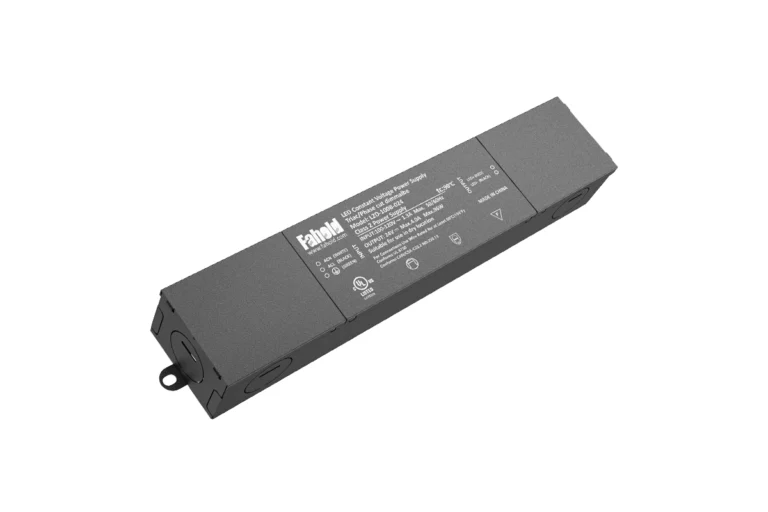
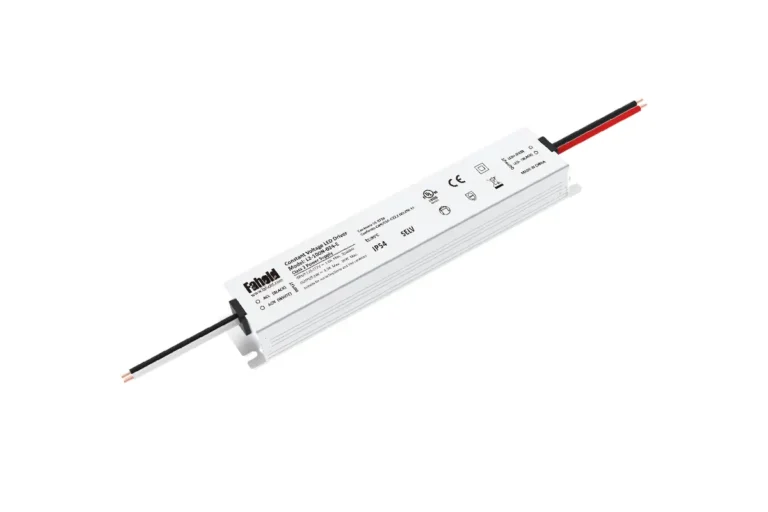
For compatible nominal 120V projects, FAHOLD’s L2D 100–120Vac Class 2 LED driver series provides 12V/24V constant-voltage options; dimmable Type B and non-dimmable Type N versions are distinct. Check the exact version and dimmer model before specifying it.
0–10V dimming for hotel common areas
A 0–10V lighting-control system uses a separate low-voltage control interface with appropriately designed drivers. It can suit lobbies, common areas, or multiple controlled zones, depending on the project’s design. A shared control signal does not guarantee that unlike fixtures will follow identical light-output curves.
For procurement, ask whether the control uses a sinking or sourcing interface as required by the devices, which dimming curve is provided, what minimum light level is supported, and whether 0V means minimum light or full off. Some systems require a separate switching function to achieve off. Confirm the actual controller–driver combination and the intended fail-safe behavior.
DALI and DALI-2 for advanced hospitality controls
DALI is a digital lighting-control protocol used in addressable systems. DALI-2 adds a third-party-verified product-certification framework intended to improve interoperability. A hotel may specify DALI-based controls for centrally managed spaces, configurable groups, scene recall, or maintenance integration, but those features depend on the actual system architecture and certified components.
The DALI Alliance explains the certification process and maintains a public product database. Do not interpret a driver’s generic “dimmable” or “5-in-1” description as DALI-2 support. A project requiring DALI-2 needs an appropriately verified driver and controller arrangement.
Lutron’s myRoom XC hospitality controls illustrate why the control architecture should be chosen at the project level: phase-dimming, 0–10V and DALI modules are different interfaces, not interchangeable labels.
Dim-to-warm vs. tunable white: what must the driver support?
Dim-to-warm systems are intended to change the light’s color temperature along a specified warm-dimming behavior. Tunable-white systems provide separately controllable color-temperature adjustment within their supported range. Neither effect is created simply by adding a standard single-channel dimmable power supply.
Verify the LED light engine, number of channels, control method, supported driver hardware, and commissioning requirements as a complete matched system. When evaluating digital color control, confirm the required device type and actual functionality; DALI-2 color-control options are addressed within the DALI Alliance ecosystem.
Hotel lighting dimming method comparison
| Control method | Potential hotel use | Advantages | Verification before approval |
|---|---|---|---|
| Forward-/reverse-phase | Guestrooms and compatible retrofit zones | May work with selected wall-dimmer infrastructure | Exact dimmer, input voltage, load range, flicker and noise |
| 0–10V | Lobby, corridor and common-area zones | Familiar separate control interface | Control polarity/interface, minimum level, off logic, curve |
| DALI / DALI-2 | Addressable and managed lighting systems | Digital grouping and scene features | Correct certified components, addressing, controls integration |
| PWM control input | Compatible architectural controls | Useful for specifically designed interfaces | Signal specifications, isolation and driver compatibility |
| Non-dimmable | Fixed-output utility/decorative circuits | Simple when control is not needed | Switching duty and actual intended use |
Need help with hotel dimmer compatibility? Send the LED load specification, wall dimmer or controller model, AC input voltage and required minimum light level to FAHOLD’s technical team for a model-level review before ordering samples.
4. Evaluate Flicker, Audible Noise and Low-End Dimming
Low-light performance is particularly visible in guestrooms and restaurants, where occupants may spend long periods under dimmed light. “Flicker-free” is not a meaningful substitute for a documented test method and real controller compatibility.
Why flicker and noise matter in guestrooms
The U.S. Department of Energy describes temporal light modulation as variations in light output that can create visible or less obvious visual effects. Driver and dimmer electronics influence that modulation. See the DOE’s flicker research overview.
Hotel projects should distinguish visible flashing or instability, measured temporal modulation, and audible noise from drivers or controls. These are different phenomena, and each needs an appropriate test. A sample may operate normally at 100% yet behave poorly at a low dimming command.
Understanding 10%, 5% and 1% dimming claims
A published “1% dimming” statement may describe a control command, a driver setting, a light-output level, or another test condition. Those are not always equivalent. Ask whether the percentage represents measured luminaire light output relative to full output, and request the test setup and dimming curve where available.
Do not assume a 0–10V or phase-cut driver achieves 1% smoothly. Confirm the actual driver, LED strip or luminaire, and room controller under the expected load.
Minimum brightness, fades and dim-to-off
A strong hotel dimming mock-up checks what happens at both ends of the brightness range. Look for abrupt pop-on, premature dropout, inconsistent transitions between neighboring fixtures, delayed starts, and lights that glow after an off command. For room scenes, test fade transitions as well as steady-state levels.
How to test a hotel driver/controller combination
Run the same representative test at design-stage sampling and before batch approval:
- Use the exact driver configuration, LED load and controller/dimmer model planned for the hotel.
- Test from full output down to the intended lowest occupied-room scene; do not rely on a no-load demonstration.
- Record visible flicker, camera-visible banding as a screening observation (not a calibrated flicker measurement), audible noise and uneven light output.
- Check switch-on, switch-off, low-level restart, repeated on/off cycles and restoration after a power interruption.
- Confirm dim-to-off behavior and any separate relay or switching requirement.
- Repeat under representative input voltage, ambient temperature and realistic installation conditions.
- Document results by model number, firmware/configuration if applicable, LED load and controller version.
If the project specifies quantitative flicker limits, ask for measurements using an agreed method and appropriate instrumentation. Smartphone video alone does not establish compliance.
5. Match Input Voltage, Output Voltage and Driver Wattage
A hotel electrical distribution system and its low-voltage lighting system are two different sides of the driver. First match the AC input to the actual branch circuit; then match the regulated DC output to the LED load.
Understanding 120V and 277V circuits in North American hotels
North American buildings may use nominal 120V and 277V lighting circuits, among other voltages, depending on the property’s distribution system. Never assume every hotel has 277V or that every lighting circuit in the same hotel uses the same voltage.
A product rated 100–277Vac can be considered for nominal 120V or 277V supplies within its complete specifications. A product rated 100–120Vac is not suitable for direct connection to 277V. Always check whether the chosen dimming method has additional input-voltage constraints.
Choosing 12V vs. 24V for hotel LED strips
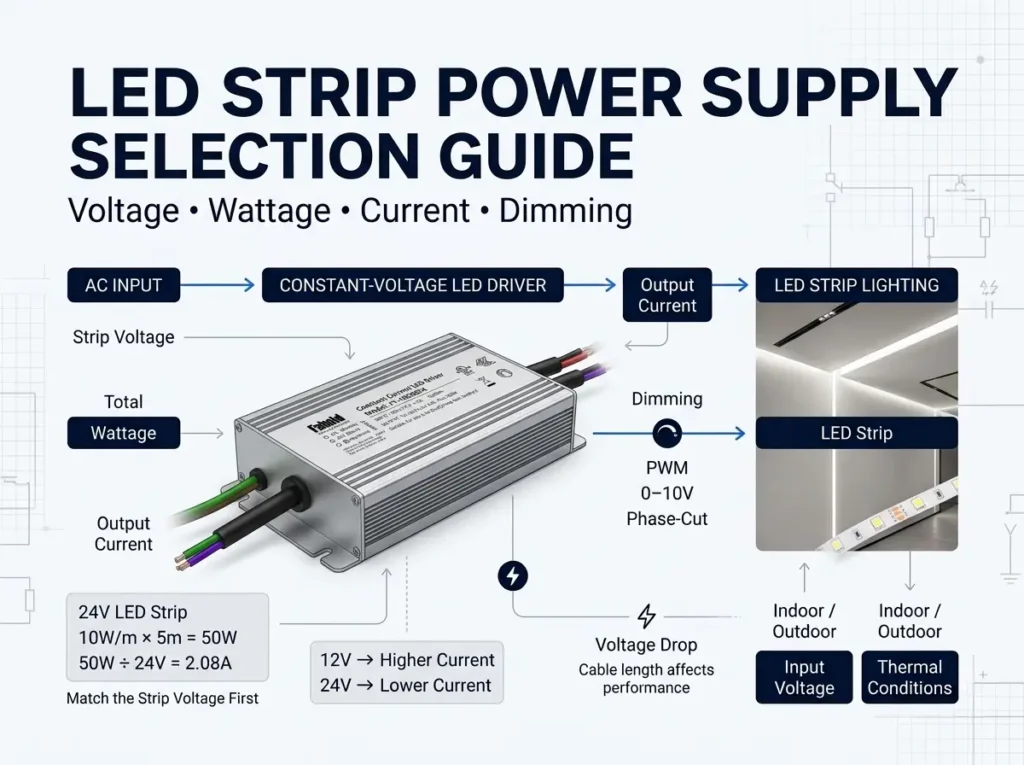
Select the voltage printed on the LED strip or luminaire datasheet. For equal wattage, 24V systems operate at approximately half the current of 12V systems, which can help with practical distribution and cable loss—but only when the LEDs are actually designed for 24V. It does not remove the need for voltage-drop calculations, wire sizing or branch planning.
For many hotel cove and linear installations, a compatible 24V constant-voltage system is worth evaluating because it supports readily available 24V strip products. It is not automatically the right voltage for all hotel fixtures.
Worked example: a 24V guestroom cove-lighting run
Assume one guestroom has a 4m strip rated at 14.4W/m, connected to a 24V CV supply. This is a hypothetical sizing example—not a FAHOLD model approval or a hotel case study.
Maximum connected load:
4m × 14.4W/m = 57.6W
Approximate full-load current:
57.6W ÷ 24V = 2.4A
Suppose the project engineer adopts an 80% design-utilization target after reviewing the driver’s usable output rating and derating conditions:
57.6W ÷ 0.80 = 72W minimum design target
This means the preliminary shortlist should include a 24V model with at least 72W of usable output capacity under the intended conditions, with sufficient output current. The 80% utilization target is an illustrative engineering allowance, not a universal code rule. The exact model must still satisfy its real temperature, installation, dimming and output-circuit specifications.
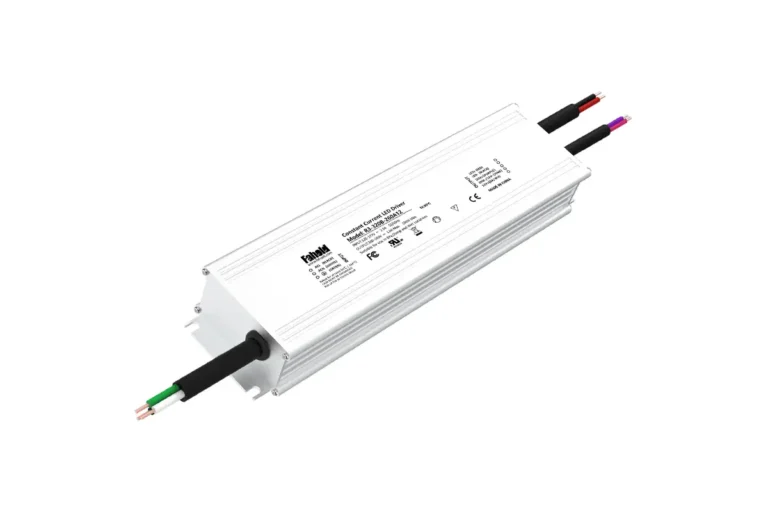
For example, FAHOLD’s L2-A series lists a 96W, 24V / 4A single-output configuration as a potential starting point for further checks. For a nominal 120V installation requiring a compatible phase-cut control, the L2D series also lists a 96W, 24V / 4A model in the relevant dimmable version. Those possibilities are not interchangeable without controller and installation verification.
Calculate other layouts with the FAHOLD LED strip power supply calculator.
Voltage drop and multiple lighting branches
A hallway or lobby installation can use many LED runs. Even when total wattage is acceptable, a long cable or strip may experience voltage drop and visible variation. Evaluate feed location, the longest circuit, conductor sizes, and the LED product’s permitted run length.
For multi-channel drivers, the combined rating is not the power available from each output. For instance, a two-channel 24V driver must be evaluated against each channel’s separate current and wattage limits, not only the sum of both channels. Include that information in the bill of materials and test plan.
6. Check Safety Certifications and Installation Conditions
Electrical safety must be evaluated using the exact driver model and installation design, not a generic series description. North American hotel projects may involve requirements from the authority having jurisdiction (AHJ), building and electrical codes, the luminaire manufacturer, and the project specification.
UL 8750, NRTL marks and complete luminaire compliance
UL Solutions explains that UL 8750 addresses LED equipment used in lighting products, including drivers and relevant controls, while UL 1598 concerns luminaires. A component’s certification is not automatically a certification for every finished luminaire using it.
Request the exact model’s certification information, the applicable standard, current certification status and any conditions of acceptability. OSHA’s NRTL program guidance explains the role of recognized third-party testing and product certification marks. For Canadian installations, separately confirm the appropriate Canadian-market certification and requirements.
When a Class 2 LED power supply matters
A Class 2 output is a defined limited-power electrical circuit classification, not a general synonym for a “safe” or “low-voltage” driver. Project requirements may call for Class 2 outputs in certain lighting architectures. Verify the exact output-circuit classification, product markings and restrictions.
For multi-output models, check whether each individual channel has an approved Class 2 configuration and whether the wiring design preserves the intended circuit separation. Do not assume that a driver’s total wattage can be drawn through any one channel.
Dry, damp and wet-location installation
A metal enclosure or IP65/IP67 ingress-protection rating cannot, by itself, establish compliance for any specific damp or wet location in the United States or Canada. Review listed environmental suitability, connectors, cable entries, wiring compartment requirements, ambient temperature, accessibility and mounting orientation.
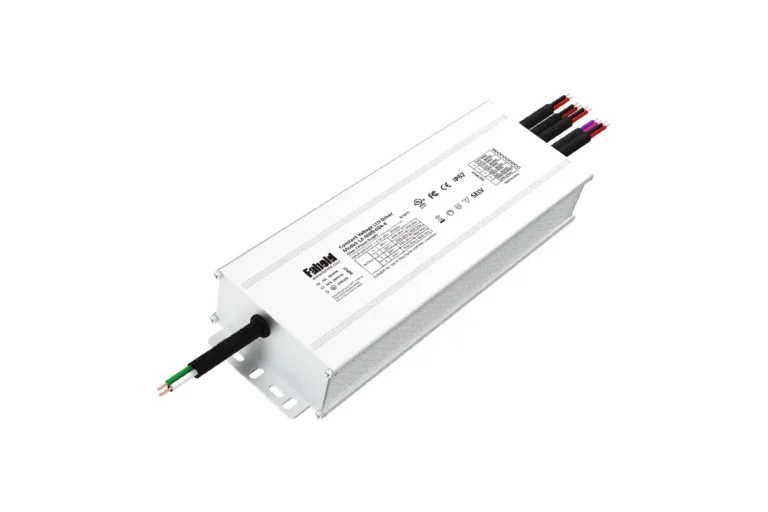
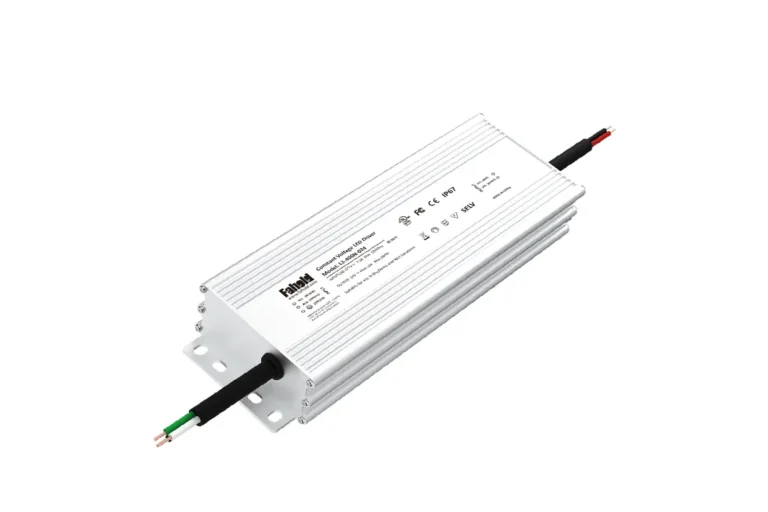
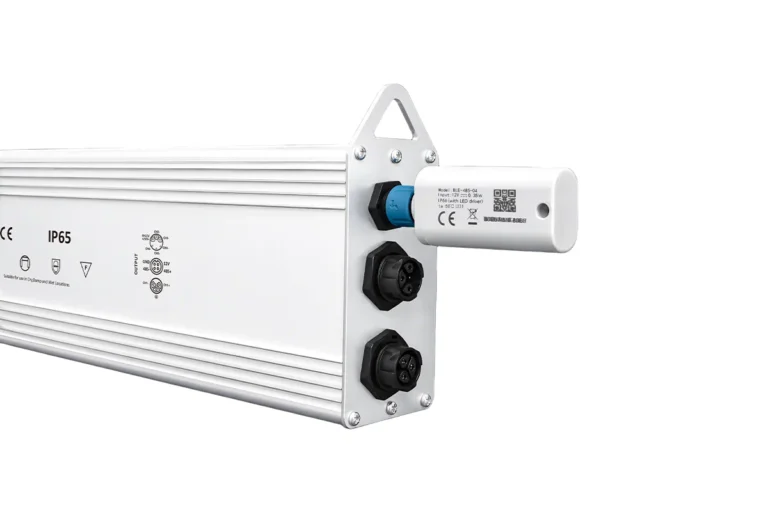
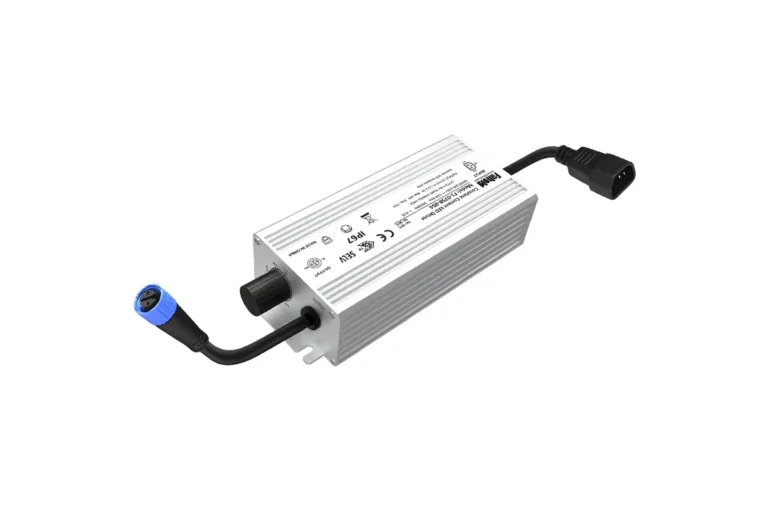
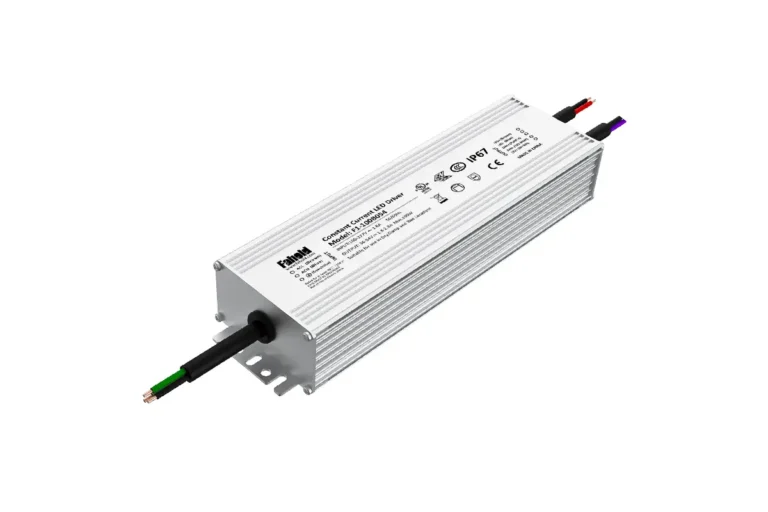
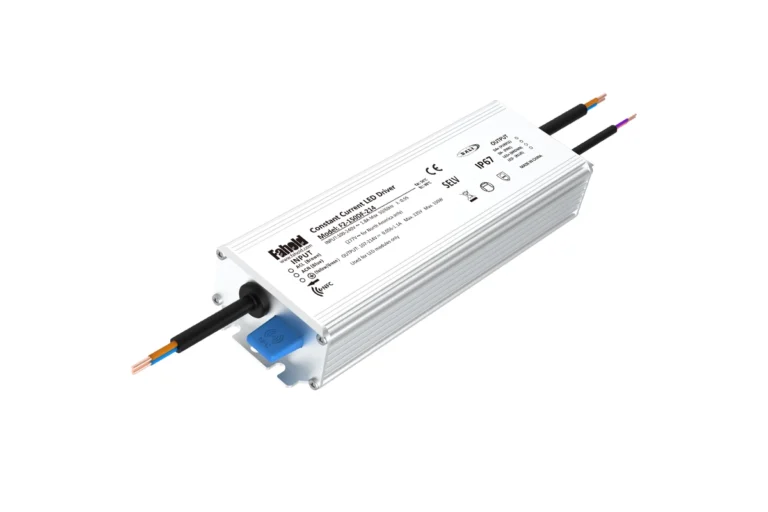
For hotel façades or other areas where the driver itself may need increased ingress protection, FAHOLD’s L2-F IP67 waterproof dimmable LED power supply series is a relevant product family to evaluate. The complete installation and exact model still need engineering approval.
Keep emergency lighting requirements separate
Exit routes and emergency lighting functions may be subject to different safety and control requirements from ordinary decorative hotel lighting. A standard dimmable driver is not automatically an emergency-lighting driver. UL Solutions’ emergency-lighting guidance discusses UL 924 and the additional evaluation applicable to emergency equipment and controls. Engage the project electrical designer and AHJ for life-safety systems.
7. Consider Reliability, Thermal Design and Maintenance
Long operating hours and thermal performance
Lobbies, corridors and building-feature lighting can run for long periods. Ask how the driver is rated at the actual ambient temperature and mounting position, rather than comparing only nominal efficiency or advertised life. A crowded ceiling void or hot enclosure may require a lower allowable output or a different design.
Verify the manufacturer’s thermal limits, permitted mounting orientation, and applicable derating curve. Where a driver provides a case-temperature measurement point, follow the product’s published test instructions.
Allow access for driver replacement
A hotel room may be renovated around concealed cove lighting. If the power supply is buried behind inaccessible finishes, even a straightforward replacement can require disrupting an occupied room. Identify accessible, code-compliant mounting locations and document which drivers serve each lighting zone.
Control spare-parts and model consistency
For repeated guestrooms, standardize the approved driver model, control configuration, and compatible LED loads wherever practical. Maintain revision-aware records; a similarly named replacement may use different firmware, control behavior, terminals or thermal construction.
Illustrative maintenance scenario: if a property has 180 identical guestrooms, a driver/controller incompatibility repeated in every room can require substantial investigation and rework. This is a hypothetical risk example, not a measured hotel failure rate or an actual project case study.
Assess efficiency, warranty and serviceability together
Efficiency, power factor, total harmonic distortion, operating temperature, warranty and access for replacement all matter. However, a higher efficiency value in a datasheet does not compensate for incompatible control behavior or an unsuitable installation. Obtain warranty and availability terms for the actual model, quantity and project—not from assumptions about an entire product family.
8. Match FAHOLD LED Driver Specifications to Hotel Applications
A suitable driver shortlist should follow the LED load and control architecture. The matrix below highlights product-family starting points, not universally approved combinations.
Guestroom cove and decorative lighting
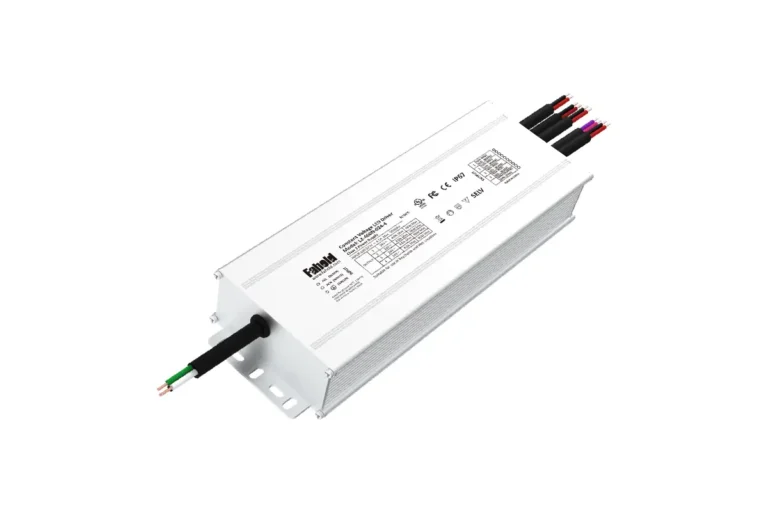
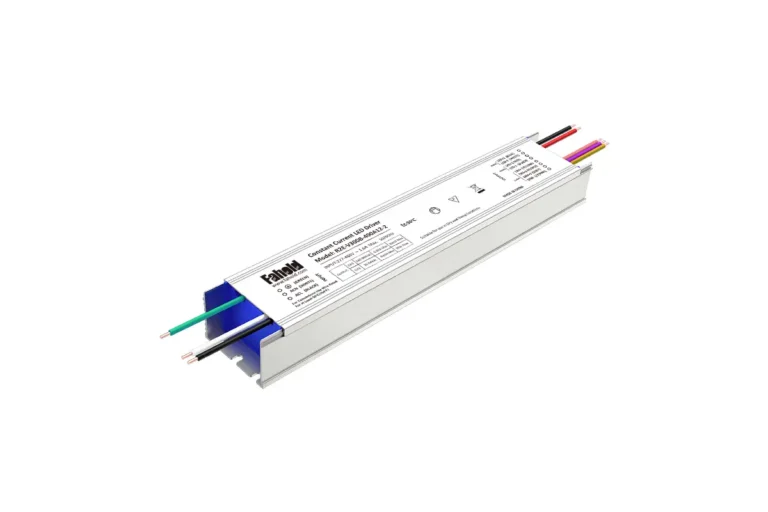
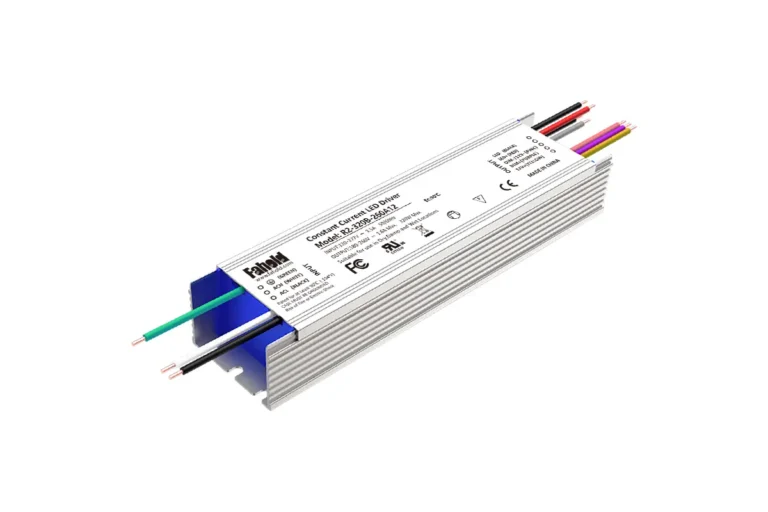
For 12V or 24V constant-voltage strips using an approved control method, evaluate a multi-mode dimmable architectural supply such as FAHOLD L2-A. Confirm whether the project’s version supports the chosen phase-cut or 0–10V method, and test low-end dimming with the actual strip.
Corridors and commercial linear lighting
Linear strips in public areas may require 24V CV supplies, longer runs divided into separate branches, and accessible driver locations. Where an enclosed junction-box construction is appropriate, L2-A is a possible starting point. Assess channel ratings and cabling before choosing a higher-power version.
Lobby, reception and decorative features
Choose controls first. A 0–10V installation may justify a compatible multi-mode constant-voltage driver for strip-based features; current-driven downlights may require a different driver entirely. If the project mandates DALI-2, source and validate a driver that actually meets that requirement rather than treating a 5-in-1 product as equivalent.
Exterior hotel lighting and moisture-exposed installations
Where the driver enclosure is exposed to conditions requiring a verified IP67 product, evaluate FAHOLD L2-F. Indoor cove lighting does not automatically need IP67; select based on the driver’s environment and approved installation method.
Hotel lighting driver selection matrix
| Project need | Preliminary FAHOLD starting point | What must be confirmed |
|---|---|---|
| 24V guestroom cove strip with compatible 120V phase-cut control | L2D dimmable Type B, where output fits | 100–120Vac supply, exact dimmer, output W/A, low-end test |
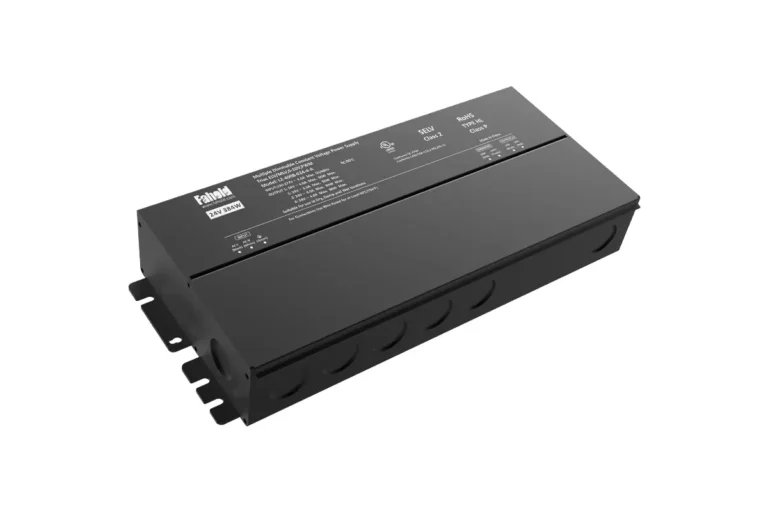
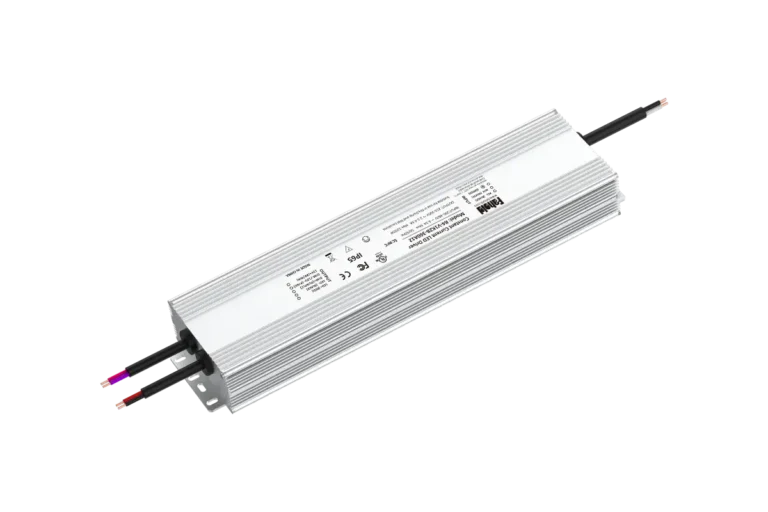
| 12V/24V architectural strips needing enclosed junction box | L2-A | Correct model, 100–277Vac input, per-output limit, selected control mode |
| Protected 12V/24V accent lighting requiring IP67 driver enclosure | L2-F | Complete outdoor installation, IP/wet-location suitability, input and control |
| 24V multi-branch commercial LED strips | L2-A or L2-F multi-channel configuration | Independent channel current, Class 2 where applicable, cable voltage drop |
| Dedicated constant-current downlight | Use the luminaire’s specified CC driver | Output current, voltage window, controls, certifications |
| Project requiring DALI-2 controls | Separately validate a DALI-2-capable product | Exact certified components and integration with hotel control system |
Browse FAHOLD architectural LED drivers and power supplies or the 5-in-1 dimmable LED driver category to compare relevant families.
Request a hotel lighting driver recommendation: Provide your room type, input voltage, LED strip/module datasheet, driver location, controller part number and estimated number of fixtures. Discuss the application with FAHOLD before finalizing the project’s bill of materials.
9. How to Evaluate an LED Driver Supplier for Hotel Projects
Hotel procurement is rarely a single-driver purchase. A typical specification may be repeated across many guestrooms and several common-area lighting packages, sometimes with phased construction and different contractors. The supplier’s ability to document and repeat an approved configuration is as important as listing a nominal power rating.
Request complete technical documentation
Ask for the datasheet, dimensional drawing, wiring and installation instructions, output characteristic and channel limits, temperature/derating information, product-specific safety evidence, and any available dimmer compatibility information. For addressable systems, ask for the interface specification and relevant certification details.
Check OEM/ODM requirements carefully
Hotels and OEM lighting brands may need custom cable lengths, connectors, labeling or enclosures. Such changes can alter the approved configuration. Agree on change control, evaluation of any safety-certification impact, approved drawing revisions, and acceptable substitutions before production.
Validate samples before bulk procurement
Approve a representative sample with the actual dimmer/controller and LED load, including worst-case intended minimum output. Include a recorded test procedure so procurement and the installation contractor can reproduce acceptance criteria. If the hotel contains many identical rooms, a sample room or lighting mock-up may expose problems before widespread installation.
Evaluate lead time, consistency and replacement availability
Ask the manufacturer how it handles model revisions, production-lot consistency, replacement-unit identification, sample timing, delivery schedule, warranty claims and troubleshooting. Verify commercial terms for the requested order volume. An unverified promise of “no flicker” or “works with every dimmer” should never replace measured or application-tested evidence.
11. Frequently Asked Questions
What type of LED driver is best for hotel lighting?
There is no single best type. A hotel cove or headboard strip may use a 12V/24V constant-voltage driver, while a current-driven downlight requires a matching constant-current driver. The final choice depends on load design, power capacity, dimming, certification and installation conditions.
Are 24V LED drivers suitable for hotel guestrooms?
Yes, when the connected LED strip or module is designed for 24V constant-voltage operation. Check the strip wattage, output current, cable voltage drop, and the specific room-control interface. A 24V driver is not a universal replacement for every hotel luminaire.
Which dimming method is best for hotel lighting?
The correct method is the one specified by the room or building control system. Compatible phase-cut control can be practical in some guestrooms and retrofits; 0–10V may suit other zones; DALI-based systems may be selected for addressable control. In every case, test the exact controller, driver and load together.
Why do hotel LED lights flicker at low brightness?
Potential causes include incompatible dimmer/driver combinations, the driver’s low-end operating behavior, unsuitable load conditions, or interactions in the LED electronics. Diagnose the full control-and-load combination rather than assuming that replacing the driver alone will solve every flicker problem.
Can one LED driver power multiple hotel light fixtures?
Sometimes. The fixtures must be compatible with the same output type and voltage/current architecture, and the design must stay within total and per-channel electrical limits. Confirm distribution wiring, voltage drop, protections, and any Class 2 circuit requirements.
Do hotel lighting projects require Class 2 LED drivers?
Not every hotel circuit has the same requirement. The need for Class 2 depends on the electrical design, equipment listing, project specifications and applicable codes. If Class 2 is specified, verify the actual driver marking and individual output-circuit limitations.
Can a 120V LED driver be used on a 277V hotel circuit?
Only if the exact model’s published rated AC input includes 277V. A 100–120Vac product cannot be directly connected to 277Vac. Also verify whether the selected dimmer or control interface is rated and configured for that supply.
Specify Hotel LED Drivers as Part of the Lighting System
Successful LED driver selection for hotels starts with the lighting application and follows a clear sequence: LED load → AC supply → output voltage/current and wattage → dimming → low-end testing → safety → mounting → supplier approval. This sequence is particularly valuable in hotel projects because the same decision may be repeated across many rooms and maintained for years.
For 12V/24V constant-voltage architectural lighting, FAHOLD offers enclosed and IP67 product families that can be assessed against actual hotel requirements. Explore FAHOLD architectural LED driver options or request a project-specific review.
Get a hotel lighting driver recommendation: Share the hotel lighting area, input voltage, LED load datasheet, connected wattage, controller model, installation location, required certification and estimated quantity. Contact FAHOLD for technical matching, sample review and an RFQ.
Technical references
These resources support the safety, controls and flicker considerations discussed in this guide. Project approval still requires current local requirements and documentation for the exact selected product.
- U.S. Department of Energy — Flicker Research: temporal light modulation and the effects of driver/dimmer electronics.
- UL Solutions — Lighting Standards and Certification: scope of UL 8750 and UL 1598, and distinctions among certification marks.
- UL Solutions — LED Equipment and Wired Controls Under UL 8750: controls and LED equipment safety considerations.
- OSHA — Nationally Recognized Testing Laboratory (NRTL) FAQ: product certification marks and the NRTL program.
- DALI Alliance — DALI-2 Certification Overview: testing, certification and interoperability.
- DALI Alliance — Certified Product Database: product-specific certification status.
- Lutron — myRoom XC Hospitality System Controls: examples of supported control interface categories.
- UL Solutions — Emergency Lighting Testing and Certification: UL 924 and emergency-lighting control considerations.
Find the Right LED Power Supply for Your Project
Share the core electrical and application requirements. We will narrow the available FAHOLD platforms to the options most relevant to your project.