Table of Contents
For a North American OEM lighting project, choose a constant-voltage LED driver manufacturer that can match the electrical specification first, preserve the required certification scope, support the correct dimming and enclosure architecture, provide engineering samples, control approved revisions in production, and scale from prototype to repeat volume orders. FAHOLD supports this process with multiple 12V / 24V / 48V constant-voltage platforms, North American-oriented dimming and Class 2 options, OEM/ODM development, samples, and volume-production support.
The most important OEM decision is therefore not:
Can this factory customize an LED driver?
It is:
Can this manufacturer start from the right electrical platform, make only the changes the project actually needs, and keep the approved product consistent through qualification and production?
That distinction matters because unnecessary customization can increase engineering time, certification work, tooling cost, sample cycles, and long-term revision risk.
For many North American lighting brands and fixture manufacturers, the more efficient OEM path is:
existing platform → electrical match → controlled customization → engineering sample → validation → approved configuration → volume production
rather than starting every project with a completely new driver design.
Start With an Existing Electrical Platform Before Asking for Customization
The strongest OEM project usually begins by identifying which existing driver architecture is already closest to the finished fixture requirement.
For a constant-voltage project, define the non-negotiable electrical requirements first:
| Requirement | Example |
|---|---|
| Target market | United States / Canada |
| AC input | 100–277Vac |
| DC output | 24V constant voltage |
| Connected load | 160W |
| Dimming | 0-10V |
| Output architecture | Two Class 2 branches |
| Installation | Protected architectural enclosure |
| Environmental requirement | Project-specific |
| Certification | North American project requirement |
| Mechanical limit | Maximum driver dimensions |
| Expected volume | Prototype + repeat production |
Once these are fixed, the manufacturer can determine whether an existing product family already covers most of the project.
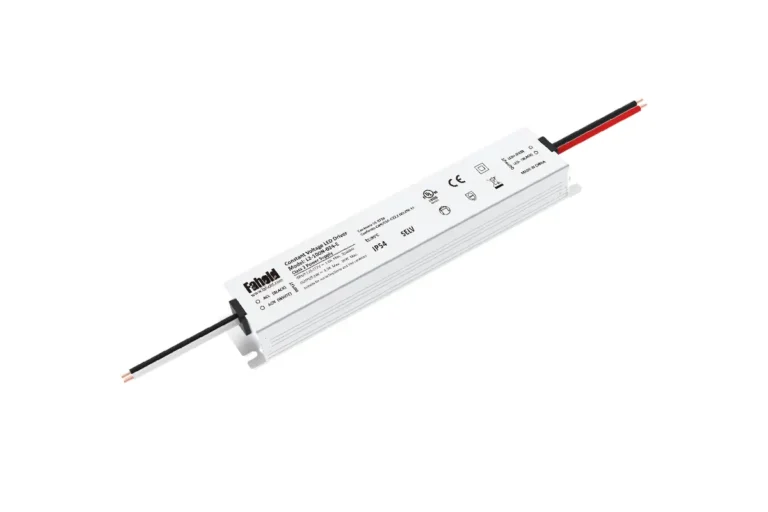
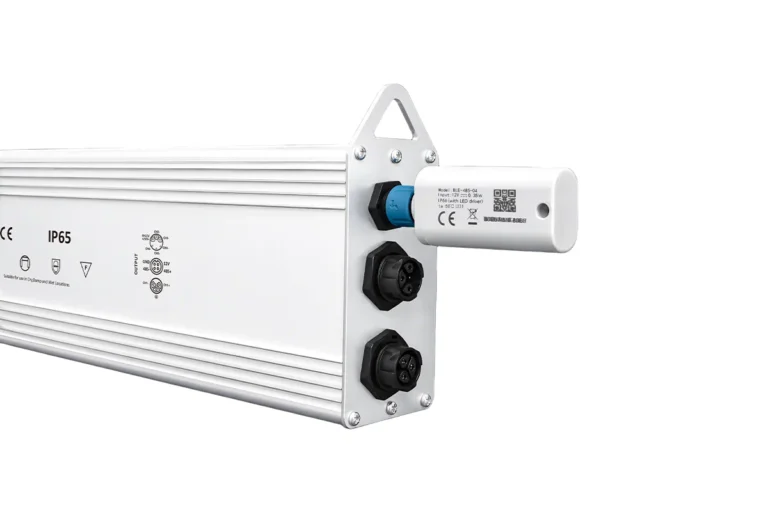
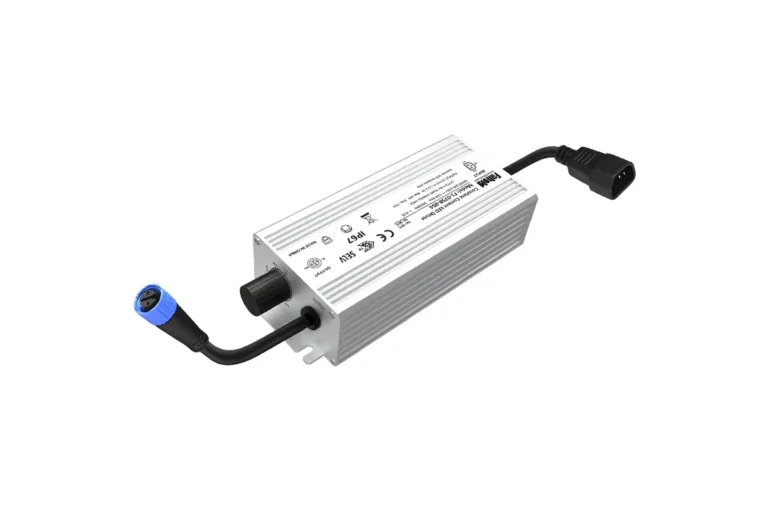
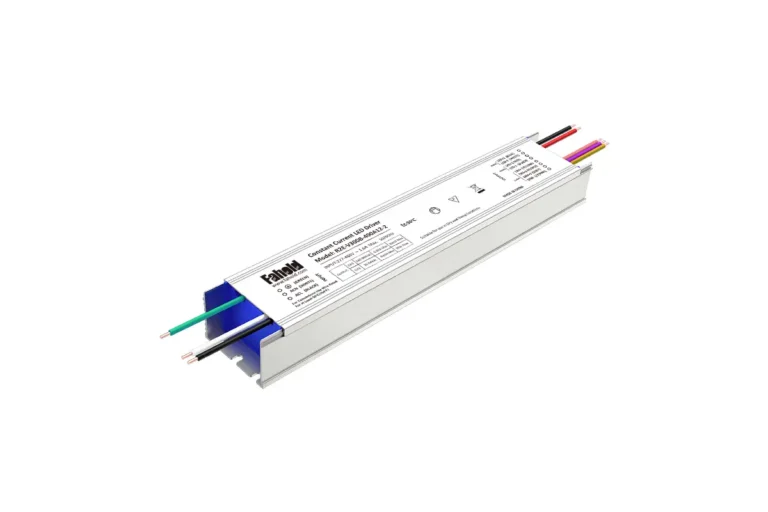
FAHOLD’s current constant-voltage portfolio includes several different starting platforms:
| FAHOLD Platform | OEM Direction |
|---|---|
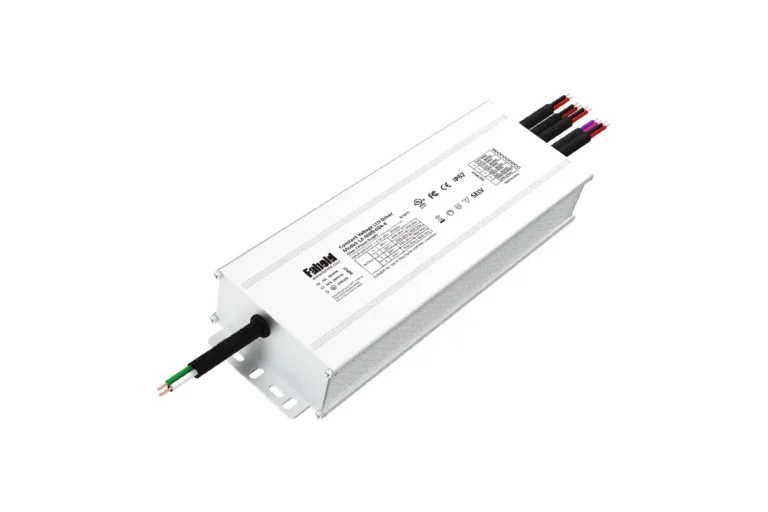
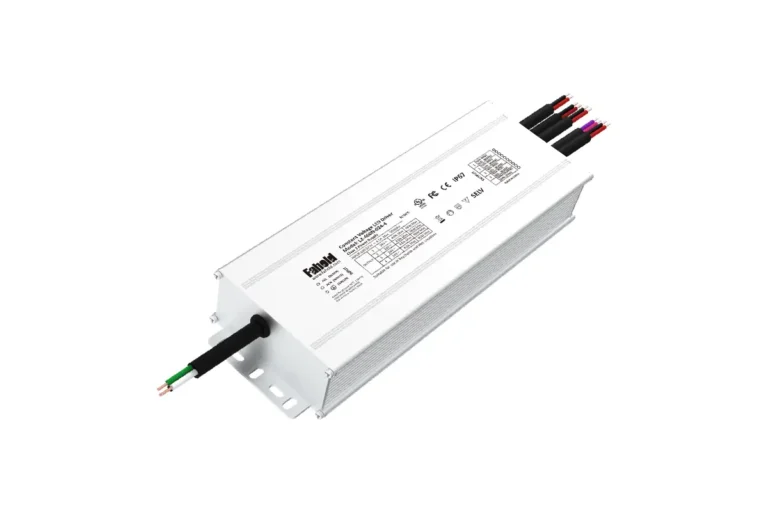
| L2-A Series | 100–277Vac, 12V / 24V, enclosed Class 2, single/multi-channel, multi-mode dimming |
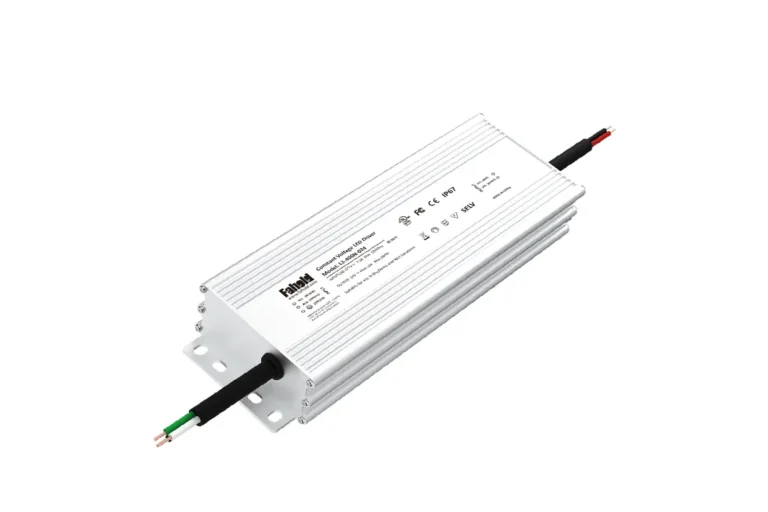
| L2-F Series | 100–277Vac, 12V / 24V, IP67 waterproof, multi-mode dimming |
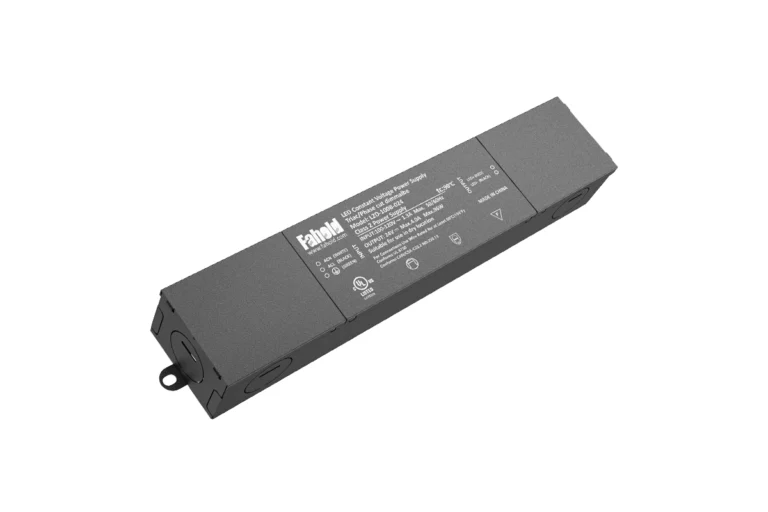
| L2D Series | North American 100–120Vac phase-cut platform with TRIAC / ELV / MLV options |
| L2 Series | 12V / 24V multi-channel Class 2 power for signage and distributed loads |
| L2-E Series | Slim 12V / 24V single-output platform for signage and space-constrained fixtures |
| L3 Series | Higher-power isolated constant-voltage, single-output architecture for signage, LED strip and related applications |
This approach gives an OEM team a technical starting point before discussing custom cables, labels, connectors, packaging, or project-specific changes.
For a broader overview of how FAHOLD’s constant-voltage platforms are selected, see the LED Power Supply Guide.
Do Not Start an OEM Project by Customizing Everything
A common sourcing mistake is to send a long list of custom requests before determining whether those changes are actually necessary.
For example:
- custom housing;
- custom cable;
- custom connector;
- private label;
- different dimming behavior;
- new output voltage;
- new wattage;
- different IP rating;
- altered mounting;
- modified internal electronics.
These requests do not all have the same engineering impact.
A custom label or export package is very different from changing the electrical architecture or a safety-critical component.
The first OEM review should separate changes into three groups.
Group 1 — Commercial / branding changes
Examples:
- private label;
- model naming;
- packaging;
- carton markings.
These may be relatively straightforward, subject to labeling and certification requirements.
Group 2 — Mechanical / integration changes
Examples:
- cable length;
- cable gauge or color;
- connector;
- termination;
- mounting details.
These changes should still be reviewed for current, thermal, ingress-protection, installation, and certification implications.
FAHOLD’s current signage solution pages specifically support project discussions around custom cable length, gauge, color, connector options, private labeling, and OEM export packaging.
See FAHOLD Sign Lighting Solutions.
Group 3 — Electrical / functional changes
Examples:
- output voltage;
- output current;
- power level;
- dimming method;
- control behavior;
- channel architecture;
- protection functions;
- environmental rating.
These usually require the highest level of engineering review because they can affect product performance, validation, and certification scope.
The practical OEM rule is:
Use an existing verified platform wherever it already satisfies the core specification, and customize only the parts that create real value for the fixture or supply chain.
This can shorten development time and reduce avoidable qualification work.
Certification Scope Must Be Part of the OEM Change Process
For North American projects, customization should never be treated as independent from product certification.
UL Solutions’ Follow-Up Services program confirms that UL Certified products continue to be manufactured in accordance with the construction and requirements that were originally evaluated. UL also states that when construction changes to certified products are necessary, those changes may need to be submitted for review.
See: UL Solutions — Follow-Up Services.
This is especially important for an OEM project because a requested change may affect:
- components;
- wiring;
- insulation;
- enclosure;
- control circuits;
- environmental protection;
- labeling;
- manufacturing location;
- certified construction.
The correct question is not simply:
Is the standard product UL certified?
It is:
Does the exact OEM configuration we intend to purchase remain within the applicable certification scope, or does the requested change require additional review?
For LED drivers with wired controls such as 0-10V or DALI, UL 8750 also contains specific requirements for integral wired-control circuits.
See: UL Solutions — UL 8750 Wired-Control Guidance.
This is one reason FAHOLD’s OEM process should begin with an existing product platform and an exact requirement review rather than with an open-ended request to redesign the driver.
Dimming Requirements Should Be Frozen Early
For an OEM luminaire, “dimmable” is not a complete specification.
A North American product family may require:
- 0-10V;
- TRIAC / forward phase;
- ELV / reverse phase;
- MLV;
- PWM;
- several control options across different SKU variants.
The control strategy should be decided early because it affects:
- driver platform;
- wiring;
- control leads;
- enclosure design;
- fixture labeling;
- compatibility testing;
- sample validation.
For 0-10V systems, ANSI C137.1-2022 defines the 0-10V control interface method and performance requirements for dimmable LED drivers and controls.
See: NEMA / ANSI C137.1-2022 Scope.
FAHOLD currently offers two useful OEM directions for North American constant-voltage lighting:
- 5-in-1 dimmable LED drivers based mainly on L2-A / L2-F platforms;
- L2D Series for TRIAC / ELV / MLV phase-cut applications.
A lighting brand that plans several control packages around one fixture family should discuss that architecture before locking the mechanical design.
This is often more efficient than developing the fixture first and trying to fit a control-compatible power supply afterward.
Product Architecture Should Match the Fixture, Not the Other Way Around
An OEM manufacturer is more useful when it can route different fixture requirements into different driver platforms instead of forcing every application into one SKU.
Example: architectural fixture platform
Requirement:
- 24V constant voltage;
- 100–277Vac;
- 0-10V;
- Class 2;
- protected installation;
- multiple load branches.
Starting platform:
FAHOLD L2-A
Why:
The series already combines the main electrical and mechanical direction before any project-specific OEM changes are considered.
Example: outdoor linear product
Requirement:
- 24V constant voltage;
- 100–277Vac;
- dimmable;
- driver itself requires IP67 construction.
Starting platform:
FAHOLD L2-F
The OEM discussion can then focus on exact wattage, control configuration, cable/termination, labeling, and project-specific requirements.
Example: North American phase-cut fixture
Requirement:
- 12V or 24V;
- 100–120Vac;
- TRIAC / ELV / MLV wall-dimmer compatibility;
- integrated enclosure direction.
Starting platform:
FAHOLD L2D
Example: slim illuminated-sign product
Requirement:
- 12V / 24V;
- compact installation;
- single output;
- signage / display application.
Starting platform:
FAHOLD L2-E
The value of a broader product platform is not the number of models in the catalog.
It is the ability to start each OEM project from an architecture that is already close to the real application.
Validate the OEM Sample as a System Component, Not as an Isolated Driver
An engineering sample should be tested inside the real fixture or a representative system.
A driver that powers an LED load on the bench may still fail the OEM qualification if it does not behave correctly in the finished luminaire.
For North American constant-voltage products, sample validation should typically include:
| Sample Check | Why It Matters |
|---|---|
| AC input | Confirms operation at the intended 120V / 277V environment |
| Output voltage | Confirms the LED load receives the correct regulated voltage |
| Maximum connected load | Verifies the real operating point |
| Dimming | Confirms the specified control interface and low-end behavior |
| Startup / shutdown | Reveals controller or load interaction |
| Thermal behavior | Confirms operation inside the intended enclosure |
| Cable / connector | Verifies the OEM mechanical configuration |
| IP / installation | Confirms the environmental direction |
| Noise / flicker | Relevant to finished lighting quality |
| Mechanical fit | Confirms mounting and service access |
| Label / model | Ensures the sampled configuration matches documentation |
| Datasheet revision | Prevents approval of an undefined or obsolete revision |
If the project uses a multi-branch constant-voltage architecture, the sample should also be tested at the intended branch loads instead of only at the total nameplate wattage.
For this design issue, see Can Multiple LED Loads Share One Power Supply?.
For sizing and deliberate design margin, see LED Power Supply Headroom.
The purpose of OEM sampling is not to prove that a driver “turns on.”
It is to freeze a configuration that can be reproduced in production.
Use an Approved Configuration and Change Control for Production
The OEM project becomes a supply-chain project after the sample is approved.
At that stage, the important question changes from:
Can FAHOLD make this sample?
To:
Can the approved configuration be reproduced consistently across future production lots?
For a professional OEM program, the approved package should identify the items that matter to the finished product, such as:
- exact driver model;
- electrical configuration;
- dimming type;
- firmware or programmable setting where applicable;
- cable and connector specification;
- enclosure / IP configuration;
- label and model marking;
- packaging;
- datasheet revision;
- approved sample or golden-sample reference;
- certification-related conditions.
If one of these changes, the impact should be reviewed before the new configuration enters production.
This matters especially for certified products. UL Solutions’ ongoing certification process is designed to verify that certified products continue to be manufactured consistently with the evaluated construction and requirements.
For OEM teams, that makes revision control and manufacturing consistency part of supplier qualification—not an administrative detail after the purchase order is placed.
Manufacturing Capability Should Support Repeat Orders, Not Just the First RFQ
FAHOLD has focused on LED driver development since 2011 and currently operates a self-owned 12,000 m² manufacturing base in Foshan.
The company’s current manufacturing profile states:
- 3 modern production lines;
- 3M+ annual high-power LED driver capacity at company level;
- more than 85% automated or semi-automated operations;
- SMT production;
- automated production equipment;
- automatic aging;
- ATE testing;
- sampling inspection and quality-control processes.
These are company-level manufacturing capabilities, not production guarantees for one individual OEM constant-voltage model.
Review FAHOLD’s manufacturing and company capabilities.
For an OEM lighting brand, this manufacturing structure becomes relevant after the product passes engineering approval because repeat production depends on:
- process control;
- test consistency;
- traceability;
- approved materials and components;
- revision management;
- production scheduling;
- quality inspection.
A strong OEM relationship should therefore be evaluated across both engineering capability and production discipline.
MOQ, Samples, and Lead Time Should Match the Project Stage
Commercial terms matter because an OEM project normally moves through more than one purchasing stage.
A typical sequence is:
engineering samples → internal validation → customer / certification approval → pilot or initial order → repeat volume production
Current FAHOLD product pages commonly list the following standard commercial reference points for many constant-voltage products:
| Commercial Item | Typical Current Reference |
|---|---|
| MOQ | 500 pcs |
| Sample order | From 10 pcs |
| Sample lead time | About 1 week |
| Bulk lead time | About 3–4 weeks |
| Warranty | Model / series dependent; confirm exact quotation |
These figures are useful for preliminary planning, but an OEM project should confirm the exact MOQ, lead time, and commercial terms against the selected series, customization scope, certification work, and project quantity.
A custom project that requires new engineering work should not be assumed to follow exactly the same schedule as an unchanged standard model.
This is another reason to identify the nearest existing platform before starting OEM development.
What FAHOLD Should Receive Before an OEM Feasibility Review
A useful OEM request should give engineering enough information to determine what can stay standard and what genuinely needs to change.
Instead of sending:
Need custom 24V driver. Please quote.
send a requirement package such as:
| Requirement | Information to Provide |
|---|---|
| Company / project | Lighting brand, fixture manufacturer, distributor, project supplier |
| Target market | United States / Canada |
| Application | Architectural / LED strip / signage / cabinet / outdoor |
| AC input | Required input range |
| DC output | 12V / 24V / 48V |
| Actual load | W or A |
| Dimming | 0-10V / TRIAC / ELV / MLV / PWM / none |
| Class 2 | Required / not required / to be evaluated |
| Output channels | Single / multi-channel |
| Environment | Indoor / enclosed / wet / outdoor |
| IP requirement | If applicable |
| Certification | Exact project requirement |
| Mechanical limit | Drawing / available space |
| Cable / connector | Existing requirement if known |
| Branding | Label / private-label requirement |
| Sample quantity | Engineering validation quantity |
| Forecast | Expected production volume |
| Existing driver | Model / datasheet if cross-referencing |
This gives FAHOLD enough information to answer three questions quickly:
- Which existing product platform is closest?
- Which requested changes are feasible without unnecessary redesign?
- What needs engineering, certification, sampling, or commercial confirmation before quotation?
For an overview of FAHOLD’s current products before submitting the specification, review the Product Catalog.
Existing Driver? OEM Replacement Projects Can Start With a Cross-Reference
Not every OEM project starts from a blank specification.
A lighting brand may already have an existing driver and be looking for:
- a second source;
- a replacement for a discontinued model;
- a different lead-time option;
- a more suitable enclosure;
- another dimming platform;
- an OEM/private-label supply option.
In this case, the fastest starting point is often the existing datasheet.
FAHOLD can compare:
- AC input;
- output voltage;
- rated power and current;
- constant-voltage architecture;
- dimming method;
- control behavior;
- Class 2 / output architecture;
- IP rating;
- mechanical dimensions;
- cable and connector;
- certification requirements.
A candidate FAHOLD model should be treated as an alternative for evaluation, not an automatic drop-in replacement until the relevant electrical, mechanical, control, and compliance requirements have been checked.
This replacement route is particularly useful for OEM teams that already know exactly what the current fixture requires.
When FAHOLD Is a Strong OEM Constant-Voltage Manufacturing Candidate
FAHOLD is particularly relevant to evaluate when a North American lighting project needs a constant-voltage driver and also requires one or more of the following:
- 12V / 24V / 48V constant-voltage platforms;
- commercial 100–277Vac input options;
- North American 100–120Vac phase-cut options;
- Class 2 single- or multi-channel architectures;
- 0-10V, TRIAC, ELV, MLV, or multi-mode dimming;
- IP-rated waterproof driver construction;
- architectural, LED strip, signage, cabinet, or outdoor applications;
- custom cable / connector / label / packaging discussion;
- private-label or OEM branding;
- engineering samples before approval;
- repeat volume production.
FAHOLD should not force an OEM project into a standard platform if the core electrical, control, environmental, mechanical, or certification requirements do not match.
In that situation, the correct next step is to determine whether another existing FAHOLD family is more appropriate or whether the requested customization requires a separate engineering review.
Send the Specification for an OEM Feasibility Review
If your team is evaluating an OEM constant-voltage LED driver manufacturer for a North American lighting product, send FAHOLD the electrical specification, fixture application, control requirement, mechanical constraints, certification requirement, and expected project volume.
FAHOLD can use that information to identify:
- the closest existing product platform;
- the models worth sampling;
- which OEM changes are straightforward;
- which changes need engineering or certification review;
- the appropriate sample route;
- MOQ and production quotation requirements.
For projects already using another driver, include the existing model number or datasheet and request a cross-reference review.
Request an OEM Driver Feasibility Review
If you want to review the current product architecture first:
View the FAHOLD Product Catalog
Find the Right LED Power Supply for Your Project
Share the core electrical and application requirements. We will narrow the available FAHOLD platforms to the options most relevant to your project.