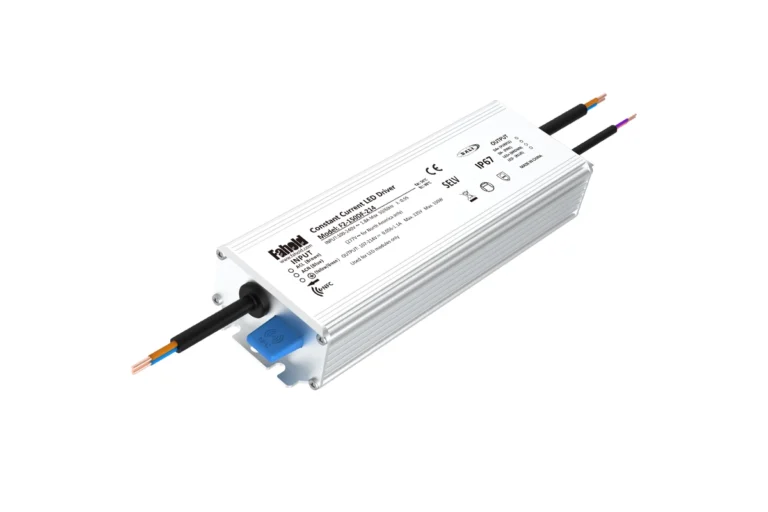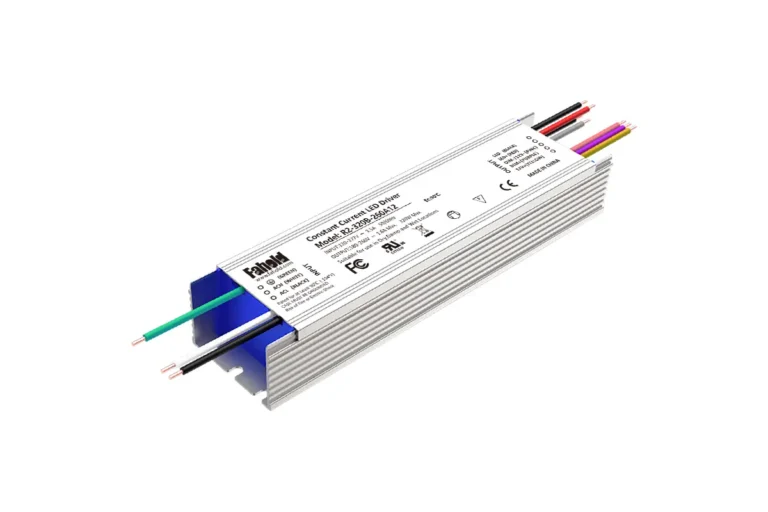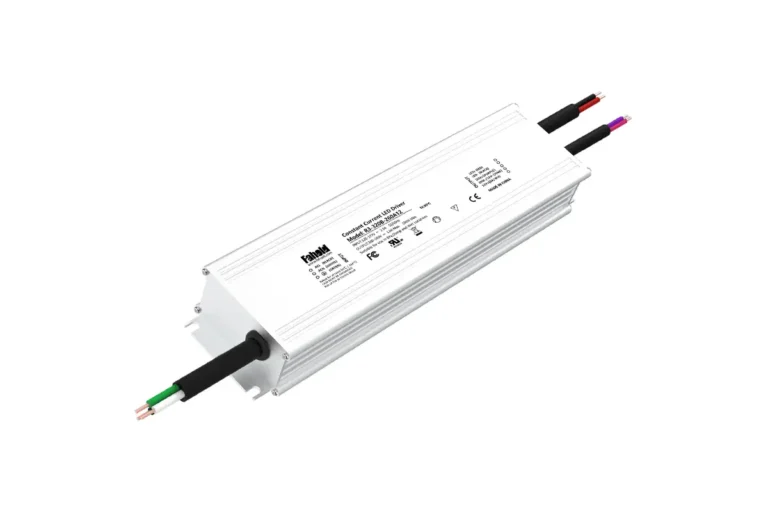
Table of Contents
Selecting an LED power supply for restaurant lighting starts with the actual LED load—not the atmosphere you want to create. A 24V cove-lighting strip, a dimmable bar-counter installation, and a cabinet light can require different drivers even when they are installed in the same restaurant. The right selection must match the load’s constant-voltage or constant-current requirement, the available AC input, output voltage and current, installed wattage, dimming controls, physical location, and applicable safety documentation.
For many restaurant cove, counter, and display applications built around 12V or 24V constant-voltage LED strips, a properly rated constant-voltage LED power supply is the starting point. Recessed downlights and certain accent fixtures, however, may require a dedicated constant-current driver or contain their own integral driver.
Quick selection guide for restaurant projects:
| Restaurant application | Typical LED load | Power-supply approach | What to verify first |
|---|---|---|---|
| Concealed ceiling/cove lighting | 24V constant-voltage strip | 24V CV LED power supply | Run length, total load, voltage drop, dimming zones |
| Bar and counter accent lighting | 12V or 24V LED strip/module | CV power supply with appropriate dimming, if needed | Controller compatibility, low-end dimming, audible noise |
| Display cabinet or shelving | 12V/24V strip or linear module | Compact CV power supply | Installation space, ventilation, cable routing, non-dim vs dim |
| Recessed dining-area downlight | Often a constant-current LED module | Matching CC driver or fixture-specified assembly | Output current, voltage window, fixture approval |
| Commercial kitchen luminaire | Purpose-built integrated or specified system | Follow the luminaire manufacturer’s requirements | Heat, moisture, grease/cleaning exposure, approvals |
The sections below turn these questions into a practical buying process for restaurant contractors, lighting manufacturers, and multi-location procurement teams. For broader building applications, compare FAHOLD’s commercial lighting solutions.
1. Match LED Power Supplies to Restaurant Lighting Applications
LED Power Supplies for Restaurant Cove Lighting
Cove lighting around ceilings, perimeter details, booths, and architectural reveals is frequently built with low-voltage LED strips or linear modules. The electrical requirement is established by the strip manufacturer’s rated voltage and power per unit length. A strip marked 24V DC needs a compatible regulated 24V supply; a 12V strip needs 12V, not 24V.
For a restaurant with several cove sections, do not automatically feed every section from one distant driver. Determine each segment’s length, wattage, wiring distance, voltage drop, and control zone. A large centrally located supply may have adequate total watts but still produce visibly uneven light because of distribution losses. Multiple strategically placed, accessible power supplies can be a more maintainable solution.
Project question: How many independently controlled cove zones are required, and where can the supplies be installed for service?
Dimmable LED Drivers for Bar and Counter Lighting
Bar lighting changes throughout service: brighter task-focused light may be useful during preparation, while low-level accent light may be preferred later. The power supply therefore needs to work with the actual dimmer or lighting controller, not merely carry a generic “dimmable” label.
A wall-mounted phase-cut dimmer, a centralized 0–10V system, and a low-voltage PWM controller can require different driver configurations and wiring architectures. Confirm the intended control interface, installed load range, minimum stable light level, fade behavior, and any audible hum. A pre-production sample should be tested with the exact controller and LED strip planned for installation.
Project question: Which dimmer brand and model will be used, and how low must the lighting dim during evening service?
LED Power Supplies for Display Cabinets and Shelves
Menu displays, bottle shelves, decorative niches, and food-display cabinets may have limited room for a power supply. A slim non-dimmable 12V/24V unit can be appropriate where a compatible LED strip simply needs steady light output. If the display needs dimming, select a separately verified dimmable model instead of assuming a fixed-output supply will work with a wall dimmer.
Confirm enclosure dimensions, ambient temperature, ventilation, permitted mounting orientation, access for replacement, and cable entry. Do not treat every illuminated display case as a dry environment: condensation, chilled cases, cleaning procedures, and moisture exposure may require a different installation design or enclosure.
Project question: Is the display dimmed, and what are the available mounting dimensions and environmental conditions?
LED Drivers for Dining-Area Accent Lighting
Dining areas may combine LED strip lighting with pendant fixtures, recessed downlights, and track-mounted spotlights. The latter may require constant-current drivers or self-contained luminaires. Avoid selecting a 24V supply simply because the lighting is LED: the fixture datasheet determines whether the driver is CV, CC, or already integrated.
For a constant-current module, the specified current must match the driver, while the LED module’s operating voltage must fall within the driver’s allowable output range. For a constant-voltage strip, the supply voltage must match the strip, and available current must cover the connected load. Both categories still require dimming-system and safety evaluation.
What About Commercial Kitchen Lighting?
Commercial kitchens present different conditions from dining-room accent lighting. High temperatures, frequent cleaning, grease exposure, and location-specific safety requirements may apply. Use luminaires and driver assemblies rated for the actual installation environment. Do not generalize that a decorative 24V power supply is suitable for hood areas, washdown conditions, or other specialized locations.
Where a kitchen luminaire has an integrated driver, follow the fixture manufacturer’s specified electrical and replacement requirements rather than substituting a decorative-lighting power supply.
2. Choose Between Constant Voltage and Constant Current LED Drivers
The most important early decision is whether the connected LED load expects fixed DC voltage or regulated current. These are different output architectures.
When to Use 12V/24V Constant Voltage LED Power Supplies
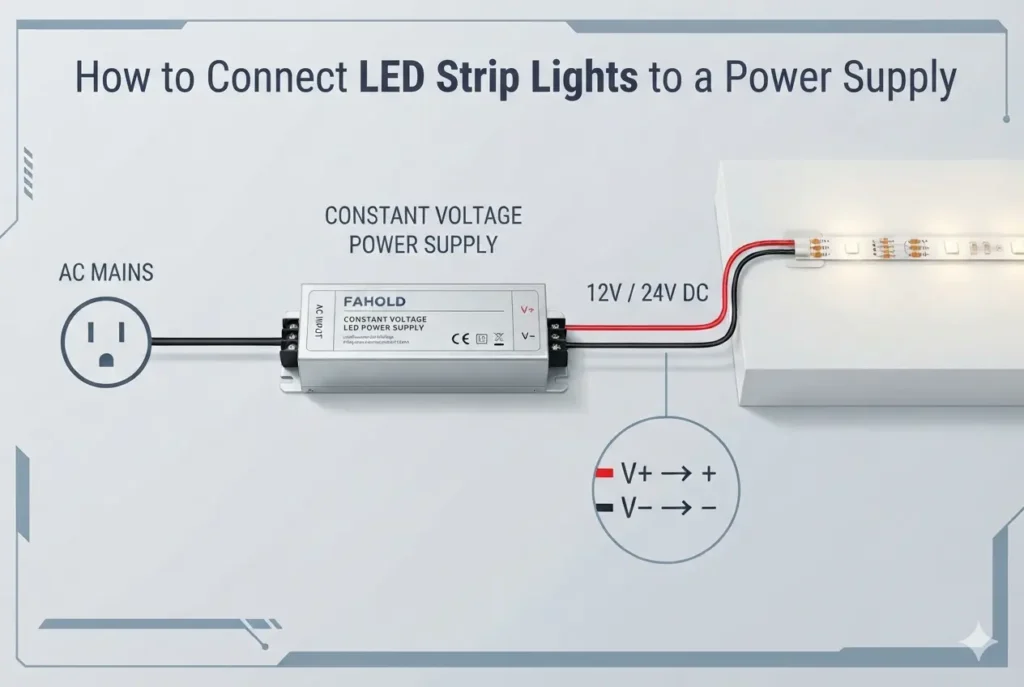
Constant-voltage (CV) supplies maintain a nominal voltage—commonly 12V or 24V—while compatible LED strips or modules draw the current required by their design. CV is common for restaurant cove lighting, under-counter strips, shelving, and certain architectural linear-lighting systems. The strips or modules must include the current-limiting/control arrangement intended for that voltage.
When Restaurant Downlights Need Constant Current Drivers
Constant-current (CC) drivers regulate output current and adjust their output voltage within an allowable range. They are used by LED modules and fixtures designed for a specified drive current, such as some downlights and accent fixtures. A 24V constant-voltage supply is not an interchangeable substitute for a constant-current fixture driver.
Why Driver Output Must Match the LED Load
| Selection factor | Constant-voltage system | Constant-current system |
|---|---|---|
| Primary rating | Output voltage, e.g., 24V DC | Output current, e.g., manufacturer’s rated mA |
| Typical restaurant example | Cove strip, shelf LED strip | Specific downlight or spotlight module |
| Main verification | Rated voltage, total current, watts, wiring losses | Rated current, allowable LED forward-voltage range |
| Common mistake | Connecting a 12V strip to a 24V supply | Choosing only by wattage and ignoring output current |
For more on system architecture, see FAHOLD’s constant-voltage LED power supply guide.
3. Choose 12V or 24V Power Supplies for Restaurant Cove and Bar Lighting
12V vs. 24V LED Power Supplies
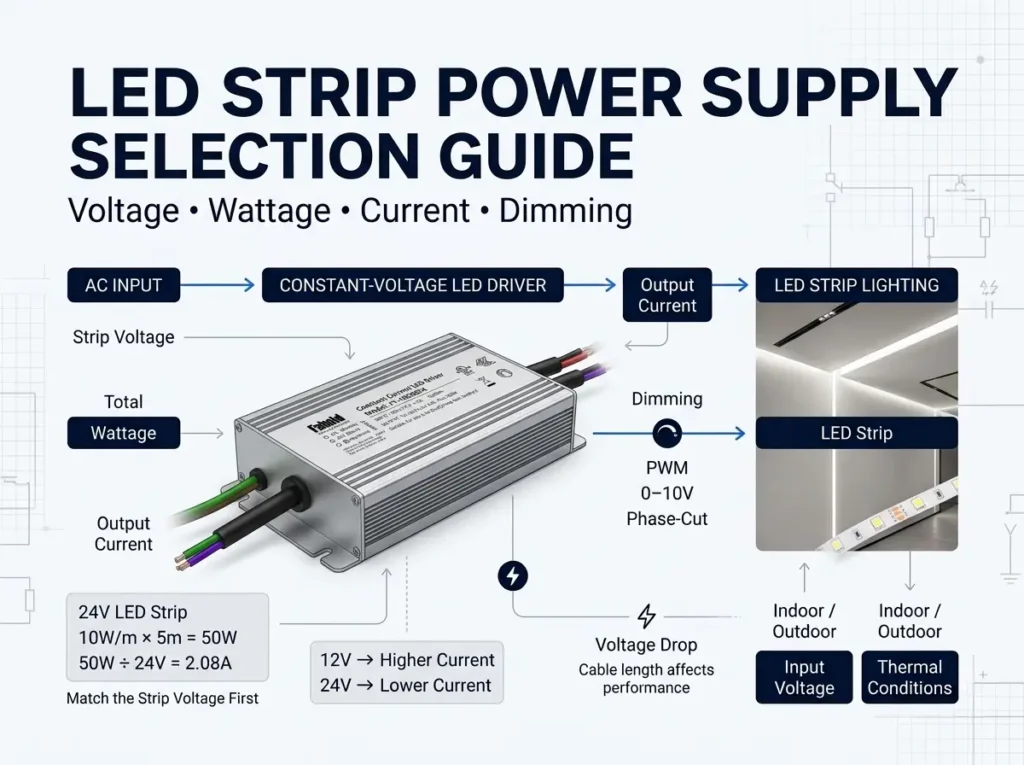
Neither voltage is universally better. Choose the voltage specified for the selected LED product. When equivalent LED systems consume the same wattage, a 24V system draws approximately half the current of a 12V system at the same load power:
- 60W at 12V requires 5A.
- 60W at 24V requires 2.5A.
Lower current can reduce resistive losses in equivalent wiring runs, making 24V practical for many extended cove and linear-lighting layouts. It does not eliminate voltage drop, and the actual LED strip’s recommended maximum feed length still applies. Follow the manufacturer’s feed and injection guidance rather than treating 24V as permission to create arbitrarily long continuous runs.
Why 24V Is Often Practical for Longer Cove Lighting Runs
Consider the complete power path: driver, low-voltage cable, connectors, and LED strip copper traces. A higher-wattage power supply does not increase the conductor size or compensate for inadequate feed points. For longer installations, divide the run into properly designed branches or provide additional feed points, with appropriate circuit protection and channel ratings.
Slim Power Supplies for Restaurant Cabinets and Tight Spaces
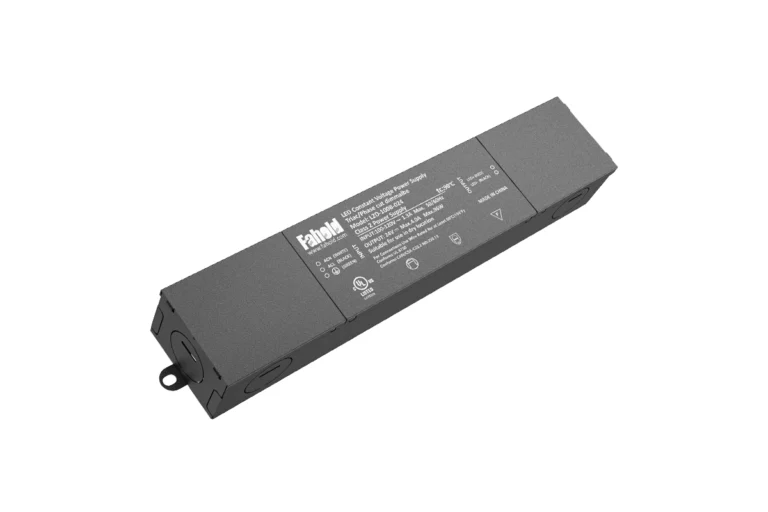
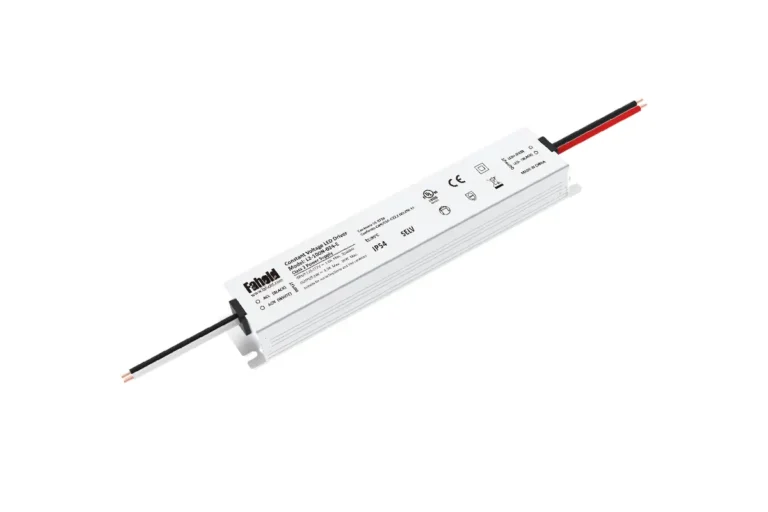
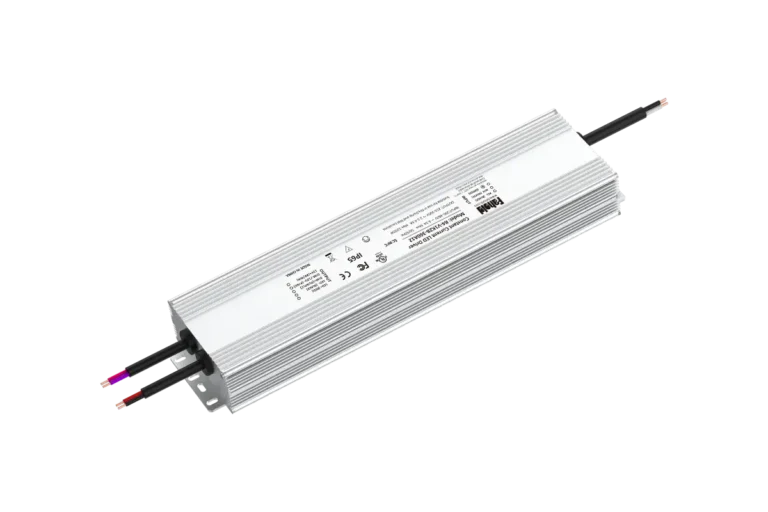
When the cabinet or architectural detail has little clearance, physical geometry matters. FAHOLD’s L2-E slim LED power supply series is a non-dimmable, single-output 12V/24V platform intended for applications including cabinets and LED strips. Confirm the exact model’s dimensions, input rating, enclosure/protection option, load capacity, and installation instructions before specifying it.
If that cabinet will be dimmed, evaluate an appropriately rated dimmable series instead of attempting to dim a non-dimmable power supply through an unsupported control method.
Planning Separate Lighting Zones for Bars and Dining Areas
A restaurant may need separate schedules or brightness levels for its bar, perimeter cove, booths, and display shelves. Plan zones before deciding whether supplies will be single-output or multi-channel. A multi-channel power supply does not automatically mean independently addressable dimming: review how each channel is powered and controlled, whether channels share a control signal, and what the per-channel electrical limits are.
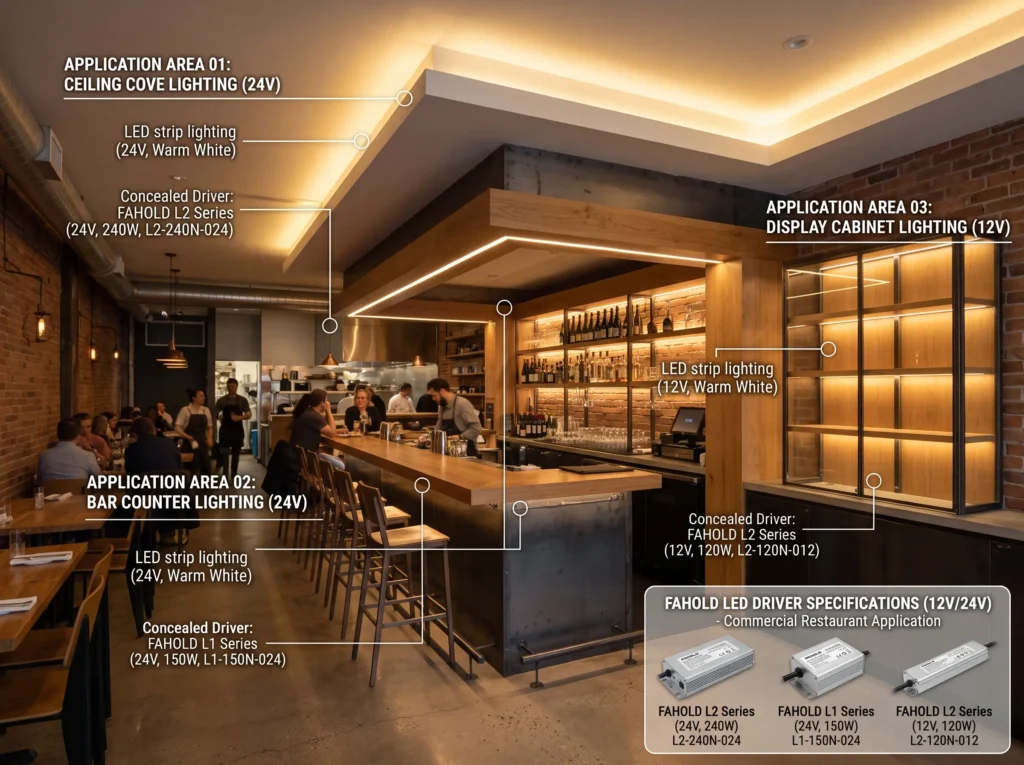
Restaurant lighting diagram showing 24V cove, bar, and cabinet power supply applications.
4. Calculate the Right LED Power Supply Wattage
Calculate Total LED Strip Load
Use the LED strip’s actual rated power rather than estimating from visual brightness. For a single constant-voltage run:
Total load (W) = installed strip length (m) × strip power (W/m)
For example, a 5-meter, 24V restaurant cove strip rated at 12W/m draws:
5 m × 12 W/m = 60 W
The corresponding output current is:
Load current (A) = total load (W) ÷ rated DC voltage (V)
60 W ÷ 24 V = 2.5 A
This is the estimated full-brightness DC load, before checking actual product tolerances, wiring layout, ambient-temperature derating, and output-channel constraints.
Check Driver Output Current and Power Headroom
A supply rated 24V, 4A has an output capacity of 96W (24 × 4), so it may be an initial candidate for the 60W example. That does not mean every 24V/4A unit is suitable: check its maximum continuous load, installation-temperature derating, control method, listing and voltage rating, and whether the intended output branch can actually deliver that current.
A project might use an internal design target such as 80% of a driver’s applicable maximum output. For a 60W load, that illustrative sizing approach requires 60 ÷ 0.80 = 75W of rated capacity. This is a design example, not a universal 20% electrical-code requirement. A manufacturer’s approved loading conditions and derating curve take precedence.
FAHOLD lists an L2D 24V/4A configuration in its phase-cut range, but that series is 100–120Vac input only. A restaurant circuit supplied at 277Vac requires a different suitable input-rated product, such as an appropriately configured L2-A, not the 100–120Vac L2D device.
Avoid Voltage Drop in Long Cove Lighting Runs
Voltage drop is influenced by current, conductor resistance, distance, connections, and LED-strip construction. Typical symptoms include dimmer sections near the far end and inconsistent output between runs. Check:
- Total length of each low-voltage branch—not merely the LED strip’s advertised reel length.
- Cable gauge and one-way routing distance between power supply and strip.
- Maximum run length and feed/injection instructions for the particular LED strip.
- Connector resistance and any shared return paths.
- Accessibility and circuit protection of branch wiring.
If the strip manufacturer’s installation guide specifies maximum feed lengths, follow that guide. Do not “fix” an excessive voltage drop by increasing the driver’s voltage above the strip rating or choosing a supply with more watts alone.
Single-Output vs. Multi-Channel Power Supplies
A single output may serve one strip or several compatible parallel branches within its rated current and wiring conditions. A multi-channel product can simplify distributed loads, but each channel’s voltage, current, power and Class 2 status must be checked individually. The aggregate power rating is not permission to overload a single channel.
For additional project calculations, use the FAHOLD LED strip power supply calculator.
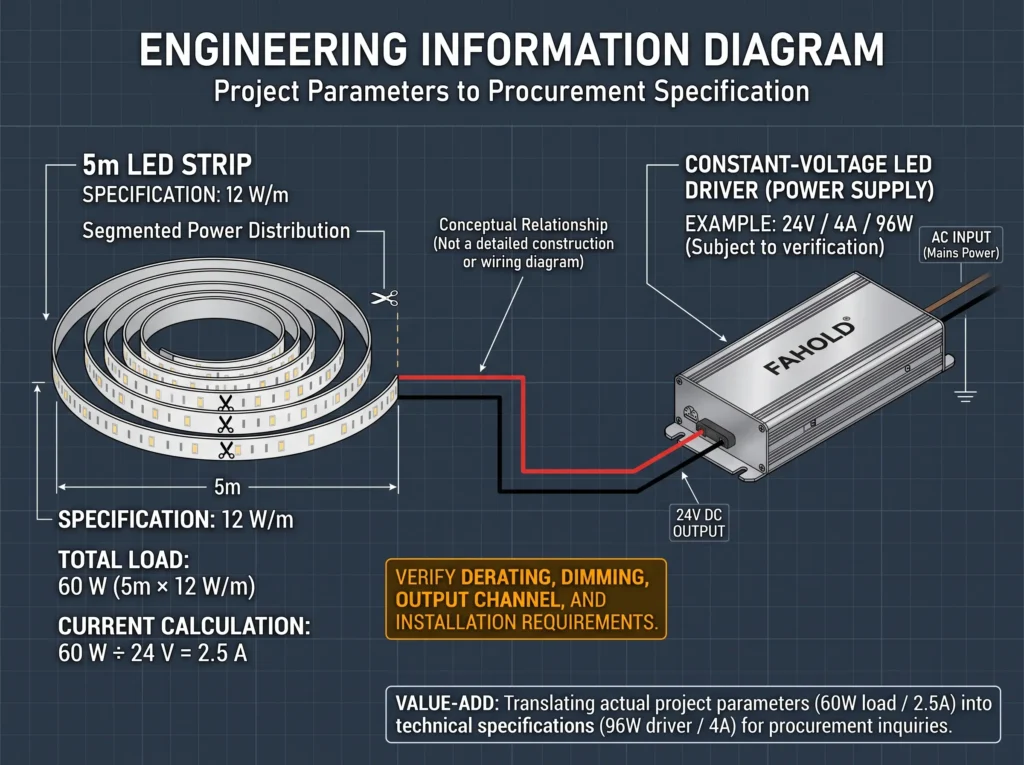
24V restaurant cove lighting calculation showing a 60W strip load, 2.5A current, and driver checks.
5. Select the Right Dimming Method for Restaurant Lighting
Restaurants often depend on lighting scenes rather than one fixed brightness level. The critical purchasing question is whether the selected LED driver has been verified with the actual control system and LED load, particularly at low output.
TRIAC and ELV Dimming for Restaurant Renovations
Where a renovation retains compatible 120V wall dimmers, phase-cut dimming may be a practical option. However, “TRIAC,” “ELV,” and “MLV” are not interchangeable labels for every dimmer. Front-edge and reverse-edge behavior, minimum load, driver electronics, and control-device compatibility affect operation.
FAHOLD’s L2D phase-cut LED driver series includes Type B configurations supporting TRIAC/ELV/MLV control. Check the actual variant, dimmer model, rated 100–120Vac supply, and 12V/24V load before confirming compatibility. Its Type N variants are non-dimmable.
0–10V Dimming for Commercial Dining Spaces
A 0–10V control architecture can be suitable where restaurant dining zones are managed by compatible commercial control equipment. The driver must accept the specified control interface, and designers must verify control-wiring requirements, minimum dimming level, and whether 0–10V control alone turns the output completely off. Dim-to-off behavior should never be assumed without driver and controller documentation.
FAHOLD’s 5-in-1 dimmable LED driver range includes constant-voltage configurations that support multiple control methods depending on model. Ask for the exact model’s control specification rather than assuming all interfaces operate simultaneously or identically.
PWM-Compatible Control for Low-Voltage LED Lighting
“PWM” can refer to different points in the system: a driver’s PWM control input or a downstream low-voltage PWM dimmer that switches the LED strip load. They are not automatically equivalent. Before purchasing, document where the modulation occurs, the controller’s electrical ratings, the driver/control compatibility, and the LED product’s requirements. An unsupported combination can produce poor dimming performance or component stress.
Low-End Dimming, Flicker and Audible Noise
Restaurant ambiance depends on smooth, repeatable low-level light. A data sheet might state a broad dimming range, but performance depends on the full dimmer + driver + LED load combination. Check visible flicker, unexpected shutoff or pop-on, light instability, and audible noise at quiet-nighttime settings.
The U.S. Department of Energy explains that LED flicker depends partly on driver design and the driver/dimmer interaction; dimming may introduce or increase flicker. See the DOE’s explanation of LED flicker. Do not treat an unverified “flicker-free” claim as a substitute for application testing.
How to Confirm Dimmer and Driver Compatibility
For a realistic pre-order test, use the specified LED strip, planned dimmer, chosen driver model, and project wiring topology. Record the following:
| Test point | Pass condition to agree before ordering |
|---|---|
| Power on/off | Predictable startup and shutdown, no recurring flash |
| High brightness | Stable output at design load |
| Low brightness | Meets the project’s target minimum level without instability |
| Full fade | Smooth transition, no unexpected steps or dead zones |
| Dim-to-off, if required | Confirmed for the exact driver/control combination |
| Audible noise | Acceptable in quiet dining conditions |
| Repeated operation | Consistent behavior after power cycles |
| Temperature | Stable operation at expected enclosure temperature |
Project CTA: Ask FAHOLD to review your dimmer and LED load compatibility. Include the dimmer manufacturer/model, strip voltage and wattage, supply voltage, target dimming range, and required quantity.
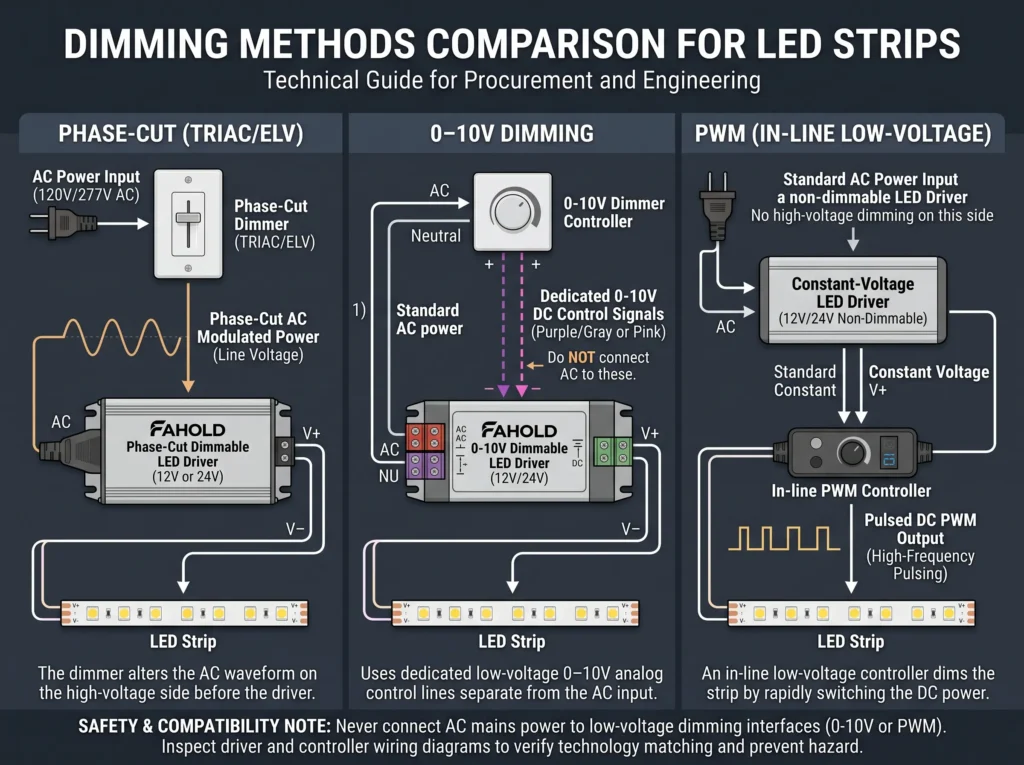
Conceptual comparison of phase-cut, 0–10V and PWM control options for restaurant LED strip lighting.
6. Check Installation, Safety and Reliability Requirements
120V and 277V Input Requirements in North America
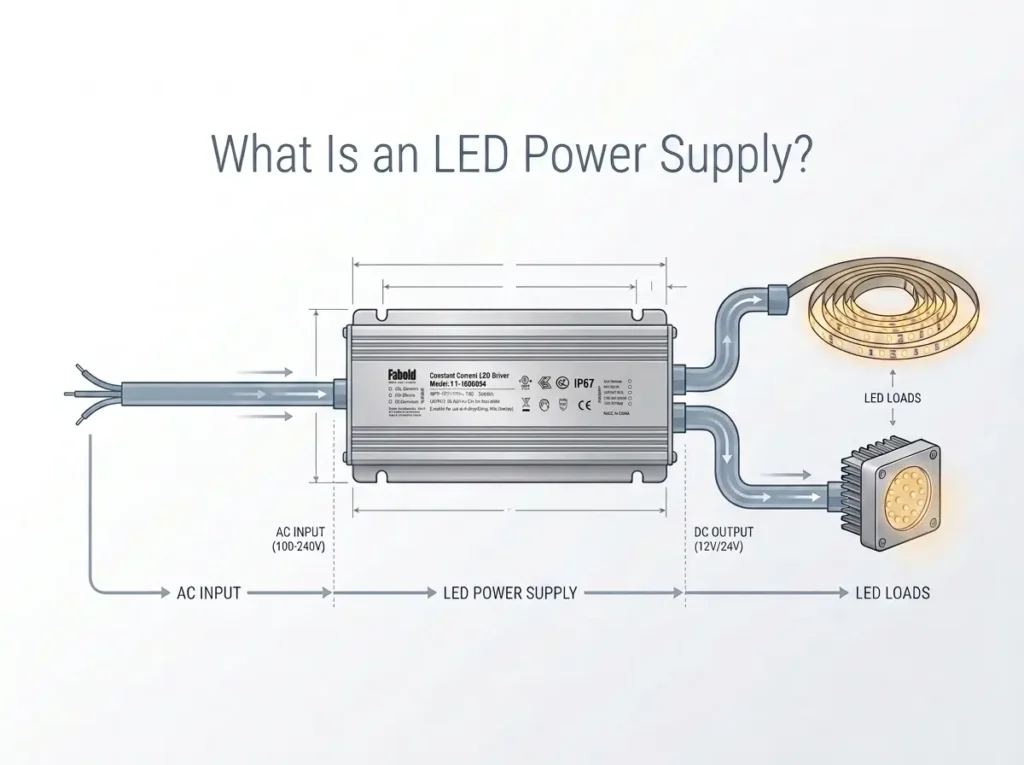
A driver’s AC input range is distinct from its 12V or 24V DC output. Two restaurants in the same chain may have different available branch-circuit voltages. Verify the actual circuit voltage for each installation rather than selecting a device from a familiar power rating.
For example, the FAHOLD L2D series specifies 100–120Vac input, while the L2-A and L2-F platforms list 100–277Vac input. L2-E’s series page lists 120–277Vac input. Model-specific ratings always override broad family descriptions.
UL 8750 and Class 2 Output Considerations
North American restaurant installations should be reviewed against applicable electrical codes and the requirements of the authority having jurisdiction (AHJ). UL Solutions identifies UL 8750 as a standard for LED equipment and UL 1598 as a standard for luminaires. A driver component’s certification does not automatically establish certification of an entire finished luminaire.
Class 2 concerns an evaluated limited-power circuit; it should not be assumed merely because the output is labeled 24V or because the total unit power is under an informal threshold. On multi-channel supplies, verify each specified output and any applicable wiring conditions. Ask for the certification mark, listing or recognition details, exact model number, and supporting documentation relevant to the project.
Dry, Damp and Wet Installation Conditions
A driver above a dining-room ceiling faces different conditions from one beneath a sink, near a wash station, or outside on a covered terrace. Evaluate the environment according to its actual moisture and exposure classification. An enclosure’s IP rating is useful information but does not on its own establish suitability for every North American wet-location installation. Review the complete product marking, listing scope, cable entries, junction box, and mounting method.
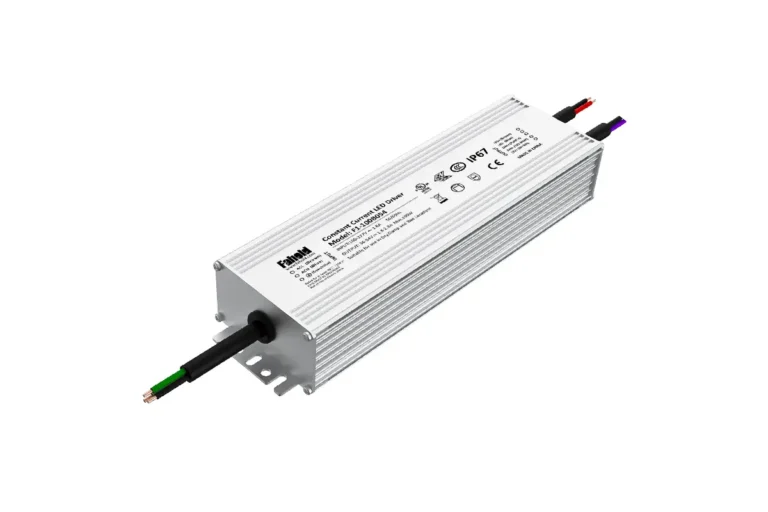
For outdoor or more demanding moisture exposure, the FAHOLD L2-F IP67 series can be evaluated if its exact configuration and installation conditions match the requirement. Do not infer that the driver makes the connected luminaire weatherproof.
Heat Management and Maintenance Access
Restaurant power supplies may be placed above ceilings, behind millwork, or inside cabinets. Enclosure temperature can be high even when the visible lighting runs cool. Confirm installation spacing, the manufacturer’s ambient-temperature and case-temperature limits, and the practical ability to replace a unit without dismantling finished interiors.
A slightly more accessible installation may lower long-term service disruption, especially for a restaurant chain using the same specification across multiple locations.
7. Which FAHOLD LED Power Supply Fits Your Restaurant Project?
Use the application and electrical requirements—not series name alone—to shortlist a driver. The following matrix is preliminary product-family matching guidance, not a claim that every model in a series satisfies every application or certification condition.
| FAHOLD series | Potential restaurant use | Published family characteristics | Before you specify |
|---|---|---|---|
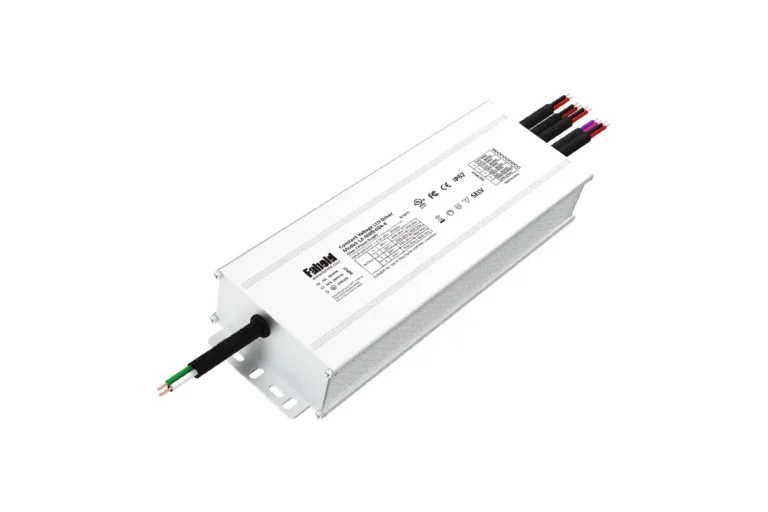
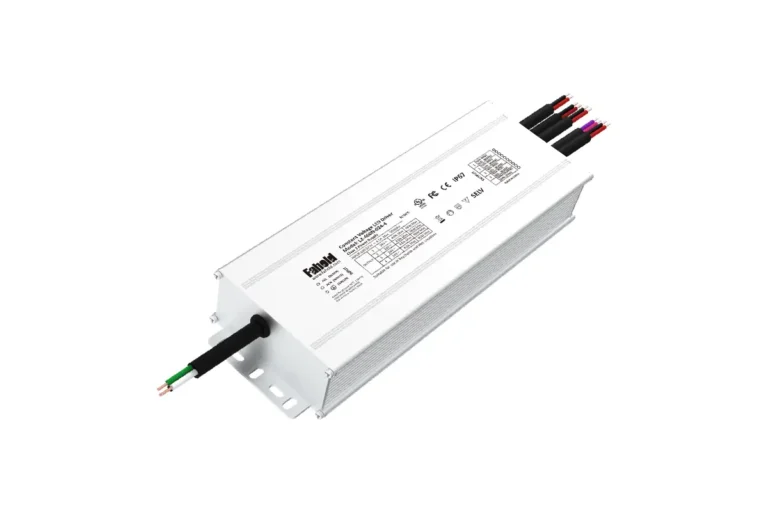
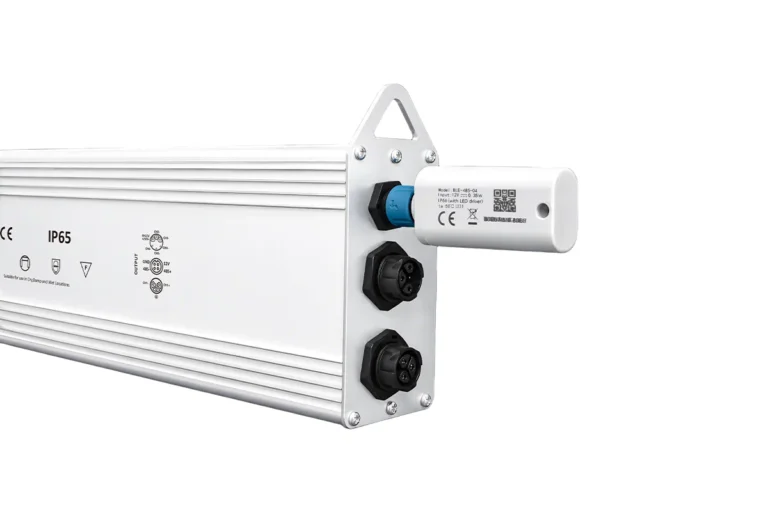
| L2-A enclosed 5-in-1 | Dimmable cove, counter, and architectural strip lighting | 12V/24V CV; 100–277Vac; model-dependent dimming; single/multi-channel variants | Exact dimming variant, current/channel, installation marking, approval documents |
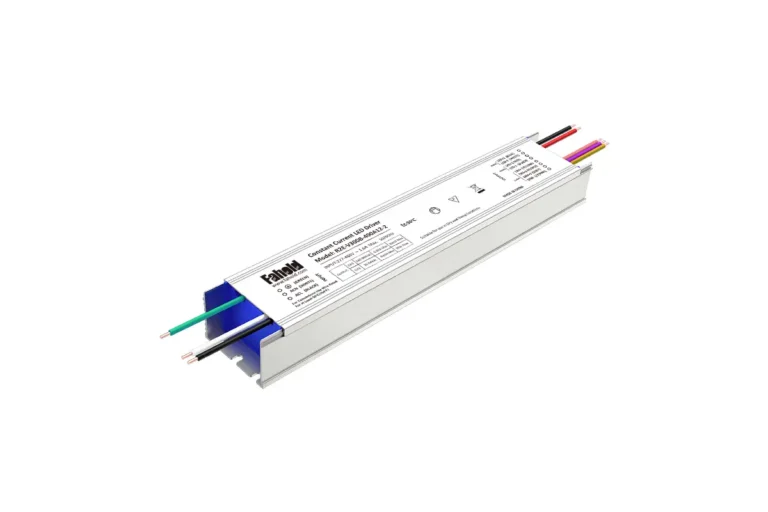
| L2D phase-cut | Compatible 120V wall-dimmer renovation | 12V/24V CV; 100–120Vac; Type B TRIAC/ELV/MLV | Confirm Type B; dimmer model; cannot be used on a 277V input circuit |
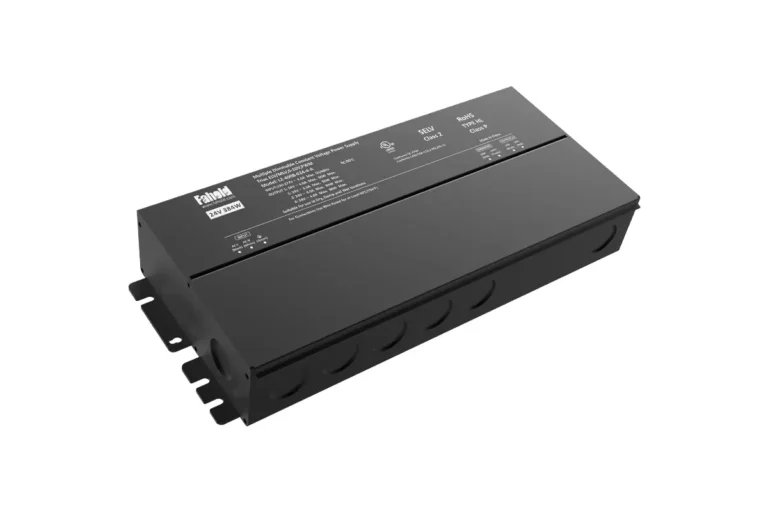
| L2-E slim | Non-dimmable display cabinet or shelf lighting | 12V/24V CV; 120–277Vac; slim, single output; non-dimmable | Exact dimensions, environment, load, installation and listing details |
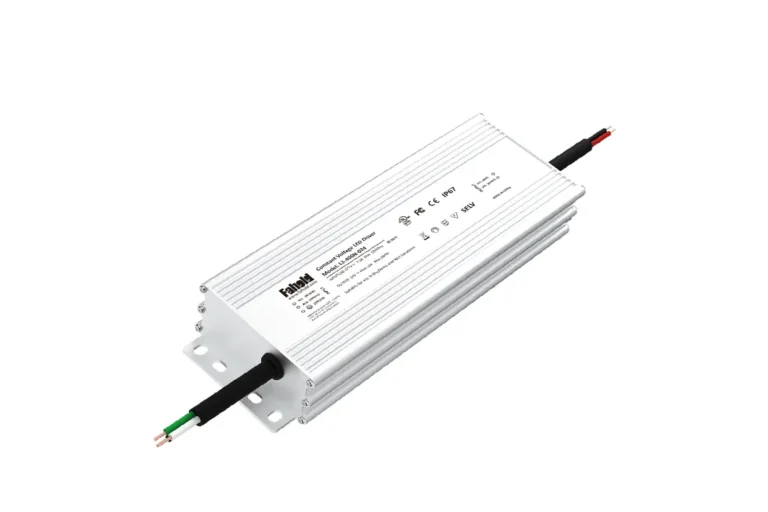
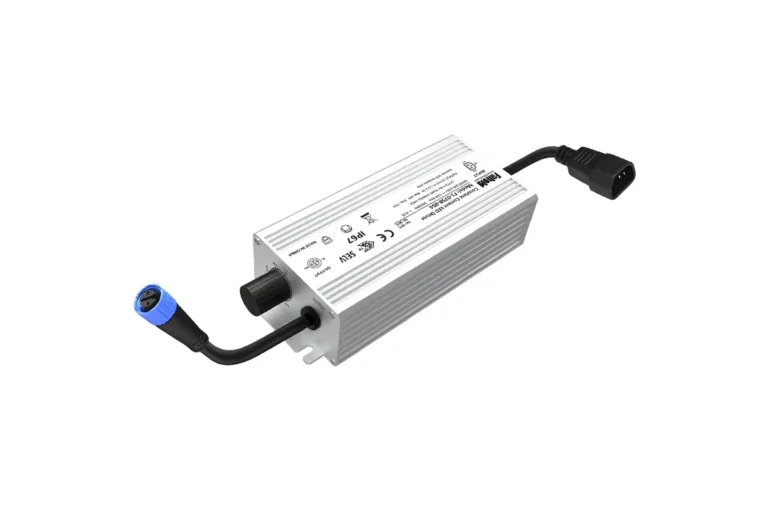
| L2-F IP67 | Decorative installations needing additional enclosure protection | 12V/24V CV; 100–277Vac; IP67 platform; model-dependent dimming | Actual wet-location approval, connector/junction-box arrangement, control match |
L2-A for Dimmable Restaurant Cove and Accent Lighting
L2-A is worth evaluating when a project specifies a 12V/24V constant-voltage load together with an appropriately supported dimming system. It can also be relevant where an integrated enclosed installation format is preferred. The project still needs the exact dimming version, branch current, output arrangement, load, and installation approval to be confirmed.
L2D for Compatible 120V Phase-Cut Dimming
L2D is a specific candidate for compatible phase-cut retrofit projects where the supply circuit is within its 100–120Vac rating. FAHOLD lists Type B as the dimmable configuration and Type N as non-dimmable. Do not select an L2D device for a 277Vac input or assume every wall dimmer will work without sample verification.
L2-E for Non-Dimmable Cabinet and Display Lighting
For a fixed-brightness display shelf, cabinet or decorative niche, L2-E may offer a slim single-output option. It is not a universal dimmable solution. If the display needs evening brightness adjustments, first select a properly controlled lighting system and a compatible dimmable power supply.
L2-F for Applications Requiring Waterproof Driver Construction
L2-F’s IP67 enclosure direction may be relevant for suitably engineered outdoor decorative applications or locations needing additional protection. Confirm the exact unit’s certification, ingress-protection construction, ambient-temperature rating, approved wiring details, and dimming interface. The IP rating is not a substitute for examining the complete site conditions.
Project CTA: Compare FAHOLD architectural LED power supply solutions or request model matching. Include the actual LED strip datasheet so the recommended model can be checked against its electrical load.
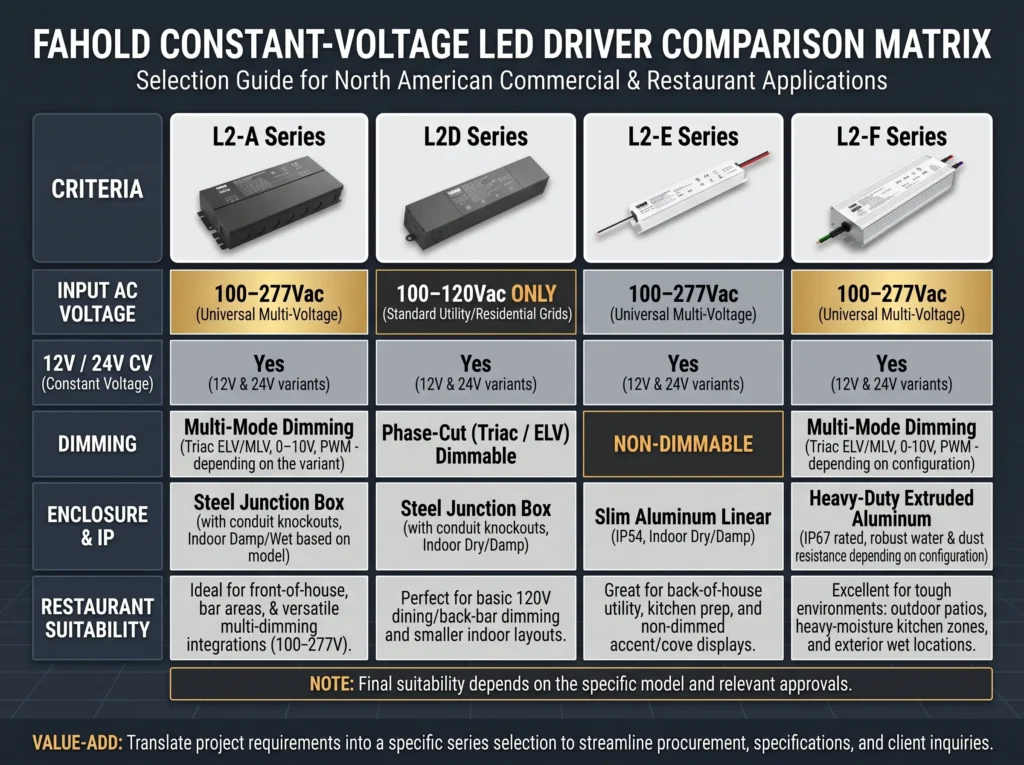
Restaurant LED power supply selection matrix comparing FAHOLD L2-A, L2D, L2-E and L2-F application fit.
8. How to Source LED Power Supplies for Restaurant Projects
Request Datasheets and Certification Documentation
A technical quotation should identify the exact driver part number and variant, AC input, DC voltage/current, output configuration, control interface, maximum rated load, temperature limits, mounting details, dimensions, and relevant certification evidence. Product-family marketing pages are a starting point, not a replacement for model-level technical files.
Verify LED Strip and Dimmer Compatibility with Samples
A sample test should reproduce the actual LED product, dimmer, control wiring, and representative connected load. Ask what has already been tested and what still requires project validation. Retain the test configuration in the purchase specification so the production units are not substituted with an electrically different revision without review.
OEM/ODM Options for Restaurant Lighting Manufacturers
Lighting manufacturers and millwork or fixture integrators may need application-specific connector lengths, housing dimensions, labeling, packaging, or electrical characteristics. Discuss what is available through FAHOLD’s OEM/ODM process, and request a drawing and approval sample before committing a custom configuration to production.
Ordering for Restaurant Chains and Multi-Site Projects
For a restaurant rollout, standardize the bill of materials where practical, including the dimmer reference, driver variant, LED strip specification, cable/connector arrangement, and any branch-level protection. Differences in local input voltage or installation environment may still require distinct models. Agree on revision control, sample acceptance, replacement strategy, estimated quantities, and delivery schedule.
What to Include in an LED Power Supply RFQ
The fastest way to receive a useful recommendation is to describe a real, buildable specification rather than ask for a generic “restaurant LED driver price.” Include the location of use, system voltage, connected load, dimmer, installation conditions, any required approvals, and quantity. For a larger project, submit a zone-by-zone schedule and sample LED strip/fixture datasheets.
Find the Right LED Power Supply for Your Project
Share the core electrical and application requirements. We will narrow the available FAHOLD platforms to the options most relevant to your project.
9. Frequently Asked Questions
What LED power supply is best for restaurant cove lighting?
For a cove made with 24V constant-voltage LED strips, start with a 24V constant-voltage LED power supply sized for the total installed load and compatible with the project’s dimming system. The specific model also needs the required AC input rating, installation approvals, and an acceptable voltage-drop plan. If the cove system uses another load architecture, follow the luminaire’s rated electrical requirements instead.
Should I use a 12V or 24V LED driver for restaurant lighting?
Use the rated voltage of the LED strip or fixture. For equivalent power, a 24V system draws about half the current of a 12V system, which can help with distribution losses in some layouts. It does not make 24V automatically appropriate for a 12V product, nor does it remove the need to check strip feed lengths and cable drop.
Can one LED power supply run multiple restaurant LED strips?
Often yes, if the strips are designed for the same supply voltage, connected in a permitted configuration, and the combined current stays within the driver’s applicable ratings. Check branch wiring, circuit protection, voltage drop, and any individual output/channel limits. Do not treat a multi-channel driver’s total wattage as the rating of each output.
What type of dimmable LED driver works with restaurant wall dimmers?
That depends on the wall-dimmer model and its control type. A compatible phase-cut supply may suit certain 120V renovation projects; a commercial zone controller may instead require 0–10V or another supported interface. Verify the specific driver variant, dimmer, load range, low-end dimming and off behavior with a sample before finalizing the order.
Do restaurant LED power supplies need to be UL Listed?
Requirements depend on the product, installation, applicable electrical code, and authority having jurisdiction. For North American projects, request the relevant NRTL certification or recognition details and documentation for the exact model and end-use configuration. UL 8750 concerns LED equipment, while other standards may apply to the complete luminaire or assembly. Do not assume that an IP rating or “Class 2” marketing statement independently proves all necessary approvals.
What information should I provide when requesting a restaurant LED power supply quotation?
Provide the application (cove, bar, cabinet or other), AC input, LED product datasheet, required 12V/24V or CC output, total wattage/current, dimmer or controller model, installation environment, required approvals, estimated quantity, and target schedule. Include wiring drawings or photos and an indication of whether samples or OEM/ODM changes are needed.
Find the Right LED Power Supply for Your Restaurant Project
For restaurant cove, bar, and display lighting, start with the LED load specification and work outward: CV or CC → output voltage/current → full-brightness load → distribution plan → dimming compatibility → input voltage → installation and certification → sample approval. This process helps avoid incorrect driver substitutions and costly problems after the restaurant finishes are installed.
FAHOLD supplies constant-voltage LED power supply platforms for commercial and architectural lighting, including dimmable, slim non-dimmable, and IP67 enclosure options. The best fit depends on the exact lighting system—not simply on the name of the application.
Request a restaurant lighting LED power supply recommendation and quotation. Send your application, AC input, LED output voltage, connected load, dimmer model, installation location, and estimated quantity, and request model-level technical documentation and sample-testing support.
Technical References
- UL Solutions — Lighting safety testing and certification: background on UL 8750 LED equipment, UL 1598 luminaires, and certification-mark distinctions.
- U.S. Department of Energy — Flicker Basics: explanation of temporal light modulation and the impact of LED drivers.
- FAHOLD — L2-A technical series overview, L2D series, L2-E series, and L2-F series: product-family information.