Table of Contents
The right LED power supply for an office lighting project depends on the LED load—not just the room or fixture name. For 12V or 24V constant-voltage linear strips, cove lighting and some architectural accents, start by matching the DC output voltage, connected wattage and dimming control. Then confirm the building’s AC input, wiring layout, installation conditions, applicable safety certification and the exact driver’s output limits. LED panels, troffers and some integrated office luminaires may require constant-current drivers instead; a generic 24V power supply is not a substitute.
In a commercial office, these decisions have practical consequences. An incorrect 0–10V pairing may leave lights glowing when an occupant expects them to switch off. A long DC run can cause uneven brightness even when the supply has enough rated watts. A driver installed inside a crowded ceiling space may operate under more demanding thermal conditions than its catalog headline suggests. And one incorrect selection can be repeated throughout a floor—or across many office locations.
This guide concentrates on the office applications where low-voltage LED power supplies are most relevant: linear strips, coves, reception features, conference-room accents and cabinet lighting. It gives a worked 24V load-and-branch calculation, a controller compatibility checklist and a practical route from a project specification to a FAHOLD quotation.
Quick selection: If the office fixture uses a rated 24V constant-voltage LED strip and needs 0–10V dimming, evaluate a compatible 24V CV driver with a documented 0–10V input, suitable AC mains range and sufficient usable DC output. If the installation is fixed-output cabinet or shelf lighting, a slim non-dimmable supply may be more appropriate. If a luminaire specifies 700mA constant current, select a compatible constant-current driver instead.
1. LED Power Supply Requirements for Different Office Lighting Applications
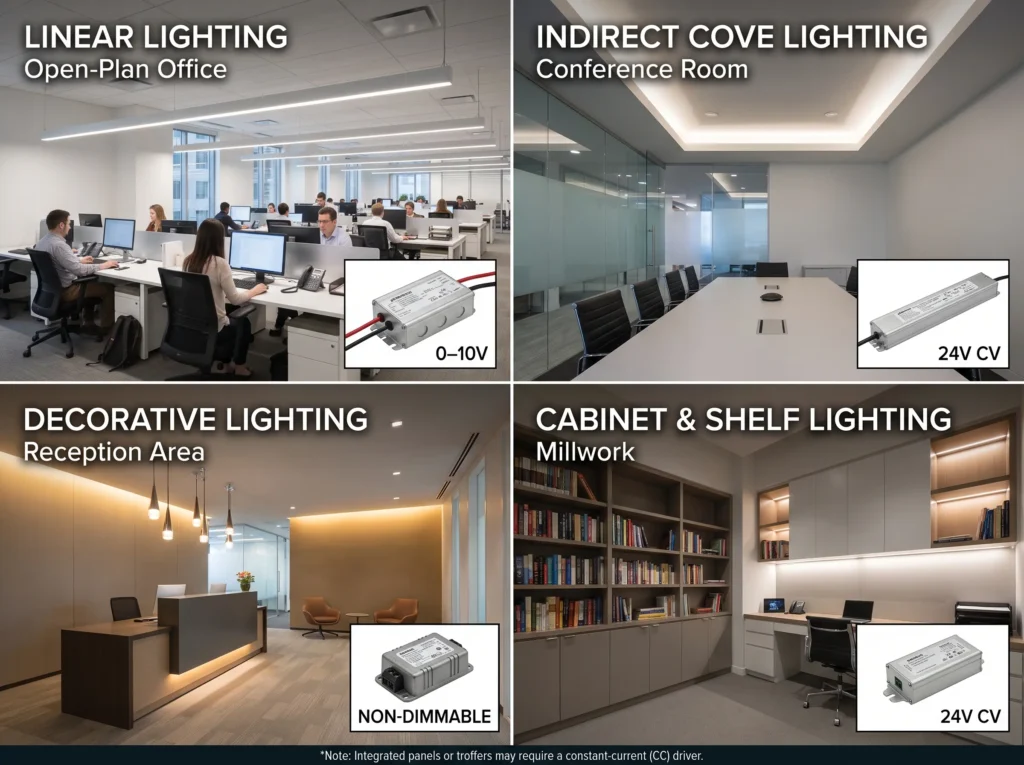
Not every office light uses the same electrical architecture. Separate the lighting application, LED load and control requirement before considering a product series.
| Office application | Typical equipment | First selection questions | Likely power architecture |
|---|---|---|---|
| Open-office linear features | LED strips in architectural profiles or integrated linear fixtures | Is the load a 24V strip or a CC LED module? Does it need centralized dimming? | CV for rated 12V/24V strips; CC for specified modules |
| Cove and perimeter lighting | Concealed LED tape or linear modules | How many powered branches, and how long are the DC runs? | Often 24V CV when specified by the strip |
| Reception and feature walls | Display accents, under-counter or wall-grazer modules | Is scene dimming needed? Is driver access restricted? | CV or CC, depending on the fixture |
| Conference and meeting rooms | Linear accents and integrated office luminaires | Is 0–10V or another controller already specified? How low must it dim? | Depends on fixture; verify control interface |
| Storage, shelving and millwork | Low-voltage cabinet or under-shelf strips | Is fixed output acceptable? Is enclosure width limited? | Often 12V/24V non-dimmable CV |
| Office panel and troffer luminaires | LED boards or integrated commercial fixtures | What current and voltage range does the luminaire require? | Often CC, or a factory-matched driver system |
Office linear and cove lighting
For strips installed in ceiling coves or linear aluminum channels, the power-supply task is usually to deliver the exact rated DC voltage at an acceptable voltage drop. Confirm the profile’s thermal design, the strip manufacturer’s maximum feed length and whether multiple sections will be connected in parallel. Treat a 10m architectural line as a system of powered sections, not automatically as one continuous electrical run.
Reception and conference-room accents
Reception areas and meeting rooms often need different light levels throughout the day. The driver must match the control system and provide stable output during fades, low-light scenes and repeated on/off cycles. If a conference room requires lights to extinguish fully, specify the off behavior explicitly rather than assuming that every 0–10V driver turns off at 0V.
Cabinets and storage areas
Some cabinetry needs only reliable on/off illumination. In that case, installing a multi-mode dimming driver may add complexity without solving a real requirement. A compact non-dimmable 24V supply can be a better shortlist candidate—provided the actual LED load, supply dimensions and installation approvals match.
Product-fit question: Is the office project using low-voltage CV strips, or integrated CC luminaires? This one answer determines whether the rest of this 12V/24V power-supply guide applies directly.
2. When to Choose Constant Voltage vs. Constant Current
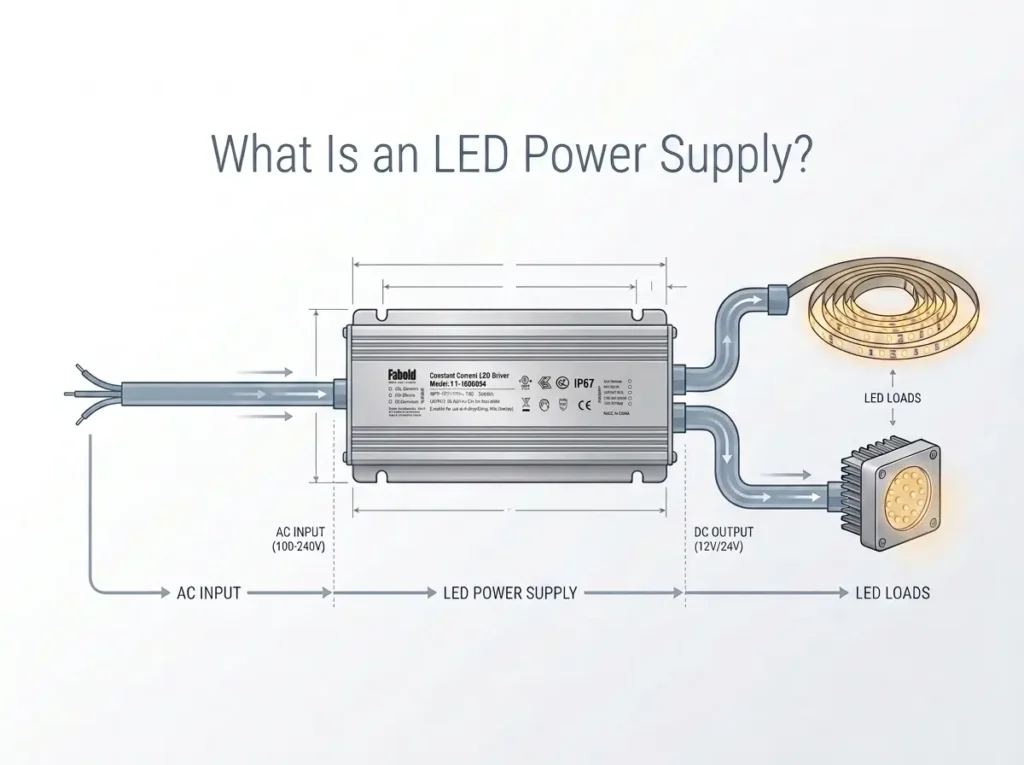
Constant-voltage (CV) supplies hold the output at a specified voltage, commonly 12VDC or 24VDC. They work with LED strips or modules explicitly designed to accept that supply voltage and containing the necessary current-regulating circuitry. This is the main focus of FAHOLD’s L2-A, L2-E and L2D families discussed below.
Constant-current (CC) drivers regulate LED current, such as a manufacturer-specified milliampere rating, while operating within an allowable output-voltage window. They are used in many integrated linear luminaires, troffers, downlights and LED modules. A 24V CV supply must not be substituted for a CC driver unless the fixture manufacturer explicitly approves that configuration.
| Datasheet specifies | Choose | Also verify |
|---|---|---|
| “24VDC” LED strip, with rated W/m | 24V constant-voltage supply | Total load, cable loss, dimming and installation |
| “12VDC” cabinet LED module | 12V constant-voltage supply | Branch current, installation space and protections |
| “700mA CC, 24–42V output range” (illustrative) | Compatible 700mA constant-current driver | Actual forward-voltage range, power and controls |
| Complete panel or troffer with supplied driver | Manufacturer-approved replacement or system driver | Connector, listing, control and warranty compatibility |
For a broader explanation, see FAHOLD’s constant-voltage LED power supply guide. The office-specific decision is simpler: purchase from the fixture or strip specification, not from the room label.
3. Choosing 12V or 24V Power Supplies for Office Linear Lighting
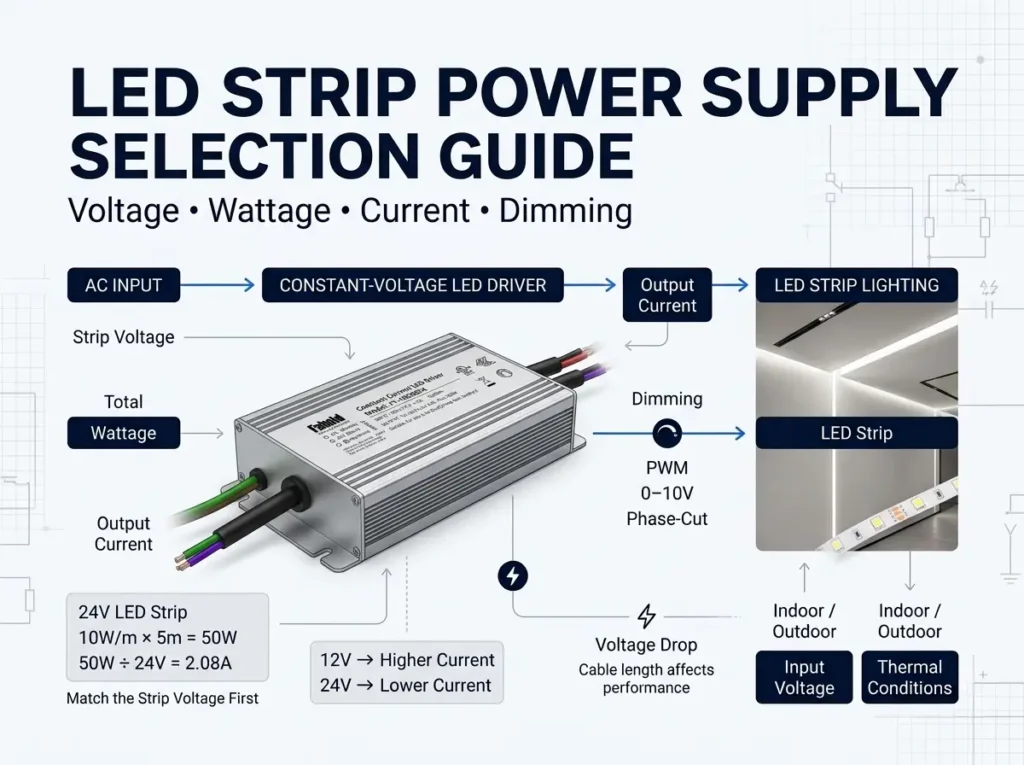
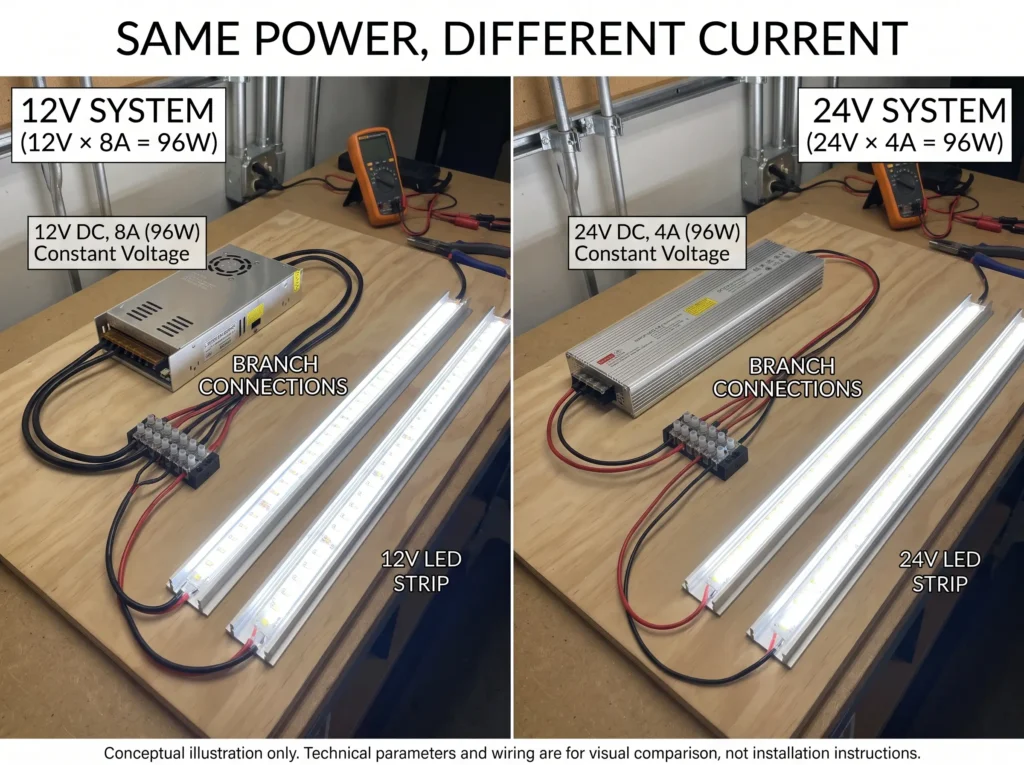
Both 12V and 24V are useful when the LED load is engineered for that voltage. For a new office cove or linear-strip design, 24V is often a practical option because it carries half the current of a 12V system at the same power. Less current can simplify distribution and reduce conductor losses, although cable size, strip copper traces, current limits and feed lengths still need to be engineered.
For an equal 96W electrical load:
- 12V: 96W ÷ 12V = 8A.
- 24V: 96W ÷ 24V = 4A.
This does not mean that a 24V version always uses less power. It means the same watts are delivered at lower current. Never apply 24V to a strip rated only for 12V.
Decide the architecture before selecting the driver
A concealed office lighting installation might use one supply per short section, several supplies serving independent zones, or a multi-channel unit with individually limited outputs. The appropriate architecture depends on:
- the maximum strip length allowed per feed by the LED manufacturer;
- the load and conductor length on each DC branch;
- whether the entire line must dim together or be divided into zones;
- the service location and accessibility of the power supplies;
- the available output terminals and maximum current of the selected model.
For a long cove, adding larger nameplate wattage to the same supply does not automatically cure dim ends. A lower-resistance cable, appropriate feed locations or additional power injection may be required. See the FAHOLD voltage-drop guide for that separate calculation.
Allow space for the complete installation
The physical unit must fit with the required wiring enclosure, conductor bends, cable entry, ventilation and maintenance access. A narrow power supply may solve one clearance issue but not the electrical-code requirements for the complete installation. Check the actual dimensions and installation manual before approving a ceiling cavity, cabinet or architectural channel location.
4. Selecting 0–10V Dimmable LED Power Supplies
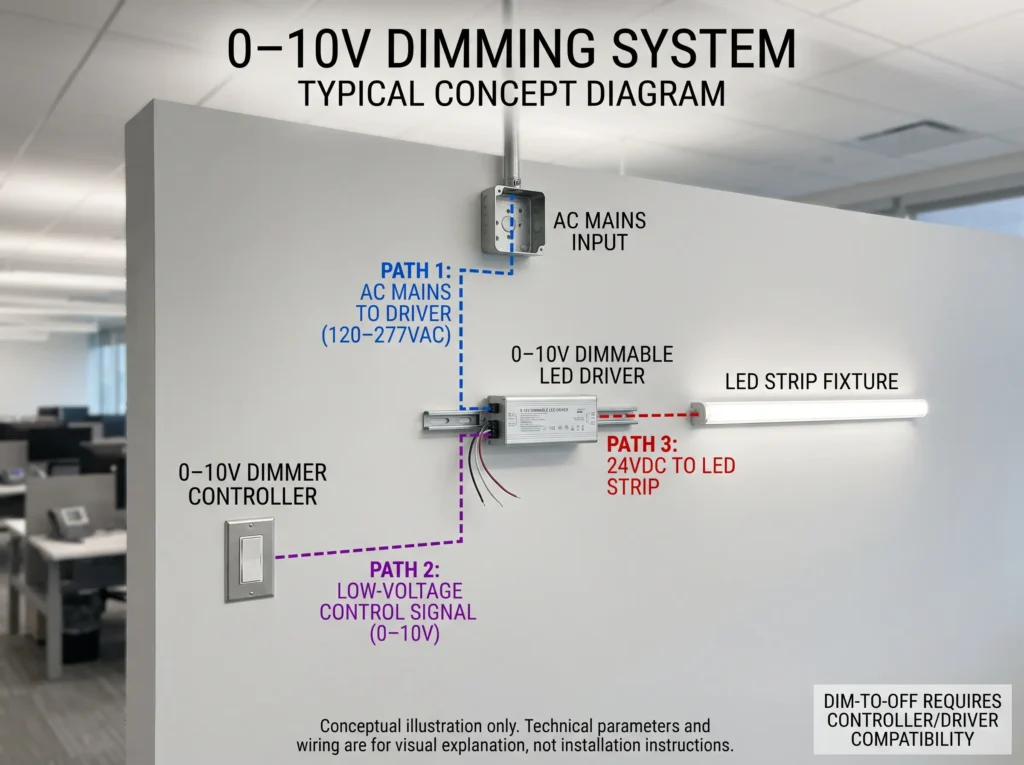
Office control compatibility deserves more attention than a generic “dimmable” icon on a product listing. 0–10V dimming is used in many commercial systems, but matching the interface label is only the start. Control wiring, source/sink topology, maximum supported control load, minimum dim level and the driver’s off behavior must all be checked.
Match the controller to the driver—not just the protocol name
For an office using 0–10V control, obtain the controller’s exact manufacturer and model. Confirm with the driver supplier:
- whether the paired devices use a compatible 0–10V interface and control source/sink behavior;
- the dimming curve, supported range and minimum stable light output;
- whether an electronic dim-to-off function is supported by both control and driver;
- whether a relay or separate switched line is needed for full off;
- permitted control-wire lengths, conductor requirements and group size;
- whether the supplied model has been tested with the actual controller and LED strip.
Importantly, “0–10V” does not promise that every luminaire will go fully dark at 0V. Lutron’s 0–10V Control Topology application note distinguishes drivers that reduce to minimum output from those that implement compatible electronic-off behavior. For office occupancy-control systems, off-state operation is a design requirement—not a minor footnote.
What to test in conference rooms and open offices
A useful sample evaluation includes a gradual fade from high output to minimum, repeated startup, full-off operation, scene recalls and visible or camera-detected temporal artifacts. Also listen for unwanted driver or fixture noise under relevant loads and dimmer settings.
The U.S. Department of Energy’s flicker research explains why temporal light modulation varies with driver design, load and control conditions. Thus, a “flicker-free” marketing claim should not replace project-specific testing when dimming quality matters.
Do all office projects need 0–10V?
No. Some small retrofit areas retain compatible phase-cut wall dimmers. Others use digital building controls such as DALI, or have integrated fixture-level drivers. Do not select a product just because it supports more modes. Confirm the specified interface and the exact FAHOLD model’s supported configuration. The FAHOLD 5-in-1 dimmable LED driver category is a relevant shortlist for compatible CV projects, but this does not establish DALI support for every listed product.
Office dimming compatibility check: Send FAHOLD the 0–10V controller model, LED strip SKU, required lowest stable level, dim-to-off requirement, AC input and load per output. Request a compatibility review before a full-floor deployment.
5. How to Calculate LED Driver Wattage for Office Lighting
For constant-voltage LED strips, begin with the maximum rated load, not the average wattage when occupants typically dim the lights.
Core formulas:
Connected LED load (W) = strip wattage per meter (W/m) × powered length (m)
DC output current (A) = connected load (W) ÷ output voltage (V)
Total driver load (W) = sum of simultaneous branch loads (W)
Worked example: 10m of 24V office linear lighting
Assume the office specifies:
- 24V constant-voltage strip, rated 12W/m;
- 10m total in a ceiling cove;
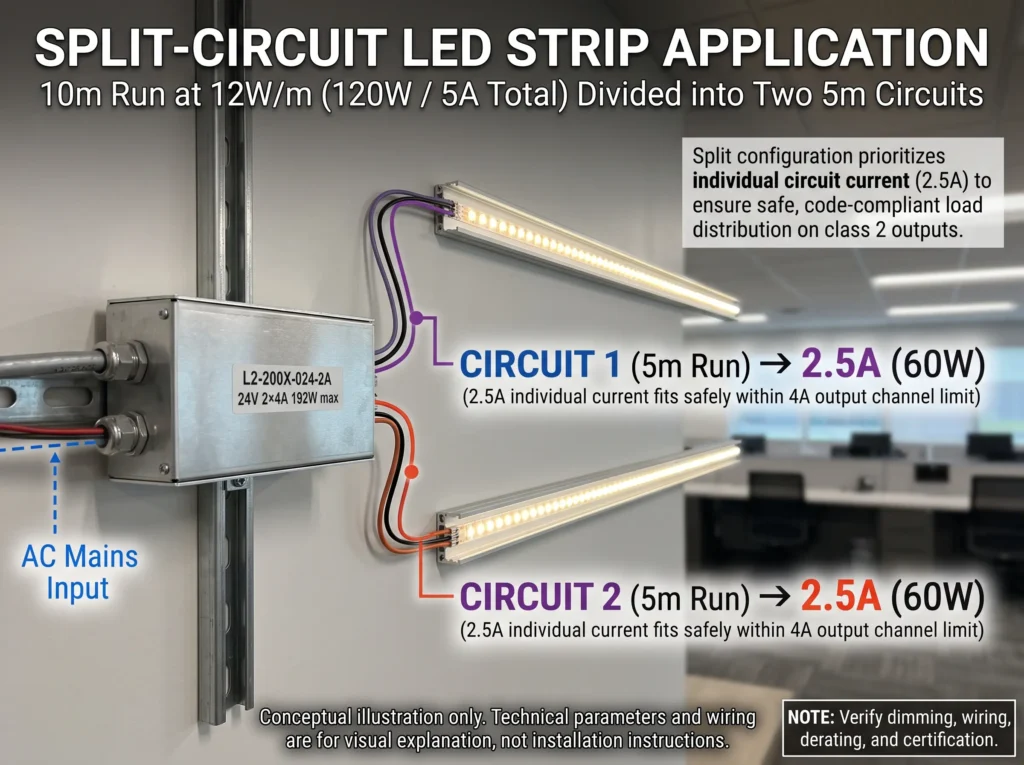
- two separately powered 5m branches;
- 0–10V dimming;
- 277Vac building circuit at the power-supply location;
- an indoor installation location that is compatible with the final selected product.
Step 1 — Calculate the LED load.
Total load = 10m × 12W/m = 120W
Total current = 120W ÷ 24V = 5A
Step 2 — Calculate each branch.
Branch A = 5m × 12W/m = 60W = 2.5A at 24V
Branch B = 5m × 12W/m = 60W = 2.5A at 24V
Step 3 — Evaluate output topology.
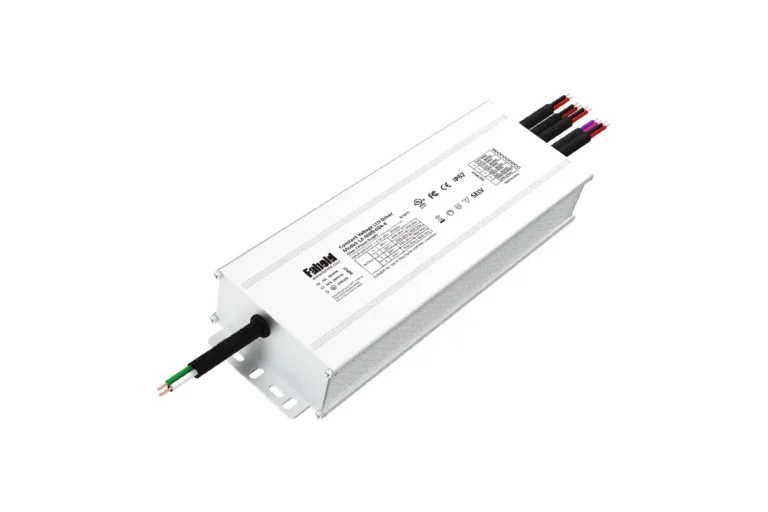
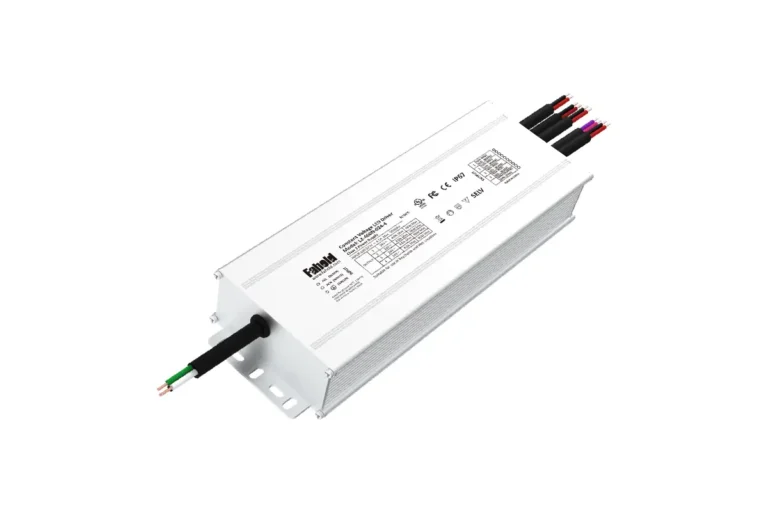
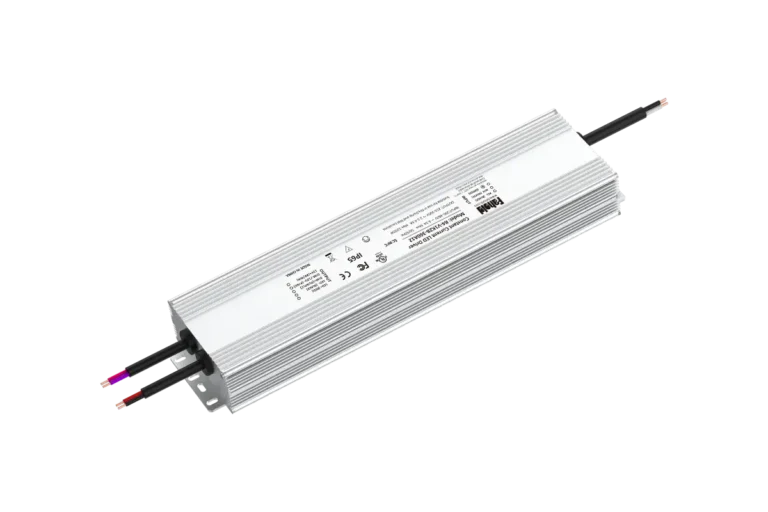
One candidate for technical evaluation is FAHOLD’s L2-200X-024-2A within the L2-A family. Its public series table lists 24V, two 4A outputs and 192W maximum combined output, with a 100–277Vac rated input. In this hypothetical design, each 2.5A branch is below its own 4A channel rating, and 120W is below the stated combined 192W maximum.
This is a paper-specification match, not an installation approval or tested dimmer pairing. The selected configuration still needs verification of individual channel behavior, load range, control compatibility, permissible installation conditions, conductor design and the actual product datasheet. The strip maker’s recommended maximum feed lengths also remain controlling.
An alternative architecture is to evaluate one appropriately rated supply per 5m section. For example, the listed L2-A L2-100X-024A is specified at 24V, 4A and 96W maximum, which may be electrically adequate for a 60W branch once its final operating and dimming conditions are checked. Compare hardware count, service access and wiring runs rather than assuming one architecture is always cheaper or safer.
Step 4 — Check usable output, not marketing wattage alone.
The product’s actual rating, applicable thermal derating and per-channel limits take priority over nominal model-class numbers. A fixed “20% spare power” rule is a planning shortcut, not a universal installation standard. Refer to the LED strip power supply calculator to check load and current before applying product-specific conditions.
Step 5 — Calculate voltage drop separately.
If either branch is dim at the far end, investigate cable and LED-strip resistance, current, conductor length and feed location. Do not assume a larger-wattage 24V driver will fix a distribution problem when the existing source already maintains its specified output voltage.
Extra check: dimming groups versus output channels
Two power-output channels do not inherently mean two independently dimmable zones. Verify whether the exact driver provides common or separate control of its outputs. If a conference room and open-plan office need independent scenes, specify control zoning first and then choose the architecture.
6. 120–277V Input, Class 2 and Installation Requirements
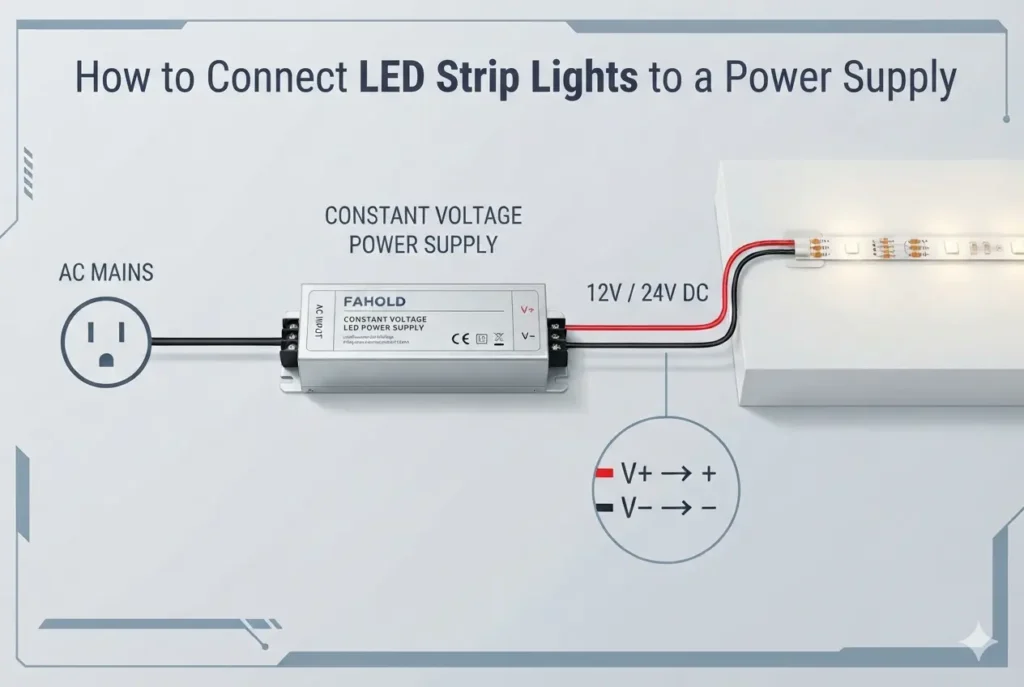
For North American projects, separate the building’s AC input from the LEDs’ DC output. A driver may be supplied from a nominal 120V or 277V branch circuit yet provide regulated 24VDC to the LED strips. It must be explicitly rated for the actual line voltage at the installation point.
The FAHOLD L2-A series lists 100–277Vac input for its current published models; L2-E lists 120–277Vac; the L2D phase-cut platform is 100–120Vac. A driver approved only for 100–120Vac should not be connected directly to 277Vac.
What Class 2 means for sourcing
For low-voltage office lighting, a Class 2 power-source or output-circuit requirement may be relevant to the permitted wiring system and installation design. It is not simply a synonym for “24V” or “less than 100W.” Confirm the exact supply’s evaluated Class 2 status, the limits of each output circuit on multi-channel models and the applicable code requirements.
UL Solutions identifies UL 8750 as the standard for LED equipment used in lighting products and UL 1598 as a luminaire standard. They cover different scopes. Also distinguish a Listed end product from a Recognized Component; an image of a logo or a generic series statement does not by itself establish a particular model’s approval for a project. See UL Solutions’ lighting standards and certification overview.
Installation and long-term reliability
Before approving the driver, verify the full installation context:
- the dry/damp/wet location rating actually applicable to the selected configuration;
- manufacturer-specified ambient temperature and derating;
- enclosure and junction-box requirements, cable entry and strain relief;
- space for ventilation, service access and future replacement;
- any project-specific power-factor, efficiency, surge-protection or commissioning requirements;
- applicable U.S./Canadian electrical codes, local authority requirements and approved installation instructions.
Even where a product series advertises an IP rating, the entire assembly—connections, glands, mounting and surrounding fixture—must suit the installation. Always request the relevant certificates for the specific SKU and intended configuration.
7. Which FAHOLD LED Power Supply Fits Your Office Project?
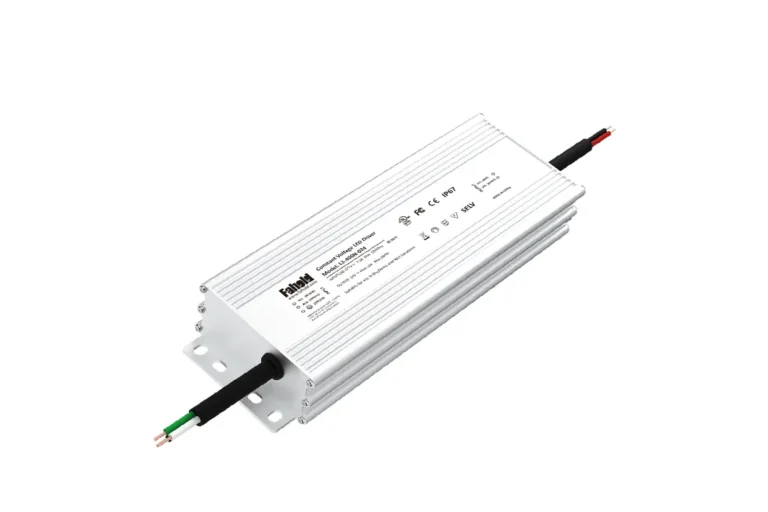
For constant-voltage office linear and decorative lighting, three FAHOLD product families are especially relevant. The table is a shortlist guide, not an assertion that every SKU will work with every controller or location.
| FAHOLD series | Published platform characteristics | Strongest office fit | Critical limitation |
|---|---|---|---|
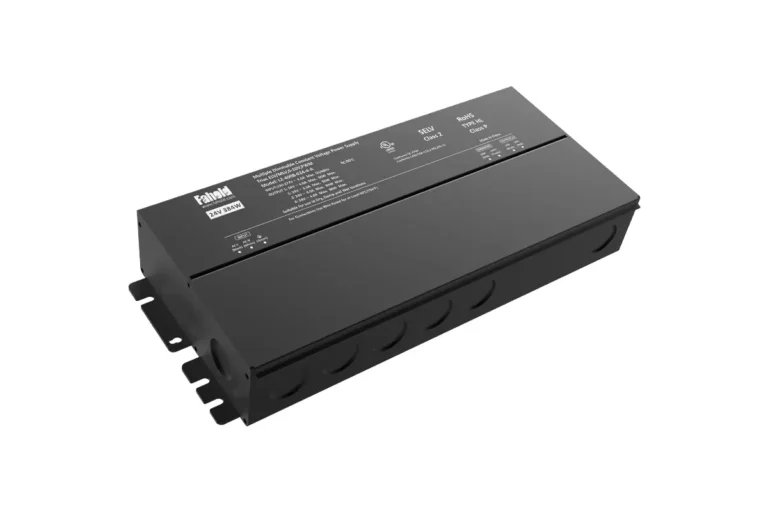
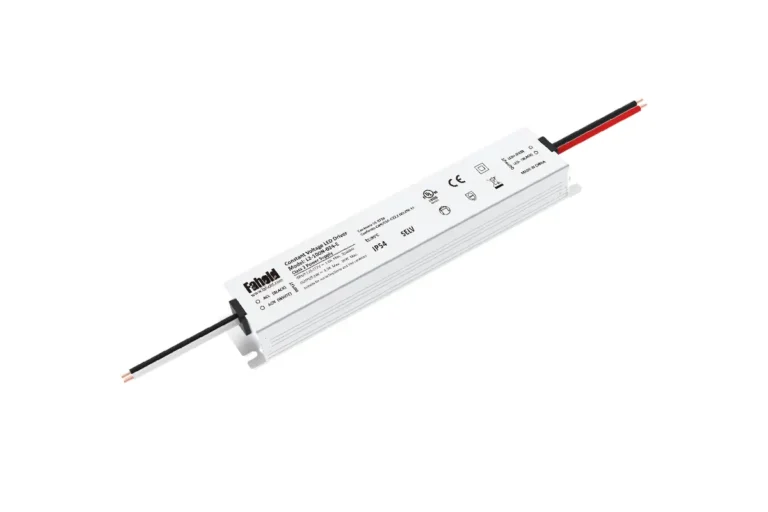
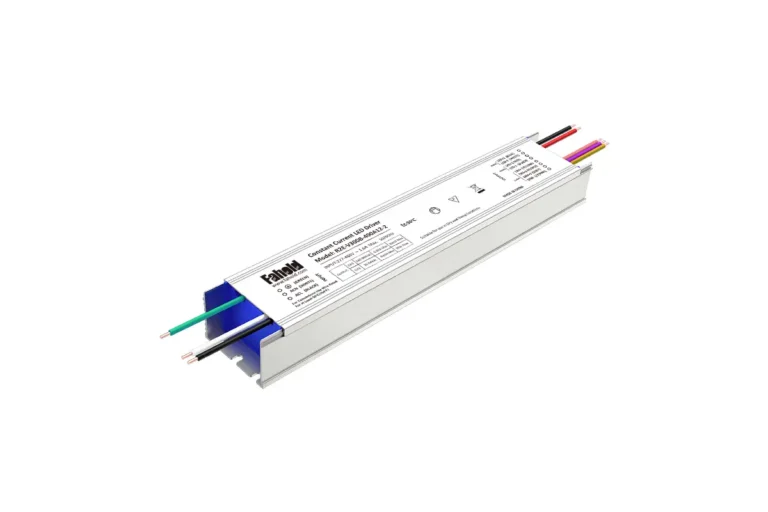
| L2-A enclosed Class 2 | 100–277Vac input; 12V/24V CV; model-dependent multi-mode dimming; single/multi-output | 24V office coves, linear strips, 0–10V-controlled accents where the actual variant matches | Verify the exact controller, individual channel ratings and enclosure approval |
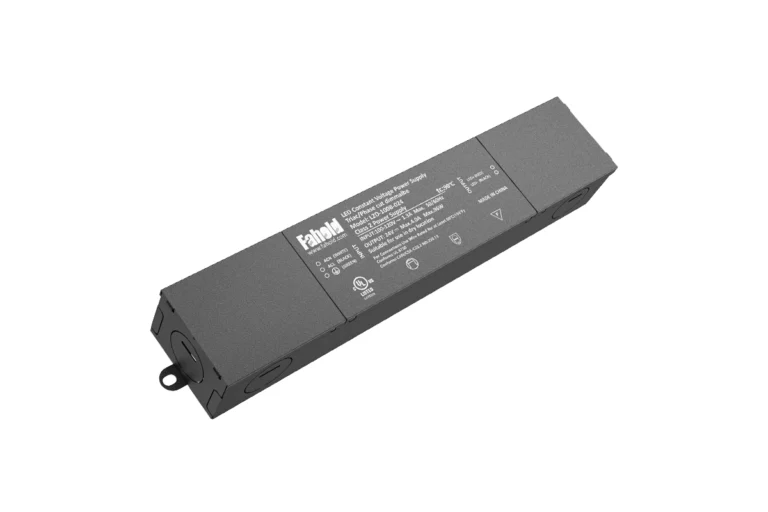
| L2-E slim non-dimmable | 120–277Vac input; 12V/24V CV; slim single output; non-dimmable | Fixed-output cabinet, shelving, millwork or backlit features where compact width matters | Not a direct 0–10V or TRIAC dimming replacement; verify model-dependent Class 2/IP status |
| L2D phase-cut | 100–120Vac input; 12V/24V CV; Type B TRIAC/ELV/MLV, Type N non-dimmable | Selected 120V retrofit zones retaining compatible phase-cut controls | Not suitable for direct 277Vac input; verify Type B and dimmer compatibility |
Recommendation A: 0–10V office coves and linear strips
Start with L2-A where the LEDs are compatible 12V/24V constant-voltage loads, the input is within the rated range and the selected configuration documents the required dimming interface. Review the output model and each channel’s load capacity—especially when several runs connect to one enclosure.
Recommendation B: fixed-output cabinet lighting
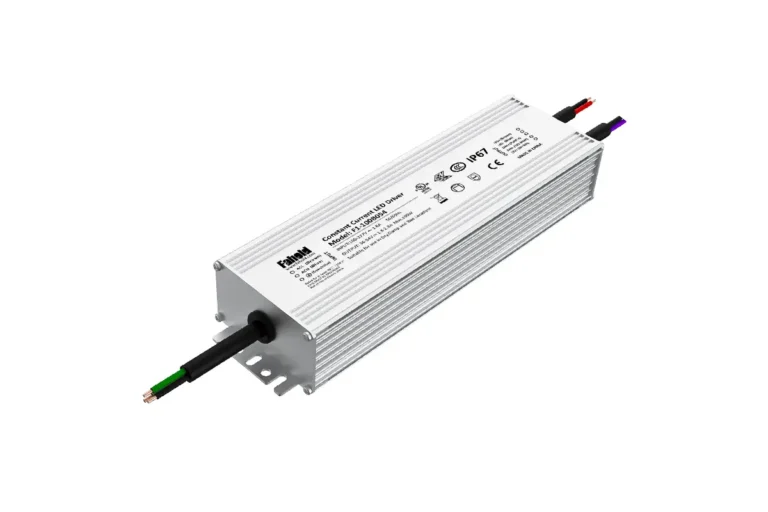
Evaluate L2-E when the load is a non-dimmable 12V/24V strip and the installation calls for a slim single-output unit. For example, the series page lists an L2-100N-024-E 24V model at 4A, 96W maximum output, despite its 100W model-class name. This distinction matters when a procurement spreadsheet assumes a full 100W of usable DC output. Verify installation and certification status for that specific variant.
Recommendation C: office retrofit with a wall dimmer
Evaluate L2D Type B only when the existing circuit is within the product’s 100–120Vac input range and the phase-cut control is verified. Do not select it for 277V ceiling circuits based solely on the fact that it is marketed for North American architecture.
If a project uses a constant-current office panel, troffer or linear module, these CV products are not an appropriate direct match. Ask the fixture manufacturer or FAHOLD’s engineering team to identify a current-regulated product with the required electrical and control specifications.
Need a model matched to your office lighting BOM? Share the fixture/strip datasheet, 120V or 277V supply, 12V/24V output requirement, branch loads, controller model, installation space and purchase quantity. Contact FAHOLD for a technical recommendation and quote.
8. How to Source LED Power Supplies for Office Lighting Projects
A successful B2B purchase goes beyond finding an output voltage and wattage on a catalog page. A multi-floor project or chain-office rollout needs repeatable specifications, documented compatibility and a workable replacement plan.
Ask for technical documentation before samples
Request the exact model datasheet, mechanical drawing, installation instructions, dimming specification, applicable certification records, ambient/derating data and any controller compatibility reports. For multiple outputs, request a diagram identifying the load limit and control behavior of each output.
Test the actual system before ordering in volume
Use representative LED strips or luminaires and the exact controller. Evaluate operation at maximum output, intermediate levels, low-end dimming, switch-off and restart. Check brightness consistency across the longest planned DC branches, the temperature in the intended enclosure and the maintainability of the power-supply location.
Record the approved combination as a controlled specification: LED strip SKU, driver SKU and configuration, controller SKU, wiring topology, test conditions and revision date. This makes a later component substitution or multi-office rollout easier to evaluate.
Evaluate OEM/ODM and ongoing supply
For office fixture manufacturers and contractors, ask about available enclosure variations, cable lengths, labeling, connector requirements, sample testing, lead time, minimum order quantities and replacement continuity. Do not assume a custom option or fixed lead time is available on every model; obtain written confirmation against the project BOM and delivery schedule.
What should an office-lighting RFQ include?
An RFQ with only “24V, 150W, dimmable” leaves too much unresolved. Supply actual electrical and application information so the manufacturer can reject unsuitable models early.
| RFQ field | Example / required information |
|---|---|
| Application | Office cove, linear profile, conference room, reception, cabinetry |
| Target market | United States / Canada; applicable certification requirements |
| AC input at installation | 120Vac or 277Vac; frequency and circuit conditions |
| LED load | Manufacturer and exact strip/module SKU; CV or CC |
| DC output requirement | 24V CV, or required CC current plus voltage range |
| Maximum powered load | W/m × length, plus branch-by-branch totals |
| Wiring design | Number of powered branches, cable lengths, control zones |
| Dimming interface | 0–10V / phase-cut / none / specified other; controller SKU |
| Required dimming behavior | Minimum level, fade behavior, dim-to-off and switching |
| Installation | Indoor location, enclosure, temperature, dimensions, access |
| Purchasing | Estimated units, sample quantity, OEM options, delivery target |
9. Office LED Power Supply Selection Checklist
Use this checklist before approving a model or issuing a purchase order:
- [ ] LED load is identified as CV or CC, from the exact LED/fixture datasheet.
- [ ] Required DC voltage or regulated current matches the load.
- [ ] Rated AC input includes the actual 120V/277V project circuit.
- [ ] Maximum connected watts and amperes are calculated for each supply.
- [ ] Each output channel can safely support its assigned load.
- [ ] Wiring lengths, voltage drop and LED-strip feed limits are reviewed.
- [ ] Required dimming interface, low-end behavior and off function are confirmed.
- [ ] Actual controller + LED load + driver combination is sample-tested where needed.
- [ ] Enclosure, thermal rating, service access and location requirements are met.
- [ ] Specific model’s certification and Class 2 status, if needed, are verified.
- [ ] Datasheet revision, drawing, quantity and delivery expectations are recorded.
Find the Right LED Power Supply for Your Project
Share the core electrical and application requirements. We will narrow the available FAHOLD platforms to the options most relevant to your project.
10. Frequently Asked Questions
What type of LED power supply is best for office linear lighting?
If the linear fixture uses a 12V or 24V constant-voltage strip, select a CV supply with the exact output voltage, sufficient usable wattage and compatible controls. If it uses an integrated constant-current module, choose a driver meeting that module’s current and voltage range. The phrase “office linear lighting” alone does not identify the electrical type.
Should I use a 12V or 24V power supply for office LED strips?
Match the LED strip’s rated voltage. For equal wattage, a 24V design carries half the current of a 12V design, which can help with power distribution. It does not remove the need to check conductor sizing, voltage drop and the strip manufacturer’s feed limits.
Can one 24V LED driver power multiple office linear lighting runs?
Yes, if the total and individual branch loads remain within the supply’s ratings and all strips are compatible with its output voltage. For multi-channel supplies, check each channel, not only the combined nameplate watts. Multiple power outputs do not necessarily offer independent dimming zones.
Do 0–10V LED drivers turn completely off at 0V?
Not necessarily. Some systems reduce to minimum light output rather than switching completely off. Electronic dim-to-off requires verified compatibility between the control and driver; other designs use a switched line or relay. Confirm this behavior before installing an occupancy-controlled office system.
What power supply do I need for 10m of 24V office cove lighting?
First obtain the strip’s rated W/m. At 12W/m, 10m draws 120W and approximately 5A at 24V. Design separate supply branches as needed; for two equal 5m sections that is 60W and 2.5A per branch. Then check each candidate model’s usable output, channel ratings, derating, dimming and the strip’s maximum feed lengths.
Can I use a 120V TRIAC LED driver on a 277V office circuit?
No, not if the driver’s published AC input rating ends at 120V. For example, FAHOLD L2D is a 100–120Vac platform. Use a product explicitly rated for the actual commercial circuit and compatible with its control method.
Do office LED power supplies have to be Class 2 or UL Listed?
Requirements depend on the complete lighting system, location and applicable code. Many low-voltage installations use Class 2 output circuits, but 24V alone does not prove Class 2 status. Confirm the required approval type and certification record for the exact power supply, and distinguish driver certification from the luminaire’s approval.
Which FAHOLD series is suitable for 0–10V dimmable 24V office cove lighting?
The L2-A constant-voltage platform is a sensible series to evaluate because suitable configurations support commercial dimming and 24V output. The exact model, control behavior, output topology and compatibility with the specified 0–10V controller must be confirmed before procurement.
Specify the Office Lighting System, Then Match the Power Supply
Office lighting power supplies should be selected from the actual LED load, electrical circuit, control system and installation design. For 12V/24V office strips, check CV output voltage, maximum branch load, voltage drop and usable driver capacity. For 0–10V office spaces, verify low-end dimming and off behavior with the real controller. For CC panels and troffers, follow the luminaire’s current-drive specification rather than substituting a generic CV supply.
FAHOLD’s L2-A, L2-E and L2D platforms address different constant-voltage office lighting requirements; none should be treated as universally interchangeable. The best next step is a product match against a real project BOM.
Request an office lighting LED power supply recommendation and quotation — send your AC input, LED load datasheet, 12V/24V requirement, branch wattages, controller model, installation constraints and expected order quantity.