Table of Contents
A replacement driver should not be ordered just because the old unit says 120V and TRIAC dimmable. Those labels describe only part of the system. Before selecting a substitute, confirm the LED load type, DC output voltage, current and power requirements, the wall dimmer’s compatibility, and the installation and safety conditions.
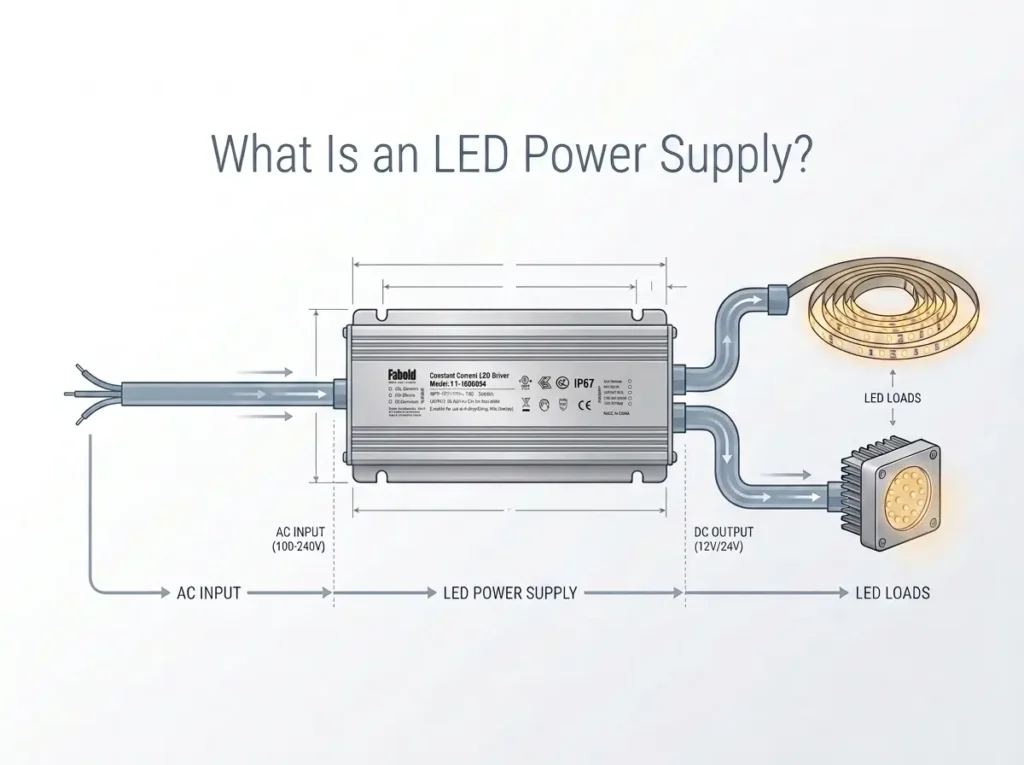
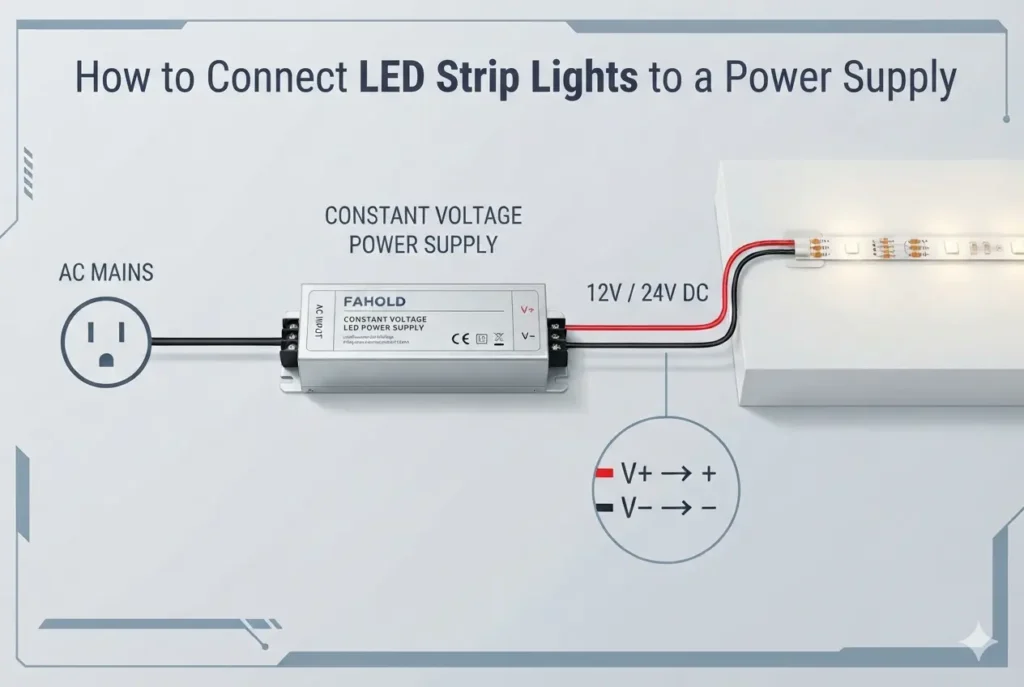
For a typical low-voltage lighting system, the building circuit may supply approximately 120Vac to the driver while the driver supplies 12Vdc or 24Vdc to the LEDs. These are separate electrical specifications. A 120Vac-input driver is not a 120Vdc LED supply.
Use this checklist before requesting a replacement:
- ☐ Record the old driver’s complete model number and photograph its label.
- ☐ Confirm whether the LED load requires constant voltage (CV) or constant current (CC).
- ☐ Match the required DC output voltage and verify the current and wattage.
- ☐ Identify the wall dimmer model and the phase-cut dimming type it uses.
- ☐ Check minimum-load behavior, low-end dimming, and the number of drivers on the dimmer.
- ☐ Confirm dimensions, wiring arrangement, enclosure, operating environment, and applicable certification requirements.
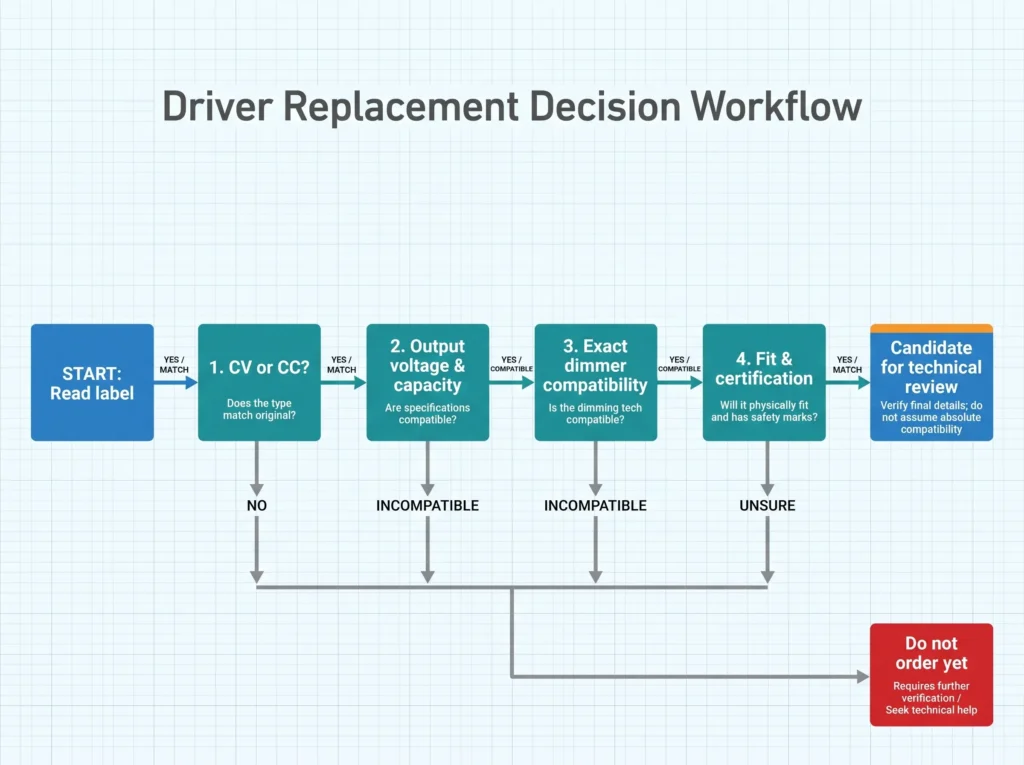
If any of these items are unknown, treat the new driver as a candidate for evaluation, not a confirmed drop-in replacement.
1. Read the Existing Driver Label Before Choosing a Replacement
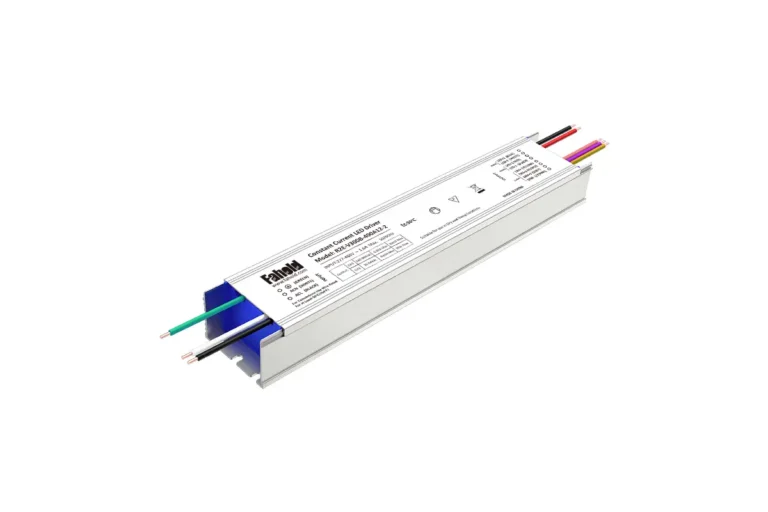
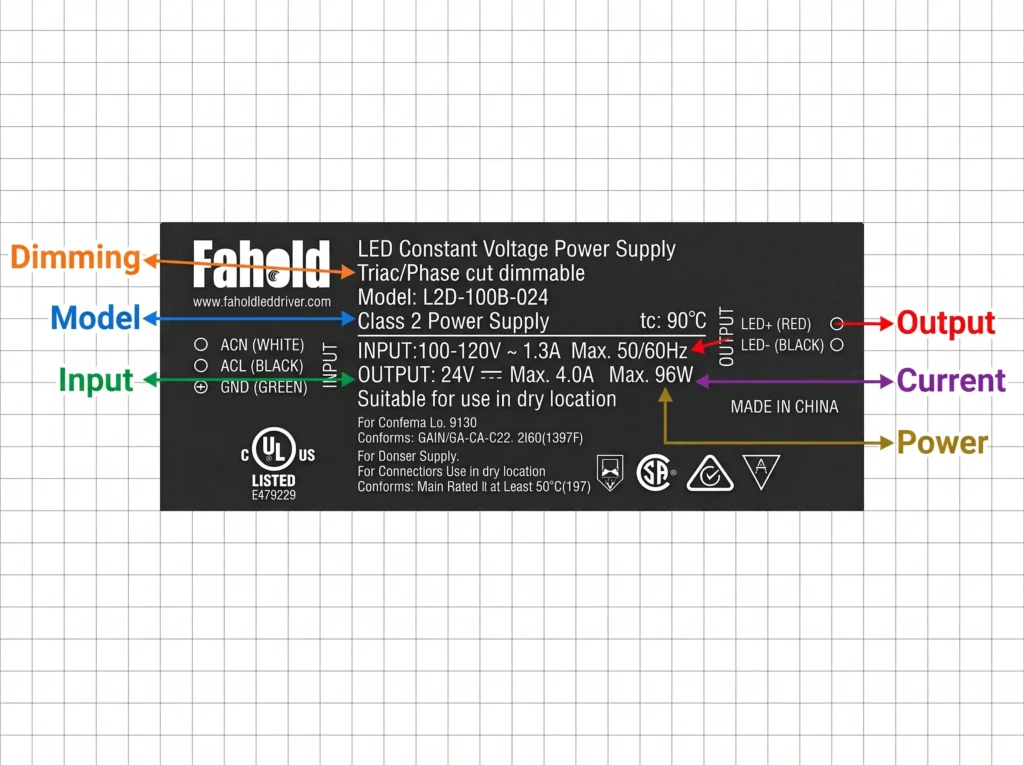
The label is the fastest starting point because it identifies the electrical limits the replacement must respect. Do not rely on a product name, the fixture’s appearance, or a wattage printed in a catalog without checking the full model and configuration.
Confirm the AC input rating
Look for a line such as Input: 100–120Vac, 50/60Hz. Confirm that the replacement is approved for the actual supply in the installation. A driver rated for 100–120Vac should not automatically be selected for a 208V, 240V, or 277V circuit.
Some datasheets list a normal rated input range and a separate extreme operating range. Those terms are not interchangeable. Use the manufacturer’s stated rated range for selection and consult the official datasheet if the site voltage is near a limit.
Identify the DC output
Record the following items exactly as printed:
| Label item | Example | What it tells you |
|---|---|---|
| Output voltage | 24Vdc | Required constant-voltage output, if the load is CV |
| Output current | 2.5A | Maximum rated output current for the listed configuration |
| Output power | 60W | Maximum rated output power, subject to the datasheet’s conditions |
| Dimming | TRIAC / ELV / MLV | Supported control method, if specified |
| Model number | Full part number and suffix | Helps distinguish output, dimming and enclosure variants |
| Certification and location markings | As shown on the actual label | Must be checked against the intended installation and project requirements |
If the label says something such as 350mA or gives a current range with a voltage range, the unit may be a constant-current driver. Do not treat it as a 12V or 24V constant-voltage power supply unless the manufacturer’s documentation explicitly says so.
What if the label is missing or unreadable?
Collect the fixture model, original bill of materials, old driver photos, LED module datasheet, wall dimmer model, and any available wiring diagram. A supplier may be able to identify a suitable candidate from this information, but visual similarity alone is not enough to establish compatibility.
2. Match the Electrical Specifications, Not Just the Wattage
A replacement must work with the LED load and the circuit it serves. A similar wattage is useful only after the output type and voltage have been confirmed.
Constant voltage or constant current?
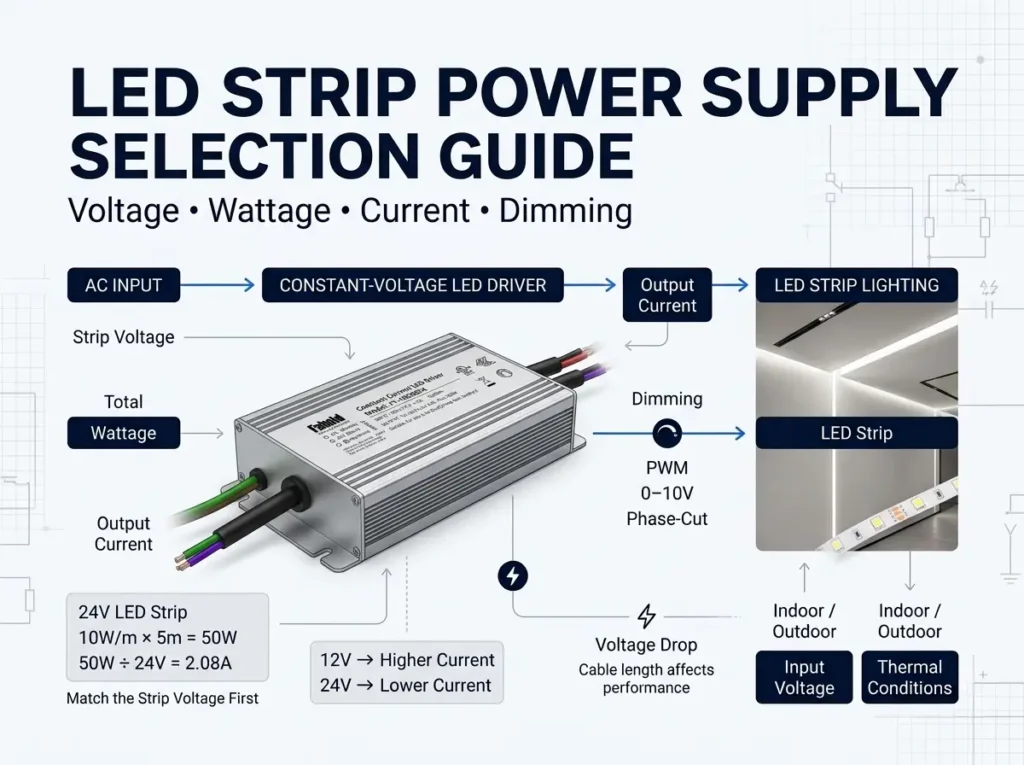
A 12V or 24V constant-voltage (CV) driver is commonly used with compatible LED strips and other loads designed for a fixed DC voltage. A constant-current (CC) driver regulates current and is commonly specified for LED modules or luminaires designed around a required drive current and voltage range.
These output types are not interchangeable. If the original driver is CC, replacing it with a 24V CV supply can damage the LED load or cause it to operate incorrectly. Confirm the LED manufacturer’s electrical requirements before selecting a replacement.
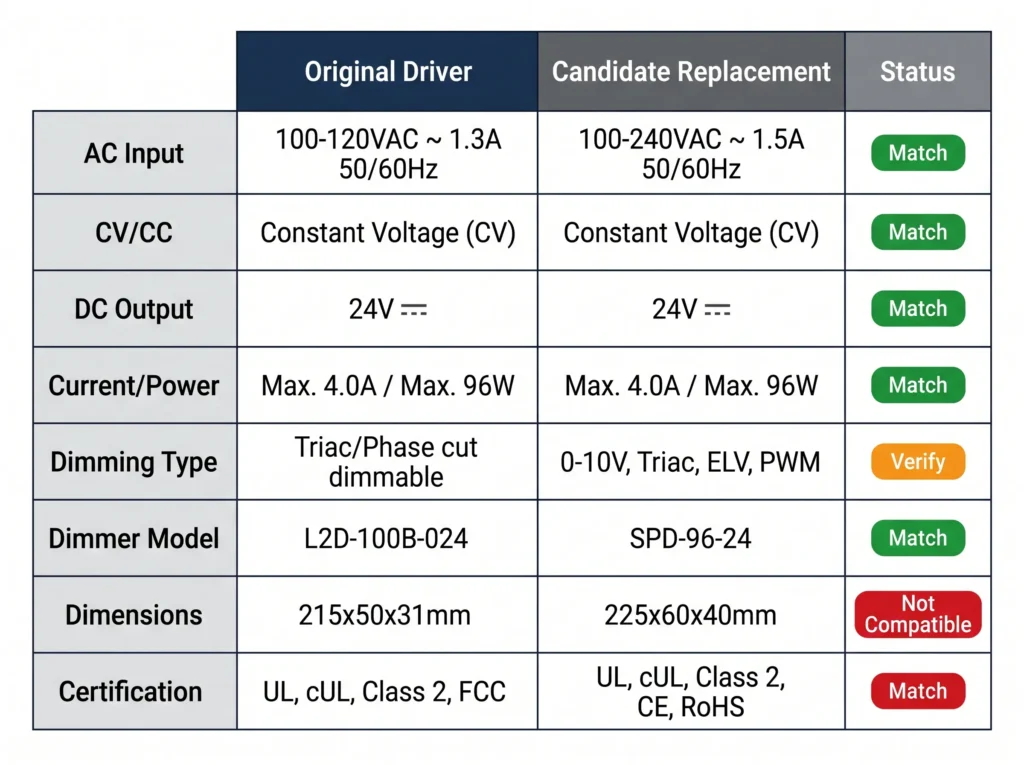
For a CV system, match the required output voltage first. A 12V load must not be supplied by a 24V driver simply because both units have the same wattage. Then verify the load current and power, and check whether the driver’s output configuration and protection behavior suit the application.
Check the actual output capacity
For a constant-voltage load, the basic relationship is:
P = V × I
A 24V, 2.5A supply has a nominal maximum output of 60W. A 24V, 4A supply has a nominal maximum output of 96W. The model name may use a rounded power class, so read the listed maximum output rather than assuming that a “100W” model delivers exactly 100W.
A higher-rated supply can be a candidate for a lower-power CV load, but higher wattage alone does not prove equivalence. Verify the output voltage, load compatibility, dimming behavior, temperature and derating limits, wiring, protection requirements, and installation conditions. Do not use a larger power rating to compensate for an incorrect output voltage or an unsuitable driver type.
Verify input voltage and frequency
For a North American 120V application, check the actual branch-circuit voltage and the driver’s rated input range. The label “120V” does not guarantee compatibility with every supply arrangement or every dimmer. If the circuit is 208V, 240V, or 277V, select a driver whose documented input range covers that supply.
3. Verify TRIAC Dimmer Compatibility Before Ordering
This is often the most easily overlooked part of a replacement. A driver may accept the correct AC input and deliver the correct DC voltage yet still perform poorly with the existing wall dimmer.
Identify the exact dimmer model
Record the dimmer manufacturer, model number, rated voltage, control type, and the number and type of loads connected to it. If possible, check the dimmer manufacturer’s compatibility list and the LED driver manufacturer’s test information.
“TRIAC dimmable” is not a universal compatibility guarantee. Results can vary by dimmer model, connected load, wiring arrangement, and the driver’s internal design.
Confirm the phase-cut method
Traditional TRIAC dimmers commonly use leading-edge phase-cut control. Many electronic low-voltage (ELV) dimmers use trailing-edge control, although product designs and compatibility claims vary. Some drivers explicitly support TRIAC, ELV, and MLV dimmers; others support only a subset.
Do not assume that a replacement supporting one phase-cut method will work correctly with every dimmer. Check the exact driver configuration and the intended control device. If the original installation uses a particular dimmer type, preserve that requirement unless the control system is also being changed and revalidated.
Check minimum load and number of drivers
The dimmer may specify a minimum and maximum load. Those ratings must be interpreted according to the dimmer manufacturer’s instructions; they are not necessarily equal to the driver’s DC output wattage. If multiple drivers share one dimmer, verify the permitted load and any manufacturer limits on the number of drivers.
An underloaded or incompatible combination may show symptoms such as flicker, unstable light output, a limited dimming range, sudden dropout at low settings, failure to start at the expected dimmer level, or audible buzz from the dimmer, driver, or lighting assembly. These symptoms are clues, not proof of one specific cause. Check the compatibility documentation and, where justified, validate the proposed combination with a sample under representative load conditions.
Verify low-end dimming and start-up behavior
A claim such as “0–100% dimming” does not mean every dimmer and LED load will reach the same perceived brightness or start reliably at the lowest setting. Confirm the specified dimming range, start-up behavior, flicker performance, and any dimmer-specific test results relevant to the project.
4. Can You Replace a 60W Driver with a Higher-Wattage Model?
Possibly—but only when the replacement remains electrically and functionally compatible with the load and control system.
Consider a 24V constant-voltage LED load rated at 60W:
I = P / V = 60 W / 24 V = 2.5 A
A candidate supply rated at 24V and 4A has a maximum output of:
P = 24 V × 4 A = 96 W
This calculation confirms the candidate’s nominal output capacity. It does not confirm that the candidate is a suitable TRIAC replacement. You still need to verify the dimmable configuration, dimmer compatibility, load behavior, thermal conditions, enclosure, wiring, and certification requirements.
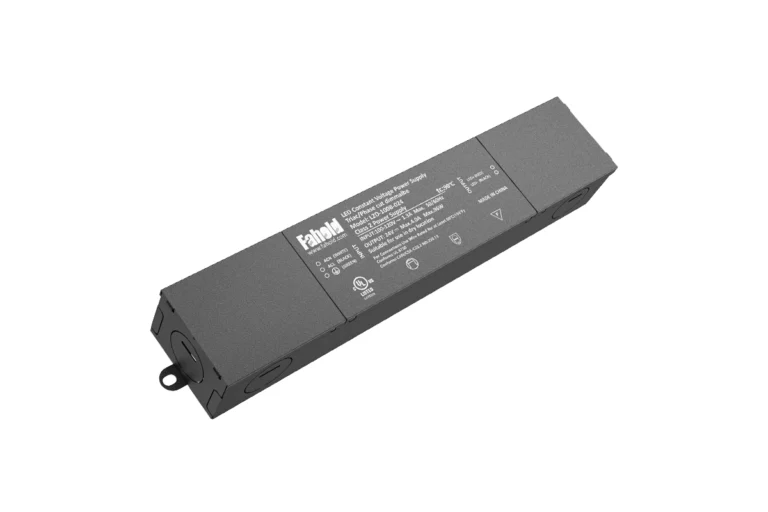
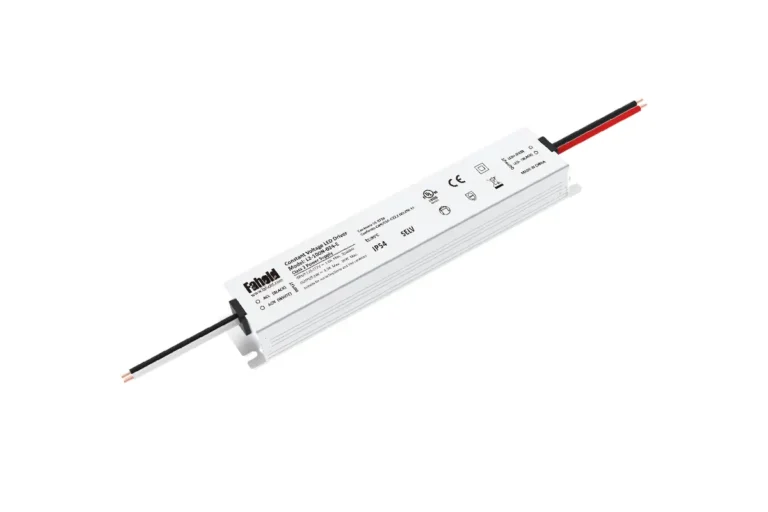
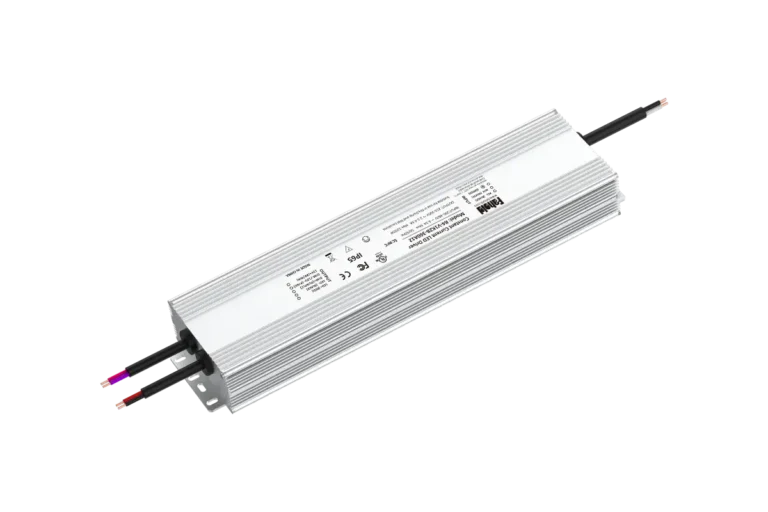
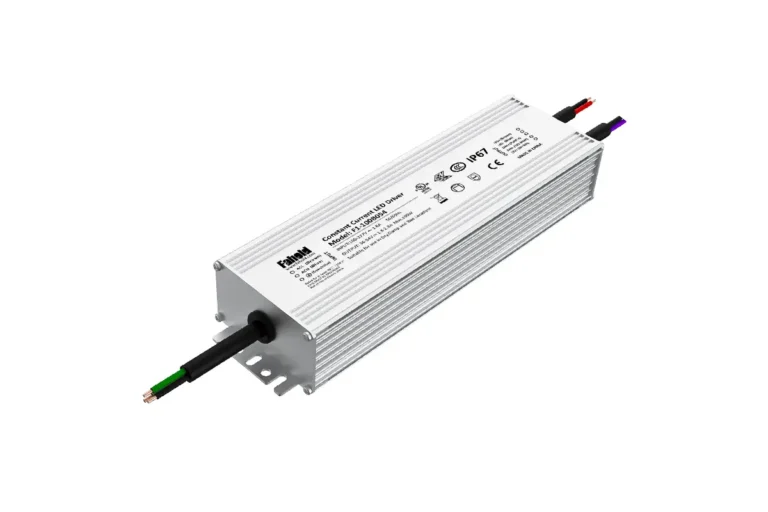
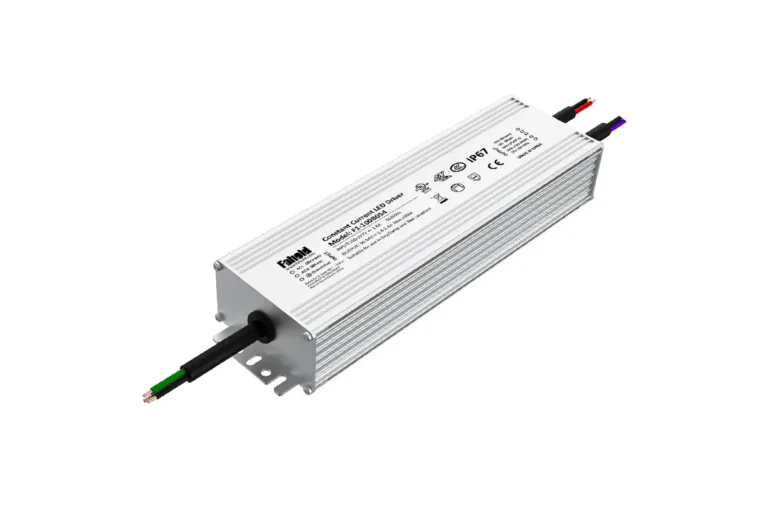
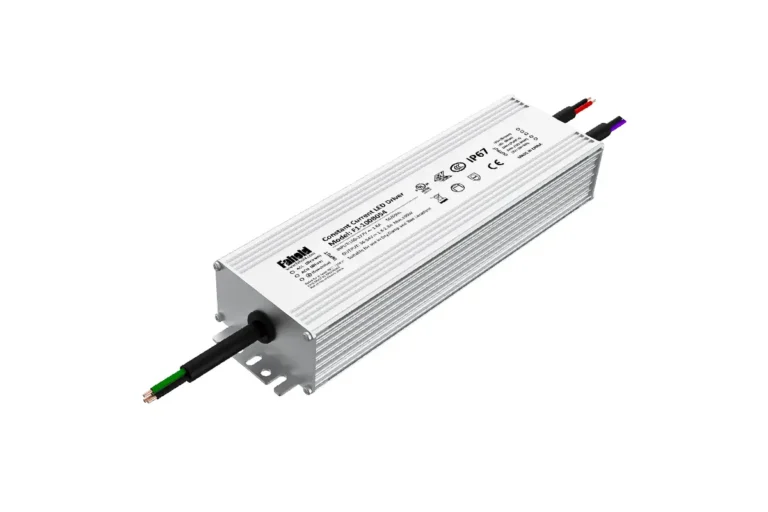
For example, FAHOLD’s L2D-060X-024 is listed as a 24Vdc, 2.5A, 60W model with 100–120Vac rated input. The L2D-100X-024 is listed at 24Vdc, 4A, and 96W maximum output. These ratings make them different capacity candidates; the exact dimmable configuration and project compatibility still need to be checked. See the L2D series specifications.
Do not select a replacement solely by the number in the model name. Use the maximum rated output in the technical table and allow for any applicable derating or installation limits.
5. Check Installation Fit and Safety Requirements
Even an electrically suitable driver may not fit the existing installation or meet the project’s safety requirements.
Dimensions, enclosure and wiring
Compare the driver’s length, width, height, mounting method, terminal arrangement, wire-entry locations, and access requirements. Confirm whether the replacement is designed for the same type of enclosure or junction-box installation. Do not assume that similar dimensions mean the same wiring arrangement.
Check the intended environment as well. A driver for a dry indoor location should not be assumed suitable for a damp or wet location. Confirm the exact model’s environmental rating and any restrictions in its installation instructions.
Certification and installation conditions
Check the actual certification and markings for the specific model and configuration, including any requirements for UL/CSA or other applicable approvals, Class 2 output, or the completed luminaire. A component’s certification does not automatically establish that the complete lighting assembly is compliant in every installation. UL Solutions describes UL 8750 as the standard for LED equipment used in lighting products.
Verify ambient temperature, ventilation, mounting clearances, and any derating instructions. Mains wiring and replacement work should be handled by a qualified person in accordance with applicable codes and manufacturer instructions.
6. Could a FAHOLD L2D Be a Candidate Replacement?
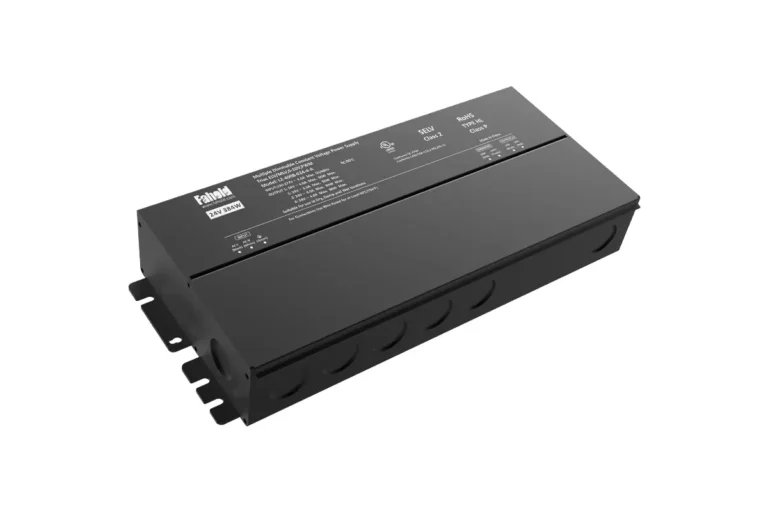
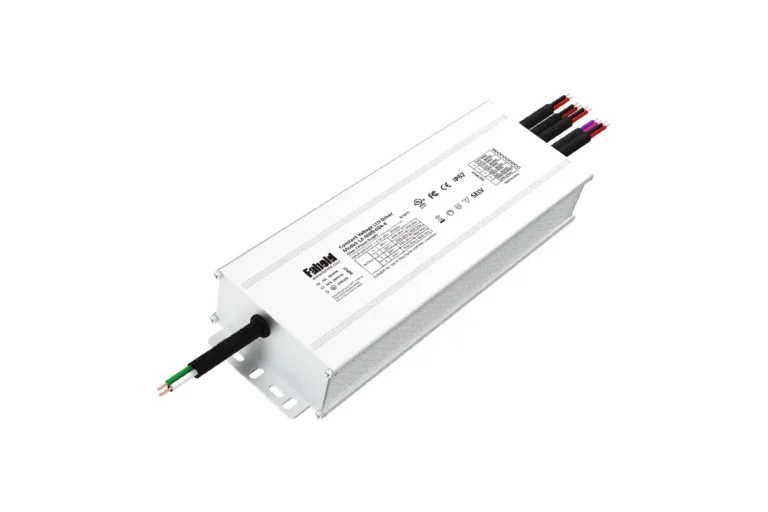
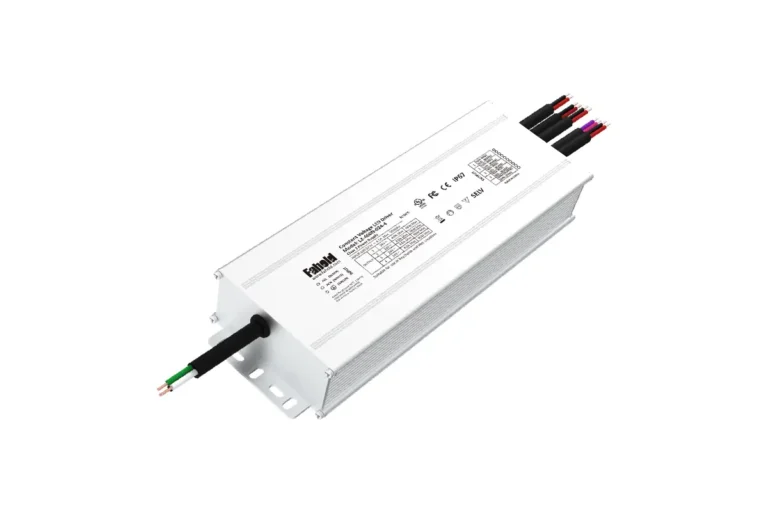
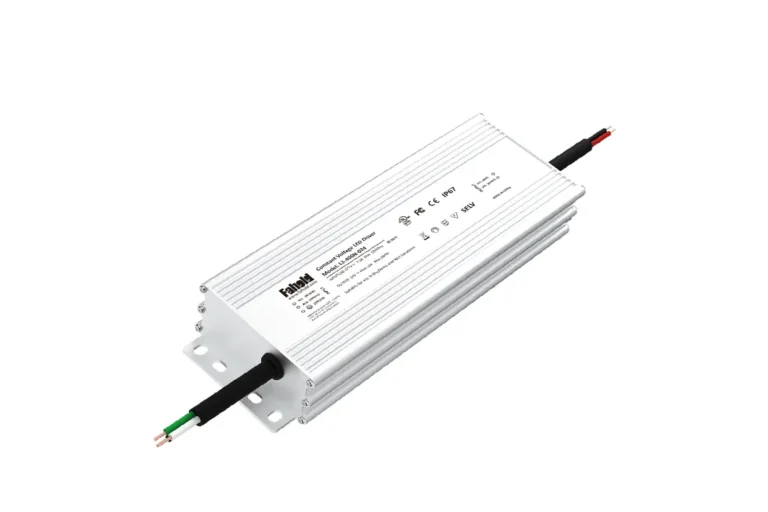
The FAHOLD L2D platform is a 100–120Vac-input, constant-voltage LED power supply family with 12V or 24V outputs. The Type B configuration supports TRIAC / ELV / MLV phase-cut dimming; Type N is non-dimmable. That makes the series worth evaluating for compatible North American low-voltage lighting applications—not a universal replacement for every 120V TRIAC driver.
| Candidate model | Rated input | DC output | Maximum rated output | Selection note |
|---|---|---|---|---|
| L2D-060X-012 | 100–120Vac | 12V / 5A | 60W | Candidate for a compatible 12V CV load |
| L2D-060X-024 | 100–120Vac | 24V / 2.5A | 60W | Candidate for a compatible 24V CV load |
| L2D-100X-024 | 100–120Vac | 24V / 4A | 96W | Higher-capacity 24V candidate; do not assume 100W usable output |
Source: FAHOLD L2D Series and L2D-060X-024 product specifications.
Before treating one of these as equivalent, confirm all of the following:
- The original load is constant voltage and requires the candidate’s exact 12V or 24V output.
- The actual load current and power are within the candidate’s rating under the project’s operating conditions.
- The selected unit is the Type B dimmable configuration, if phase-cut dimming is required; Type N is non-dimmable.
- The existing dimmer model and connected load are compatible with the chosen configuration.
- The enclosure, wiring, installation environment and certification requirements are acceptable.
- The exact model and current datasheet have been confirmed before purchase.
If the original driver is constant current, requires a different output, uses a control protocol not supported by the candidate, or operates from an input voltage outside the rated range, do not treat the L2D as a direct replacement. Start with the original driver and LED load specifications instead.
For projects requiring a wider input range or a different dimming architecture, compare the relevant FAHOLD dimmable LED driver options rather than forcing the application into the L2D family.
7. What to Send Before Requesting a Replacement Quote
The fastest way to assess a potential replacement is to send enough information to compare the original system with a candidate model. A model number alone may be sufficient for an initial lookup, but dimmer and load details are often needed to evaluate compatibility.
| Information to provide | Why it matters |
|---|---|
| Original driver brand and complete model number | Identifies the existing configuration |
| Clear photo of the driver label | Confirms input, output and ratings |
| LED load type and model | Establishes CV or CC requirements |
| Required DC voltage, current and total wattage | Checks electrical compatibility |
| Dimmer manufacturer and model | Supports phase-cut compatibility review |
| Number of drivers on each dimmer | Helps assess connected-load constraints |
| Installation location and enclosure constraints | Checks physical and environmental fit |
| Required certifications and estimated quantity | Supports project and sourcing review |
If the original label is unreadable, provide the fixture model, LED module datasheet, dimmer details and photos of the existing installation. Do not guess the output voltage or current.
For a commercial project or a batch replacement, include the number of units, target schedule, sample requirement, and whether the replacement must preserve the existing dimmer and enclosure. This helps distinguish a one-for-one maintenance replacement from a project that can accommodate a redesigned power arrangement.
Request a compatibility review only after gathering the available specifications. FAHOLD can assess candidate constant-voltage models against the information provided, but final equivalence depends on the exact load, dimmer, installation and certification requirements.
Frequently Asked Questions
Can I replace a 120V TRIAC LED driver with any 120V dimmable driver?
No. The AC input rating is only one requirement. The replacement must also match the LED load’s output type and voltage, provide adequate current and power, support the dimming method, and satisfy installation and certification requirements.
Can a 24V 60W TRIAC driver be replaced with a 24V 96W model?
It may be a candidate if the load is a compatible 24V constant-voltage system and the replacement’s dimming behavior, load range, wiring, thermal conditions and certification requirements are suitable. Higher output capacity alone does not establish compatibility.
Why does a replacement driver flicker at low brightness?
Possible causes include an incompatible dimmer, a load outside the dimmer’s specified range, low-end dimming behavior, wiring issues, or an unsuitable driver configuration. Check the exact dimmer and driver compatibility information instead of assuming the replacement is defective.
Does a TRIAC LED driver work with every wall dimmer?
No. Compatibility depends on the specific dimmer, driver, connected load and installation. Check manufacturer compatibility information and test the intended combination when needed.
What information is needed to confirm an equivalent replacement?
Start with the complete model number and a clear label photo. Add the DC output voltage, current and wattage, LED load details, dimmer model, input supply, installation conditions and required certifications.
Need Help With Your LED Power Supply Project?
Tell us what you are working on. We will review your application and recommend the most relevant FAHOLD solution.