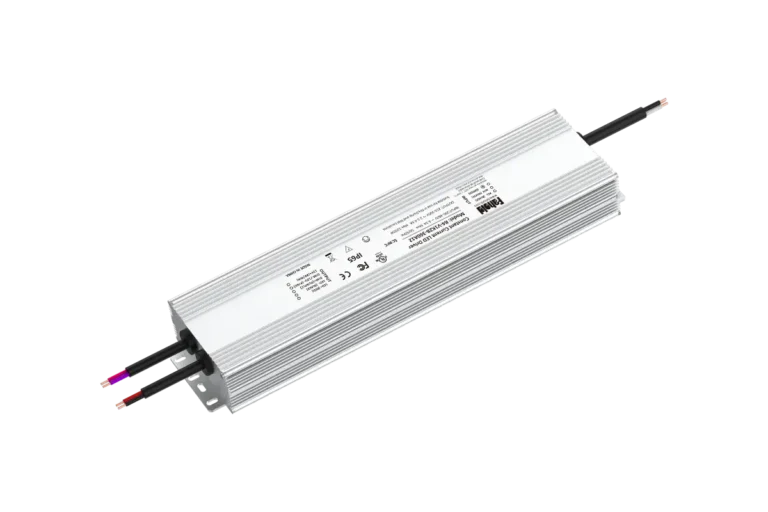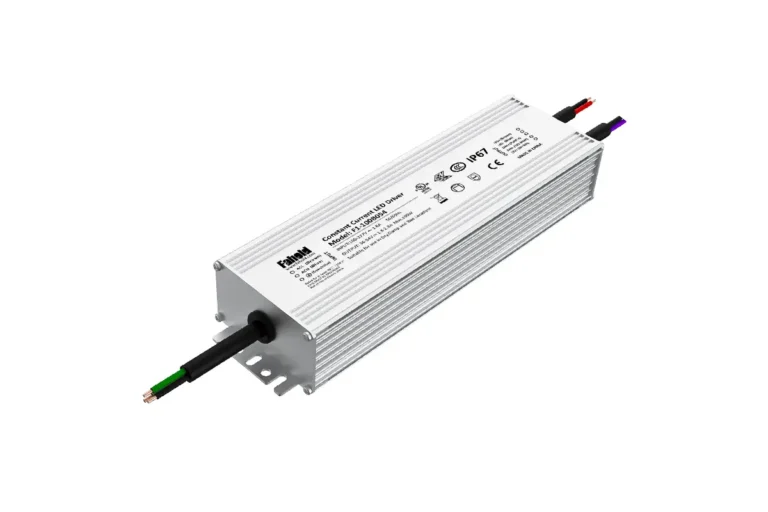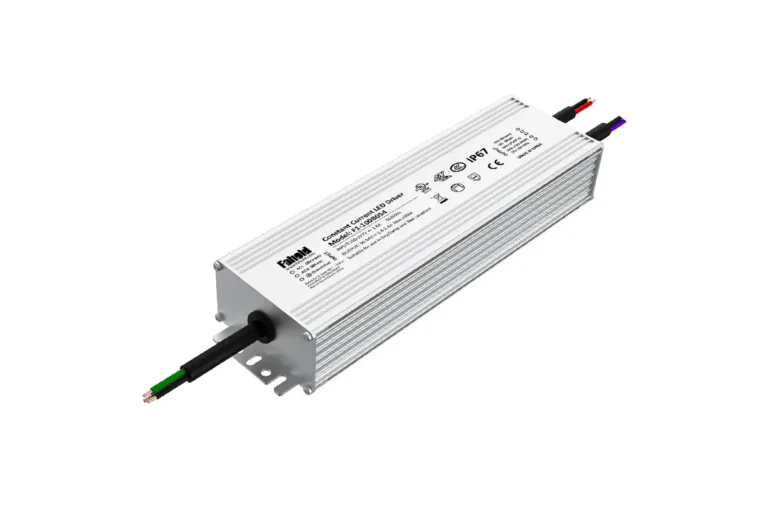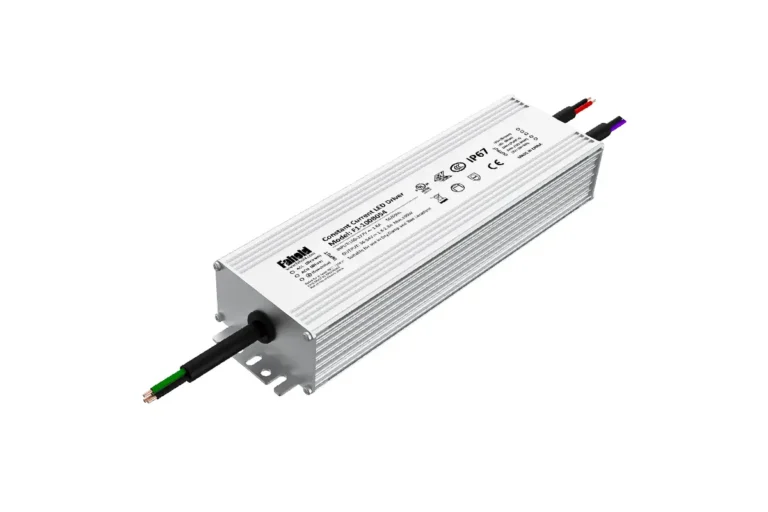
Table of Contents
A replacement 24V LED power supply does not need to have the same brand name as the original unit—but it does need to be compatible with the actual lighting system. Before selecting an alternative, confirm that the existing supply is constant voltage (CV), the LED load requires 24V DC, and the candidate can deliver sufficient usable output current and power. Then check the AC input range, dimming interface, output circuits, installation conditions, dimensions and project-specific safety requirements.
Matching only the label “24V 60W” is not enough. Two supplies marked with the same voltage and wattage may have different dimming behavior, input voltage limits, enclosure ratings, wiring arrangements or Class 2 output configurations.
This guide is for contractors, lighting manufacturers and procurement teams replacing failed or discontinued 24V constant-voltage LED power supplies in commercial LED strip, cove, cabinet, display and signage systems. If your existing device is a programmable constant-current driver, use the original luminaire manufacturer’s documentation instead; a 24V CV supply is not its automatic replacement.
Need a cross-brand replacement for a discontinued model? Send FAHOLD the original model number, a clear photograph of the complete rating label, output and dimming requirements, and your estimated quantity. Our team can review potential 24V constant-voltage alternatives. A recommendation is subject to technical verification and does not mean the candidate is an OEM-approved drop-in replacement.Request a 24V LED Power Supply Replacement Recommendation
Quick 24V Replacement Compatibility Checklist
| Must verify | What to compare | Can it be skipped? |
|---|---|---|
| Output mode | Constant-voltage versus constant-current | No |
| DC output | Regulated 24V DC and permitted tolerance | No |
| Load and capacity | Actual LED load, usable watts, amps and each output-channel limit | No |
| AC input | Actual branch voltage/frequency versus candidate rated input | No |
| Dimming | Non-dim, 0–10V, phase-cut, PWM or other control interface | No, if controlled |
| Output configuration | Single channel, multiple channels, isolation and protection arrangement | No |
| Safety | Required NRTL listing, Class 2 status, luminaire/retrofit conditions | No |
| Environment | Dry/damp/wet use, IP rating, ambient temperature and derating | No |
| Mechanical fit | Enclosure, terminals, mounting, junction box and access | No |
| Verification | Datasheet, sample and installed-system compatibility test | Before rollout |
1. Identify the Specifications on Your Existing 24V LED Power Supply
Find the Brand and Model Number on the Old Power Supply
Start with the complete part number. Record its prefix, suffix and any letter or revision code, not just a shortened model family. Suffixes can distinguish voltage, power rating, dimming version, enclosure design and special configurations. For programmed or OEM-specific units, the fixture maker may also have set an operating profile that is not obvious from the main label.
Photograph the whole power supply and then take close-ups of both its rating label and terminal markings. Record the LED fixture model and the lighting controller or wall dimmer model, if available. Existing project purchase orders, wiring schedules and luminaire maintenance files can help identify a discontinued device.
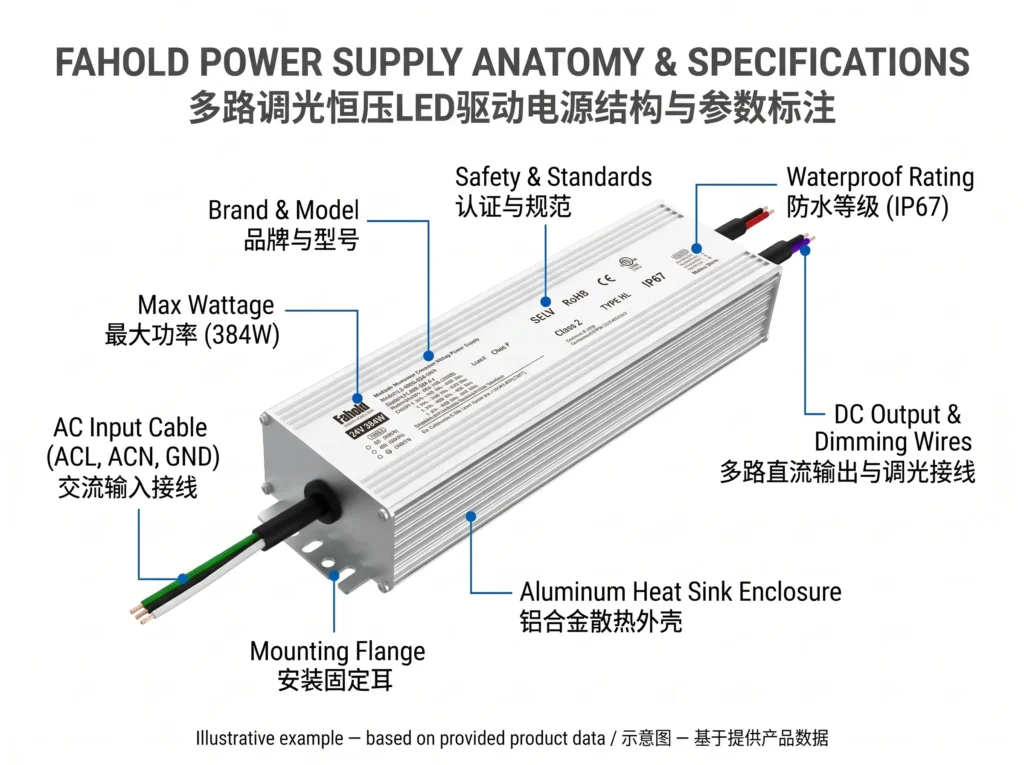
Check Input Voltage, Output Voltage, Current and Wattage
Use the output numbers to evaluate the LED load and the input numbers to evaluate the building circuit. They describe different sides of the device.
| Example label entry | What it means for replacement selection |
|---|---|
INPUT: 120–277Vac, 50/60Hz | The candidate must cover the actual available AC supply and frequency; this example is not a universal rating. |
OUTPUT: 24Vdc | The LED system is intended to receive a regulated 24V DC supply, if it is marked constant voltage. |
OUTPUT CURRENT: 2.5A max | Maximum stated DC output current in this example. |
OUTPUT POWER: 60W max | Maximum stated DC output power in this example; usable power can depend on derating conditions. |
DIMMING: 0–10V | The replacement must be compatible with the actual controller and wiring. |
Class 2, Dry/Damp/Wet or IP marking | These affect the output circuit, product evaluation and permitted installation conditions. |
Important: the table above is a hypothetical label used to explain the fields. It is not a photograph or certification claim for a particular product.
For a consistent 24V CV nameplate, the relationship is:
Power (W) = Output Voltage (V) × Output Current (A)
Thus, 24V × 2.5A = 60W. If the published voltage, current and rated power do not reconcile, request the latest datasheet and confirmation from the manufacturer instead of guessing.
What If the Original Model Number Is Missing or Unreadable?
Ask the luminaire manufacturer or original supplier for the installed driver specification. If neither can identify it, gather the following evidence for an engineer or supplier to review:
- A clear photograph of the existing power supply, terminals and installation space.
- The LED strip/module or fixture model and rated voltage.
- Any legible AC input and DC output markings.
- Measured load information only if obtained safely by a qualified professional.
- The controller/dimmer model and whether the installation has multiple output circuits.
- The required electrical listing and environmental classification.
Do not infer “24V CV” merely from a faint “24V” on the device. On a constant-current driver, 24V may be a point within an output voltage range rather than a regulated constant output.
2. Match the Critical Specifications Before Choosing a Replacement
Confirm Constant Voltage vs. Constant Current
This is the first pass/fail decision. A 24V constant-voltage LED power supply is designed to regulate its output near 24V while a compatible LED strip or module—with its own current-limiting provisions—draws the required current. A constant-current LED driver regulates current across an allowed voltage range to drive a suitable LED array.
A printed “24V” does not make a constant-current unit interchangeable with a 24V constant-voltage supply. If the original driver shows a specified output current and a variable voltage range such as 20–40V, stop and verify the fixture requirements rather than choosing from the 24V CV category.
For more background, see FAHOLD’s Constant Voltage LED Power Supply Guide.
Match the 24V DC Output Requirement
For a 24V CV lighting system, the substitute must provide the correct 24V DC output, including any project-specific voltage tolerance or adjustment setting. A 12V or 48V supply is not an equivalent 24V replacement. Also check polarity, insulation/isolation requirements and whether the original load contains compatible control electronics.
Check Output Current and Power Capacity
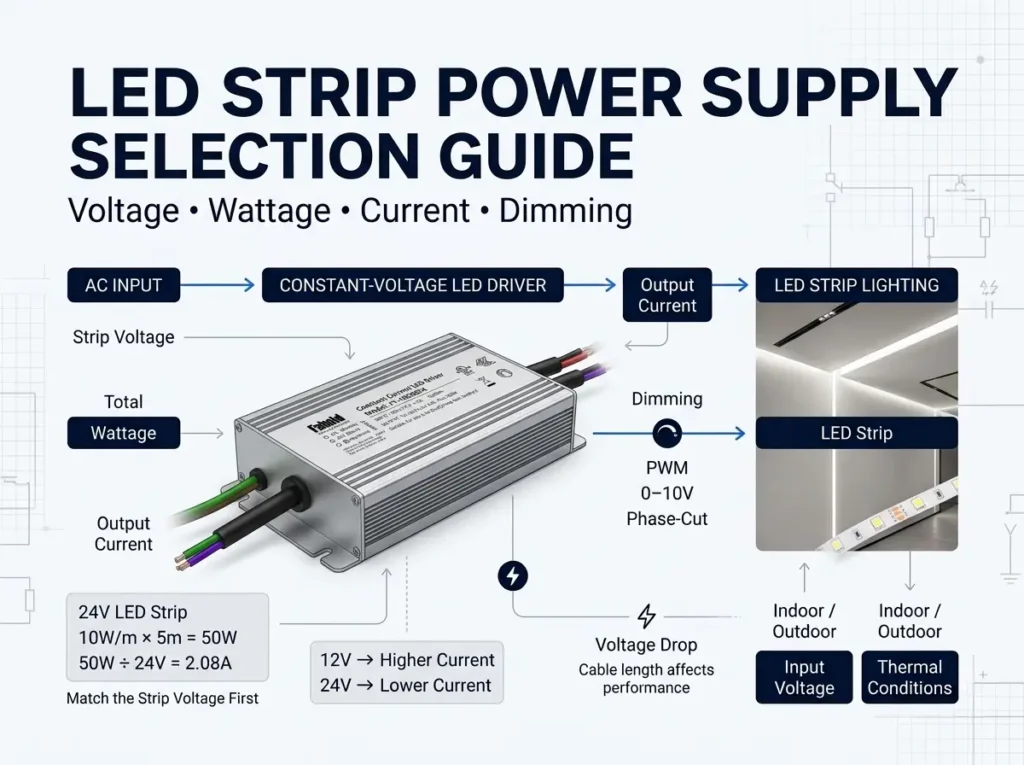
Start from the maximum simultaneous LED load, not just the number in the old unit’s product name. If the lighting system draws 48W at 24V, the calculated current is 2A. The replacement must provide at least that usable current under the actual operating conditions. If the load is unknown, do not assume the existing supply’s full nameplate wattage is the connected load.
Higher rated power may provide usable headroom in a suitable CV system, but it does not repair undersized wires, missing branch protection, excessive voltage drop or an incompatible dimmer. Check the candidate’s thermal derating and any minimum-load requirements.
For multiple output channels, verify both total power and the capacity of each individual channel. A supply rated 24V / 4A × 2 is not automatically an 8A single-channel supply. Channel configuration, common/isolated output design and connection rules must match the planned circuits.
Verify Input Voltage and Frequency
Commercial North American projects can include 120V, 208V, 240V or 277V supply arrangements. The substitute must explicitly include the site’s actual line-to-neutral or line-to-line input as applicable. For example, a product rated 100–120Vac must not be connected to a 277V circuit; a separate model rated 100–277Vac may cover the intended line voltage if the rest of the requirements also match.
Input selection is independent of the 24V DC output: a supply can accept 277Vac and still produce 24Vdc.
Check Dimming, Connections and Physical Fit
Verify whether the existing system uses:
- A non-dimmable constant-voltage source.
- A phase-cut dimmer (leading edge/TRIAC or trailing edge/ELV) upstream of the power supply.
- A wired 0–10V dimming controller.
- A downstream PWM LED controller supplied by a suitable CV source.
- Another building control system, including interfaces that may need a dedicated driver and should not be assumed available on a replacement.
Beyond control, compare the terminal arrangement, AC and DC separation, cable-entry location, enclosure dimensions, mounting holes and junction-box provisions. A device can be electrically plausible yet unsuitable as a physical or certified installation replacement.
Original vs. Replacement Specification Worksheet
| Parameter | Existing unit | Candidate unit | Acceptance question |
|---|---|---|---|
| Brand and full model | __ | __ | Is this OEM-approved, a successor, or only a third-party candidate? |
| Output architecture | CV / CC | CV / CC | Same required mode? |
| Output voltage | __ Vdc | __ Vdc | Correct regulated 24V output? |
| Maximum load | __ W | __ W usable | Sufficient in real operating conditions? |
| Current | __ A | __ A / channel | Sufficient for load and each channel? |
| AC input | __ Vac | __ Vac | Matches installed branch voltage? |
| Dimming and controller | __ | __ | Compatible interface and control behavior? |
| Class 2 / listing | __ | __ | Meets project and luminaire requirements? |
| Location and temperature | __ | __ | Suitable for site and derating? |
| Dimensions / enclosure | __ | __ | Fit and permitted field installation? |
| Verification evidence | __ | __ | Datasheet, documentation and sample test completed? |
Have the existing label but no candidate model? Send your replacement specifications to FAHOLD.
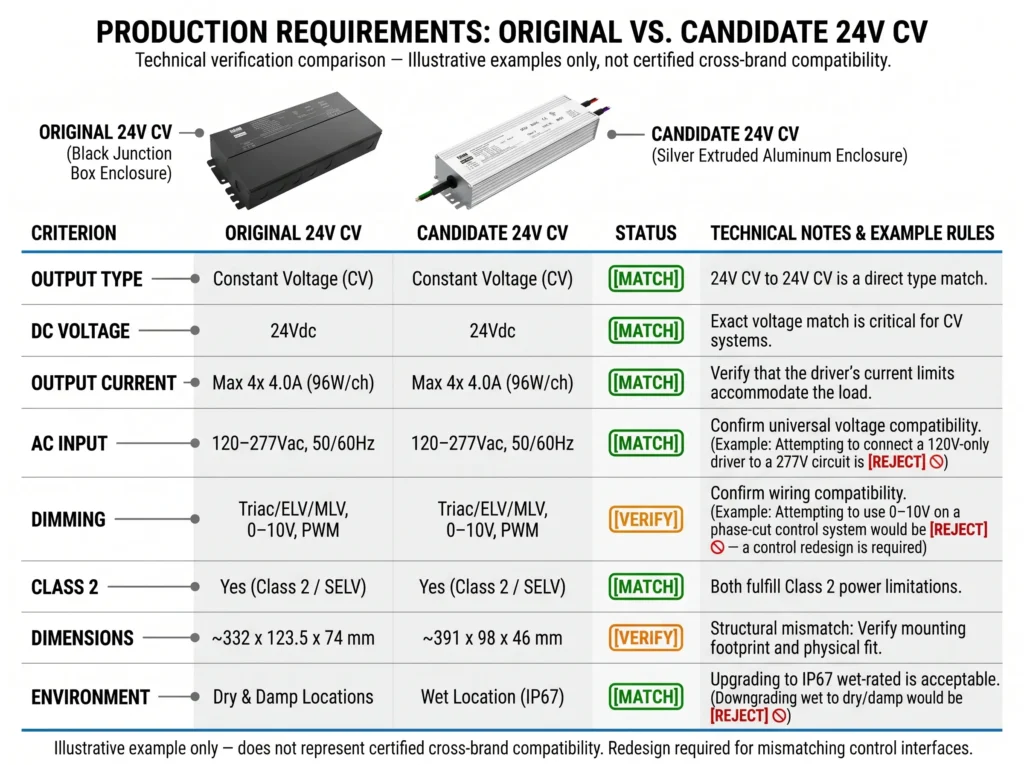
3. Can You Replace a 24V 60W Driver with a 100W Power Supply?
Understanding Watts and Amps in a 24V Constant-Voltage System
Often yes in principle, provided the system is truly 24V constant voltage and all other compatibility conditions are satisfied. At the same voltage, the LED load determines its operating current within the supply’s permitted limits; the supply’s higher wattage rating indicates an available capacity, not necessarily the power forced into the load.
Consider a 24V LED cabinet system with an actual connected load of 48W:
- LED load current: 48W ÷ 24V = 2A.
- Old 24V/60W supply: rated for 2.5A output.
- Potential replacement: a suitable 24V supply with 4A usable output would have more nominal capacity than that 2A load needs.
The higher-capacity candidate still needs correct dimming, minimum load (if specified), enclosure, Class 2 and other required characteristics.
When a Higher-Wattage 24V Supply Can Be Compatible
Compare the actual output ratings, not the rounded marketing designation. For example, FAHOLD’s L2-100X-024A belongs to a 100W model class but is specified at 24V / 4A / 96W maximum output. It may be a technical candidate for a lower-load 24V CV dimming installation when the remaining requirements match. It is not a 100W-usable-output replacement simply because the model name contains “100.”
Why a 100W Label Does Not Always Mean 100W of Usable Output
Look at the maximum DC output and current in the exact model datasheet. In the 24V/4A example:
24V × 4A = 96W, not 100W.
For a load that truly demands 100W continuous DC (approximately 4.17A at 24V), 96W/4A is insufficient before considering any temperature-related derating. Likewise, a supply rated 100W only under specific temperature or mounting conditions may offer less usable output in the actual installation.
There is no universal rule that a replacement must be exactly 20% larger. Select based on the maximum load, required project allowance and candidate-specific derating data. More rating margin also does not solve voltage drop in a long cable run. For a load calculation worksheet, use FAHOLD’s LED Strip Power Supply Calculator.
4. How to Replace a Discontinued 24V LED Power Supply
Start with the Original Manufacturer and Full Model Number
If the exact part is discontinued, ask its manufacturer or the luminaire OEM whether a documented successor exists. A new generation may have different dimming curves, terminal positions, enclosure dimensions or installation conditions even if its headline voltage and power are similar.
Compare Successor Models and Third-Party Alternatives
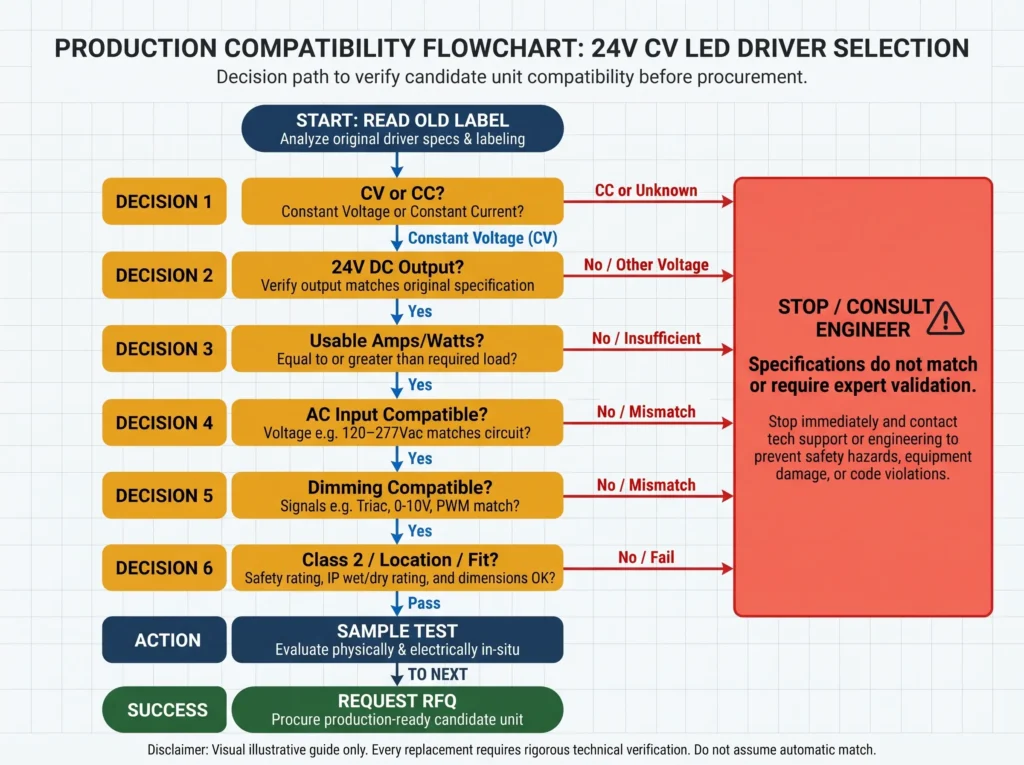
Use a shortlisting process rather than guessing from an online product photo:
- Identify the original electrical function (24V CV, not CC).
- Document the output load and AC input.
- Match the control scheme and mechanical/environmental conditions.
- Confirm applicable safety and installation requirements.
- Request the candidate’s complete datasheet and a project-specific compatibility assessment.
- Test an approved sample in the intended system before committing to bulk purchasing.
Commercial replacement programs demonstrate why this matters. Signify Advance Express asks users to identify the original driver’s label details and operating requirements. Fulham’s driver cross-reference request collects specifications and images for replacement assessment; its cited programmable offering addresses constant-current drivers, so it must not be treated as evidence of interchangeability with 24V CV products.
Why an Equivalent Specification Is Not Automatically a Drop-In Replacement
“Equivalent” can describe a candidate electrical specification; “drop-in replacement” makes a much stronger claim about the complete system. Replacing a driver may affect the luminaire’s listing conditions, thermal behavior, dimming characteristics, mechanical installation or OEM warranty. The original manufacturer, qualified installer and relevant authority having jurisdiction may need to be involved.
Do not represent any FAHOLD product as the officially approved substitute for a competitor’s specific model without evidence and appropriate verification.
When to Request a Manufacturer Cross-Reference
Request support when the old label is incomplete, the output is multi-channel, dimming is involved, the original model is discontinued, the system is installed in a wet or enclosed location, or the project requires hundreds of identical replacements.
Send the full model number, original photos, existing load/current, controller, input circuit, enclosure and quantities. FAHOLD can screen candidates against its 12V/24V constant-voltage product ranges and advise what still needs verification.
5. Match Dimming and Control Requirements
Replacing a Non-Dimmable 24V Power Supply
A non-dimmable 24V CV supply is usually the simplest category to screen, but “non-dimmable” does not tell you whether dimming occurs downstream through a separate 24V PWM controller. Check the system wiring architecture. A fixed-output supply may be appropriate upstream of a compatible external controller, subject to its input and output requirements.
Replacing a TRIAC or ELV Dimmable Driver
For phase-cut installations, establish the existing leading-edge/TRIAC, trailing-edge/ELV or other supported dimming arrangement. A product that claims phase-cut dimming is not automatically compatible with every wall dimmer. Check the exact control model, minimum/maximum load, low-end operation, turn-on behavior and audible noise.
For a 100–120Vac installation, FAHOLD’s L2D series offers 24V constant-voltage model options with phase-cut dimming on applicable Type B configurations. L2D’s rated AC input is 100–120Vac, so it must not be proposed for a 277Vac branch.
Replacing a 0–10V Dimmable LED Driver
A 0–10V replacement requires more than a matching pair of control-wire terminals. Check controller compatibility, control polarity, dimming range, whether the system expects dim-to-off or separate switched AC power, and whether multiple drivers share a controller. Different products can respond differently near minimum brightness.
FAHOLD’s L2-A series provides dimmable configurations with several possible control methods, including 0–10V. Confirm the specific configuration and control pairing rather than assuming every L2-A variation supports every listed dimming mode simultaneously.
Testing Minimum Brightness, Flicker and Switching Behavior
Before a multi-site replacement, test a representative approved unit with the actual strip and controller:
- Full-power operation at the expected input and maximum load.
- Smooth fade, stable low brightness and operation at the lowest intended level.
- Turn-on, turn-off, dim-to-off (if required) and recovery after a power interruption.
- Visible flicker, audible noise and unexpected flashing.
- Behavior after extended operation at the project’s highest expected ambient temperature.
Document the controller model, test conditions and results. The manufacturer’s broad “flicker-free” marketing description is not a substitute for the project’s compatibility test.
6. Check Safety, Enclosure and Installation Compatibility
UL 8750, Class 2 and Product Certification
For North American lighting projects, UL 8750 addresses LED equipment used in lighting products; UL 1598 covers luminaires. A Class 2 output is a particular evaluated power-limited output classification—not a synonym for any 24V power supply, a blanket approval for arbitrary rewiring, or proof that the complete luminaire remains certified.
UL Solutions distinguishes Listed, Recognized Component and other certification marks and scopes. For a replacement candidate, ask for the documentation identifying the actual model, rating and relevant certification, and check whether the original luminaire or retrofit application places additional restrictions. Useful reference: UL Solutions — Lighting Standards and Certification.
A driver advertised as “UL compliant” is not necessarily a currently NRTL-listed product for the intended use. Verify the applicable certification record and regional/project requirements instead of relying solely on a website logo.
Dry, Damp and Wet Location Requirements
The power supply’s enclosure must suit the installation. IP ratings address ingress protection, but they do not independently establish every required North American dry/damp/wet installation approval. Consider water exposure, condensation, sealing, cable entries and the location of junction boxes. An indoor dry-location replacement should not be moved into an exposed wet application merely because it fits physically.
Driver Dimensions, Junction Boxes and Cable Connections
Confirm overall length, width, height, mounting pattern, wire gauge and entry type. An integrated junction box may simplify some layouts but still needs suitable clearances and installation methods. Check whether the existing luminaire was evaluated for a particular driver type or enclosure arrangement.
Thermal Derating and Installation Restrictions
A replacement can deliver its rated power on a bench yet overheat inside a sealed cabinet. Compare case-temperature limits, ambient ratings, orientation restrictions and derating curves. A physically smaller unit is not automatically cooler or easier to approve.
Electrical replacement work and any measurements on live circuits should be performed by qualified personnel using applicable safety procedures. This guide is for specification comparison and procurement; it is not a mains rewiring instruction.
7. Which FAHOLD 24V Power Supply Can Be Considered as a Replacement?
FAHOLD provides several 24V CV product families. Each is a candidate category, not a claimed cross-reference for a specific third-party part number. Use the exact configuration datasheet, project conditions and sample test to decide.
L2-E — Slim Non-Dimmable 24V Power Supply
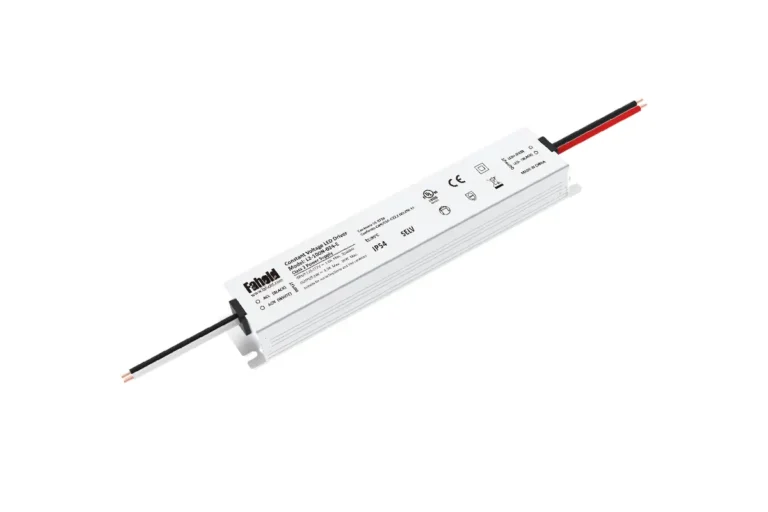
The L2-E series is a slim, single-output, non-dimmable 12V/24V constant-voltage family intended for applications such as illuminated cabinets, LED strips and signs. Listed models use 120–277Vac input. For example, the published L2-060N-024-E rating is 24V / 2.5A / 60W. It is a reasonable candidate for evaluation when the original system is a compatible fixed-output 24V CV application and the form factor fits.
Do not treat L2-E as a replacement for a supply whose upstream phase-cut or 0–10V dimming must be preserved. Check any optional IP configuration and actual Class 2/listing status at the exact SKU level.
L2-A — Enclosed Multi-Mode Dimmable 24V Power Supply
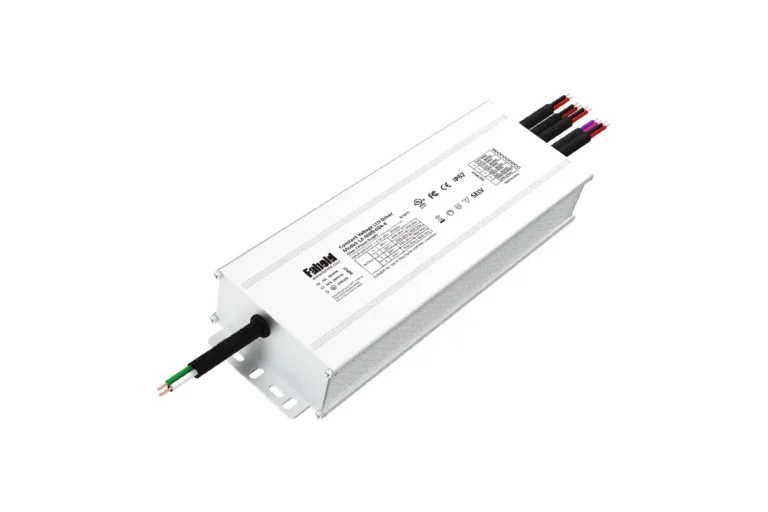
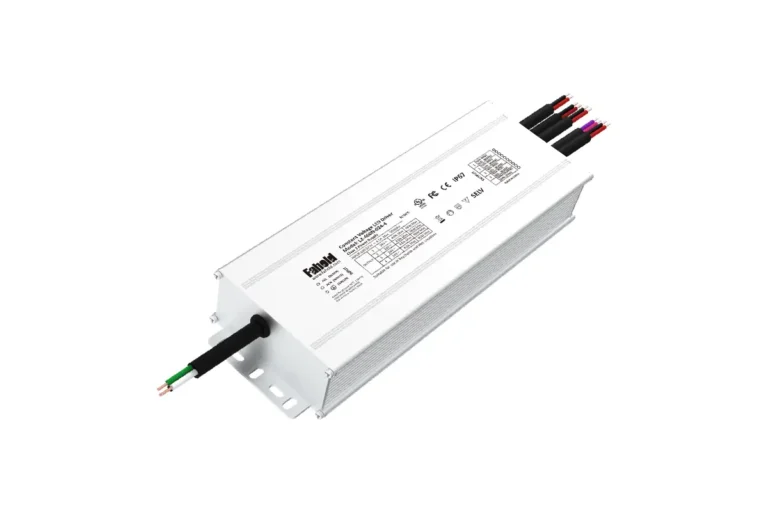
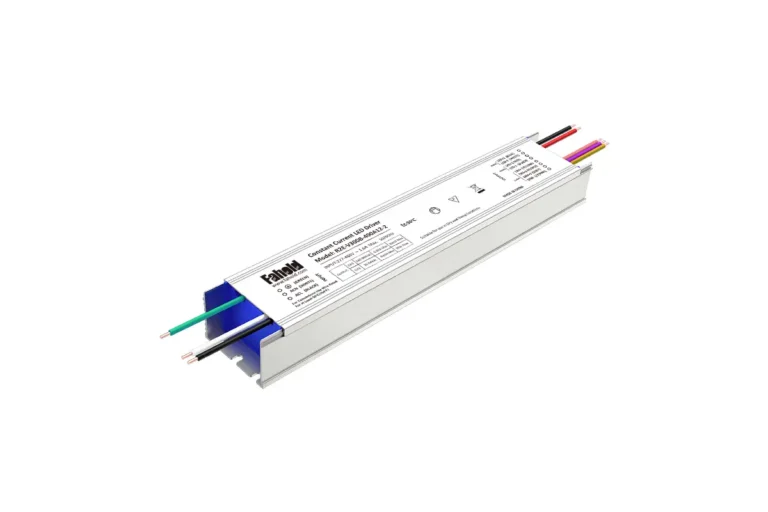
The L2-A series has 100–277Vac input and enclosed constant-voltage options with selectable dimming configurations. The published L2-060X-024A specification is 24V / 2.5A / 60W, and L2-100X-024A is 24V / 4A / 96W. Verify whether the requested Type B/control implementation supports the original controller, and compare junction-box and enclosure constraints.
L2D — Phase-Cut Dimmable Power Supply for 100–120Vac
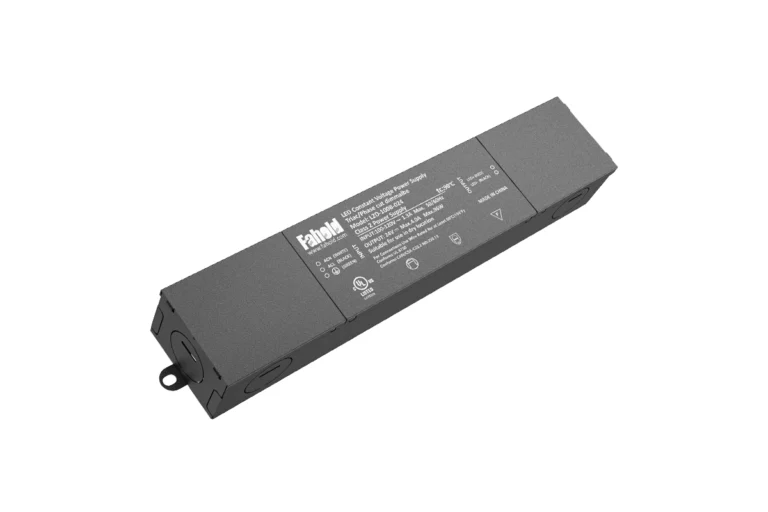
The L2D series is intended for 100–120Vac 12V/24V CV applications. Its published L2D-060X-024 specification is 24V / 2.5A / 60W. Applicable Type B configurations support TRIAC/ELV/MLV phase-cut control; Type N is non-dimmable. A control-mode match and real dimmer test are still required. This family must not be recommended for 208/240/277Vac circuits without an appropriately rated alternative.
L2-F — Waterproof 24V Power Supply Options
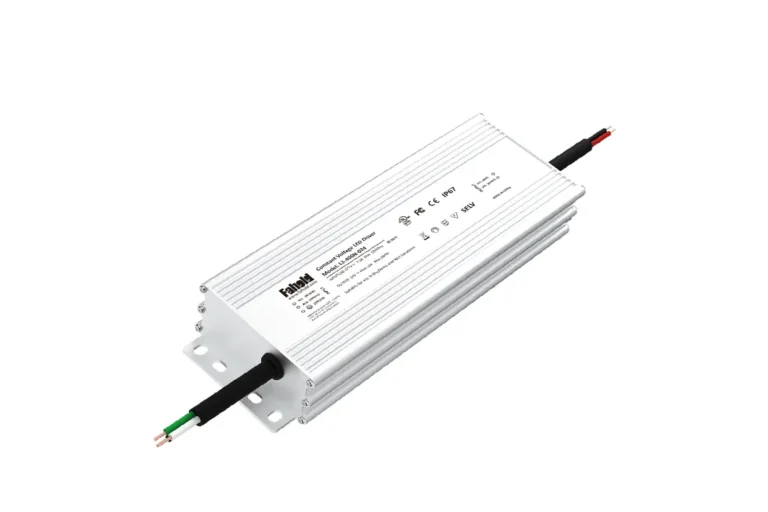
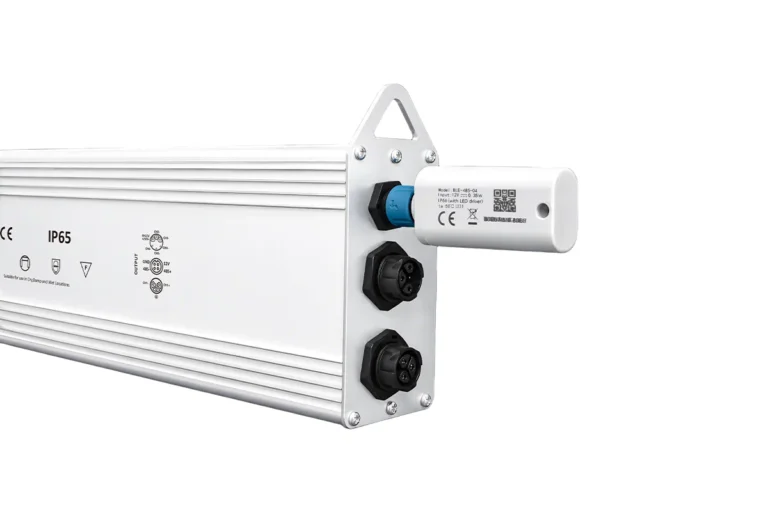
The L2-F series is a 100–277Vac, IP67 12V/24V CV platform with model-dependent multi-mode dimming and enclosure choices. It is a series to assess when the original installation requires a waterproof driver construction.
How to Compare a Candidate FAHOLD Model with the Original Driver
| Existing system’s requirement | FAHOLD candidate to investigate | Hard stop or verification needed |
|---|---|---|
| 24V CV; 48W actual load; non-dimmable; narrow cabinet space | L2-E, e.g., published 24V/60W/2.5A model | Verify AC input (L2-E listed at 120–277Vac), physical fit, actual environmental configuration and certification. |
| 24V CV; 60W nominal class; needs verified 0–10V control | L2-A 24V dimmable configuration | Compare controller, actual load, Type B option and dimming behavior. |
| 24V CV; 120Vac; existing TRIAC/ELV wall dimmer | L2D applicable Type B 24V model | Test actual dimmer; do not use at 277Vac. |
| 24V CV; wet/exposed location | L2-F suitable configured model | Correct and verify datasheet watt/current per output, installation approval and dimming. |
| 24V CV; distributed commercial signage circuits | L2 multi-channel family | Each channel’s current, branch wiring, required controls and listing must match. |
See the L2 multi-channel 12V/24V power supply family for systems requiring separate output circuits. None of these rows constitutes a certified old-to-new part-number interchangeability list. Ask FAHOLD to Review Your Original 24V Driver and Recommend a Candidate
8. Replacement Examples for Commercial LED Lighting Projects
Example A: Replacing a 24V 60W Non-Dimmable Supply in Cabinet Lighting
Illustrative scenario: A commercial display cabinet contains a 24V constant-voltage LED strip with an independently verified maximum load of 48W (2A). The original supply is labeled 24V / 60W and has no upstream dimming interface. The site has an input circuit covered by the candidate’s AC rating.
A published 24V / 2.5A / 60W non-dimmable L2-E model is a candidate worth evaluating. The selection is not complete until the installer confirms dimensions, environmental suitability, output wiring and required listing conditions. If the load increases, the candidate must be sized again using the revised maximum output demand.
Example B: Replacing a 24V Dimmable Driver in Cove Lighting
Illustrative scenario: An architectural cove has 60W of 24V CV LED strip and a 0–10V controller. An L2-A 24V dimming configuration may be considered if the selected SKU delivers sufficient usable output and supports the installed control arrangement.
The purchasing decision depends on a real controller compatibility test, correct turn-off behavior, enclosure fit and certification evidence. An L2-E fixed-output supply would not directly preserve the original 0–10V dimming function. A phase-cut L2D model is likewise not a direct substitute for a 0–10V control circuit merely because both are dimmable.
Example C: Replacing Multiple Power Supplies in Retail or Office Projects
Illustrative scenario: A contractor needs to replace discontinued supplies across 30 branches, with four fixtures per branch. That is 120 potential replacement units, but the team should not place a full order immediately.
First confirm that all 120 fixtures actually share the same LED load, original driver revision, input circuit and controller. Select candidate SKUs by configuration, request sample documentation, test a representative installation for each distinct configuration and keep the approved part number, drawing and test record in the maintenance schedule. Where multiple low-voltage circuits are consolidated onto a new supply, output-channel ratings and branch protection must be reviewed separately; changing the power-distribution architecture is not a simple one-for-one replacement.
For a multi-location project, ask the supplier about repeat-order availability, documented configuration control and an agreed replacement process before a bulk rollout. These examples are engineering illustrations—not documented field installations or claimed customer results.
9. What to Include in a 24V LED Power Supply Replacement RFQ
A useful replacement RFQ lets the supplier assess whether a specific candidate can be reviewed quickly. Include the following information wherever available.
Original Driver Model and Label Photos
Provide the existing brand, full part number (including suffixes), clear label photographs, the fixture model and any original datasheet. Include photos of the connectors and the actual mounting space. If the old model is discontinued, say so explicitly.
Electrical and Dimming Requirements
List the AC input voltage/frequency, 24V CV output requirement, connected load in watts, maximum output current, output-channel count, controller or dimmer model, and necessary turn-off/dimming behavior. Mark unknown fields as unknown rather than guessing.
Installation Conditions and Certification Needs
Specify dry/damp/wet exposure, applicable IP requirement, ambient temperature, enclosure dimensions, junction-box expectations, Class 2 requirements and required NRTL certification records. Mention any luminaire-OEM or project specification that controls which replacements are allowed.
Replacement Quantity, Samples and Project Timeline
Include number of units, number of different original models, target country, sample evaluation needs and desired procurement schedule. For repeated commercial projects, attach a model-by-model quantity sheet and identify which installation types require separate testing.
Send your requirements: Contact FAHOLD for 24V Replacement Model Evaluation. This is a technical model-matching request—not an automatic compatibility approval.
10. Frequently Asked Questions
Can I replace a 24V LED power supply with a different brand?
Yes, a different brand can be considered if the system is a compatible 24V constant-voltage load and the candidate satisfies electrical, dimming, safety, environmental and mechanical requirements. A matching brand is not a substitute for checking specifications; a matching voltage alone is not evidence of a safe drop-in replacement.
Can I use a 100W LED power supply instead of a 60W model?
Potentially, in a correctly designed 24V CV system, provided the candidate has sufficient usable output, correct controls, appropriate installation approvals and no conflicting minimum-load or other restrictions. Verify the actual watts and amps in the datasheet: a “100W-class” model may be rated at 96W / 4A at 24V.
Does a 24V replacement power supply need the same amperage?
Not necessarily the identical maximum ampere rating. It must deliver at least the actual maximum load current under the application conditions while meeting circuit-protection, wiring and other requirements. Check each output channel separately. A candidate with more capacity is not automatically compatible for every installation.
Can I replace a dimmable LED driver with a non-dimmable one?
Not as a direct functional replacement if the installation depends on the original driver’s dimming interface. A non-dimmable source may only be suitable in a different, independently verified control architecture. Match phase-cut, 0–10V or other controls to the exact model and test them.
How do I find a replacement for a discontinued LED driver?
Collect the full old model number, rating-label and terminal photos, LED-load specifications, AC input, control method, mechanical constraints and required certifications. First check with the luminaire/OEM manufacturer for an approved successor; then request a documented cross-brand engineering assessment and sample test if necessary.
Can a 24V constant-voltage supply replace a constant-current driver?
No, not automatically. Constant-current and constant-voltage supplies regulate different quantities. If the original unit specifies regulated current and a variable output-voltage range, the lighting module must be evaluated for a suitable constant-current replacement.
What if my original 24V LED power supply has no readable label?
Look for the original fixture documentation or ask its manufacturer. Provide photographs of the device, terminals and fixture along with any identifiable LED-strip/module part number. A qualified technician may need to verify the electrical design. Do not select a substitute based solely on appearance.
How can I find an equivalent UL Class 2 LED power supply?
Identify the original output circuit’s Class 2 requirements and the relevant full luminaire/installation conditions. Request the candidate’s exact NRTL listing and certification documentation, not just a Class 2 logo or general statement. Confirm output voltage/current, channels, environmental rating and whether the existing luminaire’s approval permits the change.
Request an Equivalent 24V LED Power Supply Recommendation
A reliable 24V LED power supply replacement starts with the old equipment’s actual function and the load it serves—not its brand or headline wattage. Confirm 24V constant-voltage output, usable current and power, AC input, dimming, output-channel arrangement, installation conditions and safety requirements. If the part is discontinued, a cross-brand candidate can be assessed, but its complete compatibility must be documented and tested.
For lighting OEMs, contractors and project buyers replacing one model across multiple commercial installations, the most efficient next step is to submit the original label and project requirements for a targeted review. This helps narrow candidate models before purchasing samples or committing to a bulk order.
Request an Equivalent 24V LED Power Supply / Submit Your Old Model
Need Help With Your LED Power Supply Project?
Tell us what you are working on. We will review your application and recommend the most relevant FAHOLD solution.