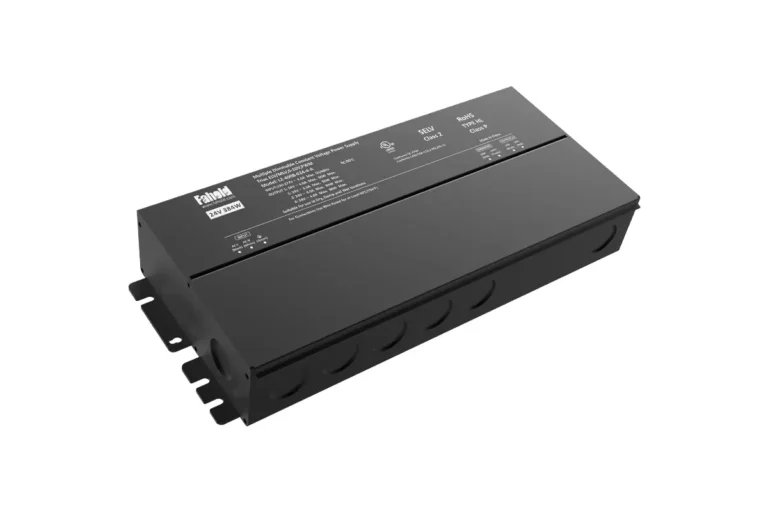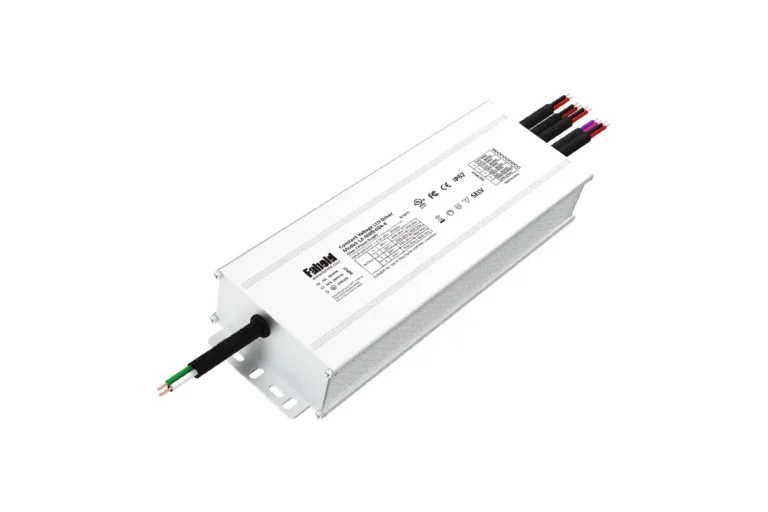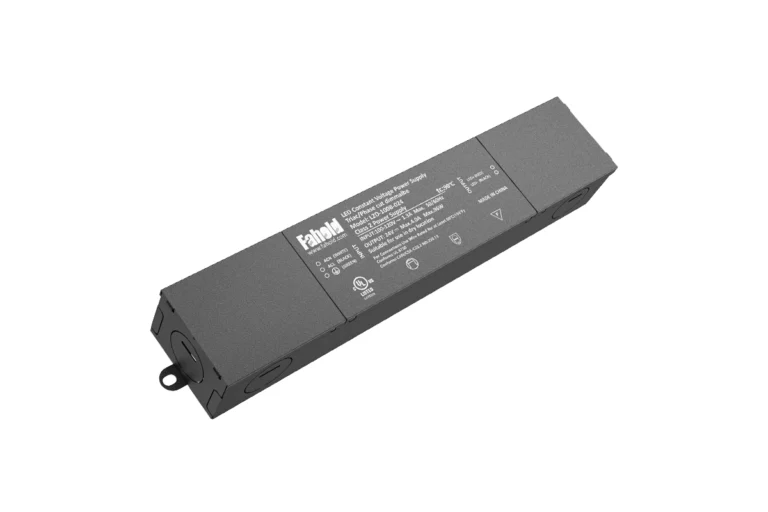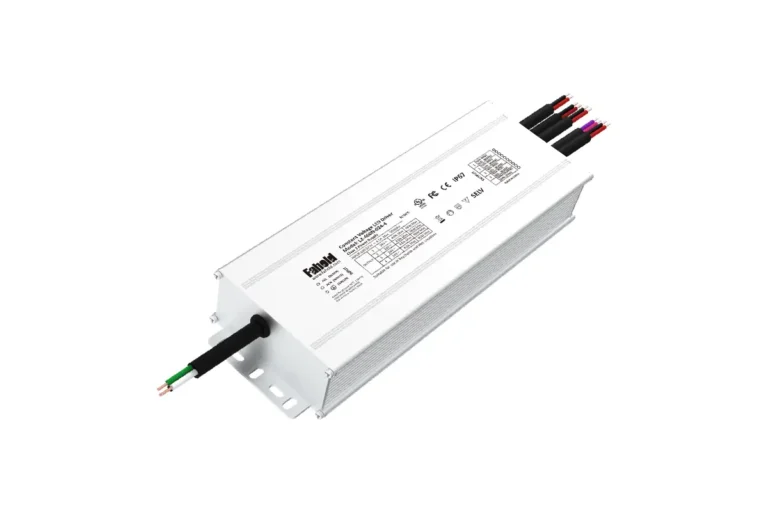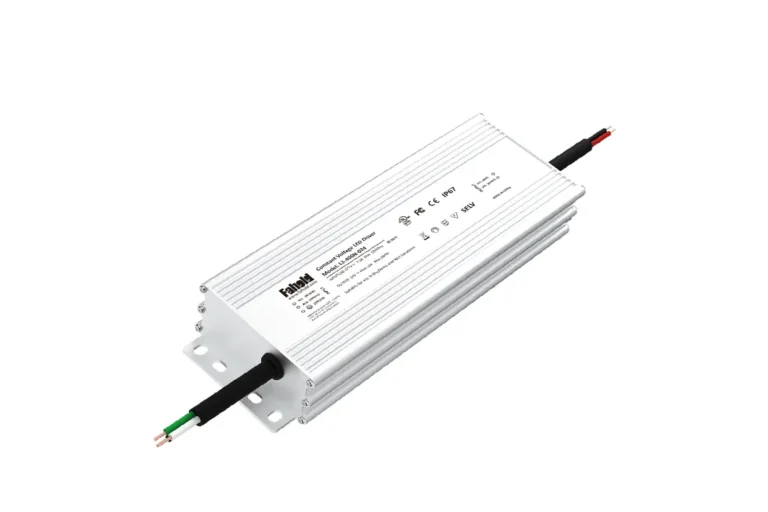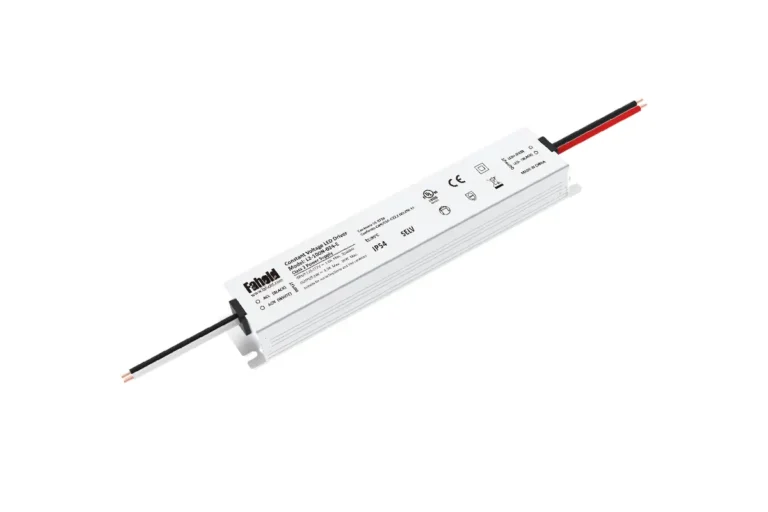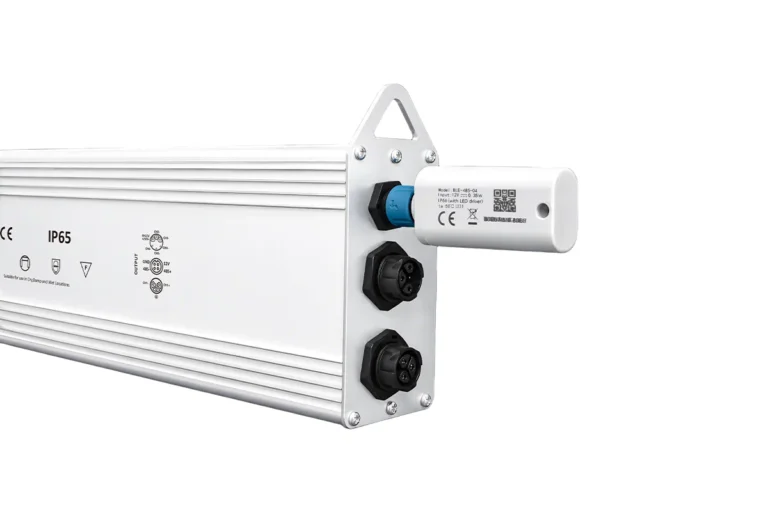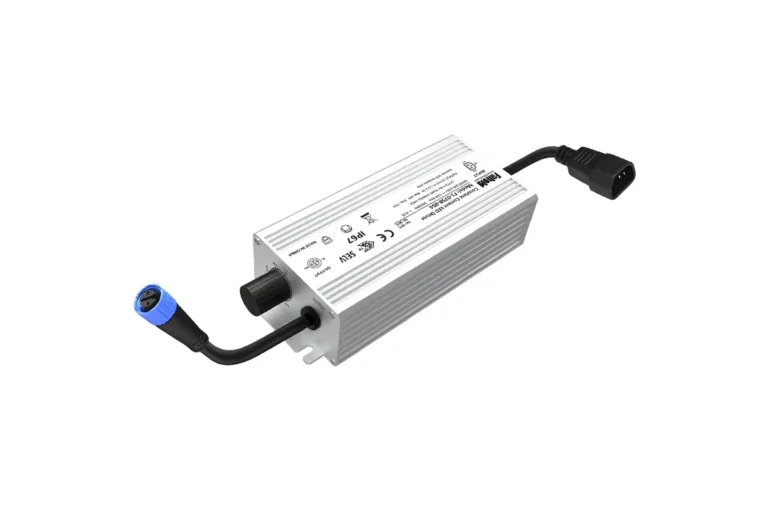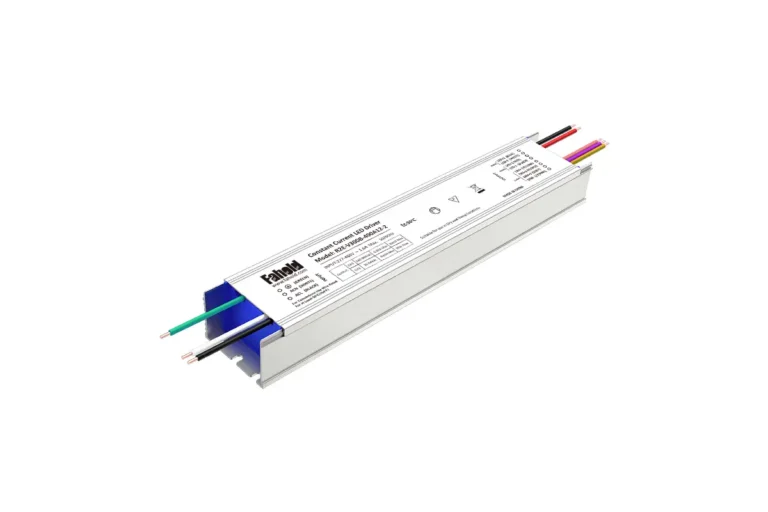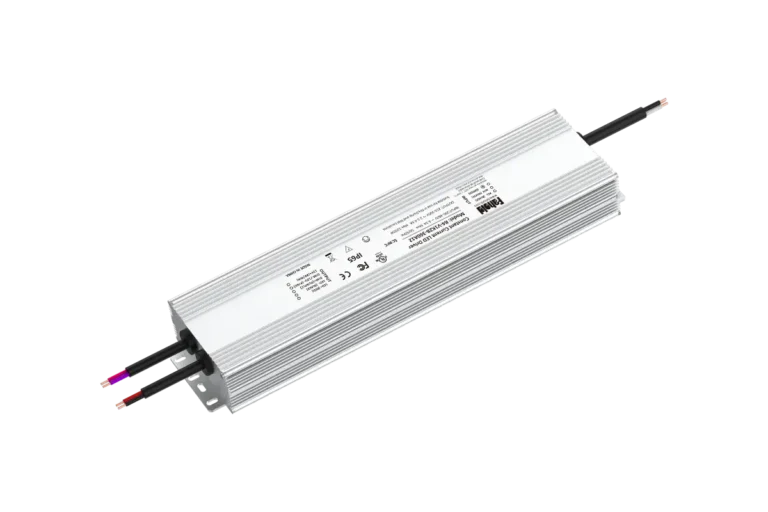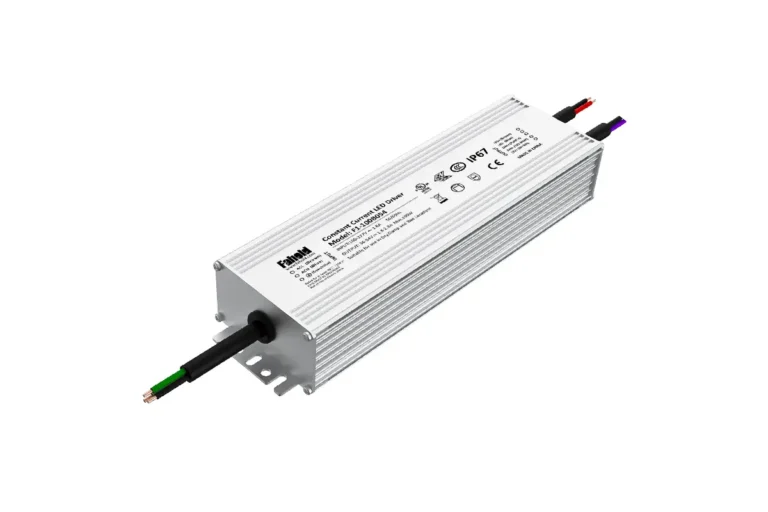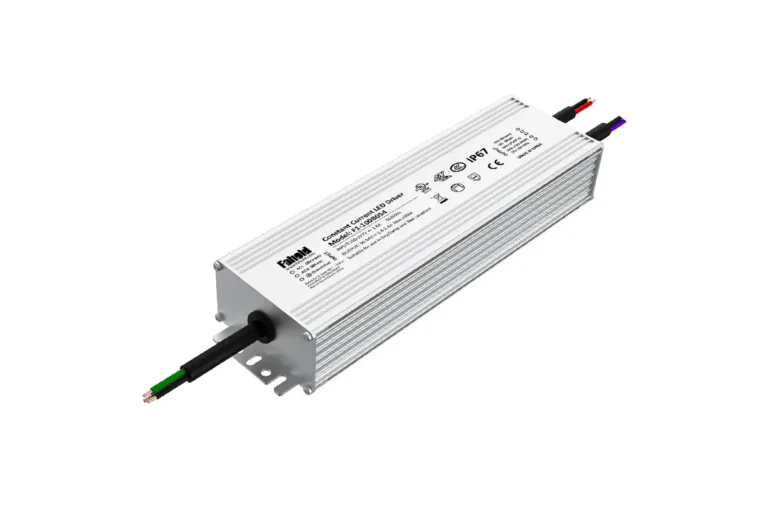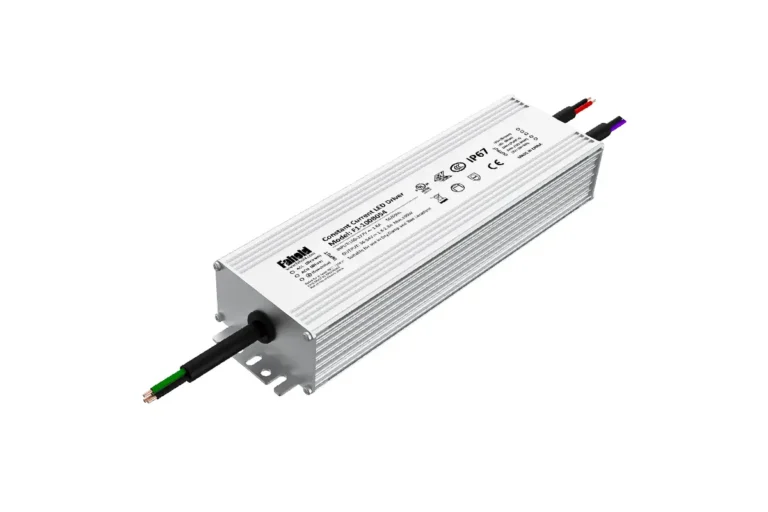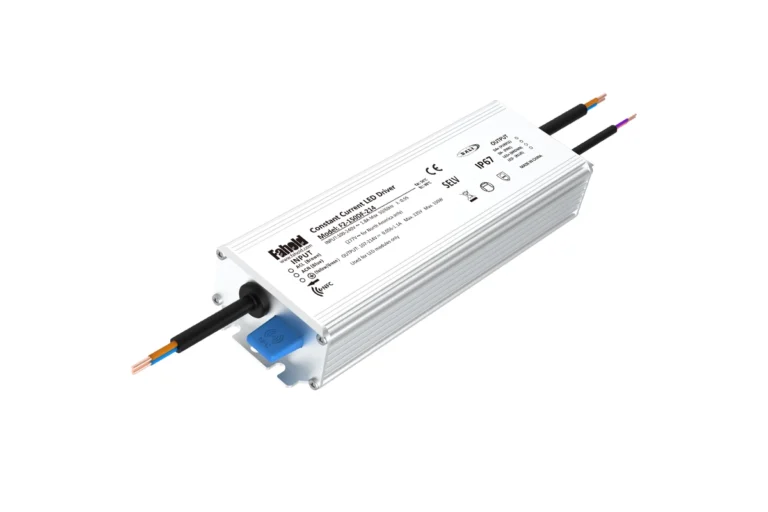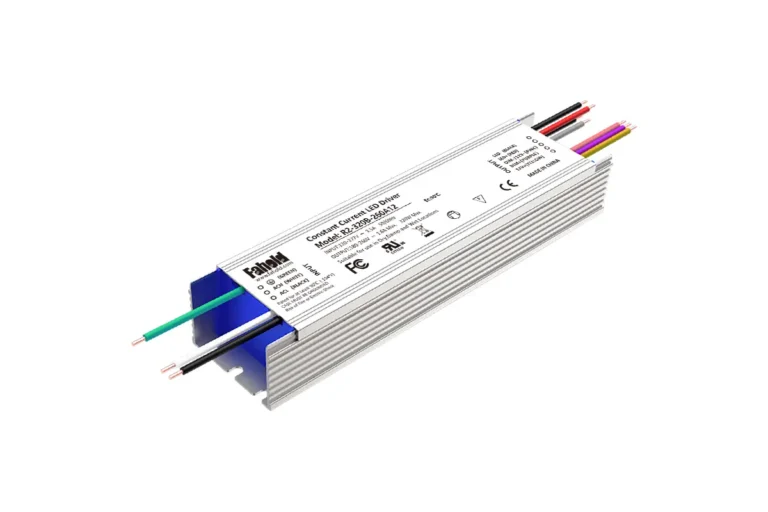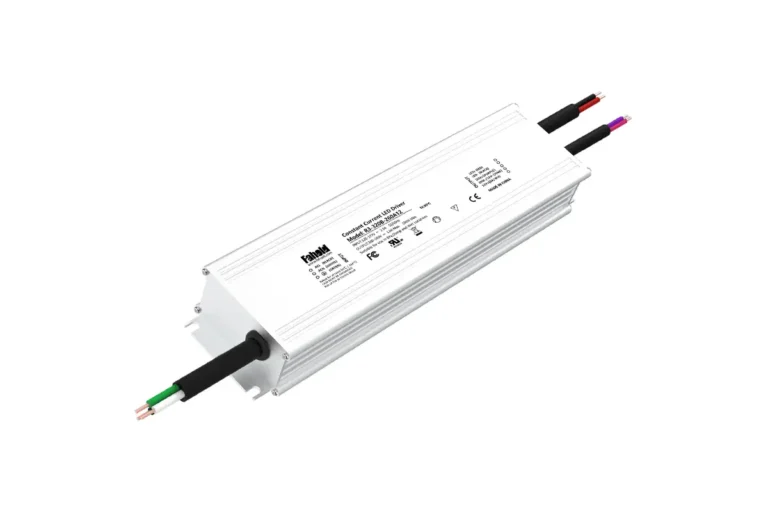
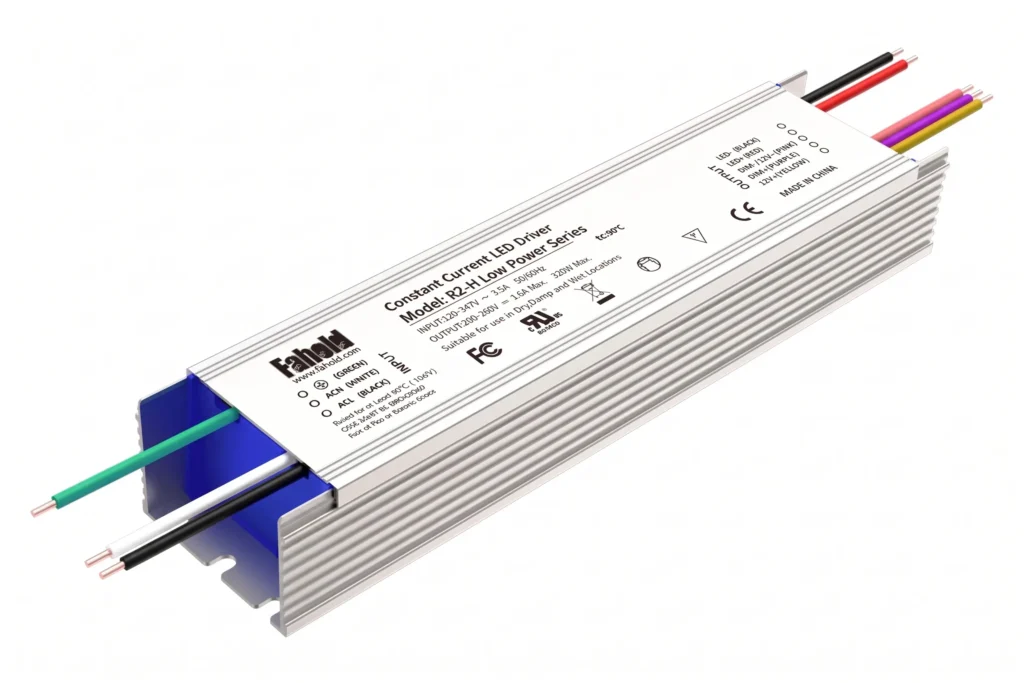
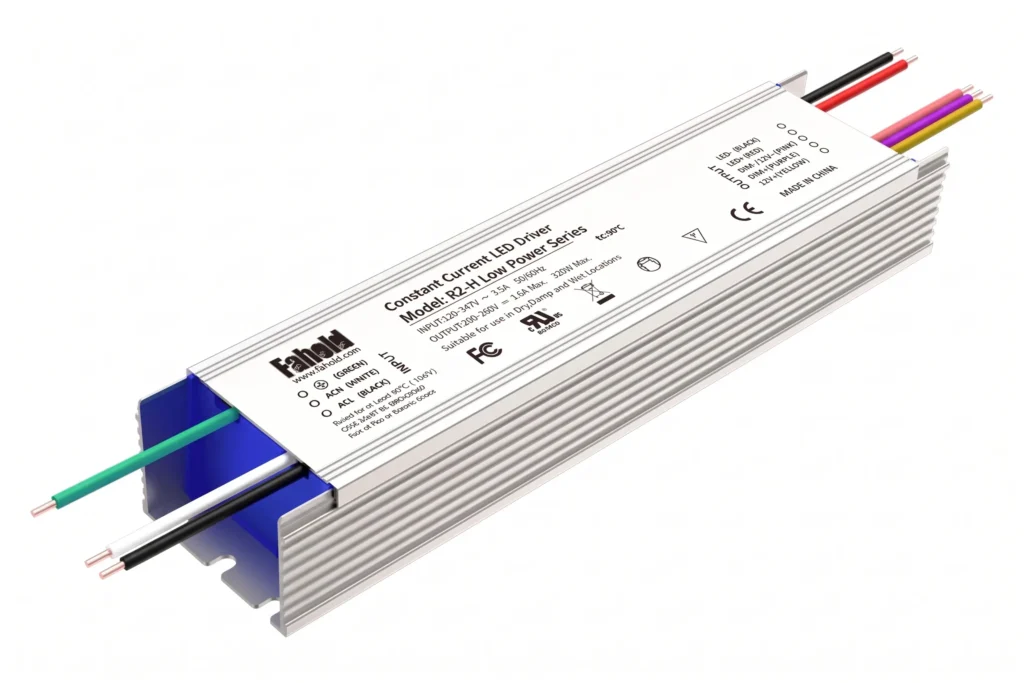
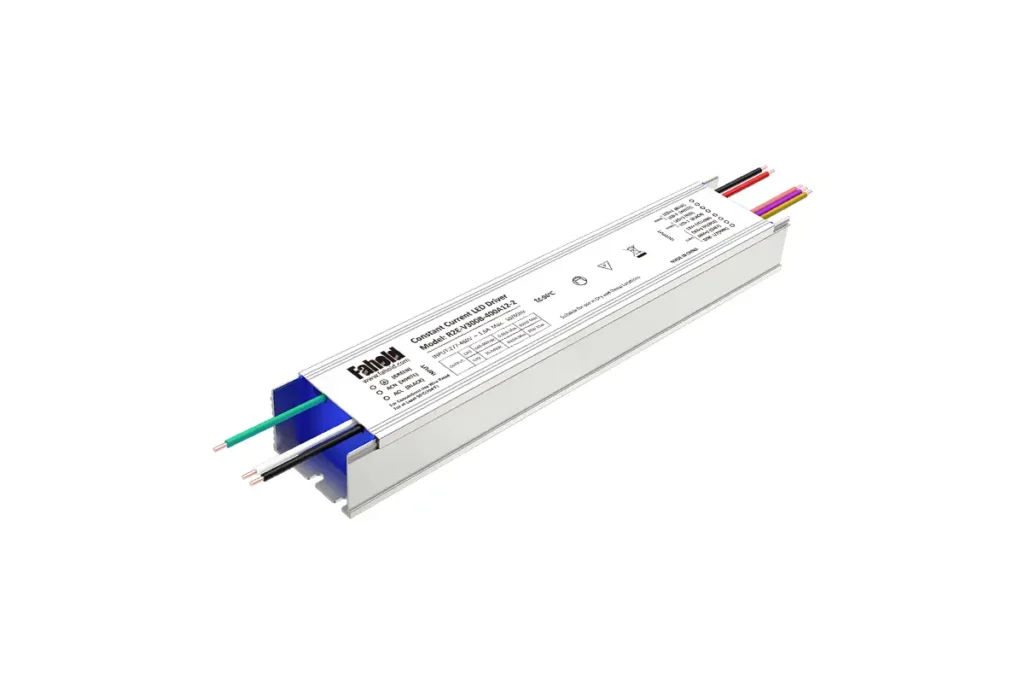
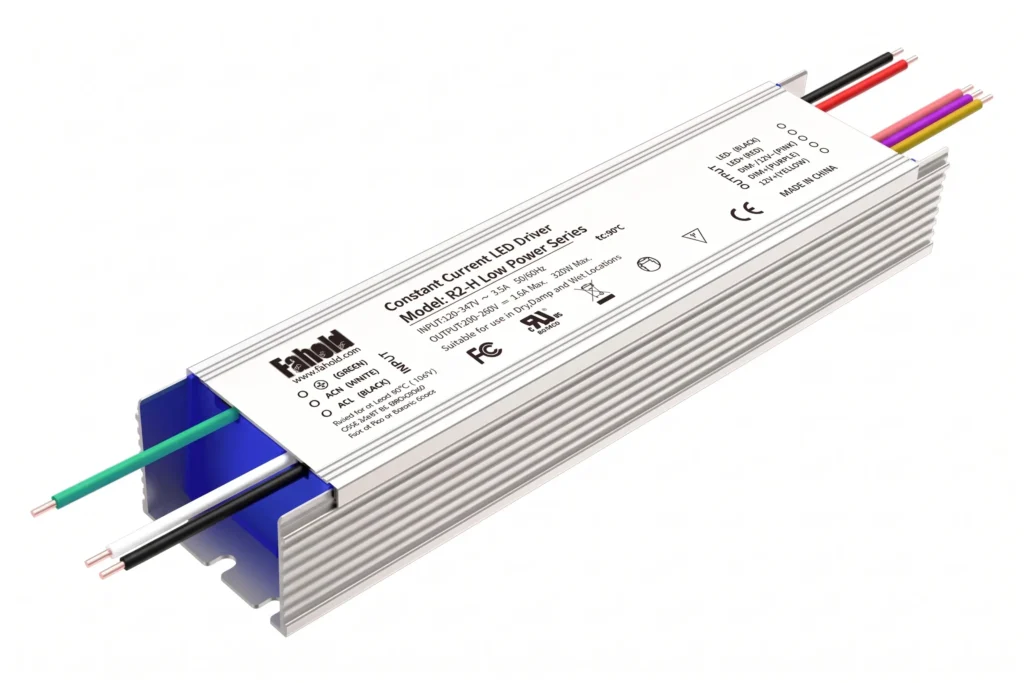
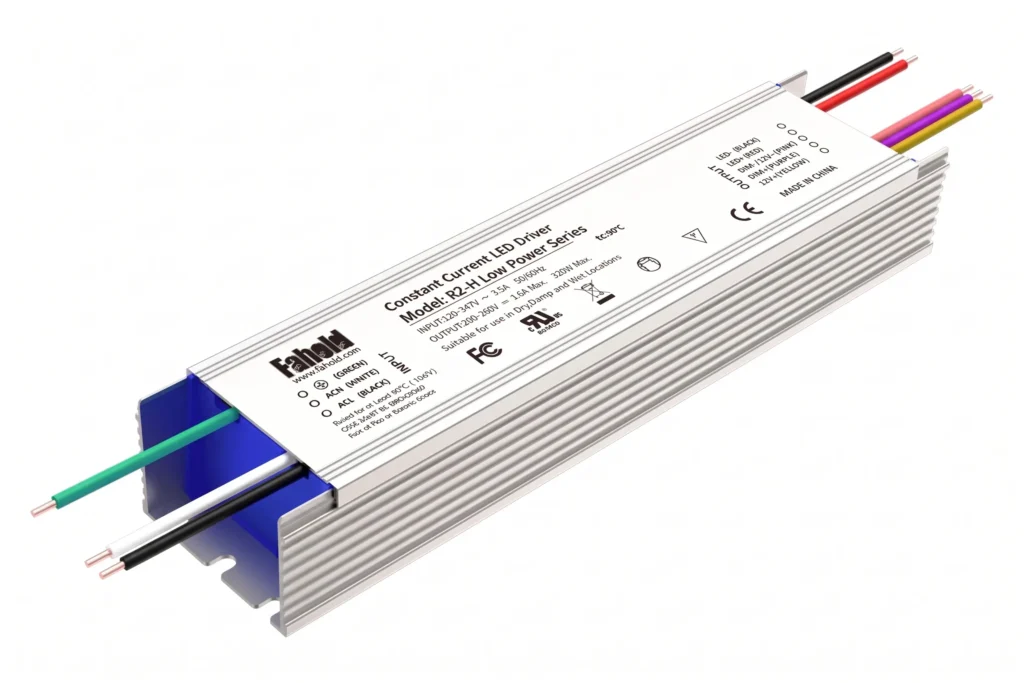
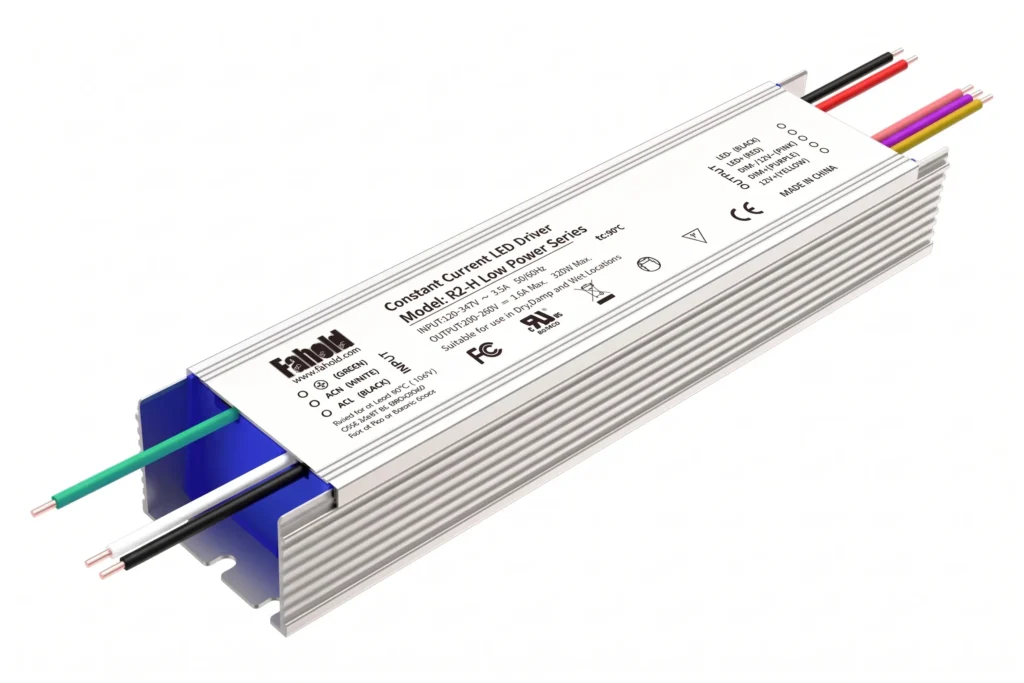
R2-060B-260Z-H 60W 180-260V Inter-Canopy Horticulture LED Driver
- Power60W
- Input120-277Vac
- Output Voltage180-260Vdc
FAHOLD non-isolated horticulture LED drivers are designed for commercial grow lights, inter-canopy fixtures, LED bar lights, greenhouse top lights and other professional horticulture luminaires where high efficiency, compact integration and high power density are priorities. The portfolio includes single-channel and multi-channel constant-current platforms from 60W to 1500W.
Available products cover 120–277Vac, 200–277Vac, 200–480Vac and 277–480Vac input platforms, with low-power inter-canopy drivers, slim programmable high-power drivers and dual-channel top-grow solutions. Depending on series and configuration, available functions include offline programming, 0–10V / PWM / resistor control, Dim-to-Off, independent channel control and IP-rated enclosures.
Compare products below by fixture architecture, wattage, AC input, LED output-voltage range, current, channel count and control requirements. FAHOLD also supports electrical matching, datasheets, samples and OEM/ODM grow-light projects.
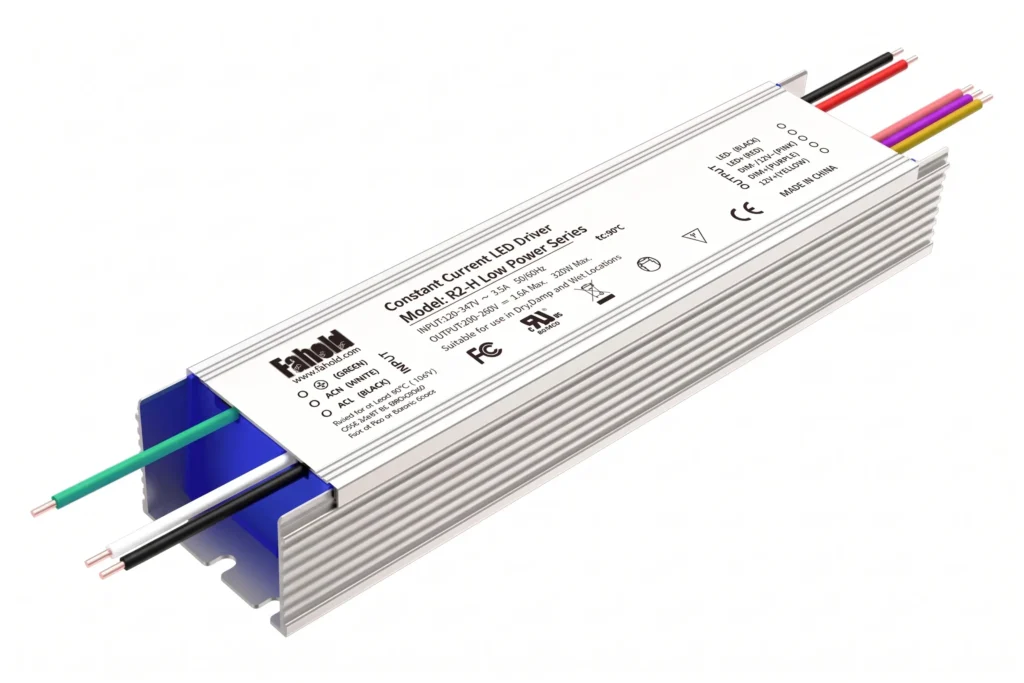
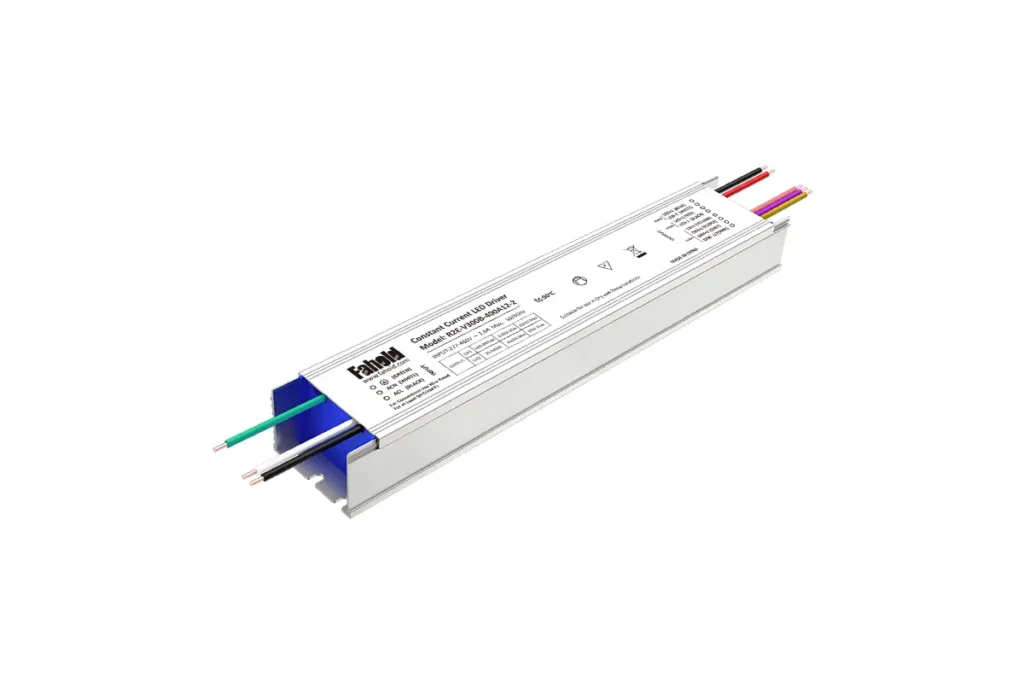
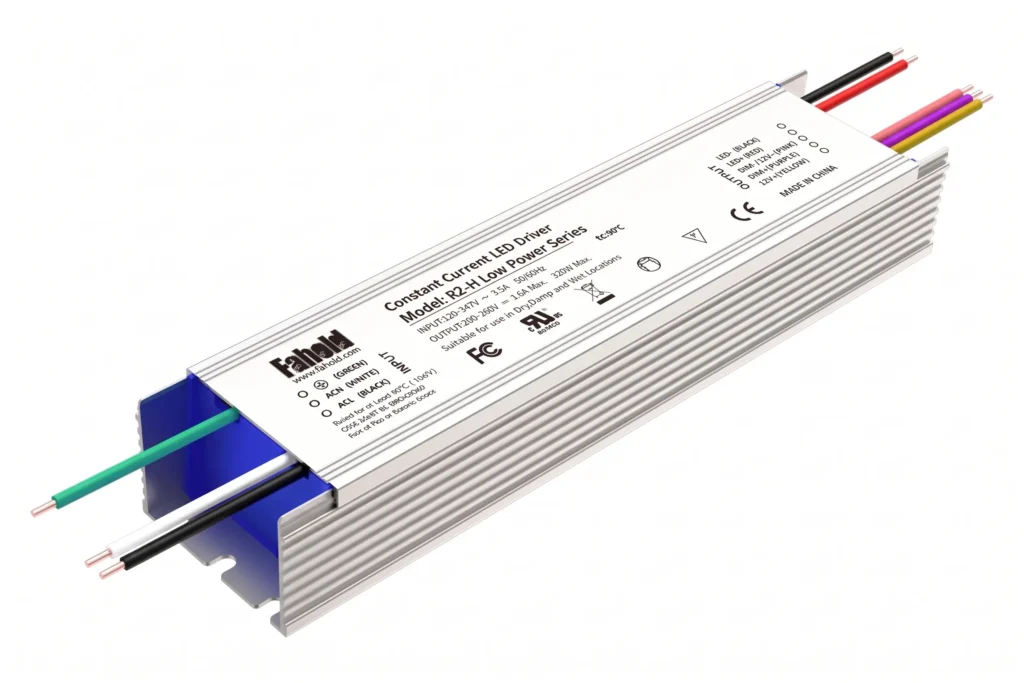
A non-isolated horticulture LED driver uses a power architecture without galvanic isolation between the AC input and LED output. This approach can support high conversion efficiency, compact mechanical integration and high power density when the complete grow-light fixture is specifically designed around a non-isolated LED power system.
FAHOLD non-isolated grow-light drivers cover compact inter-canopy lighting, commercial LED bar fixtures, high-power indoor grow lights and greenhouse top-light systems. Available platforms range from lower-power single-output drivers to programmable 1200W-class single-channel products and dual-channel horticulture drivers up to 1500W.
Non-isolated driver selection requires system-level engineering. The LED-board voltage, accessible parts, insulation, connectors, enclosure, grounding, channel architecture, control method and target certification must all be evaluated as part of the finished luminaire.
Isolation topology is one of the first decisions when designing a professional horticulture fixture. An isolated driver provides galvanic separation between the mains input and LED output, while a non-isolated driver does not provide the same input-to-output isolation.
| Architecture | Typical Advantage | Selection Direction |
|---|---|---|
| Non-Isolated LED Driver | High power density, compact integration and potentially very high conversion efficiency | Fixtures engineered around protected high-voltage LED loads and a complete non-isolated safety architecture |
| Isolated LED Driver | Electrical separation between AC input and LED output | Fixtures where input-to-output isolation forms part of the electrical safety architecture |
Neither topology should be selected from efficiency alone. The correct choice depends on the complete luminaire architecture, LED voltage, accessible components, enclosure design, target certification and installation environment.
For projects that require galvanic input-to-output isolation, compare
Isolated Horticulture LED Drivers
.
FAHOLD non-isolated horticulture products include both single-channel and multi-channel architectures. The correct structure depends on how the LED loads are electrically arranged inside the fixture.
| Architecture | Typical Fixture | Selection Focus |
|---|---|---|
| Single-Channel | Inter-canopy lights, LED bar fixtures and high-power grow lights using one primary regulated LED load | Output-voltage window, current, total wattage, programming and dimming method |
| Multi-Channel / Dual-Channel | Top-grow and advanced horticulture fixtures using separate LED loads or auxiliary lighting channels | Individual channel voltage, current, power allocation and independent control requirements |
A high-wattage fixture does not automatically require multiple output channels. If the LED system operates as one electrical load, a single-channel platform may be more appropriate. Multi-channel drivers are relevant when two or more LED sections require separate power distribution or control.
Compare
Non-Isolated Single-Channel Grow Light Drivers
or
Non-Isolated Multi-Channel Grow Light Drivers
.
The FAHOLD non-isolated horticulture portfolio covers substantially different fixture classes rather than one continuous driver family. Product selection should therefore begin with the application and LED architecture before narrowing by wattage.
| Power Direction | Typical Product Direction | Typical Application |
|---|---|---|
| 60W–320W | R2-H and compact R2-based platforms | Inter-canopy lighting, linear horticulture fixtures and lower-power grow-light applications |
| 400W–800W | R4 high-power single-channel platform | Commercial LED bar lights, indoor-grow fixtures and high-output horticulture luminaires |
| 880W–1200W | R4 / R6-V high-power platforms | Large indoor grow lights and greenhouse top-light systems |
| 1500W Class | R6-V dual-channel platform | Very high-power commercial top-grow fixtures requiring separate controlled outputs |
Rated wattage is only one selection parameter. The LED forward-voltage window, required current, channel architecture and facility AC input must also match the selected driver.
Commercial horticulture facilities use different AC distribution systems depending on region, facility scale and luminaire power. FAHOLD non-isolated platforms therefore cover several input-voltage architectures.
| Rated Input Direction | Typical Platform | Project Direction |
|---|---|---|
| 120–277Vac | R2-H / R2 / R4 | Commercial indoor grow lights, inter-canopy fixtures and broadly deployed horticulture luminaires |
| 200–277Vac | R4E and selected high-power platforms | Commercial high-power fixtures designed around 208V, 240V or 277V-class infrastructure |
| 200–480Vac | R2-H high-voltage / R4-V / selected R6-V | High-voltage horticulture systems including 347V and 480V-class installations |
| 277–480Vac | Selected R2E-V and R6-V configurations | Large greenhouse and commercial top-grow lighting systems |
Always confirm the exact rated-input range of the selected product. A driver designed only for 120–277Vac operation should not be connected to a 347V or 480V supply.
Inter-canopy lighting places linear LED fixtures inside or between crop rows, where limited fixture space and relatively high LED-string voltage can create different driver requirements from traditional overhead grow lights.
FAHOLD R2-H non-isolated single-channel products use a 180–260Vdc LED output platform. The current 120–277Vac group covers 60W, 100W, 150W, 200W, 240W and 320W, while the 200–480Vac branch includes 60W, 120W, 150W and 200W options.
This makes R2-H relevant to slim inter-canopy and linear horticulture fixtures where lower power, high LED-string voltage and compact driver integration are priorities.
Compare
R2-H 120–277Vac Inter-Canopy LED Drivers
or
R2-H 200–480Vac Inter-Canopy LED Drivers
.
R4 is the primary FAHOLD high-power non-isolated single-channel platform. The family covers 400W to 1200W and is available across 120–277Vac, 200–277Vac and 200–480Vac rated-input branches.
Current R4 platforms use a 210–360Vdc output window for high-voltage LED-string architectures. The slim linear enclosure is designed for high power density in grow-light and LED bar fixtures where internal installation space is limited.
Selected R4 models reach typical efficiency up to approximately 97%, making the platform particularly relevant to professional grow lights that operate for long daily cycles and require low driver losses.
For complete technical specifications, review the
R4 High-Power Non-Isolated Grow Light LED Driver Series
.
Selected FAHOLD non-isolated platforms support offline programmable output. Programming allows supported electrical parameters to be configured within the operating limits of the driver to match different LED boards, fixture wattages or OEM product variants.
This can help horticulture-lighting manufacturers standardize one driver platform across several fixture SKUs rather than maintaining a separate power supply for every current or wattage target.
The programmed operating point must remain inside the permitted voltage, current, power and thermal limits of the selected driver.
Commercial cultivation systems often need adjustable light output for plant-growth stages, daylight integration, environmental-control strategies or facility energy management. Depending on series and configuration, FAHOLD non-isolated horticulture drivers support 0–10V, PWM and resistor-based dimming.
| Control Method | Typical Use | Selection Consideration |
|---|---|---|
| 0–10V | Commercial greenhouse and indoor-grow controllers | Confirm signal range, wiring and controller compatibility. |
| PWM | Fixture controllers and automated horticulture systems | Confirm signal requirements, frequency and driver compatibility. |
| Resistor / Rx | External resistance-based output adjustment | Confirm the supported resistance range and control-interface architecture. |
Available control methods differ between product families. The actual greenhouse controller or fixture interface should therefore be specified during driver selection.
A complete dark period can be important in controlled-environment agriculture. Selected programmable FAHOLD non-isolated platforms support Dim-to-Off so the LED output can shut down fully at the lower control threshold instead of producing residual visible light.
The controller, driver and LED load should be tested together when precise low-end control and complete shutdown are project requirements.
Some high-power horticulture fixtures use separate primary and auxiliary LED loads rather than one combined output. A dual-channel architecture allows these sections to be powered and controlled independently.
FAHOLD R6-V is a high-power non-isolated dual-channel platform for commercial top-grow lighting. Current models cover 880W, 1000W, 1200W and 1500W, with 200–480Vac or 277–480Vac rated-input platforms depending on model.
R6-V provides independent control of both output channels. The primary P1 channel uses a 150–500Vdc output platform, while the P2 auxiliary channel uses 30–150Vdc. Compatible configurations support 0–10V and PWM dimming together with optional dynamic channel-power allocation.
For high-voltage dual-channel projects, review the
R6-V Dual-Channel Grow Light LED Driver Series
.
A multi-channel grow-light fixture may not require maximum power from every LED section at the same time. On compatible R6-V configurations, dynamic power allocation can shift available power between auxiliary and primary outputs while remaining within the total power limit of the driver.
This can provide additional flexibility for horticulture fixtures that use different LED spectra, supplemental channels or crop-specific lighting strategies.
Grow-light drivers can operate for many hours per day, so conversion efficiency directly affects electrical losses and heat generated inside or around the fixture.
FAHOLD non-isolated platforms are designed around high-efficiency power conversion, with selected R4 models reaching approximately 97% typical efficiency. The practical efficiency of the complete lighting system still depends on input voltage, LED operating point, current, temperature and fixture thermal design.
Efficiency should therefore be compared together with power factor, output range, control capability and thermal performance rather than used as the only product-selection criterion.
Environmental requirements vary significantly between inter-canopy fixtures, indoor grow rooms and greenhouse top-light systems. FAHOLD non-isolated product families therefore use different enclosure and ingress-protection options.
| Platform Direction | Protection Direction | Typical Application |
|---|---|---|
| R2 / R2E-based products | IP42 with IP67 options on applicable models | Inter-canopy and compact horticulture fixture architectures |
| R4 | IP65 | High-power grow-light and commercial LED bar fixtures |
| R6-V | IP65 | High-power commercial top-grow lighting |
The driver IP rating applies only to the driver enclosure or configured product. Connectors, cables, seals, fixture housing, mounting orientation and the complete luminaire must also be designed for the actual horticulture environment.
Inter-canopy fixtures operate closer to the crop canopy and often require a slim mechanical profile. R2-H provides lower-power 180–260Vdc constant-current platforms that are suited to this style of linear horticulture fixture.
When selecting an inter-canopy driver, consider fixture dimensions, LED-string voltage, required current, humidity, connector architecture and the AC distribution used across the cultivation facility.
High-power LED bar fixtures benefit from slim drivers with high conversion efficiency and programmable output. The R4 platform is designed around this requirement, combining a linear enclosure, 400W–1200W power classes and a 210–360Vdc high-voltage LED output architecture.
Offline programming and compatible 3-in-1 dimming allow the power platform to be adapted to different commercial grow-light designs within the supported electrical range.
Large greenhouse top-light fixtures may require several hundred watts to more than one kilowatt of LED power together with 277V, 347V or 480V-class facility distribution.
For single-load fixtures, high-voltage R4-V platforms can provide a programmable non-isolated solution. For fixtures using independently controlled primary and auxiliary loads, R6-V provides a dual-channel architecture with high-voltage input capability.
| Fixture Requirement | Recommended Platform Direction |
|---|---|
| Low-Power Inter-Canopy / Linear Fixture | R2-H |
| Slim High-Power Single-Channel Grow Light | R4 / R4E / R4-V |
| Compact Dual-Channel Horticulture Fixture | R2 / R2E-V dual-channel configurations |
| 880W–1500W High-Voltage Dual-Channel Top-Grow Light | R6-V |
For application-level comparison of greenhouse top lighting, indoor-grow fixtures, vertical farming and inter-canopy systems, review
FAHOLD Grow Lighting LED Driver Solutions
.
Non-isolated horticulture fixtures require precise coordination between the LED board, driver and luminaire safety architecture. Output voltage, current, programmed power, channel configuration, dimming interface, connectors, cable lengths, auxiliary outputs, housing and target certification can all affect the final driver specification.
FAHOLD supports commercial grow-light manufacturers with driver matching, technical datasheets, samples, programmable-output evaluation and OEM/ODM project configuration. Providing the facility AC input, LED voltage range, current, maximum power, number of channels, control protocol, IP requirement and certification target helps identify the appropriate platform more efficiently.
A non-isolated horticulture LED driver powers a grow-light LED load without galvanic isolation between the AC input and LED output. This architecture can support compact size, high power density and high conversion efficiency, but the complete fixture must be engineered with suitable electrical protection, insulation, enclosure and certification requirements.
An isolated grow-light driver provides galvanic separation between the AC input and LED output, while a non-isolated driver does not provide the same input-to-output isolation. Non-isolated architectures can offer advantages in efficiency, size and power density, but the correct topology depends on the complete luminaire safety and LED-board design.
The current FAHOLD non-isolated horticulture portfolio covers approximately 60W to 1500W. Lower-power R2-H products serve inter-canopy fixtures, R4 covers high-power single-channel grow lights, and R6-V provides high-power dual-channel solutions up to 1500W.
FAHOLD non-isolated horticulture platforms include 120–277Vac, 200–277Vac, 200–480Vac and 277–480Vac rated-input options depending on series. The driver input range must be matched to the actual electrical distribution used by the grow facility.
A single-channel driver powers one primary regulated LED load, while a multi-channel or dual-channel driver provides separate outputs for multiple LED loads or fixture sections. Multi-channel architecture is useful when different LED loads, spectra or lighting sections require independent power or control.
FAHOLD R2-H is designed for lower-power inter-canopy and linear horticulture fixtures. Current models use a 180–260Vdc output platform with 120–277Vac or 200–480Vac input options depending on model, covering approximately 60W to 320W.
Selected FAHOLD non-isolated horticulture platforms support offline programmable output. The R4 family, for example, allows supported electrical parameters to be configured within the operating range of the selected driver for different LED-board current and fixture-power requirements.
Yes, selected FAHOLD non-isolated horticulture platforms support 0–10V and PWM dimming. Some R4 configurations also support resistor-based 3-in-1 control, while R6-V supports independent dual-channel 0–10V / PWM control. Available control functions depend on series and configuration.
FAHOLD R6-V is designed for high-power dual-channel top-grow fixtures. Current models cover 880W, 1000W, 1200W and 1500W with 200–480Vac or 277–480Vac input, independent channel control and compatible 0–10V / PWM dimming.
Provide the facility AC input, minimum and maximum LED forward voltage, required current, maximum fixture wattage, number of LED loads or channels, dimming method, environmental requirements and target certification. These parameters help determine the appropriate R2-H, R4, R2/R2E or R6-V platform.