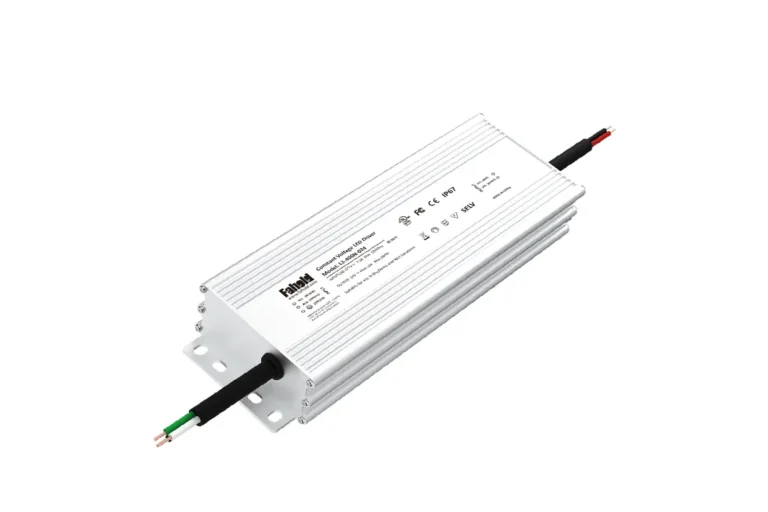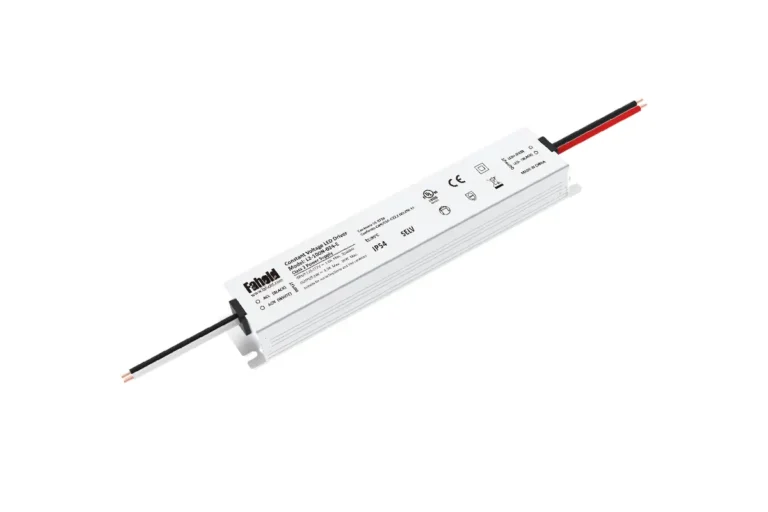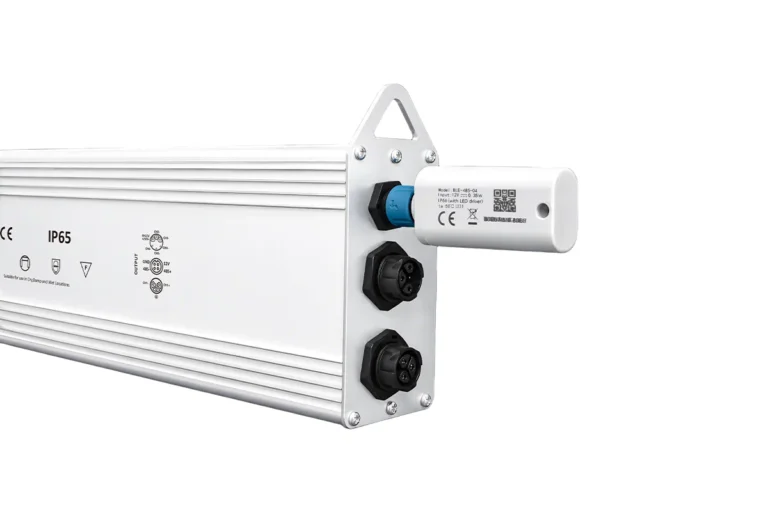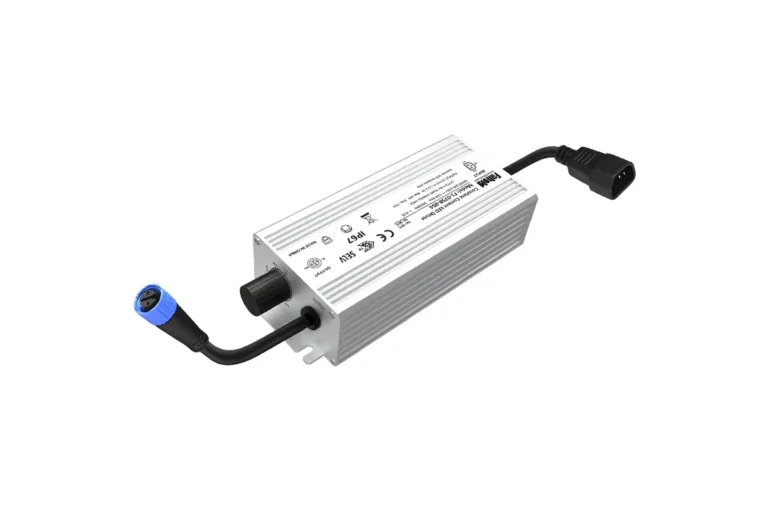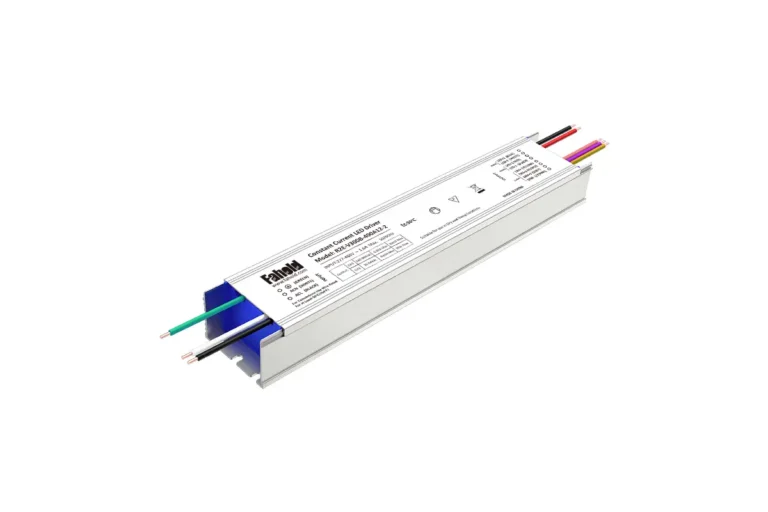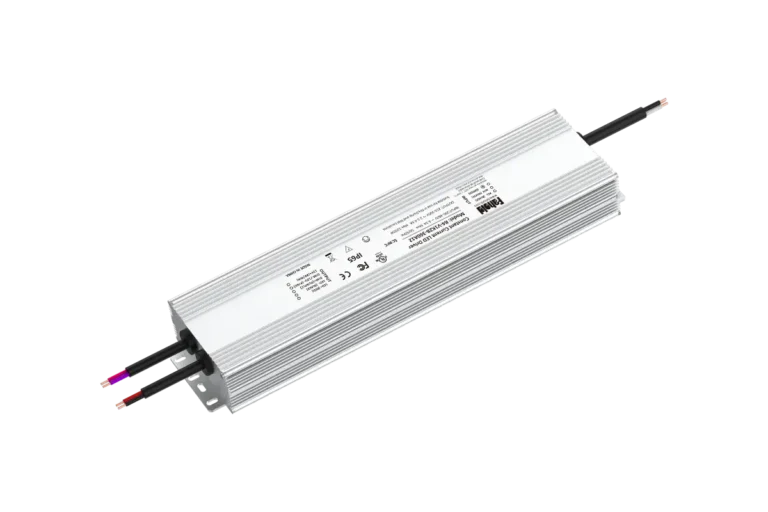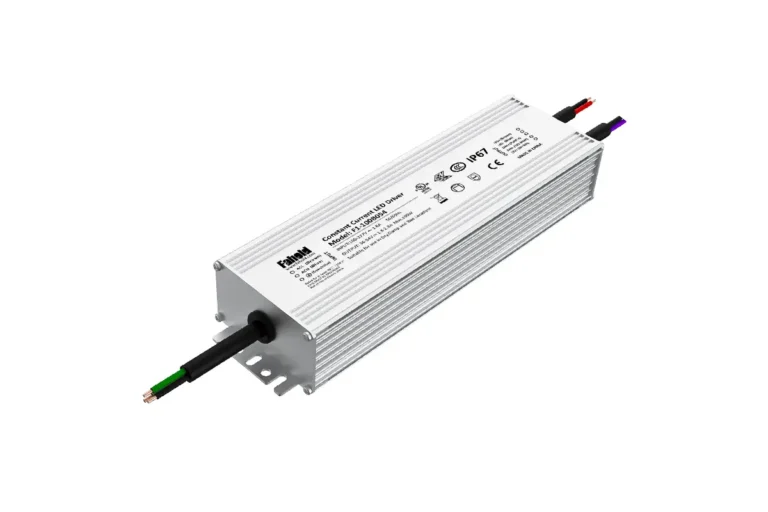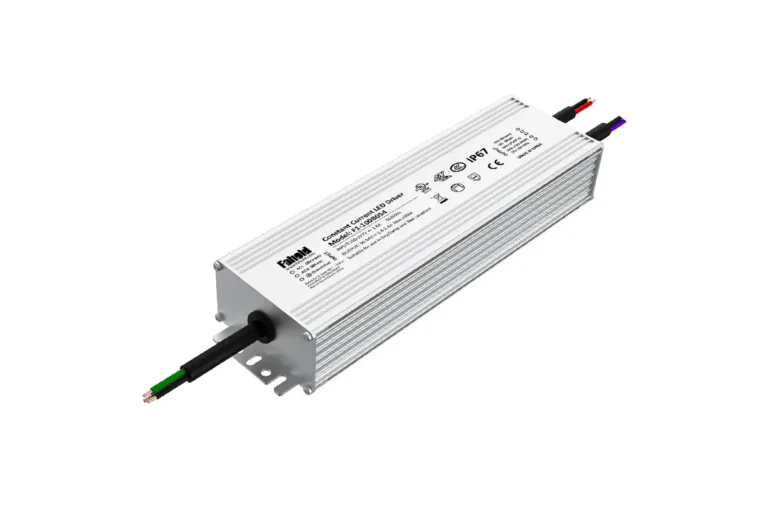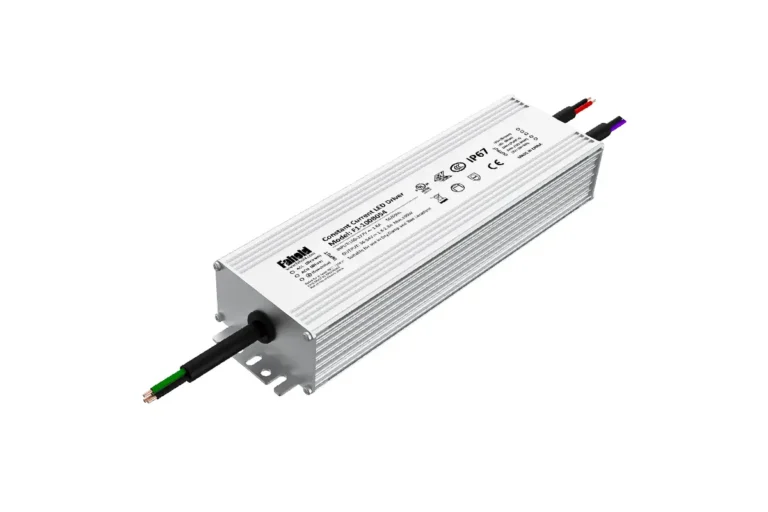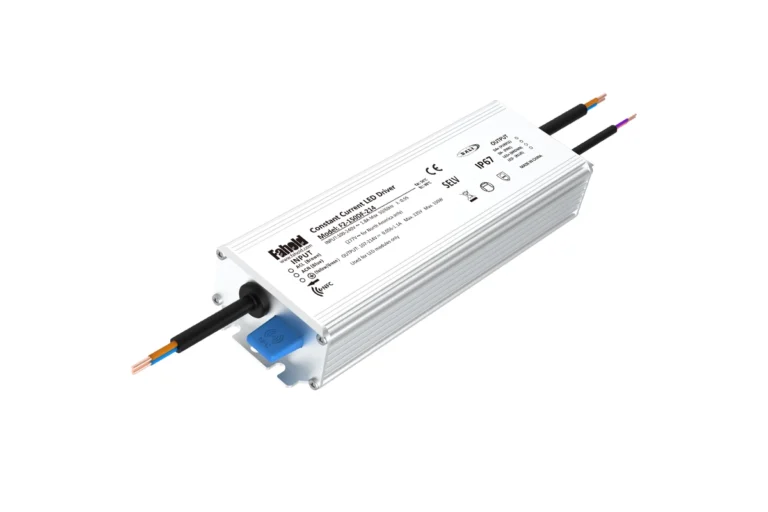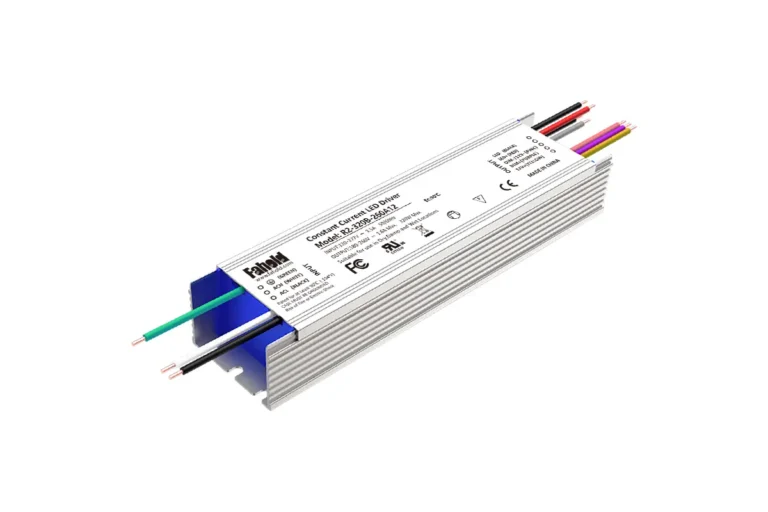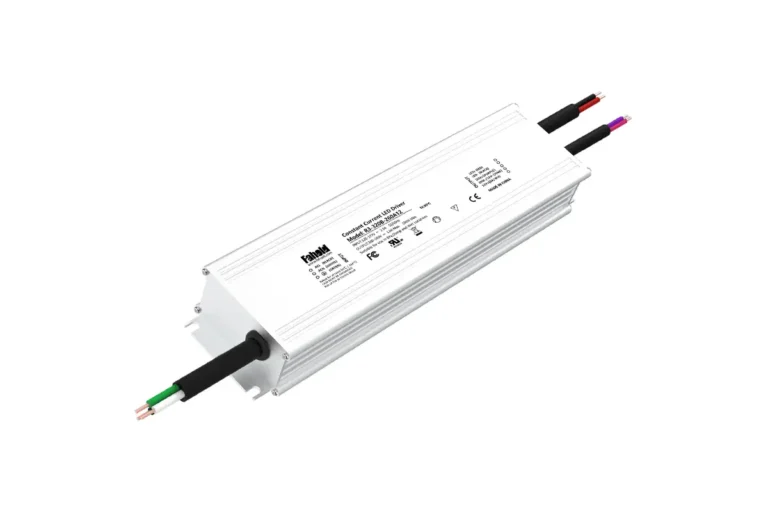
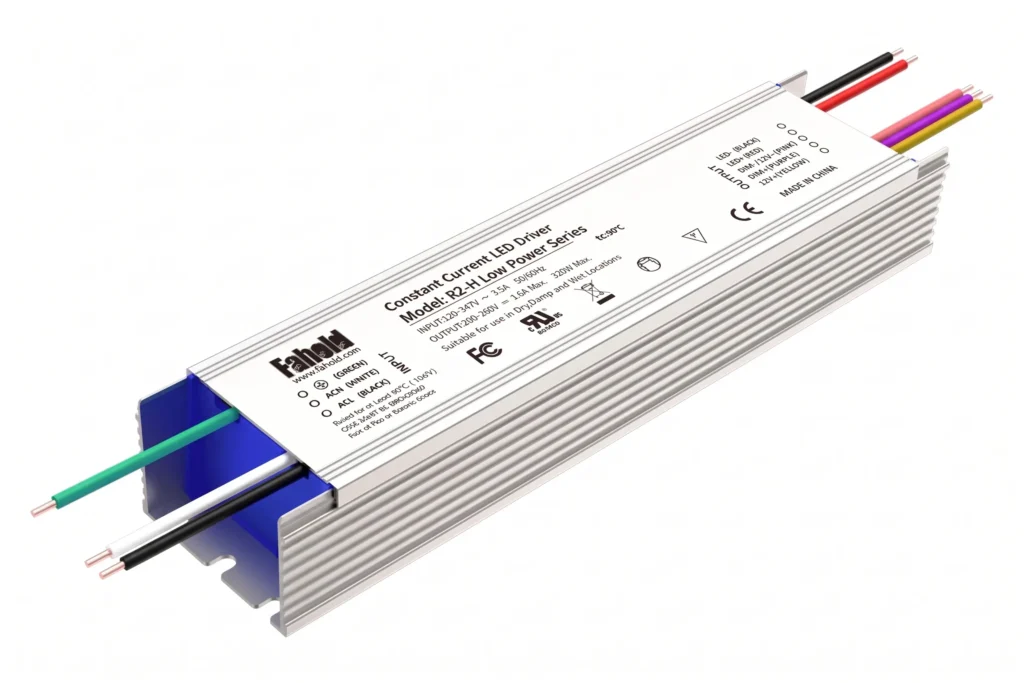
R2-060B-260Z-H 60W 180-260V Inter-Canopy Horticulture LED Driver
- Power60W
- Input120-277Vac
- Output Voltage180-260Vdc
FAHOLD R2-H 120–277V inter-canopy grow light drivers are ultra-narrow non-isolated single-channel constant-current power solutions for inter-lighting, bottom-fill, under-canopy and supplemental horticulture fixtures. The series is designed for space-constrained linear grow lights using high-voltage LED strings.
Current R2-H models cover 60W, 100W, 150W, 200W, 240W and 320W with a common 180–260Vdc output platform. Type B configurations support 0(1)–10V / PWM dimming, offline programmable current setting and no-afterglow shutdown, with optional 12V auxiliary power for compatible fixture electronics.
Compare the six models below by wattage, LED voltage, output-current requirements and fixture size. FAHOLD also supports electrical matching, programmable-output configuration, datasheets, samples and OEM/ODM inter-canopy lighting projects.
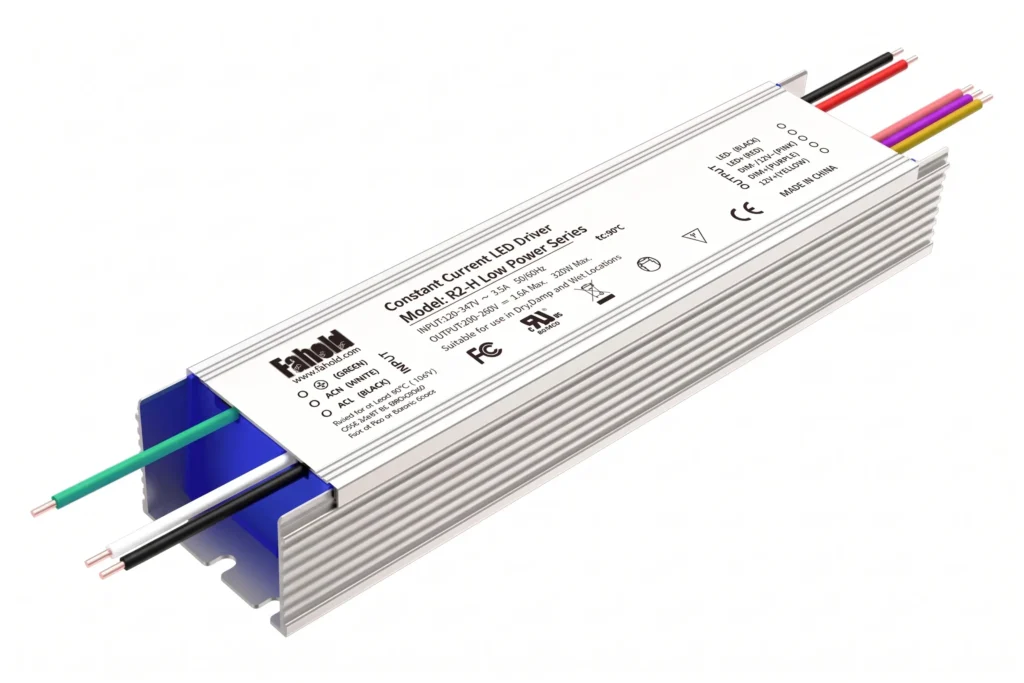
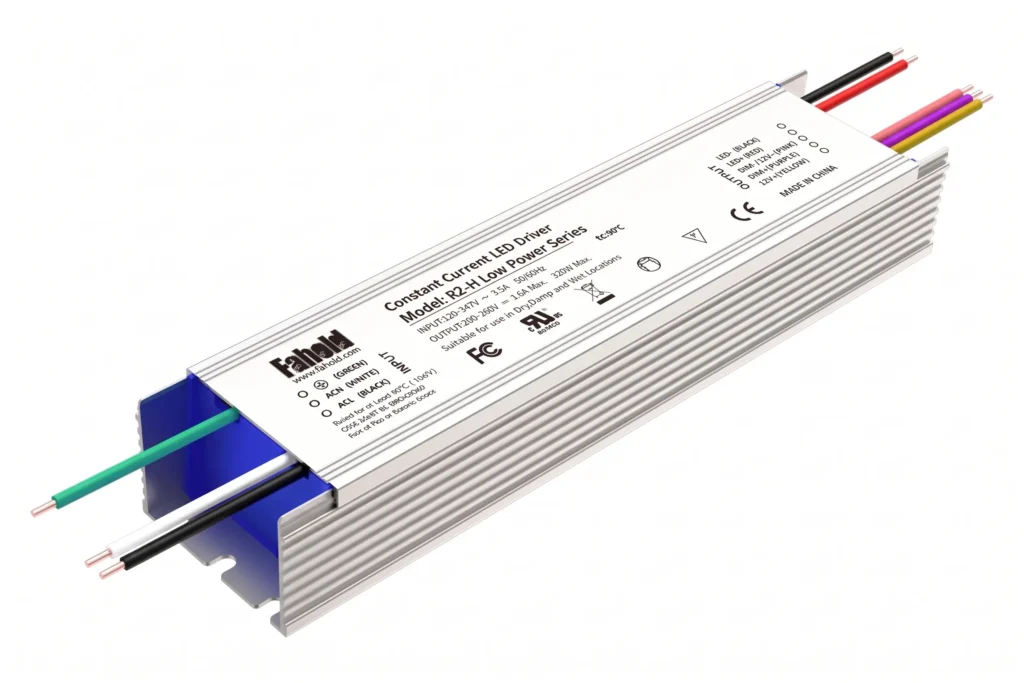
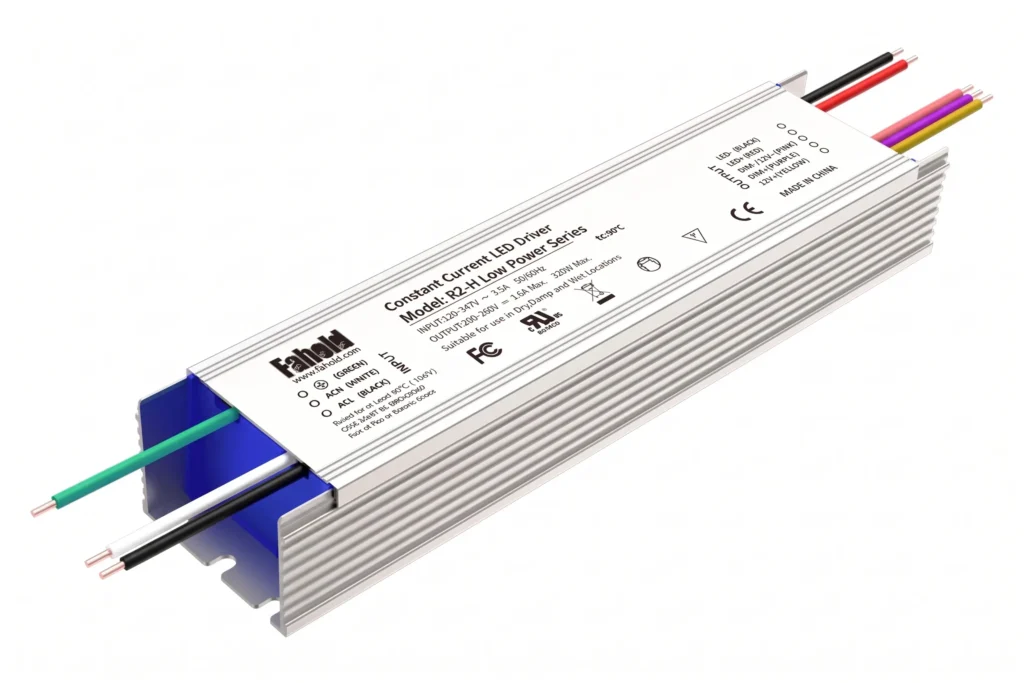
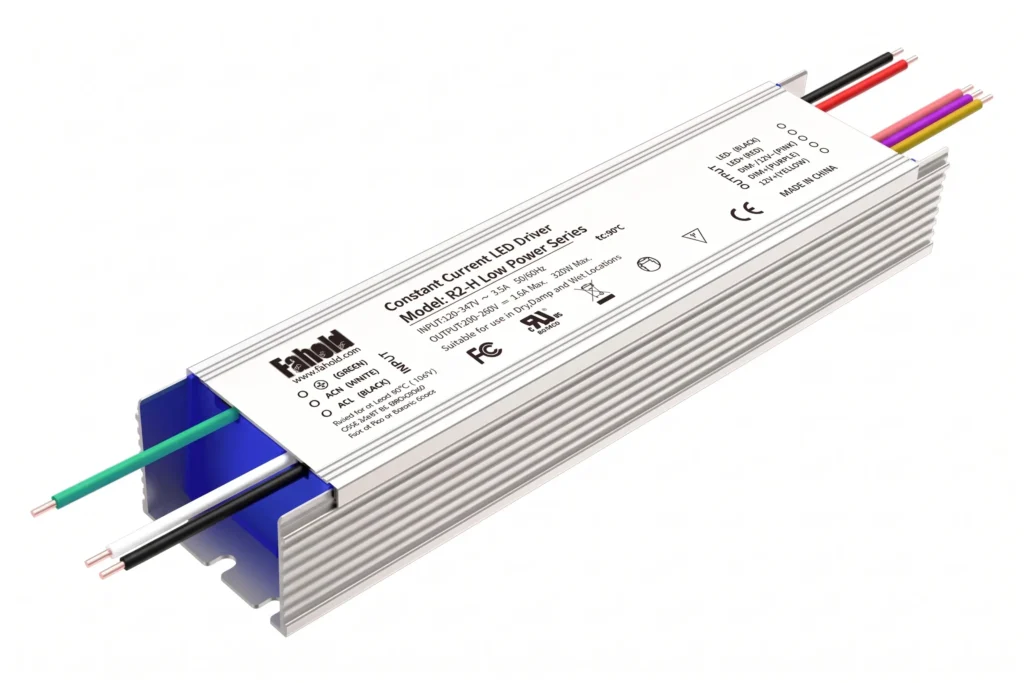
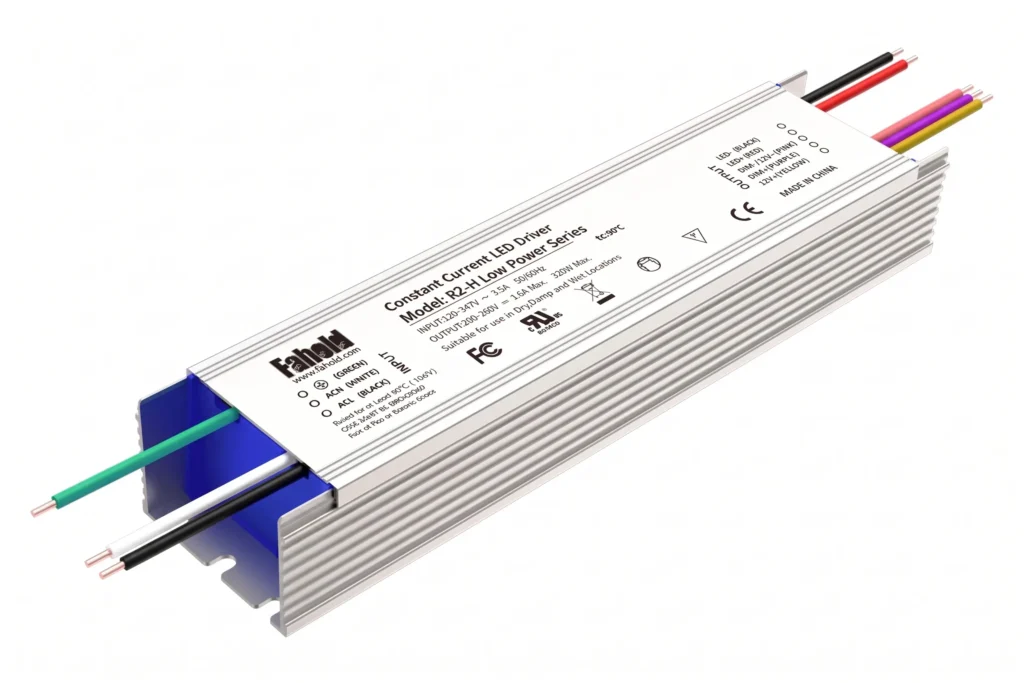
FAHOLD R2-H is an ultra-narrow non-isolated single-channel constant-current LED driver platform developed for inter-canopy lighting, bottom-fill lighting, under-canopy fixtures and other supplemental horticulture luminaires where installation space is limited.
The current 120–277Vac R2-H range includes 60W, 100W, 150W, 200W, 240W and 320W models. All six products use a 180–260Vdc LED output window, allowing the series to support high-voltage LED-string architectures in slim linear grow-light fixtures.
R2-H differs from high-power top-light platforms such as R4, H2 or R6-V. Its primary focus is compact fixture integration, programmable constant-current output and practical control for lighting installed closer to or within the crop canopy.
The six current R2-H models allow fixture manufacturers to scale the same general electrical architecture across several inter-canopy and supplemental lighting power classes.
| Power Class | Rated Input | Output Voltage | Typical Fixture Direction |
|---|---|---|---|
| 60W | 120–277Vac | 180–260Vdc | Compact inter-canopy, propagation and supplemental lighting bars |
| 100W | 120–277Vac | 180–260Vdc | Lower-power bottom-fill and slim linear horticulture fixtures |
| 150W | 120–277Vac | 180–260Vdc | Medium-power inter-lighting and under-canopy fixtures |
| 200W | 120–277Vac | 180–260Vdc | Higher-output commercial inter-canopy fixtures |
| 240W | 120–277Vac | 180–260Vdc | High-output linear grow-light bars and supplemental fixtures |
| 320W | 120–277Vac | 180–260Vdc | Highest-power fixtures in the current 120–277V R2-H range |
Wattage alone should not determine model selection. The LED string's minimum and maximum forward voltage, required operating current and final fixture power must all remain within the electrical limits of the selected driver.
Inter-canopy lighting positions LED fixtures inside or between crop rows instead of relying only on overhead top lighting. This creates different power-supply requirements because the fixture often needs to fit within a narrow mechanical space close to foliage.
R2-H is designed around this type of installation. Its slim linear enclosure allows the driver to be integrated into compact horticulture bars while the 180–260Vdc output architecture supports long high-voltage LED strings.
For commercial growers and luminaire manufacturers, inter-canopy driver selection should consider not only power but also fixture width, driver height, cable routing, humidity, LED-board voltage and the required dimming strategy.
Bottom-fill and under-canopy fixtures are used to deliver additional light below the upper canopy where overhead fixtures may not provide sufficient penetration.
These luminaires typically use slim housings and are installed in restricted spaces around crop structures. An ultra-narrow driver architecture can simplify mechanical integration while keeping the power supply close to the LED load.
R2-H is suitable for compatible bottom-fill and supplemental lighting designs when the fixture uses one regulated 180–260Vdc LED load and its power requirement falls within the 60W–320W range.
All current products on this R2-H category page use a 120–277Vac rated-input platform. This covers common commercial lighting supply conditions such as nominal 120Vac, 208Vac, 240Vac and 277Vac.
The AC input voltage is separate from the LED output specification. A fixture supplied from 277Vac can still use an R2-H driver that provides regulated 180–260Vdc constant-current output to the LED string.
For horticulture facilities using higher-voltage 347V or 480V-class distribution, compare the
R2-H 200–480Vac Inter-Canopy Grow Light Drivers
.
R2-H uses a 180–260Vdc constant-current output platform across the current 120–277Vac product range. This makes it suitable for horticulture LED boards designed around relatively long, high-voltage LED strings.
Higher LED-string voltage allows useful fixture power to be delivered at lower current than a low-voltage, high-current architecture. This can influence PCB layout, conductor sizing, connector requirements and the mechanical design of a slim horticulture fixture.
Because R2-H is a non-isolated platform, the LED output and complete fixture safety architecture must be evaluated carefully. Insulation, accessible parts, PCB spacing, wiring, connectors, enclosure construction and certification requirements should all be considered together.
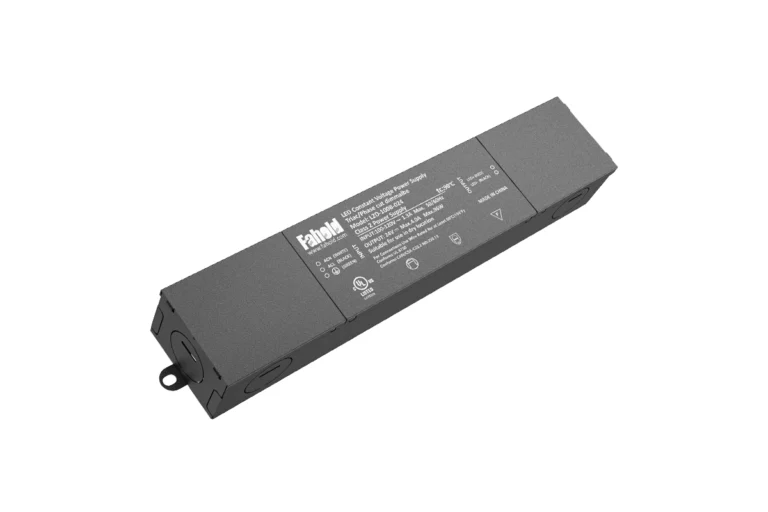
One of the key advantages of R2-H is its ultra-narrow mechanical format. Current product documentation identifies a 44mm-class enclosure width, allowing the driver to fit into slim linear grow-light structures where conventional wider power supplies may be difficult to integrate.
The 60W model, for example, uses an enclosure approximately 150 × 44 × 32mm. Driver length increases with power, so mechanical drawings should be reviewed before final fixture tooling, mounting-point design or cable routing.
This narrow profile is especially valuable in inter-canopy and bottom-fill fixtures that must remain compact around crop rows.
R2-H supports offline programmable current setting on compatible Type B configurations. This allows supported operating parameters to be configured within the electrical limits of the selected driver.
For OEM grow-light manufacturers, programmability can help standardize one driver platform across multiple fixture SKUs. A common electrical and mechanical platform may be used with different programmed current settings when all operating points remain inside the permitted voltage, current, power and thermal limits.
Programming requirements should be defined before production so the driver configuration, finished fixture specification and product label remain consistent.
Compatible R2-H Type B configurations support 0(1)–10V control for commercial horticulture lighting systems. This allows inter-canopy and supplemental fixtures to adjust output according to cultivation stage, crop requirements, facility schedules or centralized lighting-control strategies.
Controller signal range, wiring and actual driver compatibility should be validated during fixture development because different lighting-control systems can implement analog dimming differently.
R2-H also supports PWM control on compatible configurations. PWM can be useful when the horticulture fixture is integrated with a controller or automation platform that provides a pulse-width modulation signal.
Signal voltage, frequency and control wiring should be confirmed against the selected driver configuration before final production.
The R2-H platform includes no-afterglow shutdown behavior on applicable configurations. This helps prevent visible residual LED glow after the fixture is commanded off.
A clean off state can be useful in controlled-environment agriculture where scheduled dark periods are part of the crop-lighting strategy. The complete controller, driver and LED load should still be validated together when low-end dimming and shutdown behavior are important.
The R2-H model-code system provides an optional A12 configuration with a 12V / 200mA auxiliary supply for compatible fixture electronics.
This auxiliary output can support suitable controls or other low-voltage electronics inside the luminaire without requiring an additional small power supply.
The 12V auxiliary option is configuration-dependent and should be specified during project development rather than assumed to be included with every R2-H driver.
Current R2-H product documentation identifies Type B as the dimmable and programmable configuration. It combines 0(1)–10V / PWM control with offline current programming.
| Function | R2-H Direction |
|---|---|
| Analog Dimming | 0(1)–10V on compatible Type B configuration |
| PWM Control | Supported on compatible Type B configuration |
| Offline Programming | Programmable current setting within supported operating limits |
| Auxiliary Power | Optional A12 12V / 200mA configuration |
| Shutdown Behavior | No-afterglow design |
The exact configuration should always be confirmed when requesting samples or production quotations.
Current R2-H product data lists power factor above 0.96 and typical efficiency ranging from approximately 93% to 97% depending on model and operating point.
Efficiency is important in inter-canopy fixtures because the driver is often installed inside a compact housing with limited space for heat dissipation. Lower electrical losses can help reduce thermal load around the driver and LED boards.
Actual efficiency depends on input voltage, LED operating point, programmed output and thermal conditions, so fixture-level testing remains important.
Current R2-H product documentation specifies DM 6kV / CM 6kV surge protection together with short-circuit, over-current and over-temperature protection.
These driver-level protections should be combined with correct facility grounding, branch-circuit protection and fixture-level electrical design, particularly in large commercial cultivation installations.
R2-H is designed for slim fixtures installed within crop canopies where mechanical width, power density and controlled dimming are important.
The compact linear architecture makes R2-H relevant to fixtures positioned below the main crop canopy to supplement light reaching lower leaves and fruiting zones.
Compatible under-canopy fixtures can use R2-H when one high-voltage LED load requires 60W to 320W and the installation uses 120–277Vac commercial power.
R2-H can also support linear supplemental grow-light fixtures that require programmable constant-current operation and external 0–10V or PWM control.
The 60W, 100W and 150W R2-H models are suited to compact inter-canopy and bottom-fill fixtures where low profile and limited thermal footprint are priorities.
Current product data lists approximately 0.12–0.30A for the 60W model, 0.25–0.50A for the 100W model and 0.38–0.75A for the 150W model, all within the common 180–260Vdc platform.
The exact operating current should be selected from the LED string requirements rather than simply using the maximum available current.
The 200W, 240W and 320W R2-H models extend the same slim 120–277Vac architecture into higher-output inter-canopy and supplemental lighting fixtures.
These higher-power models are relevant where more LED output is required but the luminaire still benefits from a narrow linear driver rather than a larger top-light power platform.
Because voltage, current and thermal load increase in importance at higher fixture power, model matching should be completed from the LED-board electrical specification and the latest driver datasheet.
FAHOLD provides two R2-H input-voltage branches for different horticulture facility electrical systems.
| Platform | Rated Input | Current Power Direction | Typical Facility |
|---|---|---|---|
| R2-H | 120–277Vac | 60W / 100W / 150W / 200W / 240W / 320W | Commercial facilities using 120V, 208V, 240V or 277V-class lighting circuits |
| R2-V-H | 200–480Vac | 60W / 120W / 150W / 200W | High-voltage facilities using compatible 277V, 347V or 480V-class distribution |
Both branches use a 180–260Vdc output architecture, but they should be selected according to the actual facility AC supply and the power requirement of the fixture.
For the high-voltage range, compare
R2-H 200–480Vac Inter-Canopy LED Drivers
.
R2-H and R4 are both non-isolated single-channel horticulture platforms, but they serve different fixture classes.
| Requirement | R2-H | R4 |
|---|---|---|
| Primary Application | Inter-canopy, bottom-fill and compact linear horticulture lighting | High-power commercial grow lights and LED bar fixtures |
| Power Direction | 60W–320W | 400W–1200W across the wider R4 family |
| LED Output Platform | 180–260Vdc | 210–360Vdc |
| Mechanical Direction | Ultra-narrow 44mm-class platform | Slim high-power platform |
Choose R2-H for compatible lower- and medium-power inter-canopy fixtures where narrow mechanical integration is a priority. For higher-power commercial single-channel systems, compare
R4 120–277Vac High-Power Grow Light Drivers
.
Inter-canopy lighting requires closer coordination between the LED board, driver and fixture mechanics than a generic grow-light power supply. LED-string voltage, current, programmed power, driver width, dimming interface, auxiliary electronics and installation conditions can all affect the correct driver configuration.
FAHOLD supports R2-H model matching, programmable-output evaluation, technical datasheets, samples and OEM/ODM horticulture projects. For accurate pre-selection, provide the facility AC input, LED voltage range, required current, maximum fixture wattage, dimming method, mechanical constraints, auxiliary-power requirements, target certification and expected quantity.
For the broader product category, return to
Non-Isolated Single-Channel Grow Light Drivers
.
For application-level horticulture matching, review
FAHOLD Grow Lighting LED Driver Solutions
.
FAHOLD R2-H is an ultra-narrow non-isolated single-channel constant-current LED driver platform for inter-canopy, bottom-fill, under-canopy and supplemental horticulture lighting. The current 120–277Vac range covers 60W to 320W with a 180–260Vdc output platform.
The current R2-H 120–277Vac range includes 60W, 100W, 150W, 200W, 240W and 320W models. The correct model should be selected according to LED voltage, operating current, maximum power and fixture requirements.
All current R2-H models on this 120–277Vac category use a 180–260Vdc constant-current output platform. The connected LED string's complete forward-voltage range must remain within this operating window.
Yes. R2-H is specifically positioned for professional inter-canopy, bottom-fill and supplemental horticulture fixtures. Its ultra-narrow 44mm-class construction is designed for space-constrained linear grow-light installations.
Yes. Compatible R2-H Type B configurations support 0(1)–10V and PWM control together with offline programmable current setting. Control wiring and controller compatibility should be confirmed for the selected project.
Yes. R2-H Type B configurations support offline programming for output-current setting within the supported electrical range of the selected driver. This can help OEM fixture manufacturers configure related product variants from a common driver platform.
An optional A12 configuration provides a 12V / 200mA auxiliary supply for compatible fixture electronics. This option is configuration-dependent and should be specified when requesting samples or production units.
The 120–277Vac R2-H range currently includes 60W, 100W, 150W, 200W, 240W and 320W models. The high-voltage 200–480Vac branch currently includes 60W, 120W, 150W and 200W models. Both use a 180–260Vdc output platform, but they are designed for different facility AC distribution systems.
R2-H is designed primarily for 60W–320W inter-canopy, bottom-fill and slim linear horticulture fixtures using a 180–260Vdc LED output platform. R4 is a higher-power non-isolated platform for commercial grow lights and LED bar fixtures using a 210–360Vdc output architecture.
Provide the facility AC input, LED string minimum and maximum forward voltage, required operating current, maximum fixture wattage, dimming method, programmed-current requirement, available driver space, auxiliary-power requirement and target certification.